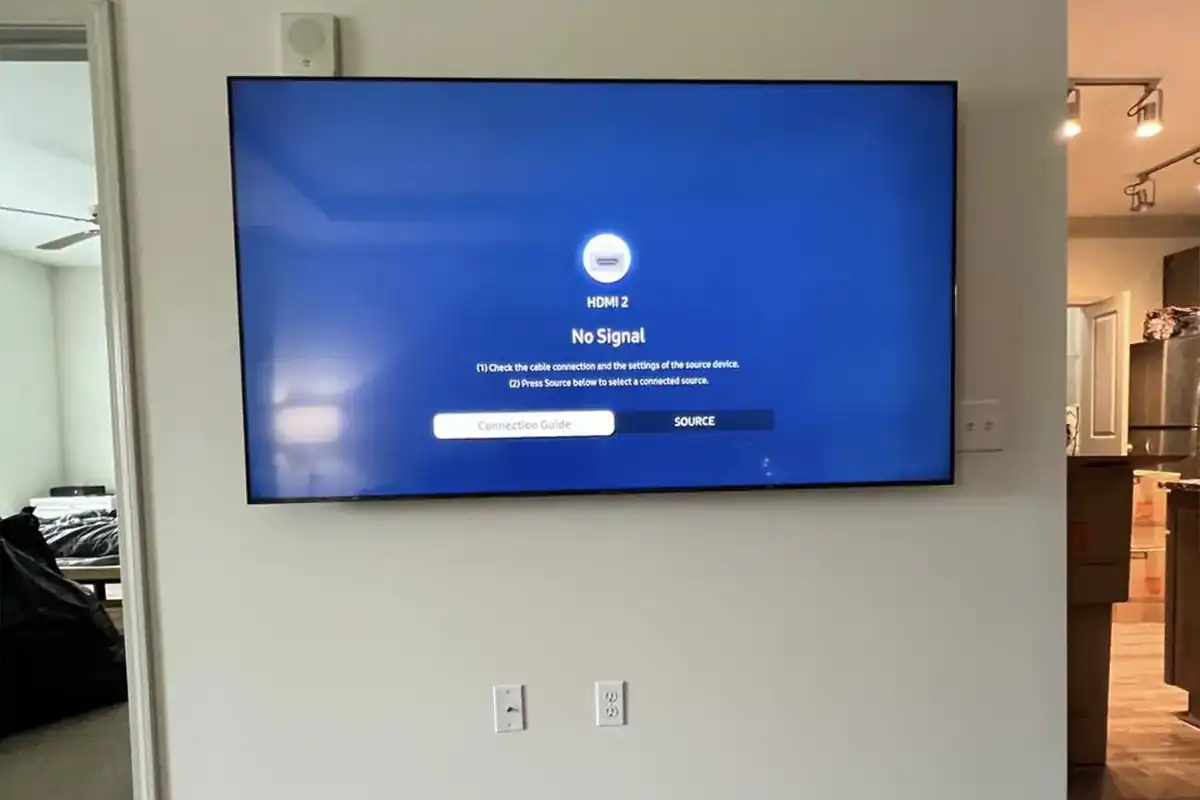
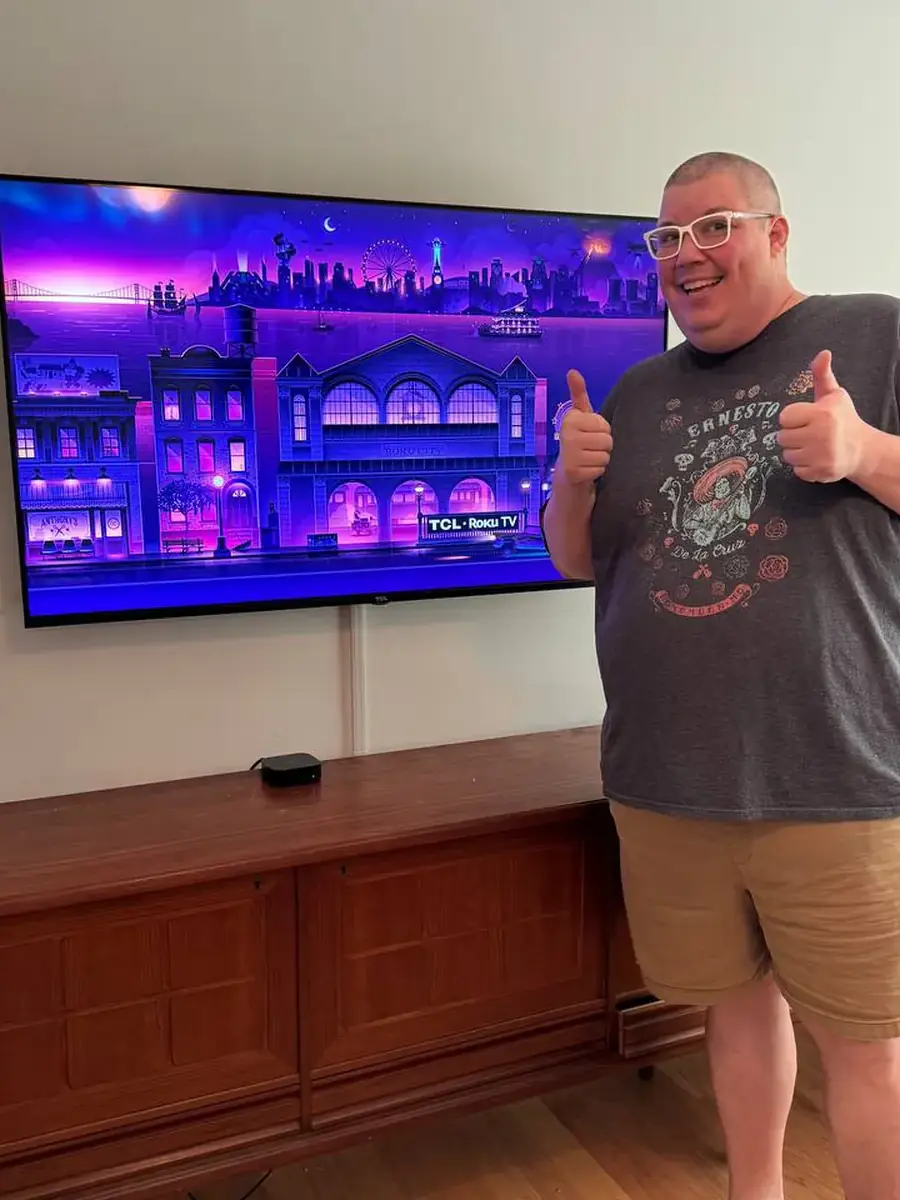
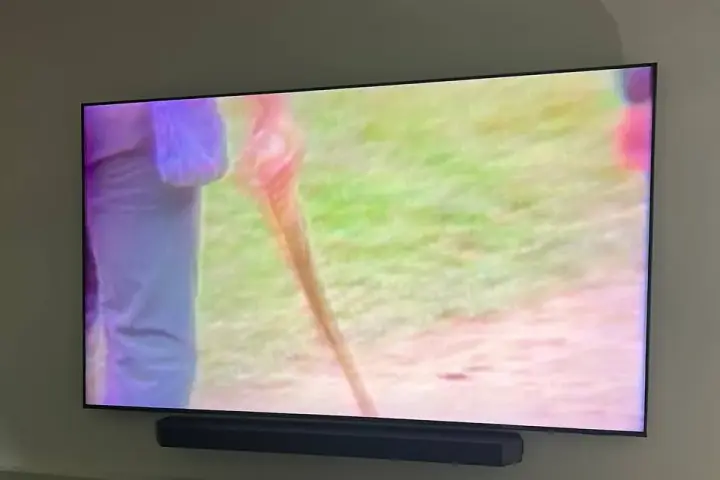
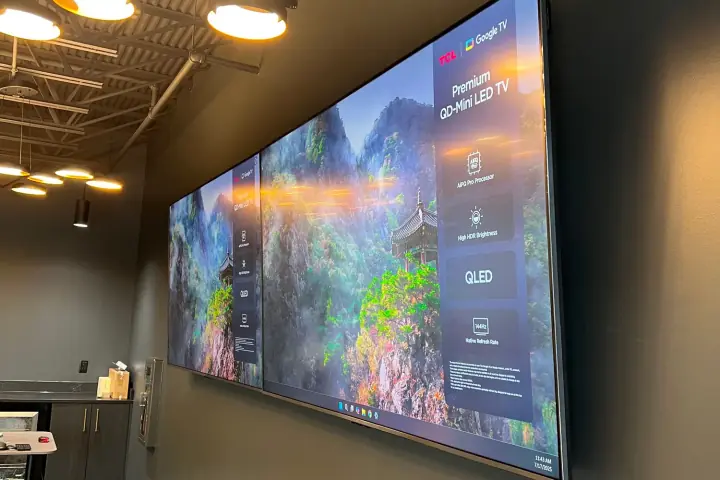
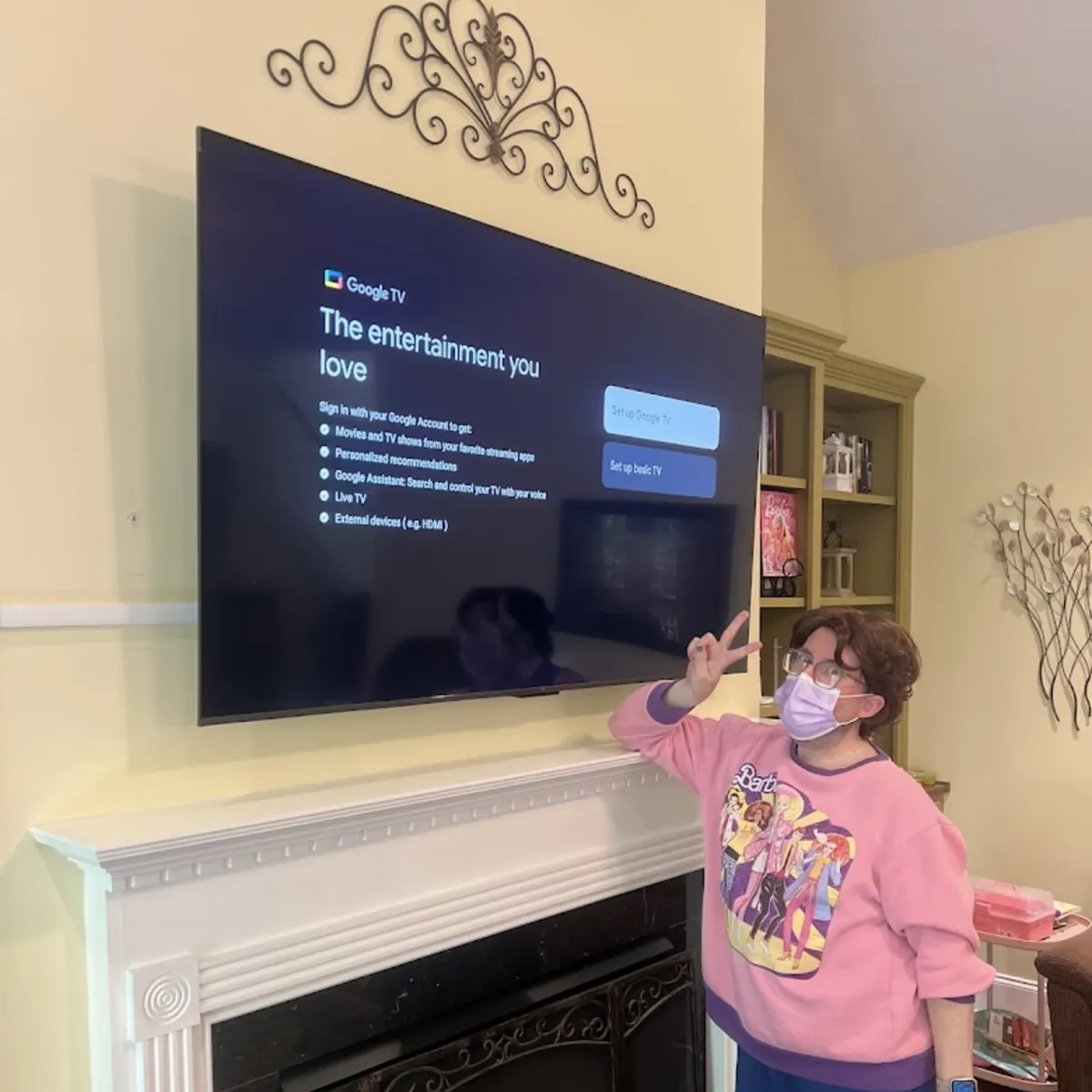
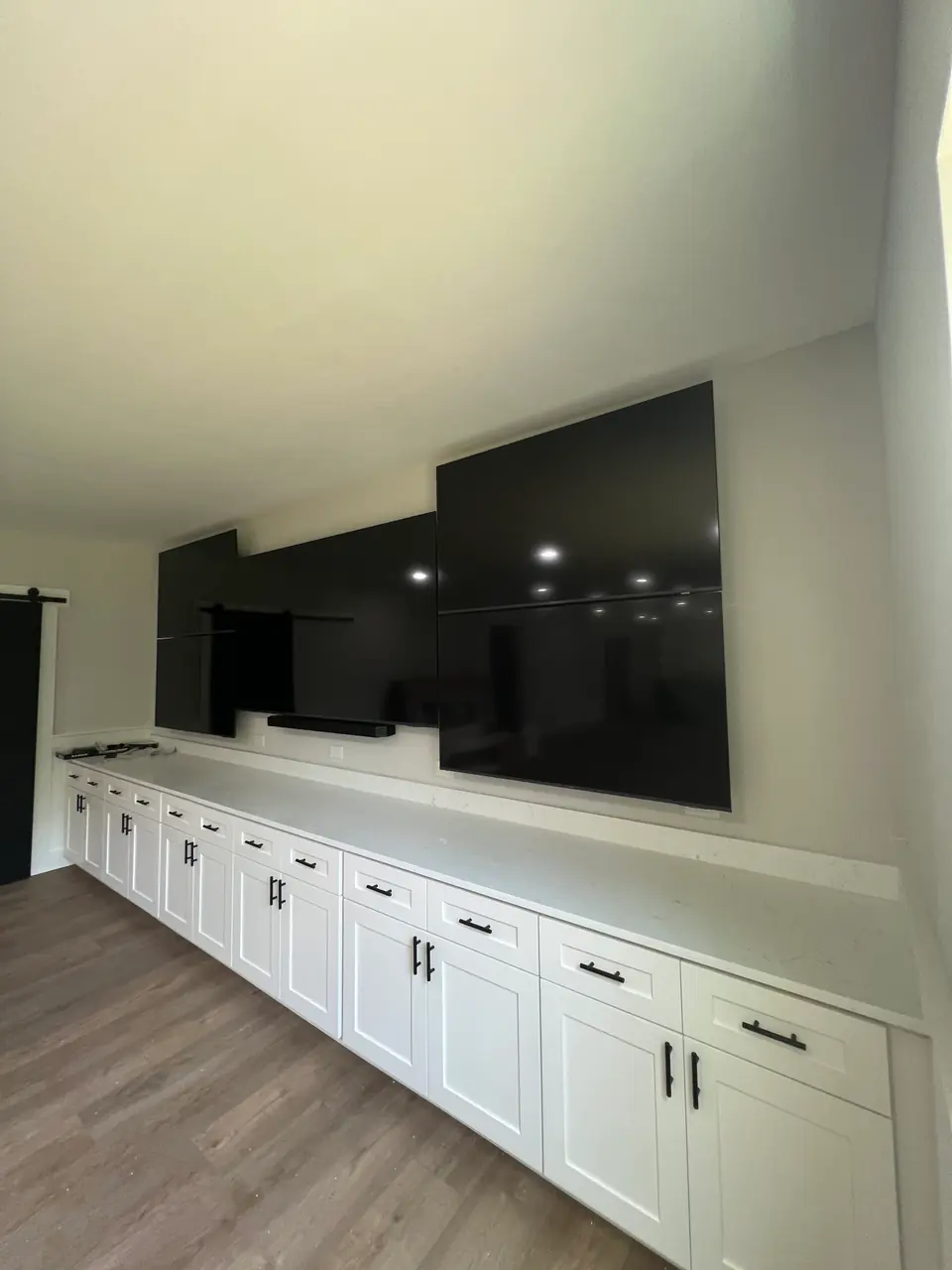
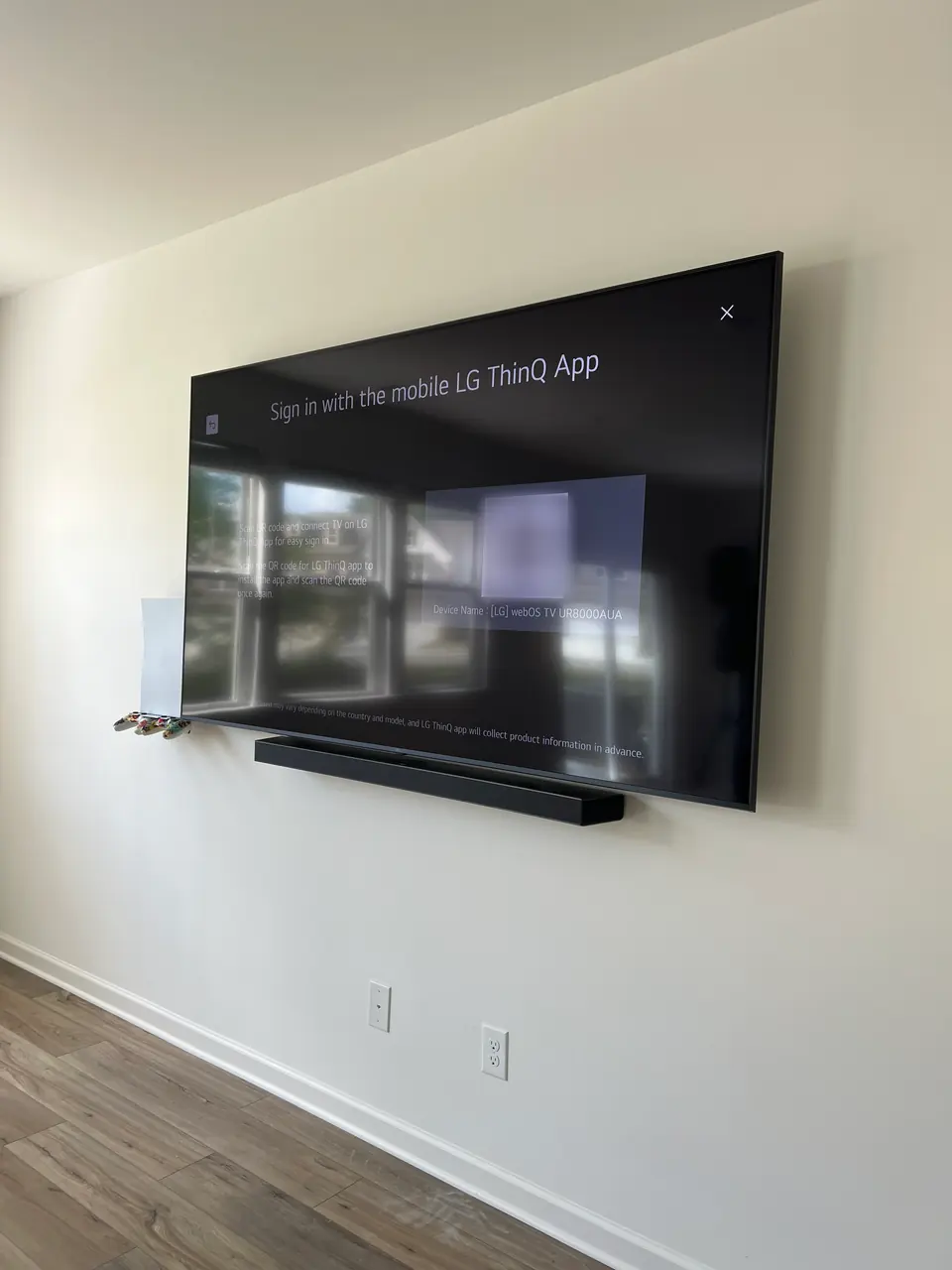
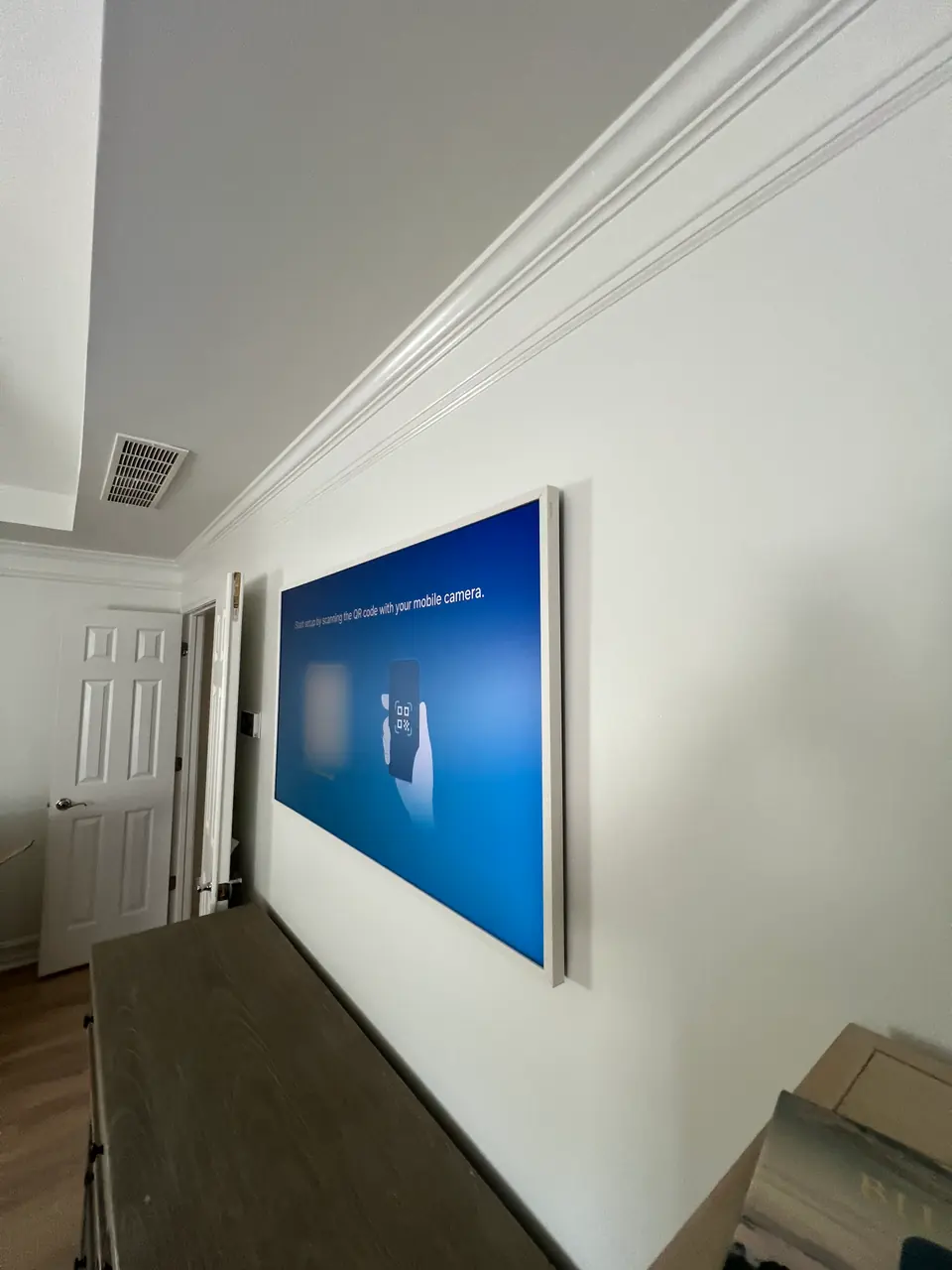
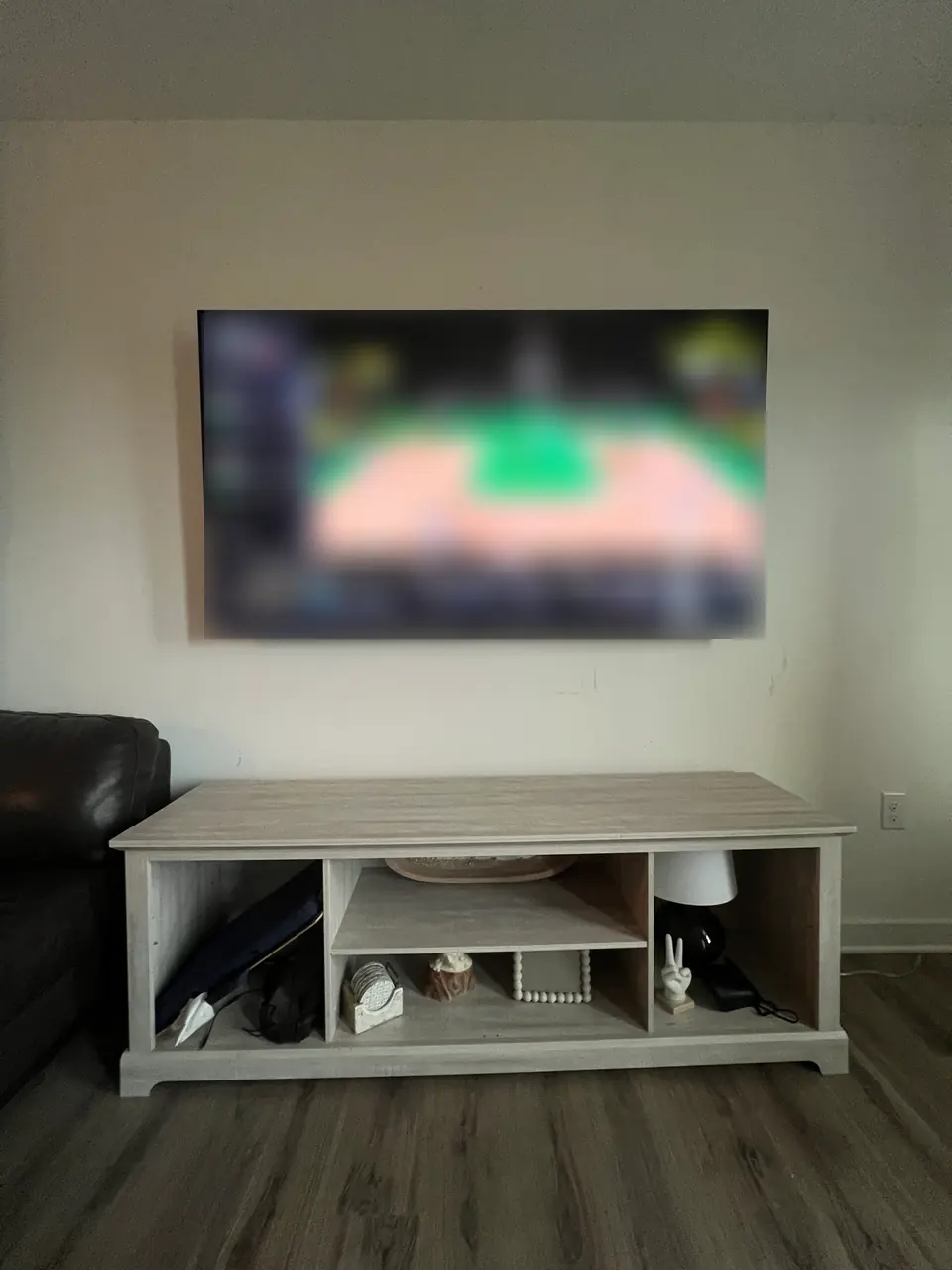
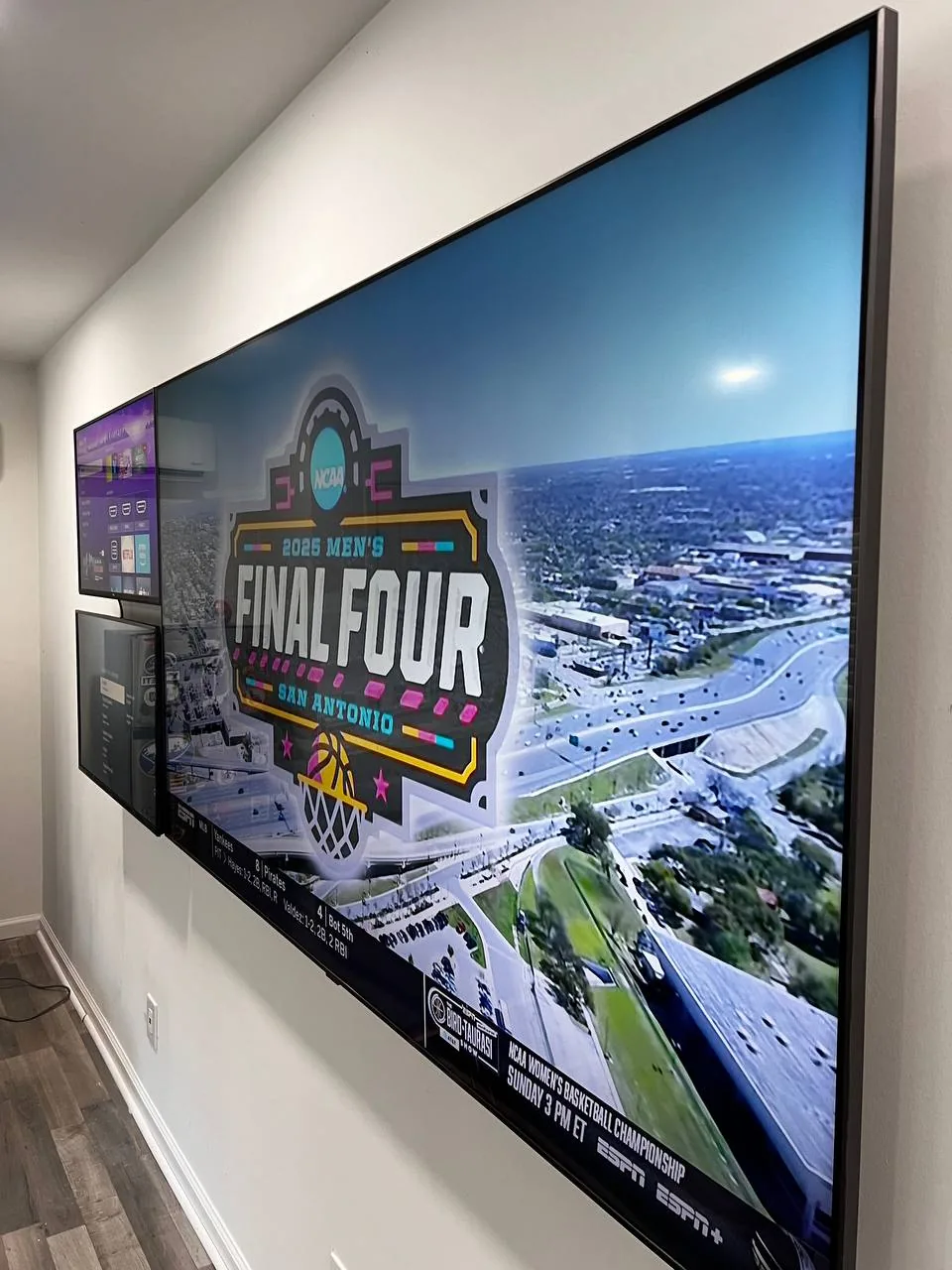
Carrollton's first big subdivisions went in during the 1970s and early 1980s: one-story brick houses on slabs, drywall inside, a brick fireplace in the den. Later streets, from the late 1980s through the 1990s, run to two stories, with the fireplace in a family room and its front in brick or tile. Both kinds mount the same way. Lag bolts go into the wood studs behind the drywall at no wall charge, and the fireplace front is the one surface that adds $59, plus $49 when the TV goes over the mantel.
Old Downtown Carrollton is the square at Main and Broadway, with the Green Line's Downtown Carrollton station raised just across Belt Line Road and a footbridge linking the two. The line runs on up the old Katy right of way to Trinity Mills and North Carrollton/Frankford. Streets near the square hold some of the oldest houses in Carrollton, and a few of those sit on pier-and-beam with plaster in some rooms. Plaster is priced like drywall. The difference is inside, where old framing may sit exactly where a cable wants to go, so a photo ahead of time saves guessing.
Duplexes and townhomes are a Carrollton habit going back to the 1970s. Country Place, laid out that decade around a small lake and a par-three course, mixes houses with duplexes and townhomes, and later neighborhoods added half-duplexes through the 1980s. Each has a party wall, shared with the other unit and built differently from the rest: often two separate rows of studs with a gap between them, or extra layers of drywall, and in some older buildings a solid block or brick wall. That is the wall to think about.
What carries through a party wall is mostly sound from the TV's own speakers, bass above all, and a screen hung on that wall puts the source right against it. When the room allows, the better wall is the one at a right angle to the shared wall, so the sound runs along it instead of into it. On a shared wall the cables stay on your side, in a paintable cover for $49, since what is behind the drywall is half the neighbor's.