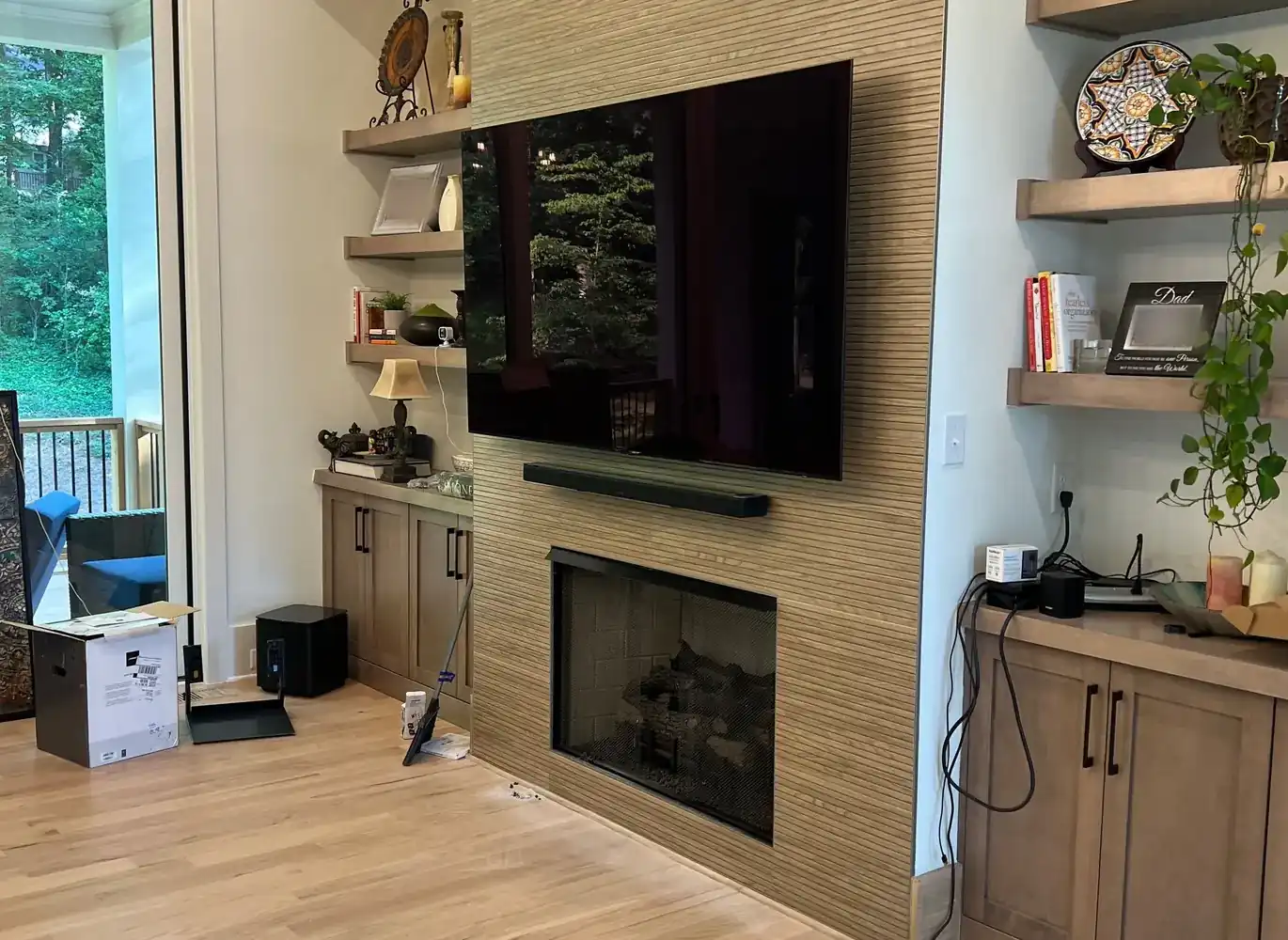
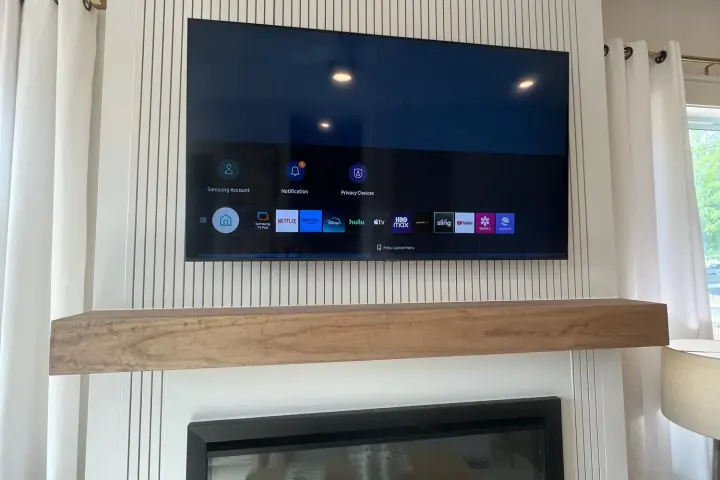
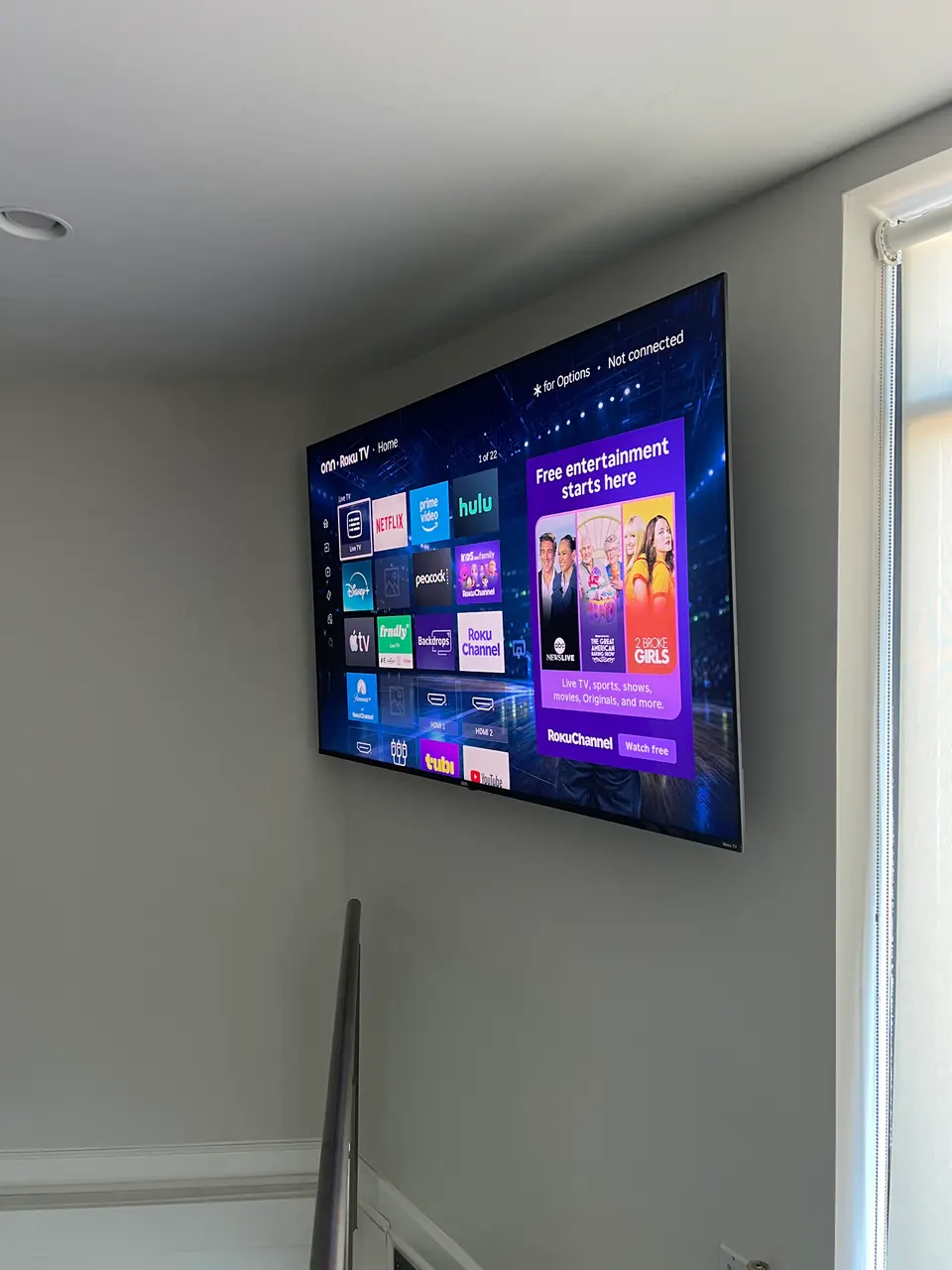
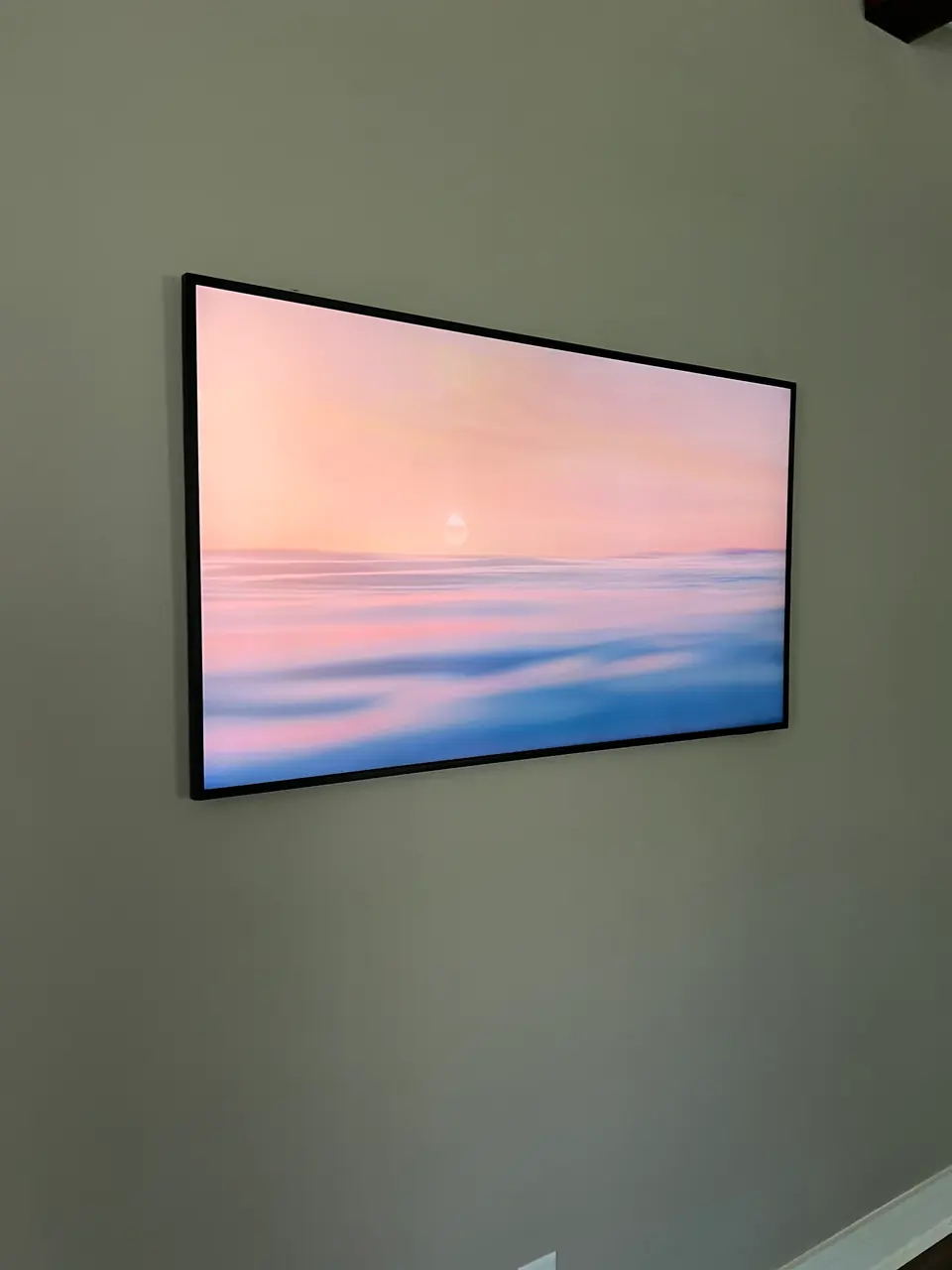
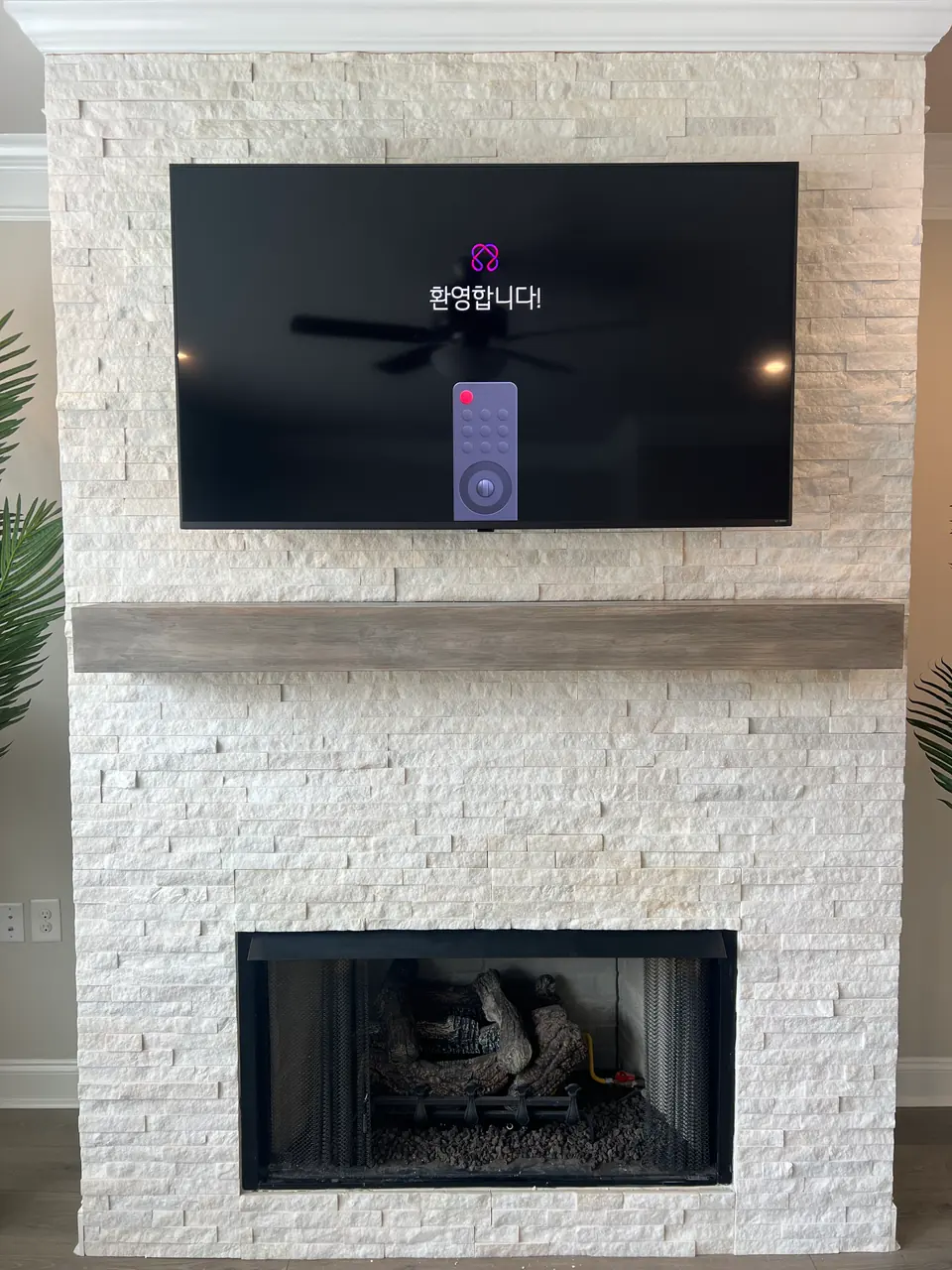
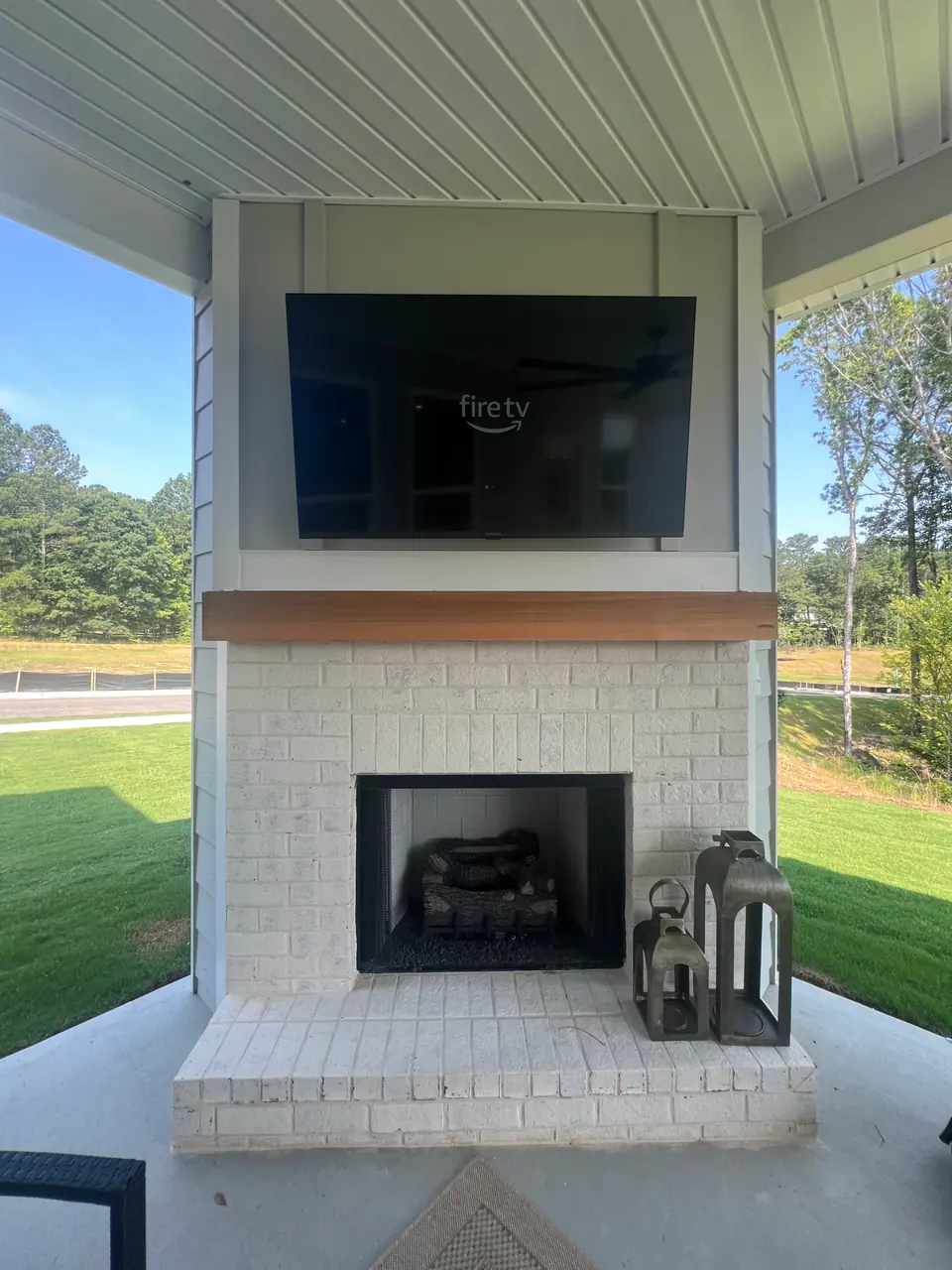
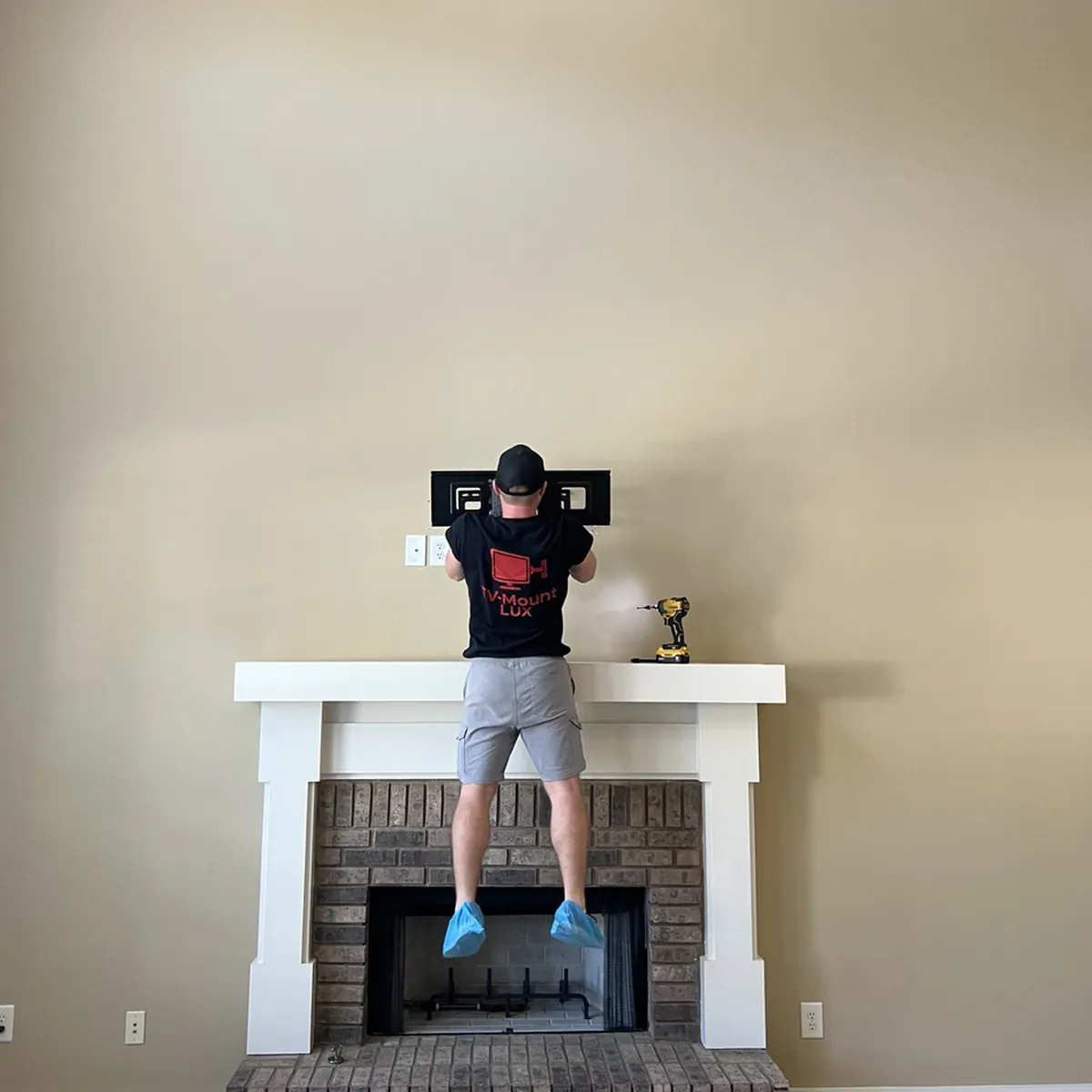
In a 1960s or 1970s ranch, the fireplace is often the main feature of the family room, and sometimes the brick runs the full width of the wall with a raised hearth along the bottom. A TV on that brick is mounted on masonry anchors set by hammer drill, the $59 hard-wall price, and if it sits above the firebox the fireplace line adds another $49. The brick also settles the cable question: nothing can be pulled through solid masonry, so the cables either ride in a cover or hang down to an outlet under the TV.
Split-levels put the family room a half flight down, partly below ground. The outside walls on that level are often concrete block behind paneling or drywall, and a mount that lands on block is billed as a hard wall. An interior wall on the same floor is usually wood-framed and adds nothing, so before choosing a wall down there it pays to know which kind it is.
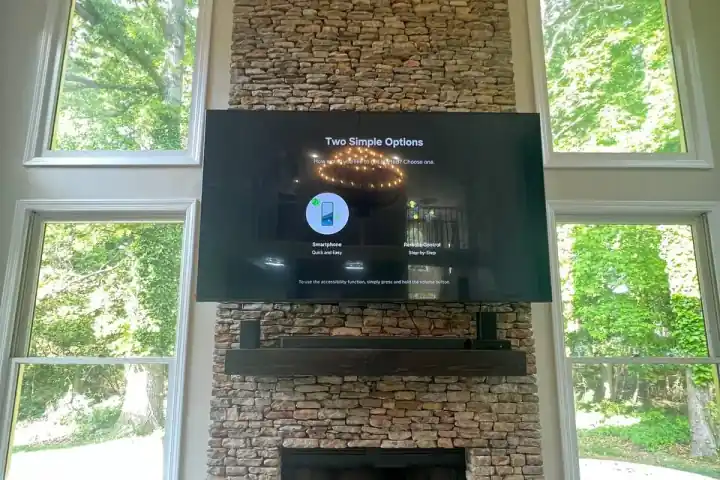
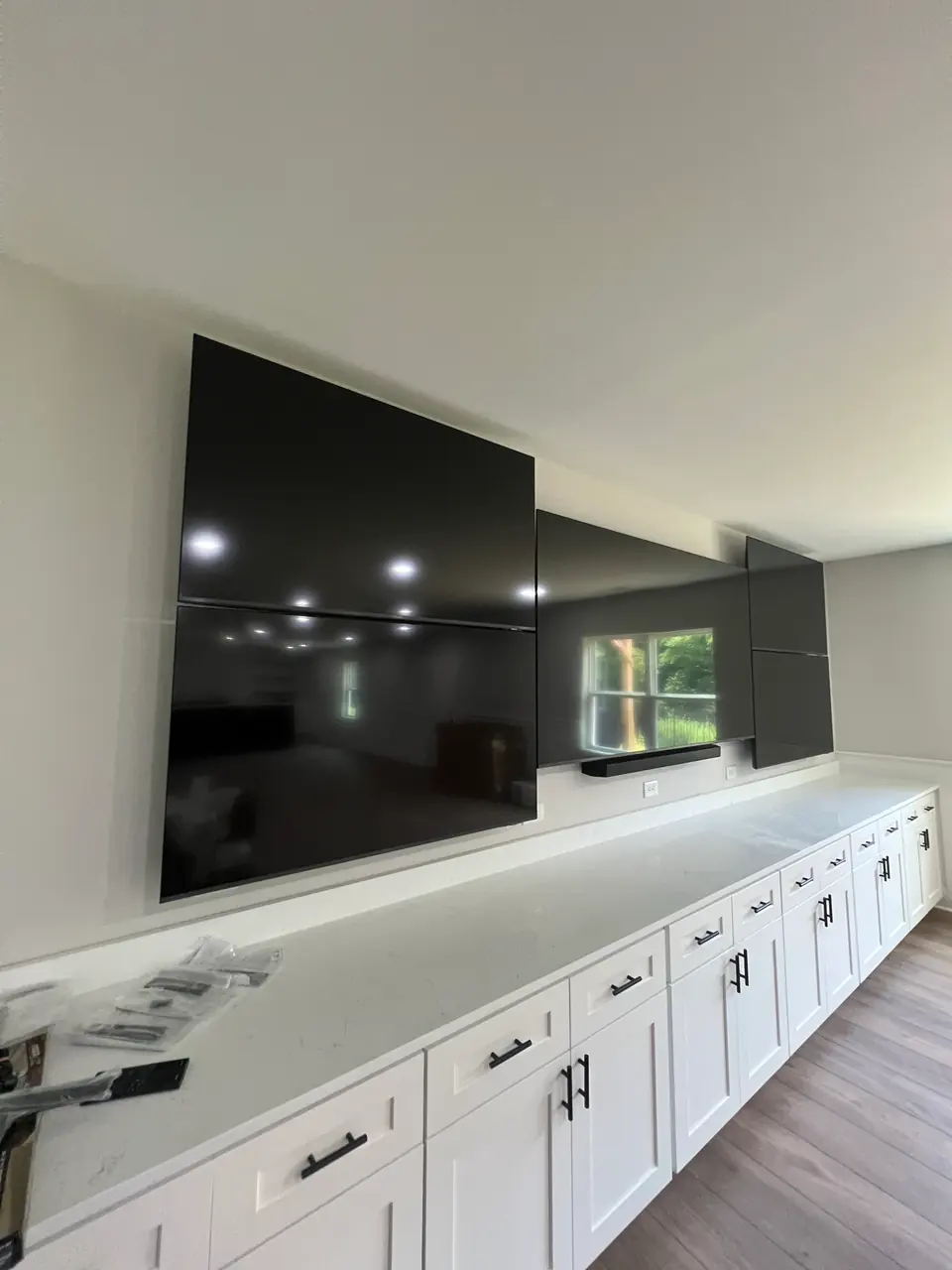
Closer to the river, the large homes on wooded lots often have rooms that can carry a bigger screen. For a screen of 60 inches or more, one technician plus your help is $165 in labor, and a second technician brings it to $210. Our large TV page explains the choice. Big windows onto the trees can put glare on a screen, and a tilting mount helps with light from above while full motion turns the picture away from a side window.
Around Perimeter Center, an area Sandy Springs shares with Dunwoody, many residents rent, and a lease often limits drilling. Ask the landlord or the management office before the visit, and find out whether cables may go inside the wall or only in a cover. The high-rise condos there have concrete columns and outer walls, billed on the $59 hard-wall line, plus building rules about when contractors can work.