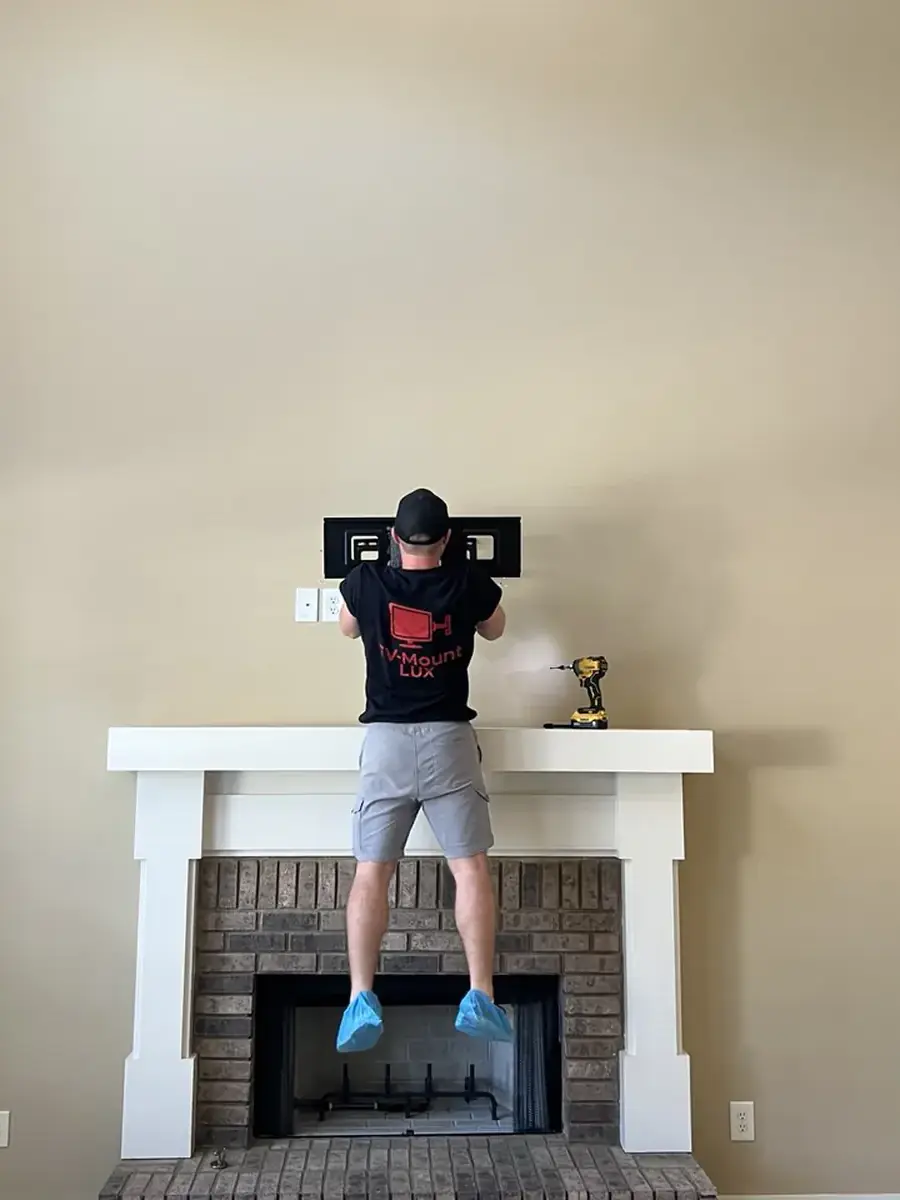
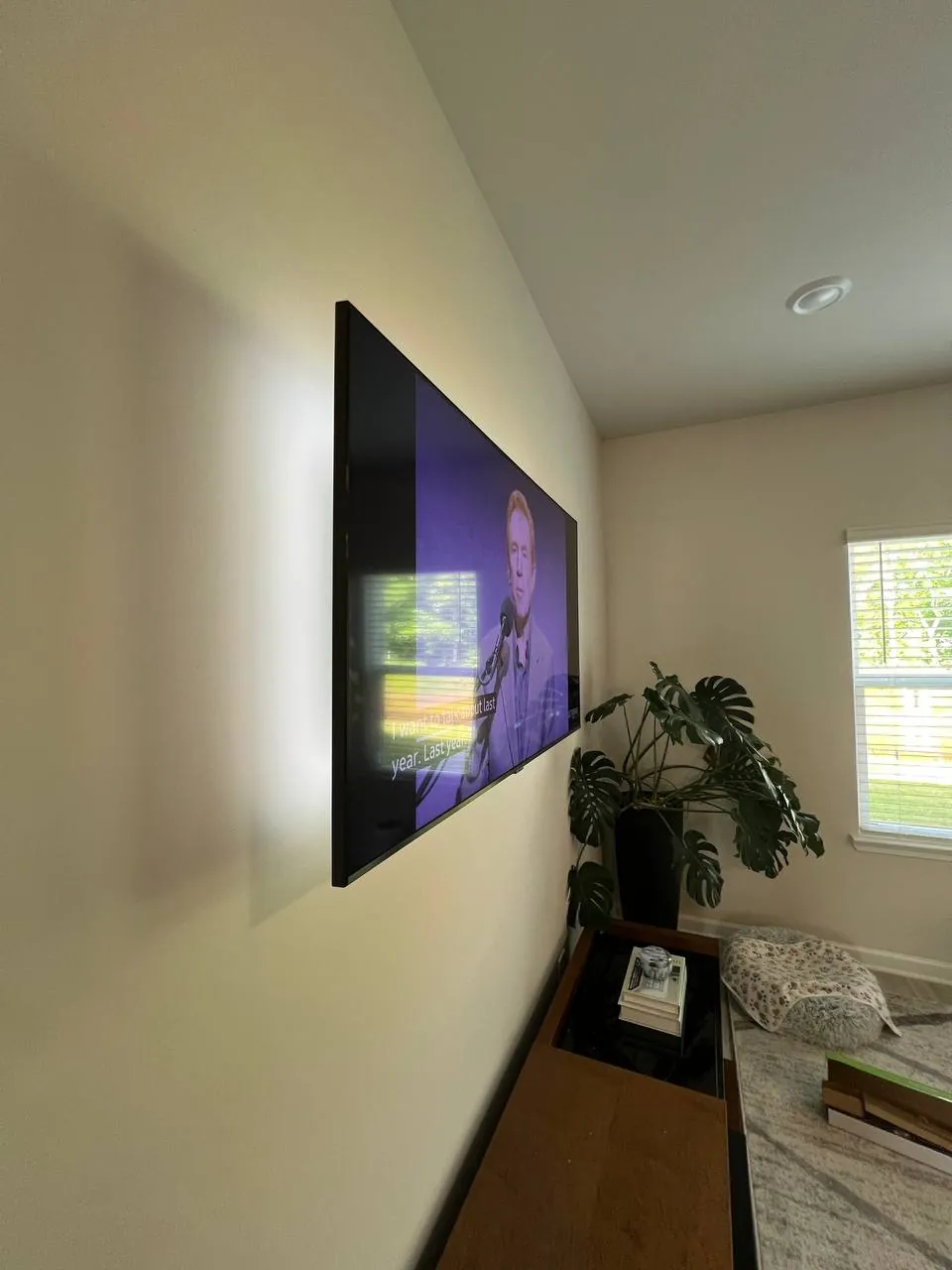
The tobacco buildings on the west side of downtown Durham and the Golden Belt textile mill in East Durham were built of brick with heavy timber inside, and both have been turned into apartments. Much of that brick is left bare indoors, which makes it the natural backdrop for a TV. On the price list it counts as a hard wall: $59 per TV for the hammer drill and masonry anchors. Solid brick has no hollow space for cables, so they come down its face in a $49 paintable cover or drop behind a console set right under the screen. A framed partition between rooms adds nothing for the wall and can hide the cables inside it, if the building allows that.
The city's older neighborhoods bring plaster into the picture. Trinity Park's earliest houses include Queen Anne cottages built for Trinity College faculty, and the blocks filled in with bungalows and revival-style houses into the 1930s. Watts-Hillandale's bungalows went up mostly in the 1920s and 1930s, and Old West Durham still has houses built for workers at its cotton mill in the 1890s. Plaster over wood lath and plain wood boards are common finishes in houses of these ages, and both mount at the drywall price because the lag bolts bite into the studs behind them.
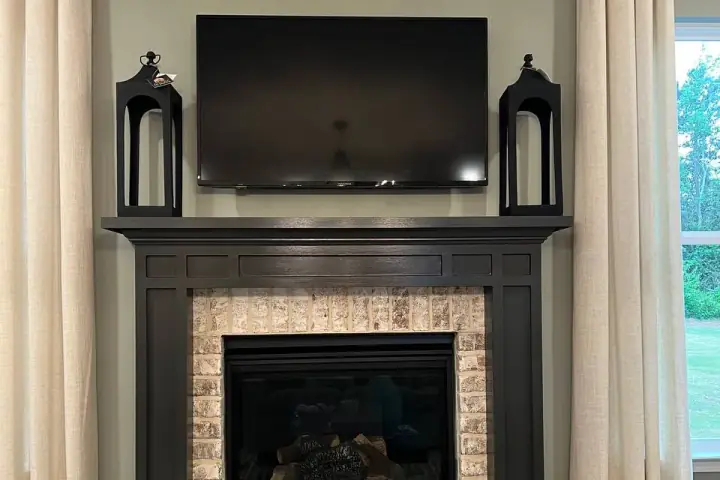
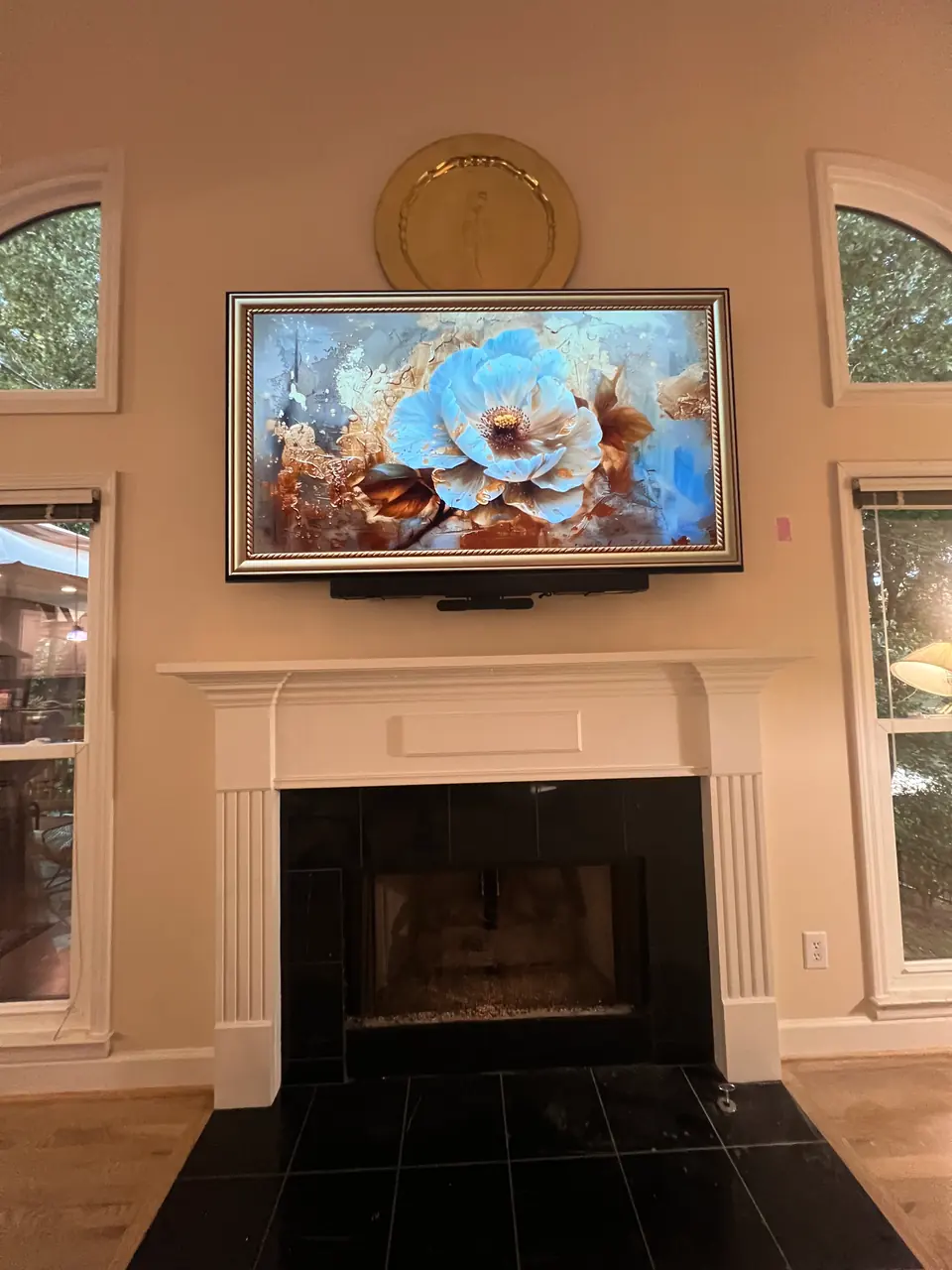
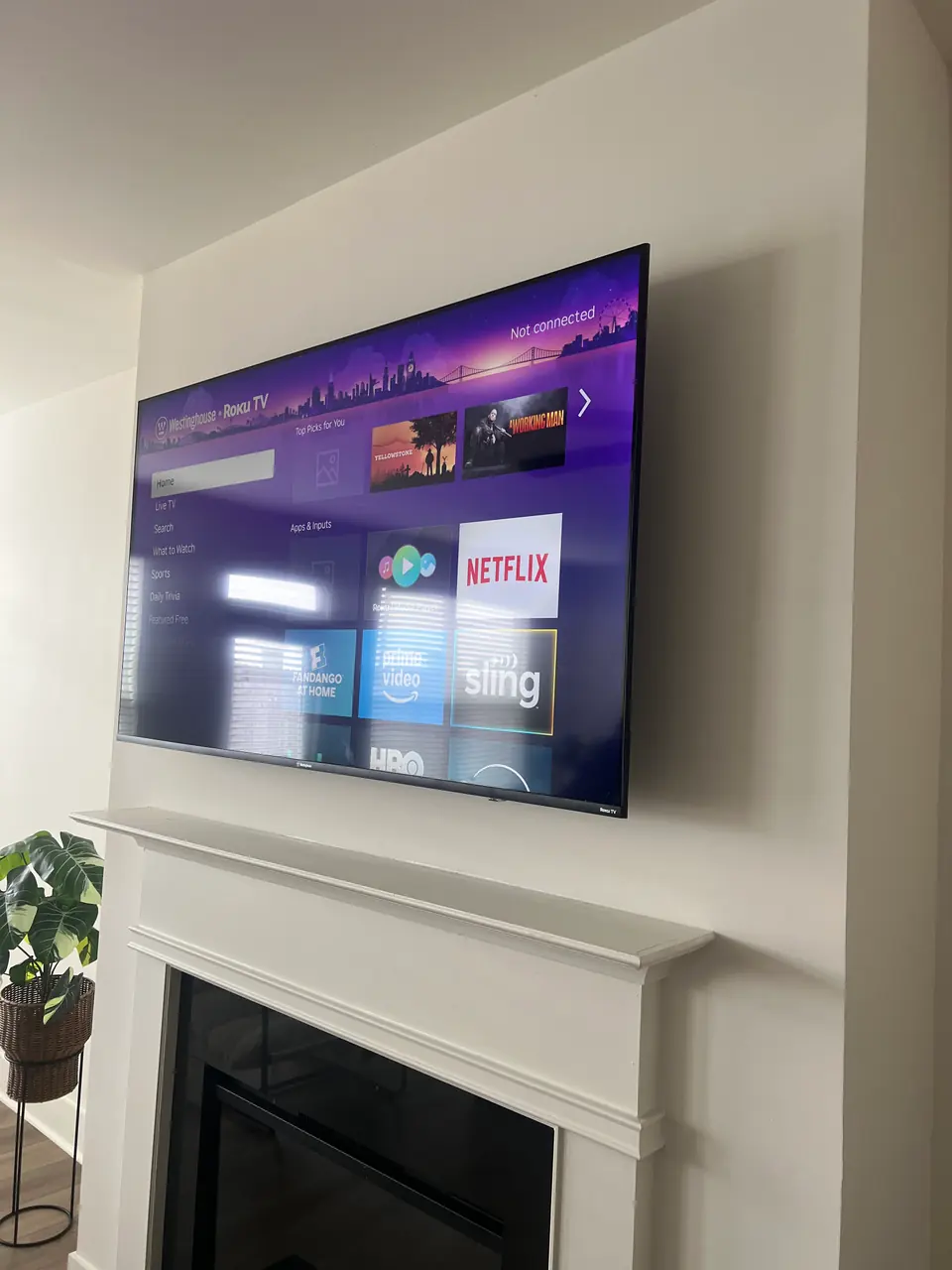
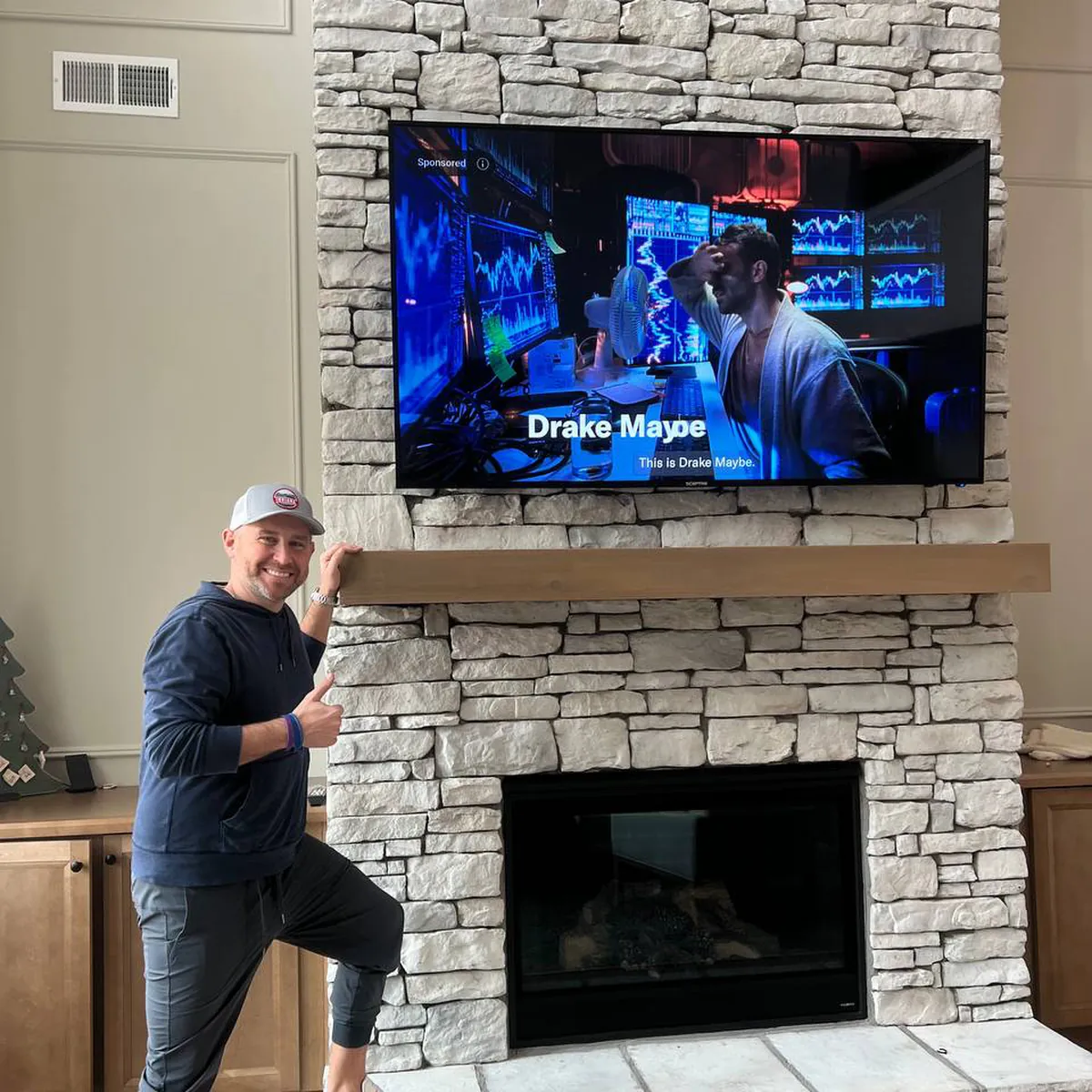
Hope Valley was announced in 1926 as a country club neighborhood, the first planned one outside Durham's center, and its houses lean toward Tudor Revival and English cottage designs. Rooms in that style often center on a fireplace. When the face above the mantel is brick or stone, a TV there carries two lines, $59 for the masonry and $49 for the spot above the firebox. Nothing gets threaded through a masonry chimney, so the cables travel down the side in a cover or plug in at an outlet close by.
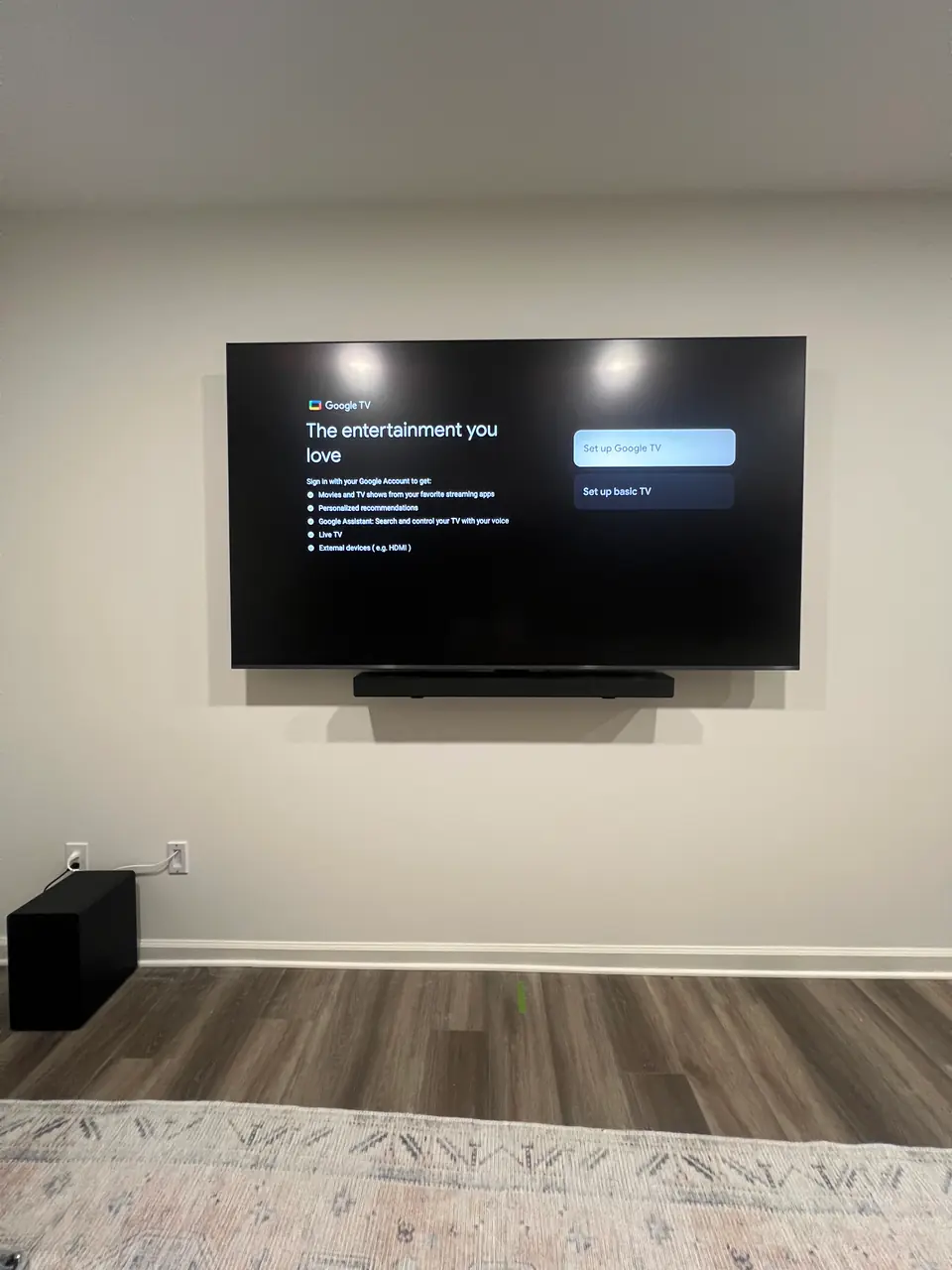
South Durham is younger. Woodcroft, a planned community near Interstate 40, has drywall townhomes and houses from the mid-1980s and early 1990s, where the wall adds nothing. On a wall shared with the next townhome, the association's rules settle what can be drilled and whether cables can go inside.