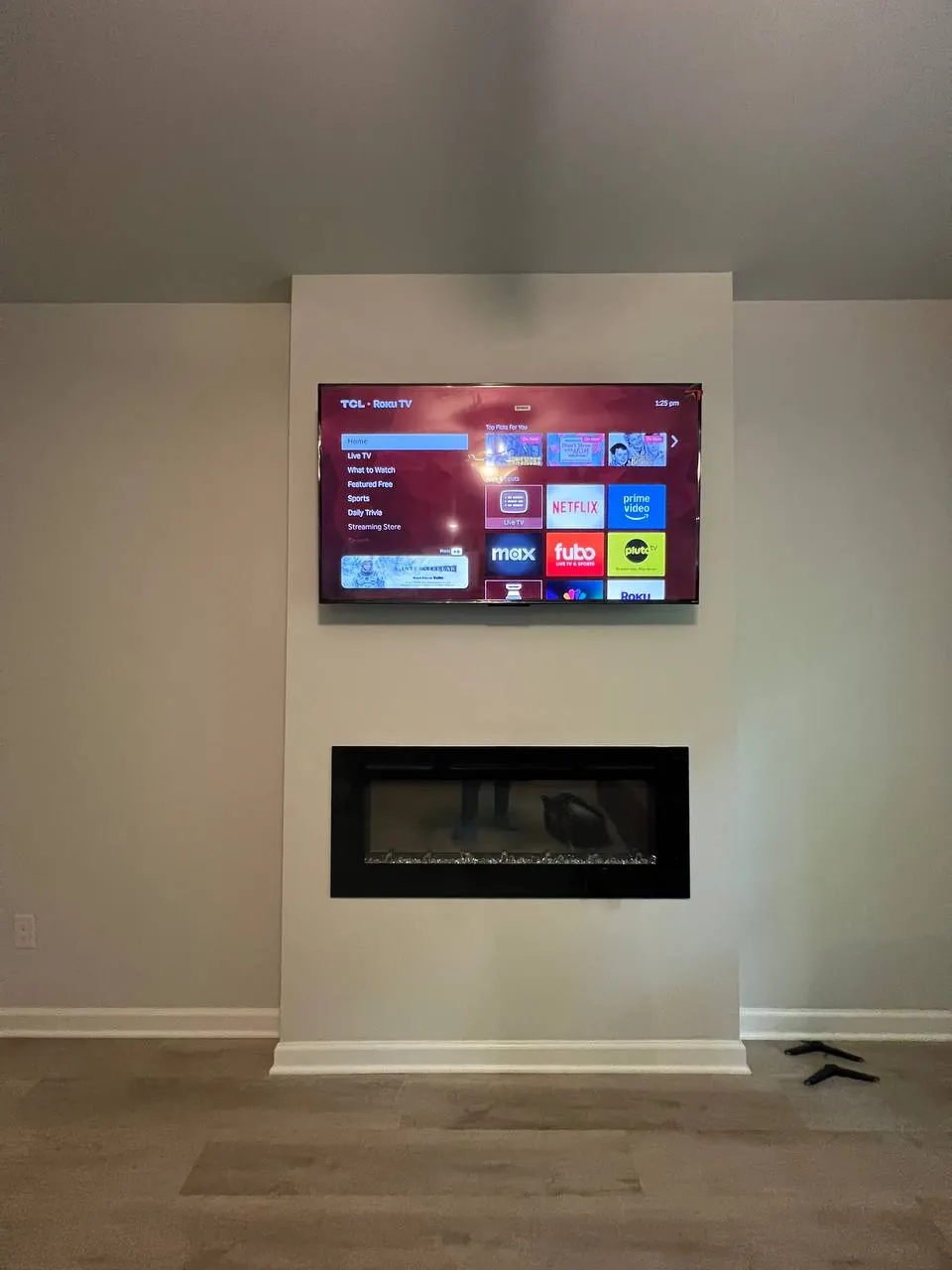
Pasadena was a farm town until the late 1930s, when the plants along the Houston Ship Channel started hiring and houses went up quickly for the people who came to work. The streets nearest the channel, on the north side of the city, hold the oldest of them: small wood-framed houses, some on pier-and-beam foundations, with brick ranches of the 1950s and 1960s behind. Farther south, Pasadena was built from the 1970s onward, with brick veneer outside and drywall inside on a slab.
In a frame house from the 1940s the inside of the wall was often sheathed in shiplap boards before drywall or plaster went over them, and that layer is still there under the paint. It confuses an electronic stud finder, which looks for the change in density at a stud and instead reads solid wood the whole way across. Nails hold the shiplap to the framing in straight vertical lines, and a magnet picks them up through the drywall. A tap and a small pilot hole behind the mount plate confirm the spot, and the lags then pass through both layers into the stud. The shiplap itself is never what holds the TV.
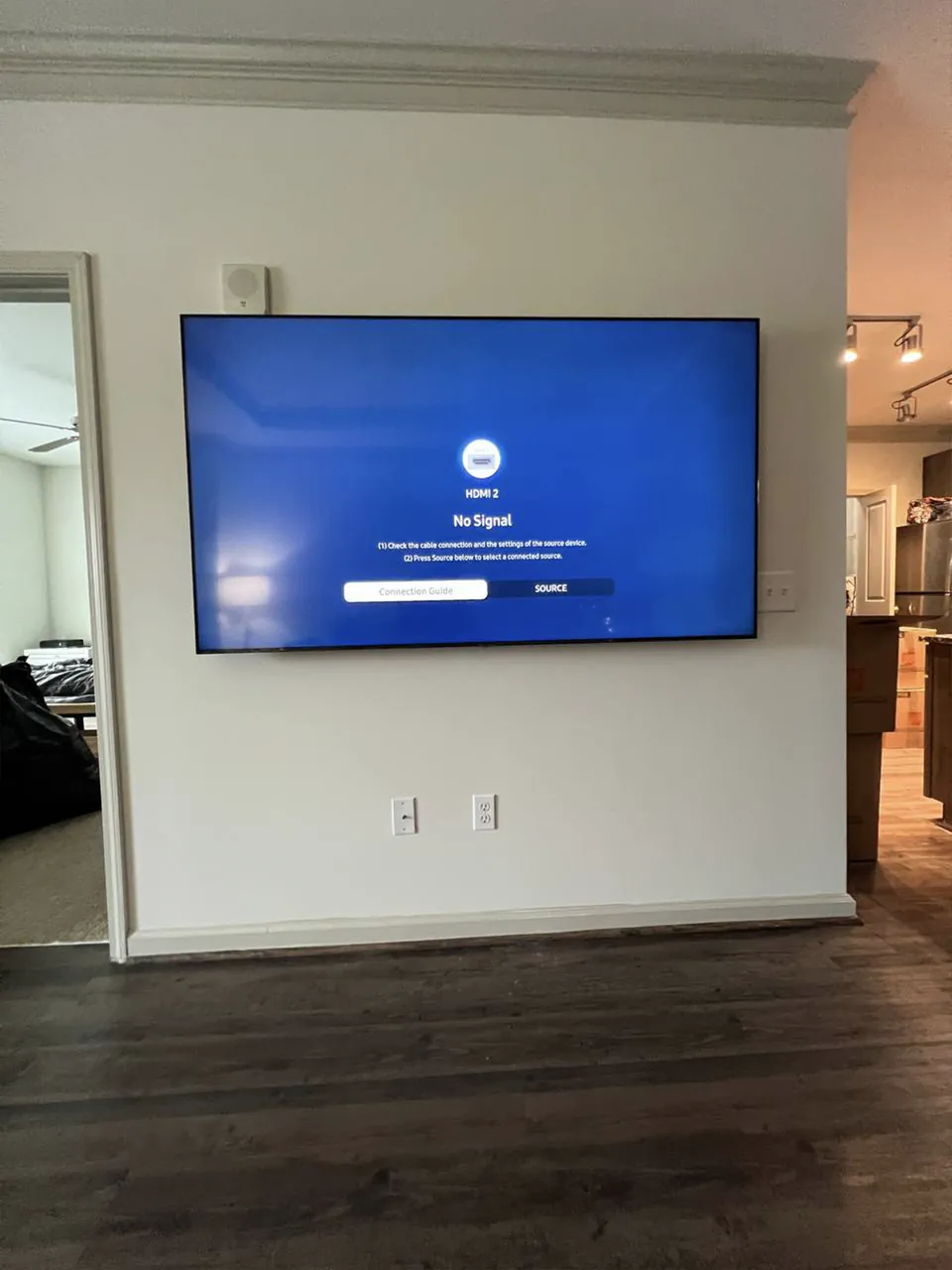
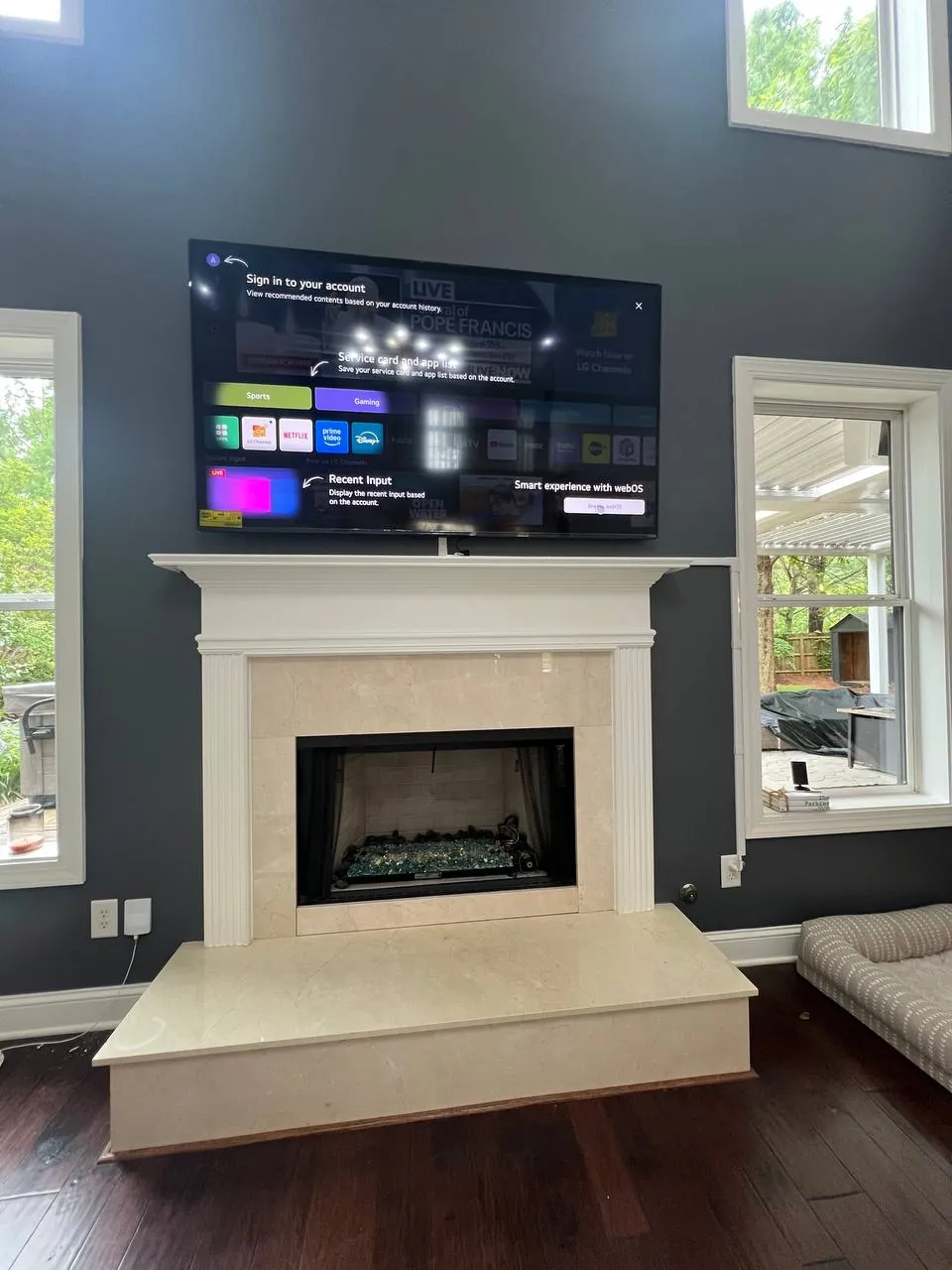
Houses of that size were often wired with one or two outlets to a room, so the outlet nearest the TV wall may be low on another wall or across a doorway. A paintable cover ($49) carries the cords down the wall and along the baseboard to the power. The in-wall line ($99) puts a power outlet behind the TV instead, and in a shiplap wall that means cutting the boards as well as the drywall. Wall space is the other limit. A living room of this age may offer one wall without a window, a door or a window unit, and that wall may be short.
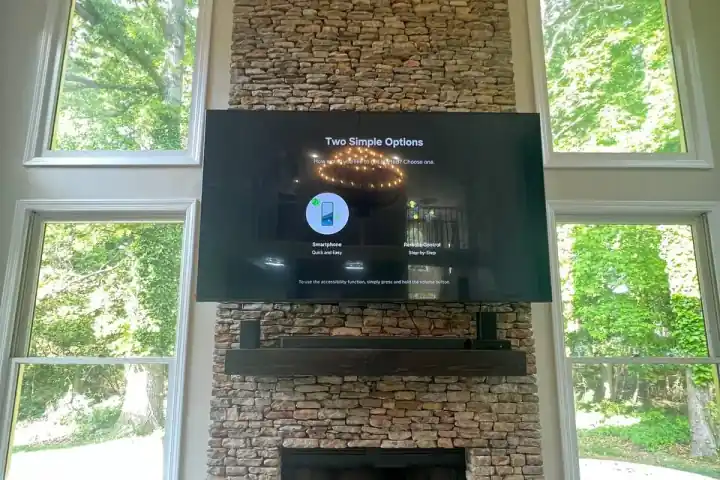
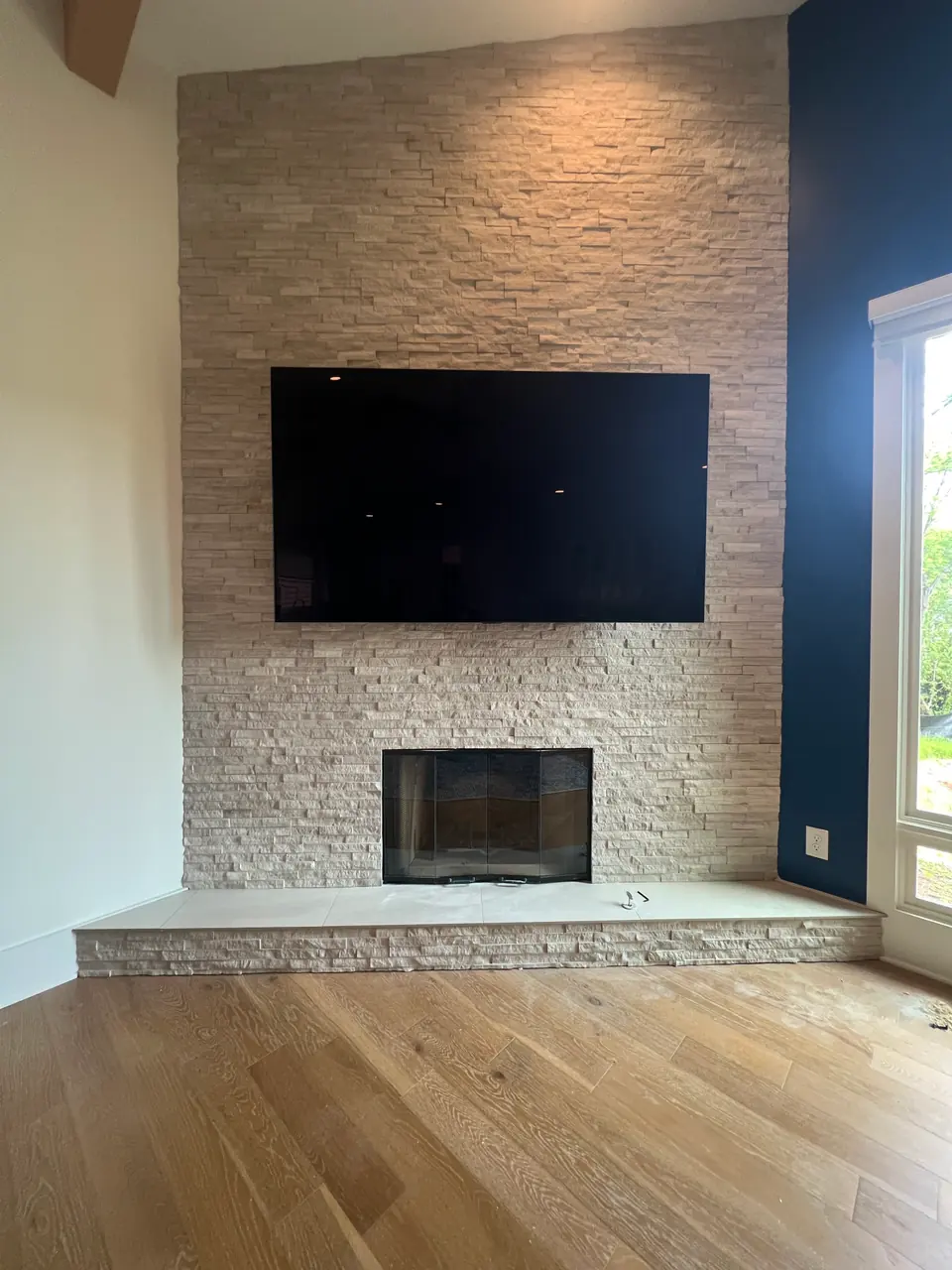
The brick ranches are wood-framed behind the brick, with drywall on the studs alone, so a stud finder reads them normally and the inside walls carry no wall charge. Only a brick fireplace takes the $59 masonry line, and the newer houses on the south side of Pasadena are drywall throughout. Pasadena is one of the cities on our Houston area page, with the same prices as nearby Pearland.