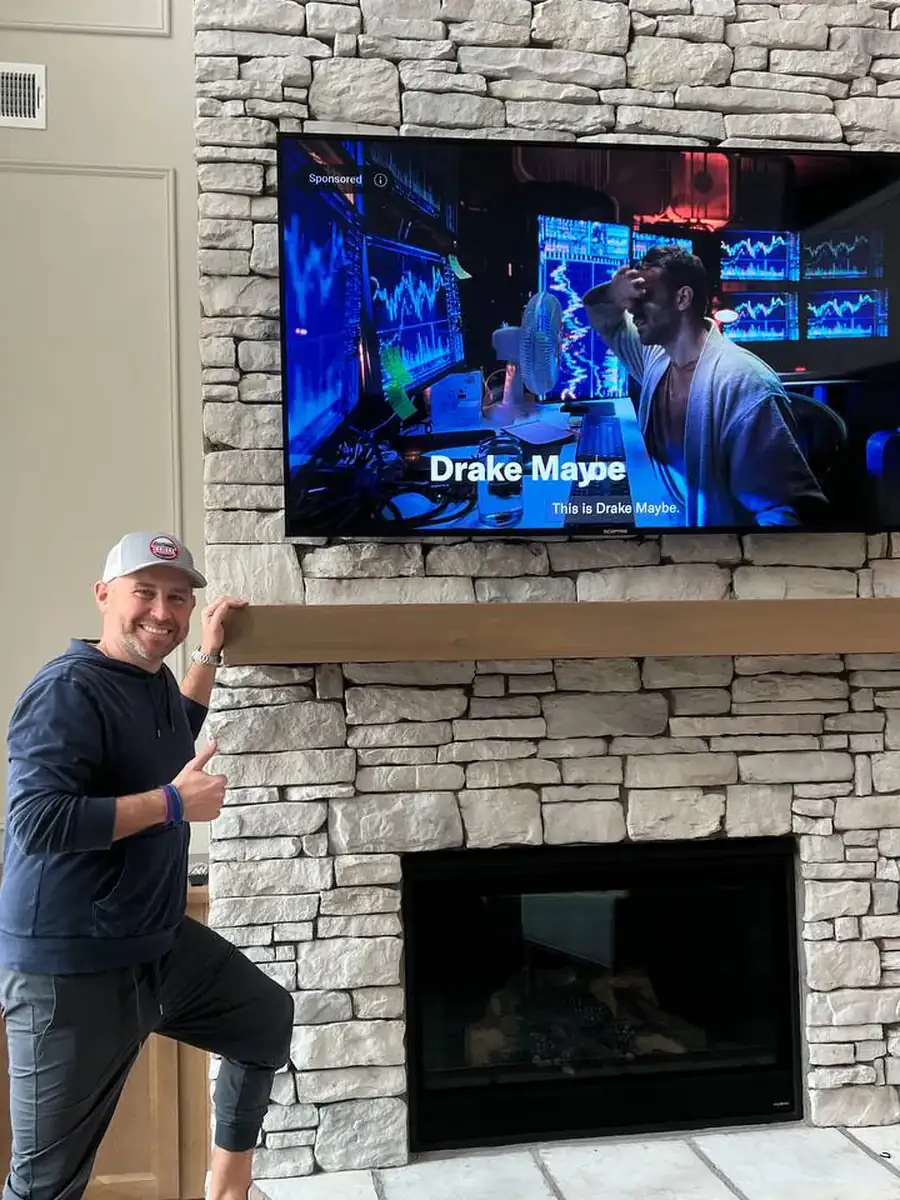
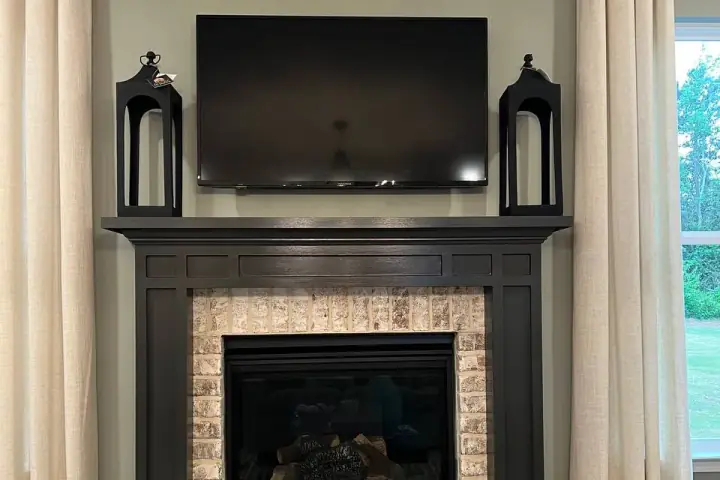
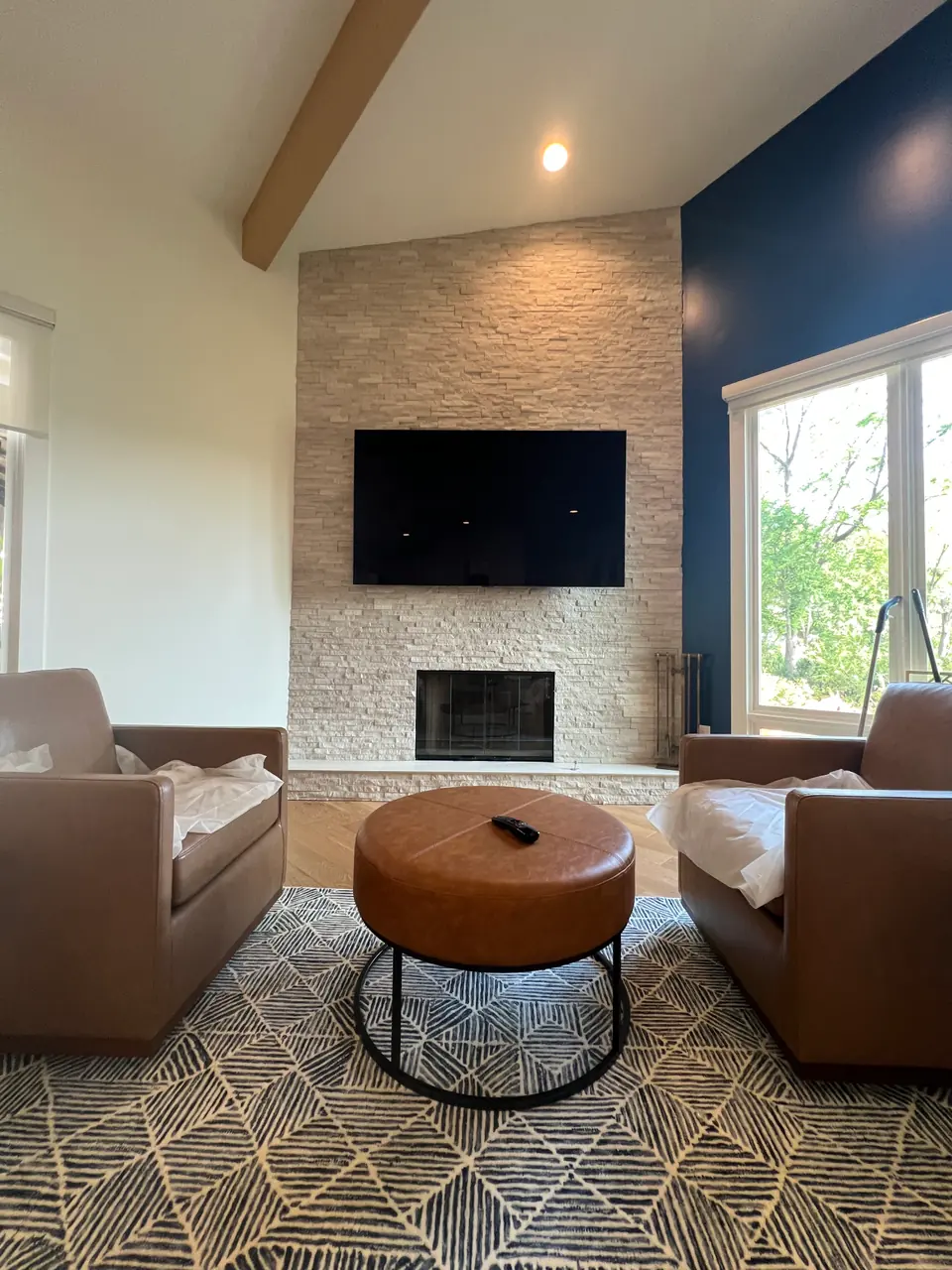
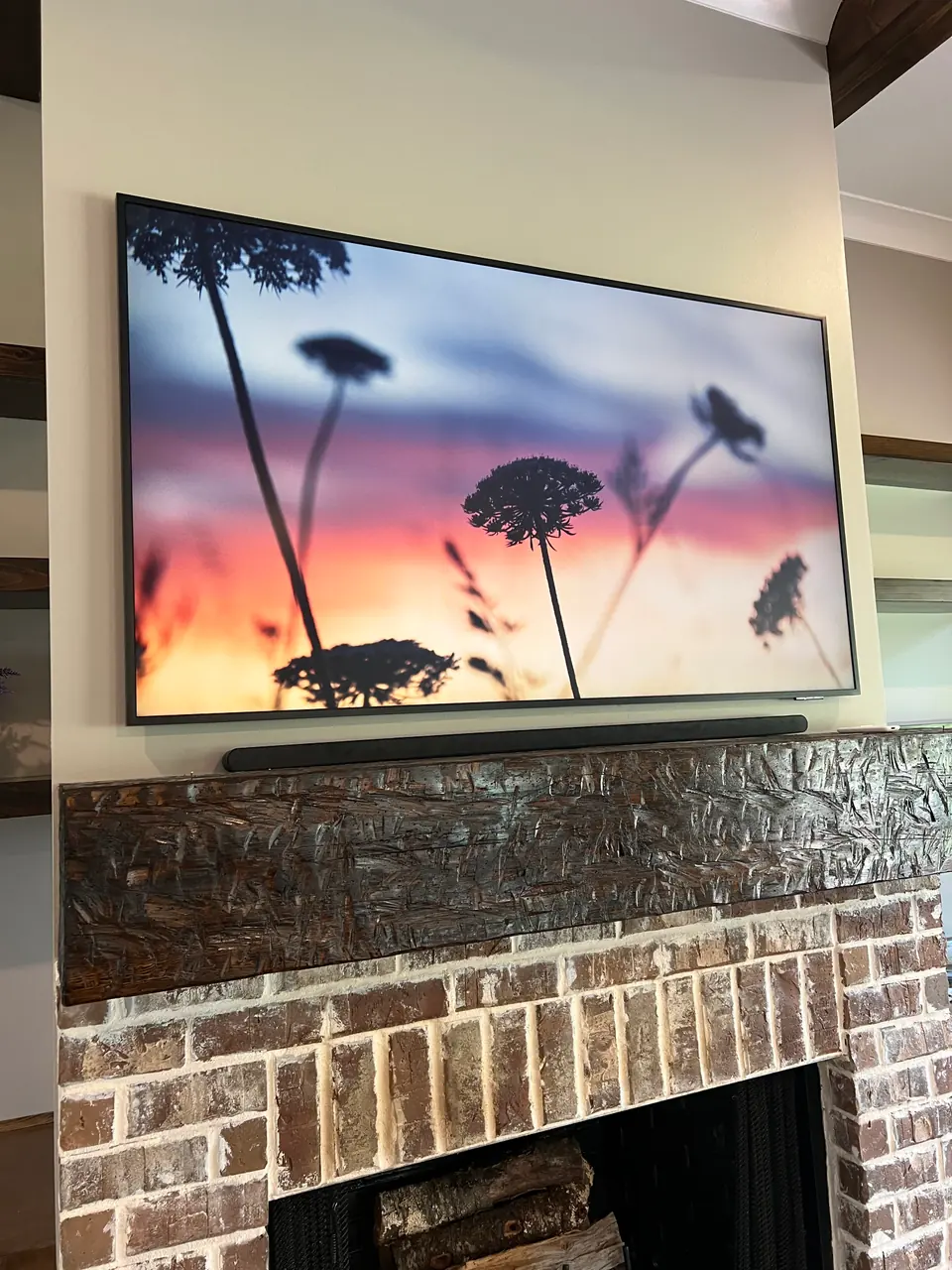
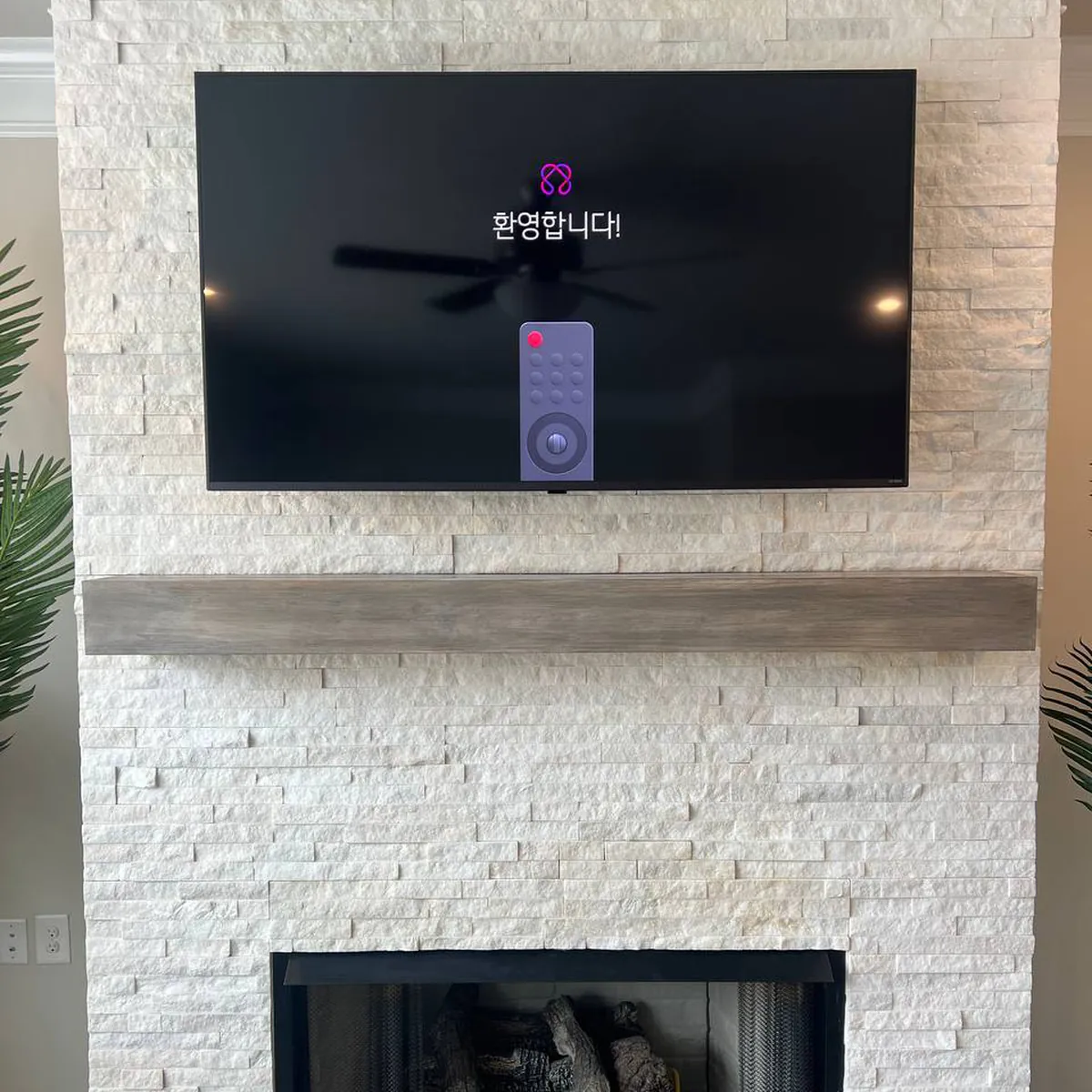
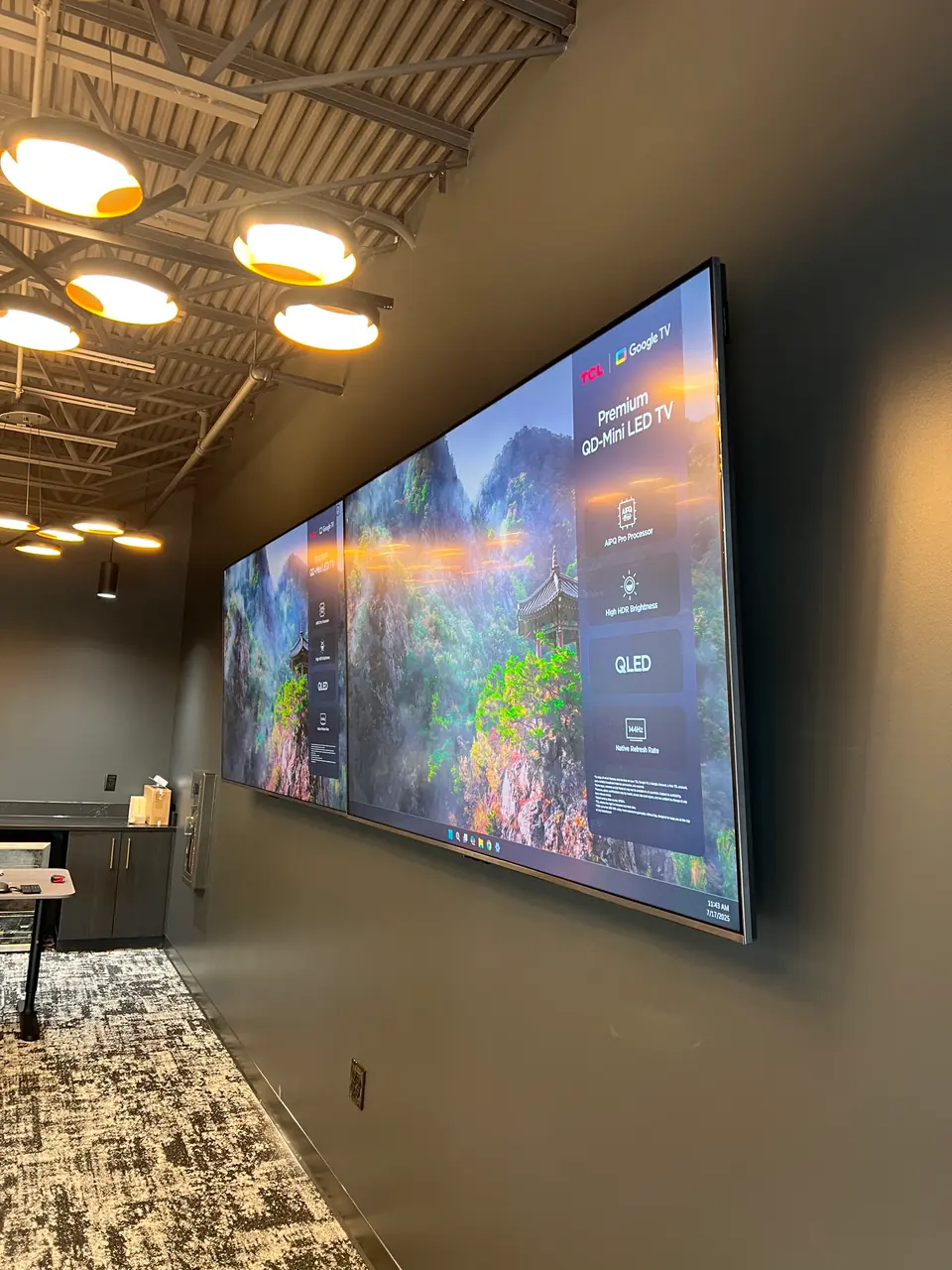
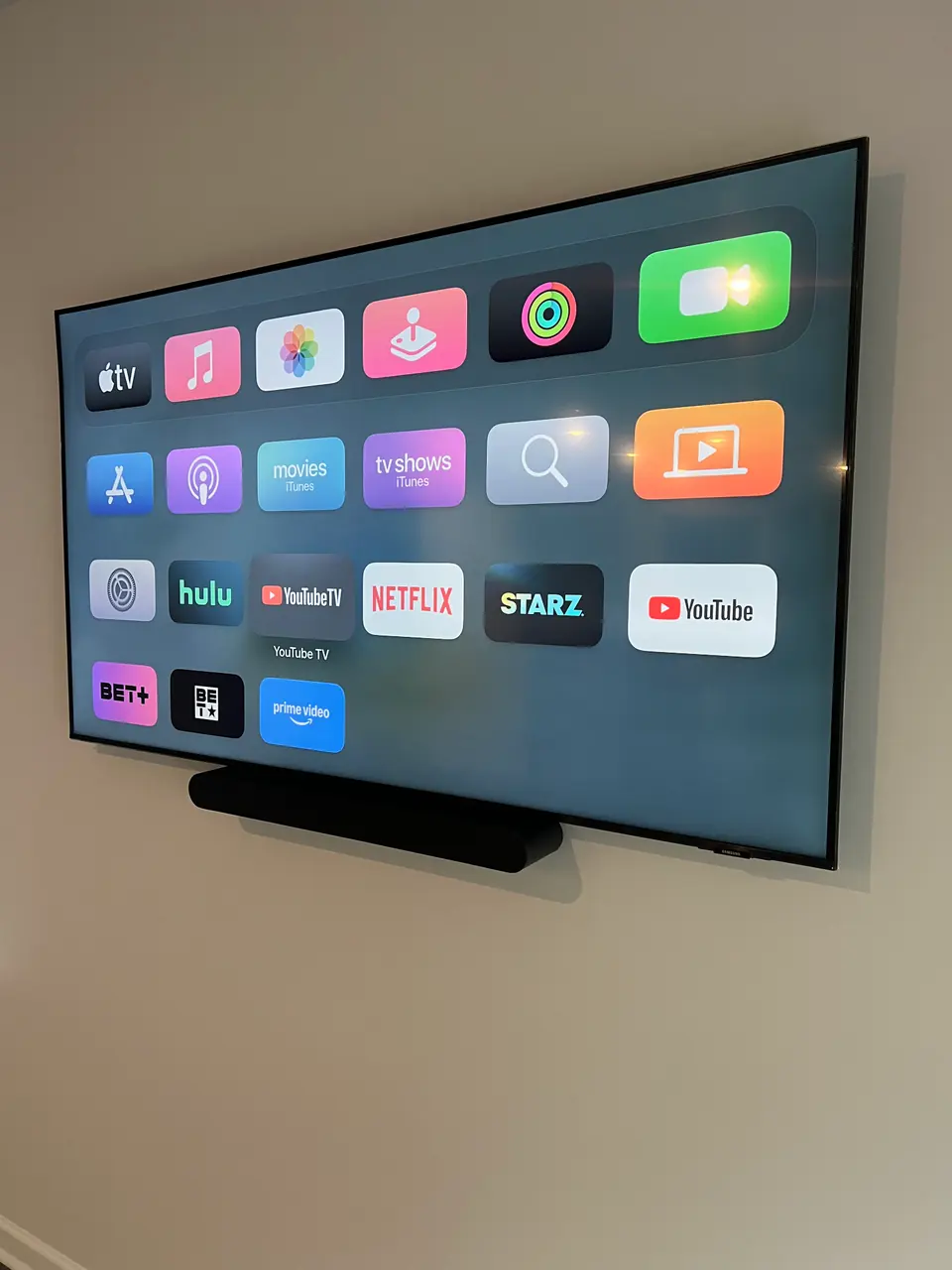
Lake Hills was laid out in the 1950s as a planned community of ranches and split-levels, and Eastgate filled in with similar houses in the same decade. Ramblers, as one-story houses are called in the Northwest, often have a brick fireplace in the living room. On that brick, a TV goes up on masonry anchors, the $59 hard-wall line, and hanging it above the firebox adds $49 more. The cords can't travel through solid brick, so they come down the face in a paintable cover. A drywall wall in the same room skips both charges and leaves room to run the cables inside.
Somerset climbs a hillside and was built in phases from the early 1960s into the late 1970s, and Newport Hills went up mostly in the late 1950s and 1960s. On sloped lots like these, many houses have a daylight basement, a lower floor dug into the uphill side that opens onto the yard on the downhill side. The walls against the hill are usually the poured concrete foundation, either bare or finished with drywall, and the downhill wall is wood framing. A TV on a framed wall down there is priced like one upstairs, and its cables can run inside the wall to an outlet behind the screen for $99. If the mount has to anchor into the foundation, the concrete adds $59.
Downtown Bellevue's residential towers are concrete buildings, and many units have glass from floor to ceiling along the outside walls, which leaves fewer places for a TV. Columns and the walls between units are often concrete, at $59 per TV. Walls between rooms are more often drywall over metal studs, which carry no wall charge and take anchors suited to metal framing. Condo associations commonly want contractor visits scheduled ahead and the elevator reserved. Most single-TV installs take about an hour, which helps when the building asks how long to hold the elevator.
In West Bellevue and Northwest Bellevue, many older ramblers have been torn down and replaced by much larger houses. Their new drywall over wood studs is the simplest wall to hide cables in, and rooms that size suit a bigger screen. For 60 inches and up, labor is $165 if you lend a hand on the lift, or $210 when two technicians do it.