Magnolia Park filled in during the 1930s and 1940s, and the Rancho district kept larger lots, with horses still stabled behind many of its houses. The homes in both are modest in size, and a good number still have their original plaster on wood lath. Plaster is harder than drywall and about an inch thick with the lath behind it, so the technician finds the studs with a scanner and a probe, then drills a pilot hole through the plaster before the lag bolts go in. Done that way the surface stays whole, and the wall costs nothing extra.
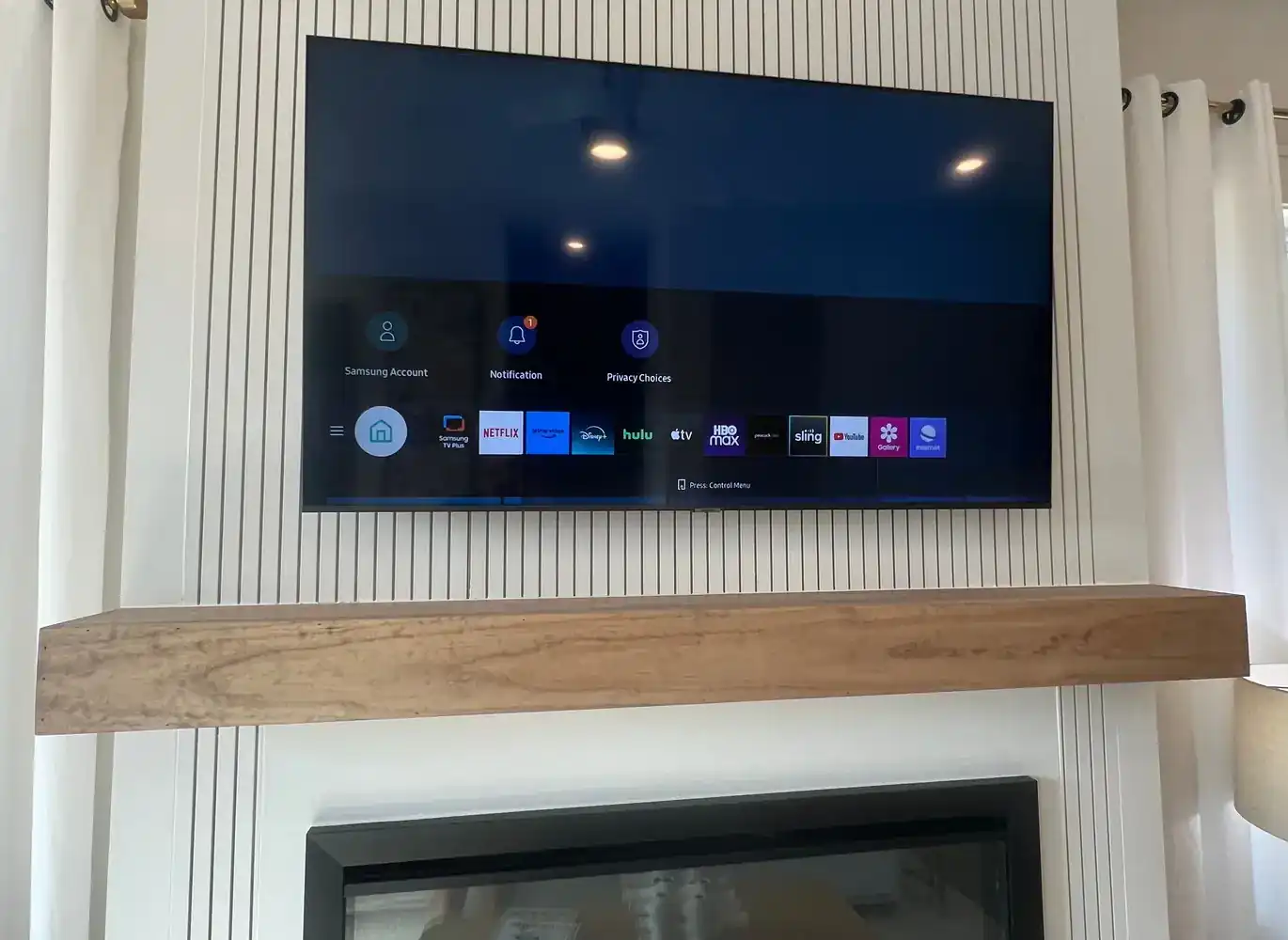
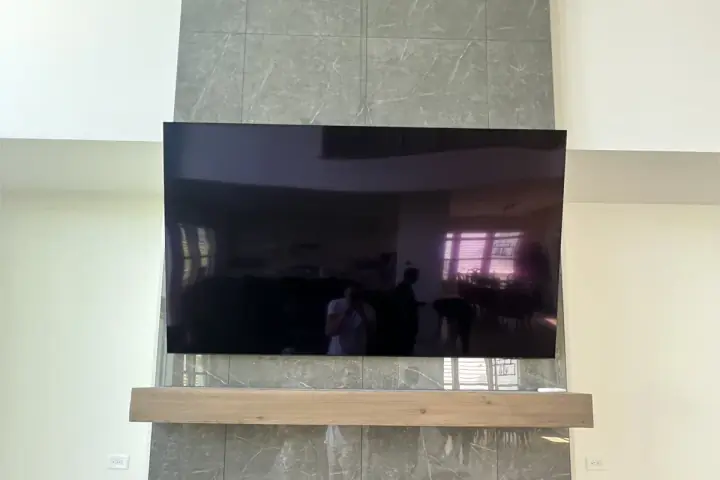
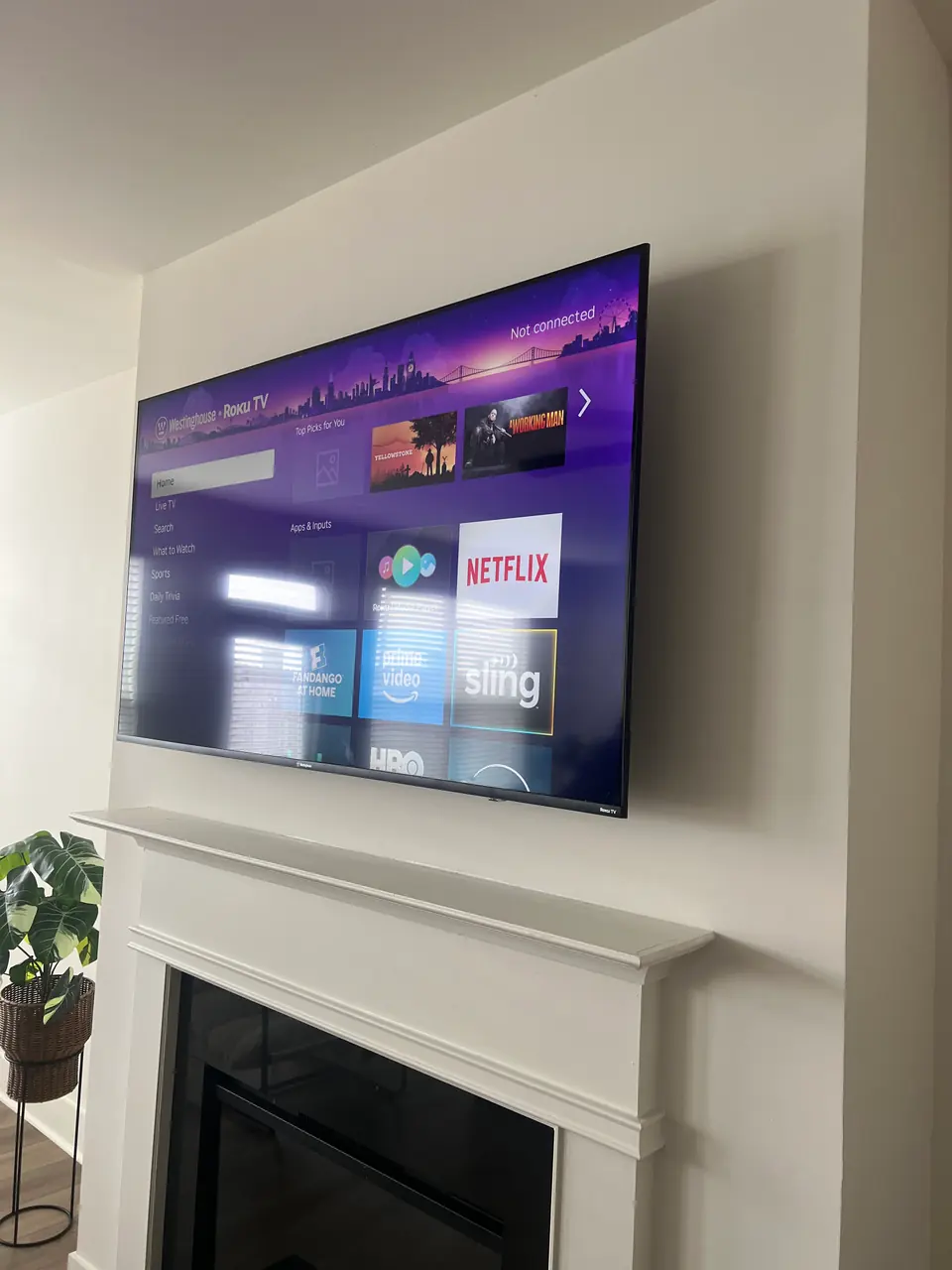
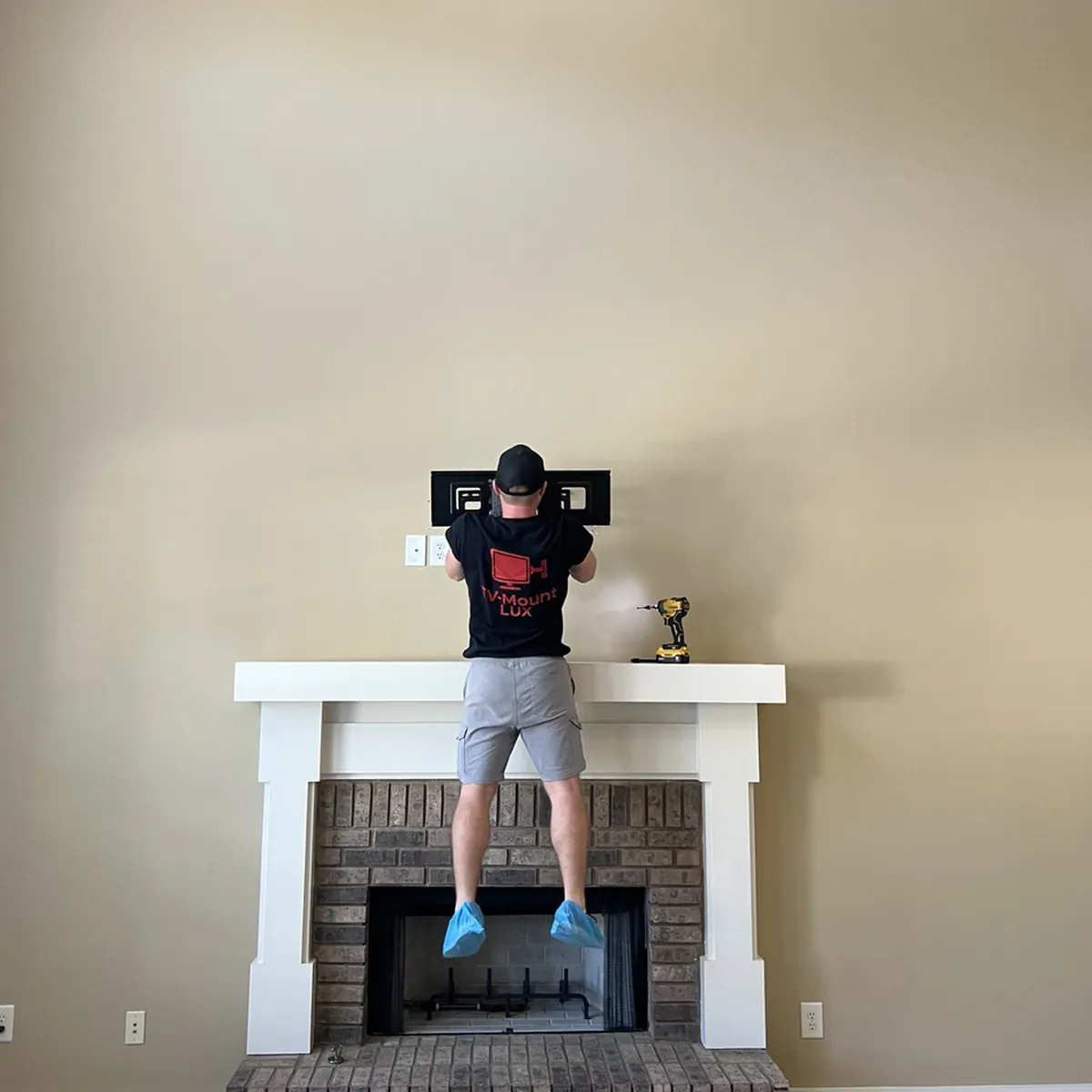
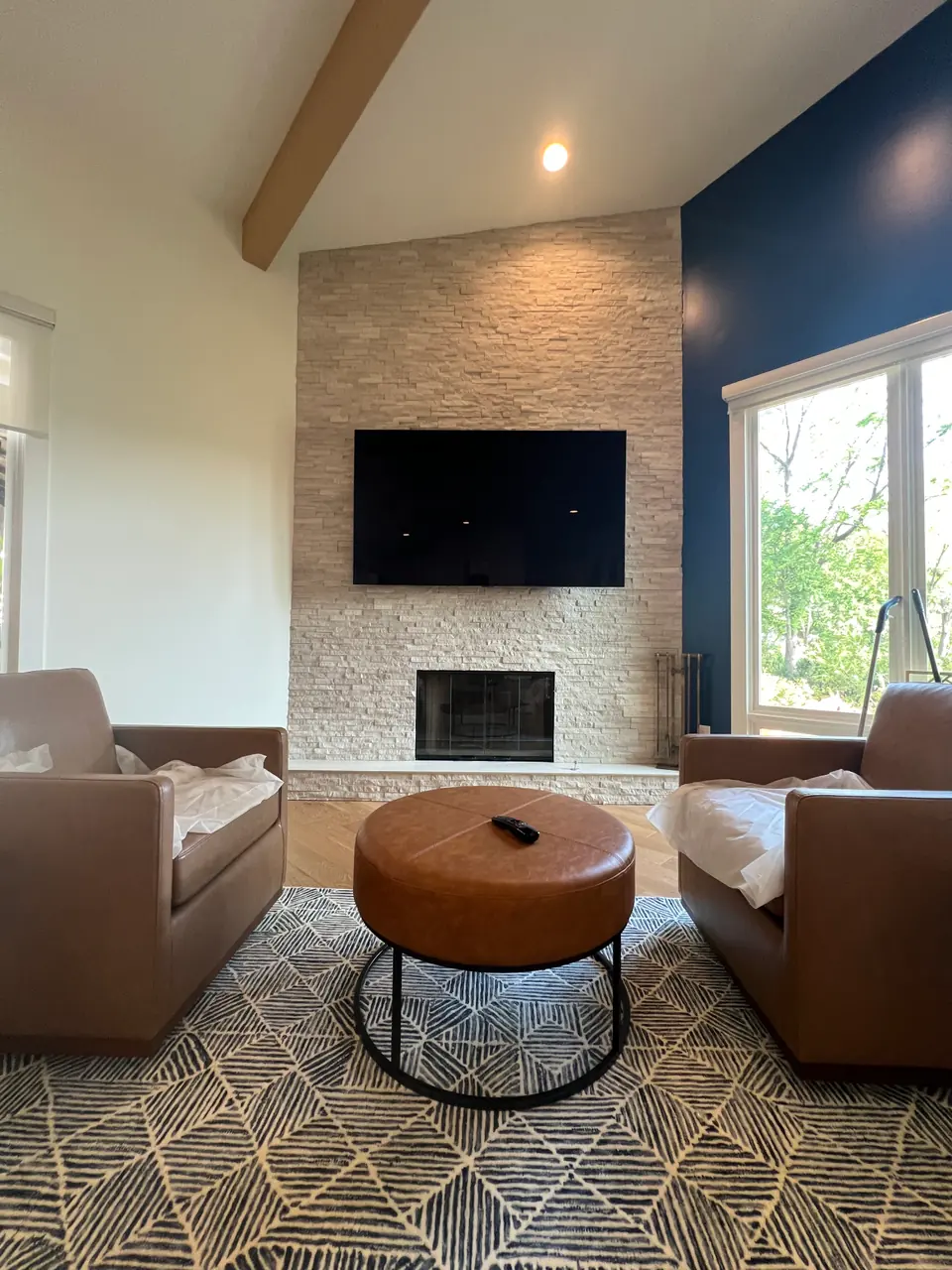
The fireplace in a 1940s Burbank living room is usually brick, built low, with the mantel near chest height and a short stretch of wall between the mantel and the ceiling. A 65-inch screen is taller than that band in many rooms. The choice then is a smaller TV above the mantel, a TV on the brick face beside the firebox, or a plaster wall elsewhere in the room. Above the mantel on plaster, the fireplace line adds $49. On the brick, the hard-wall line adds $59 more, and the cords stay in a cover because solid brick has no cavity to carry them.
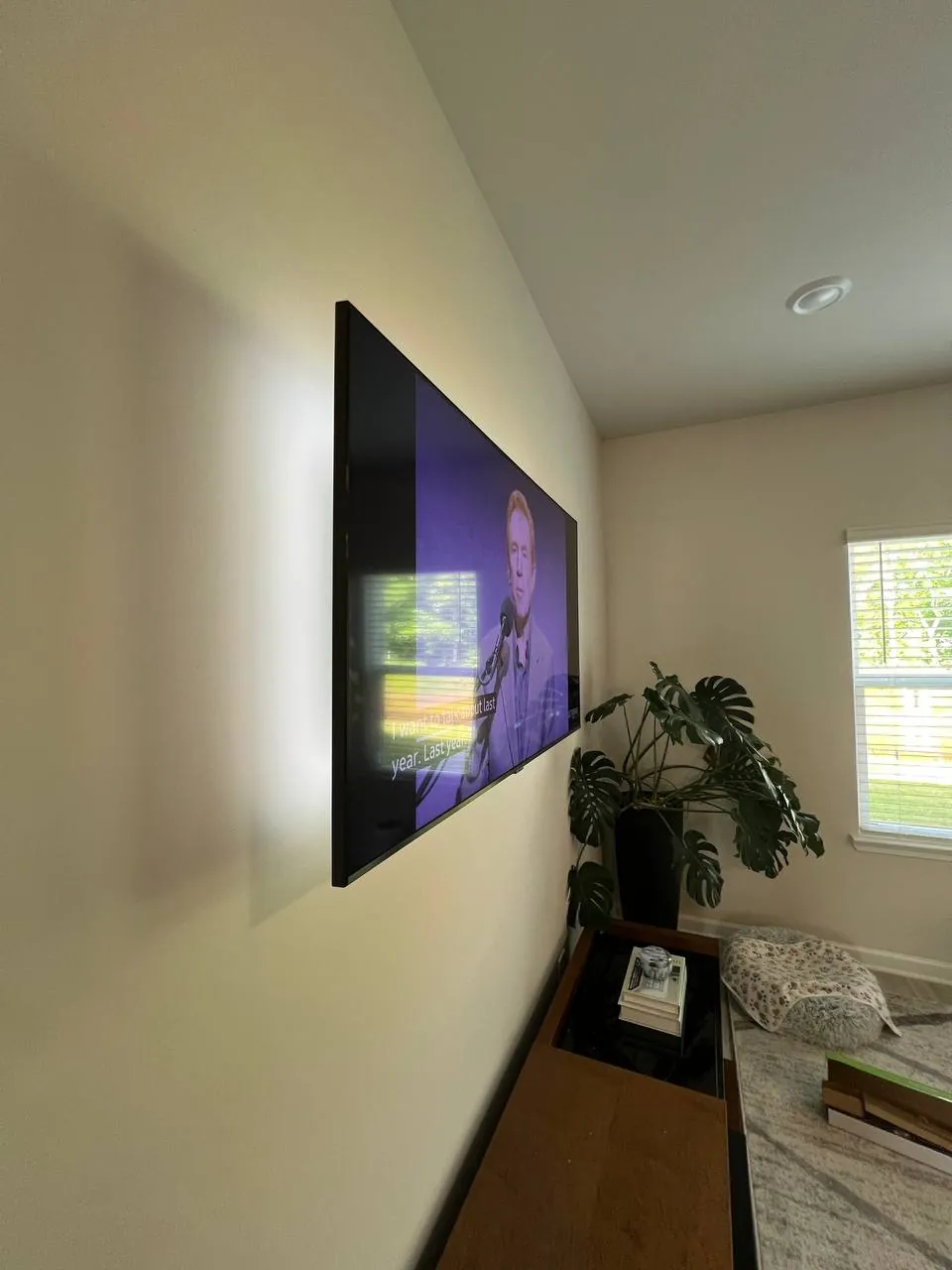
Plaster walls have a second quirk, the in-wall wire run. Old stud bays may hold fire blocking partway up, and the plaster keys into the gaps in the lath, so fishing a cable from the TV down to an outlet takes a little longer than in drywall. It costs the same, $99 with a power outlet behind the screen or $149 above a fireplace. Many Burbank houses have been opened up and redone in drywall over the years, and in those the run is routine.
Downtown Burbank is a different kind of housing. The apartment and condo buildings there, three to five stories from the 2000s on, have drywall on wood or metal studs, and metal studs take toggle anchors sized for them at no extra charge. The rooms are larger than a 1940s living room, so a 65-inch screen fits without crowding, at $165 labor with your help lifting or $210 with two technicians.