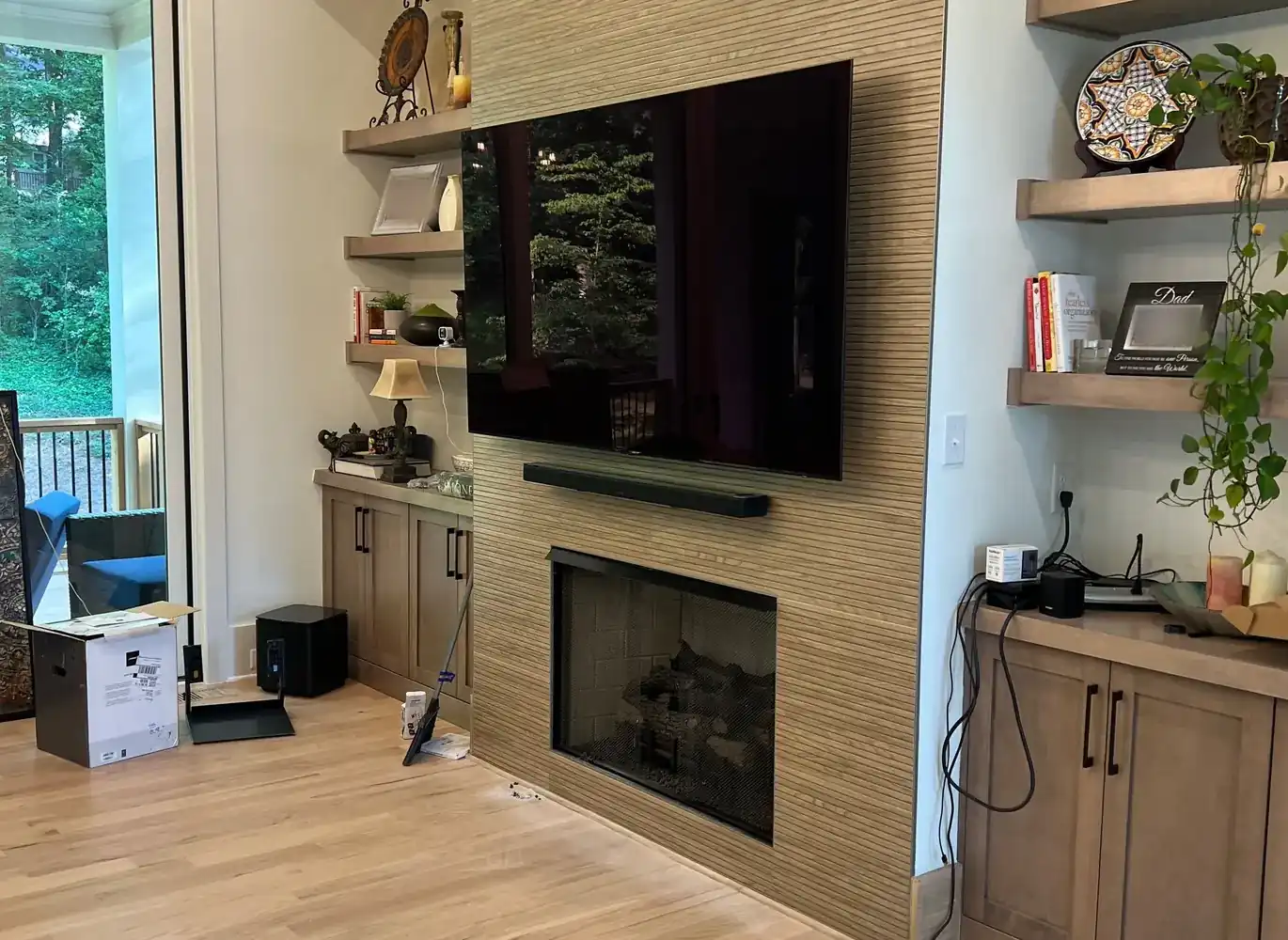
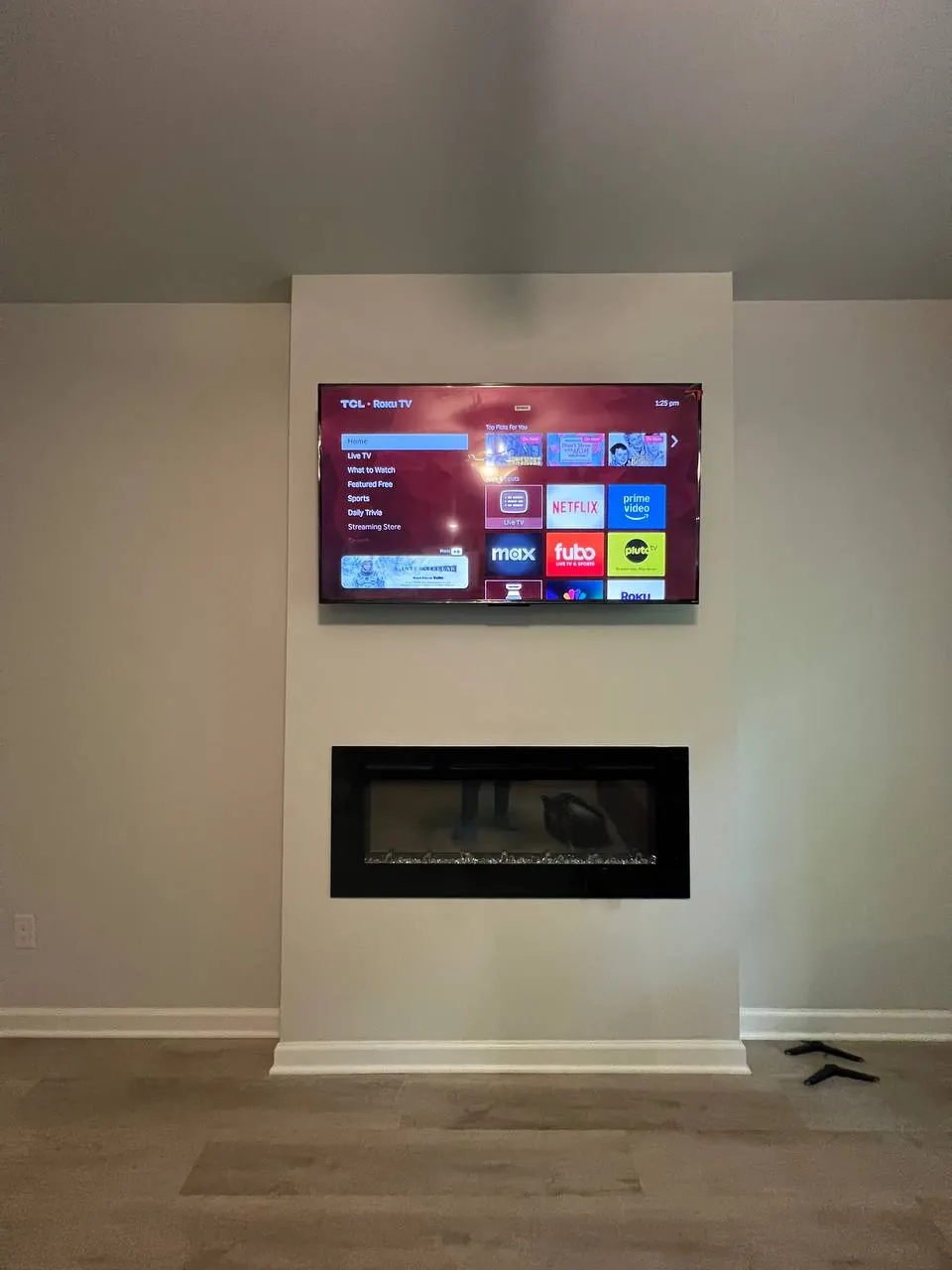
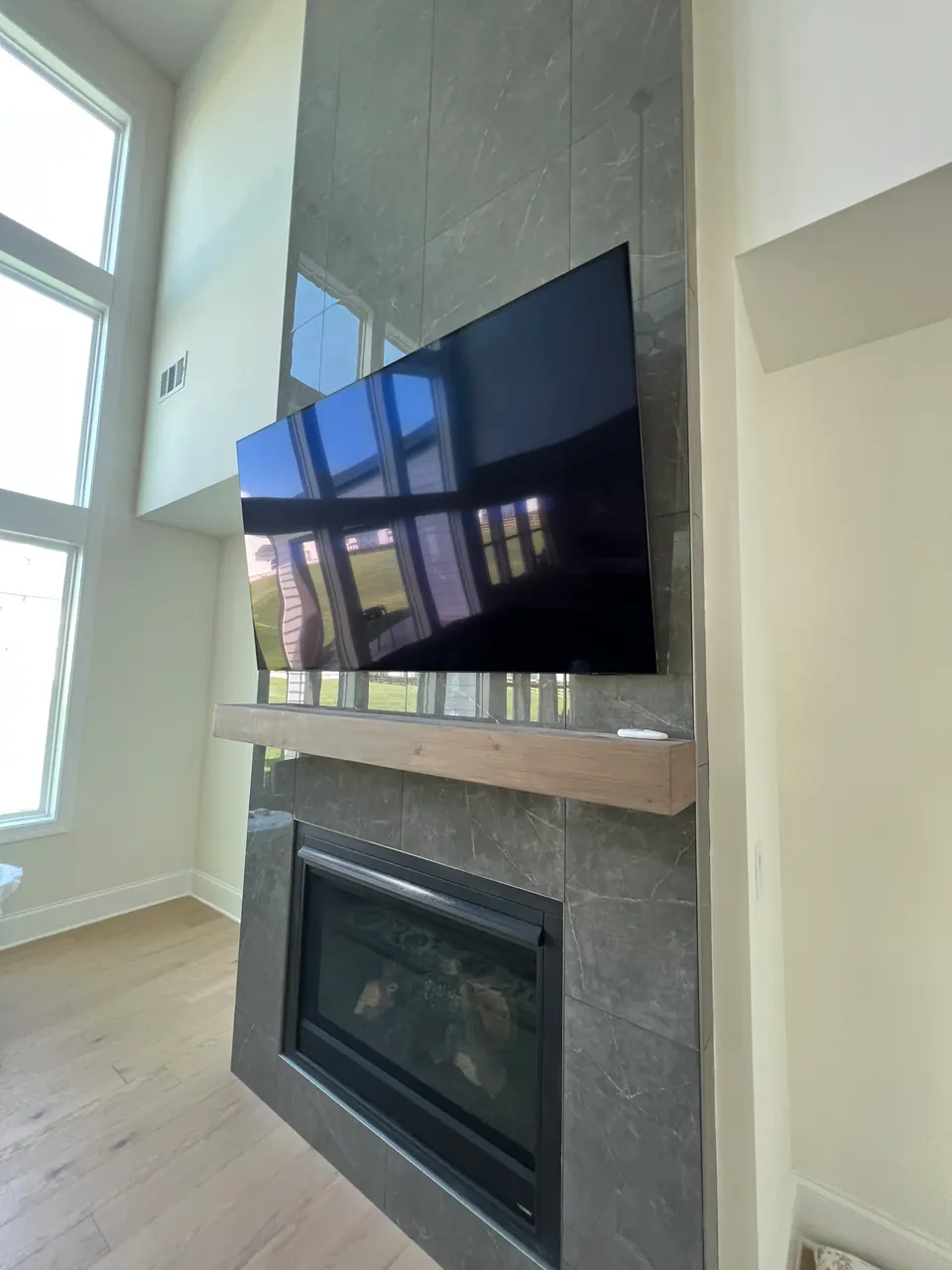
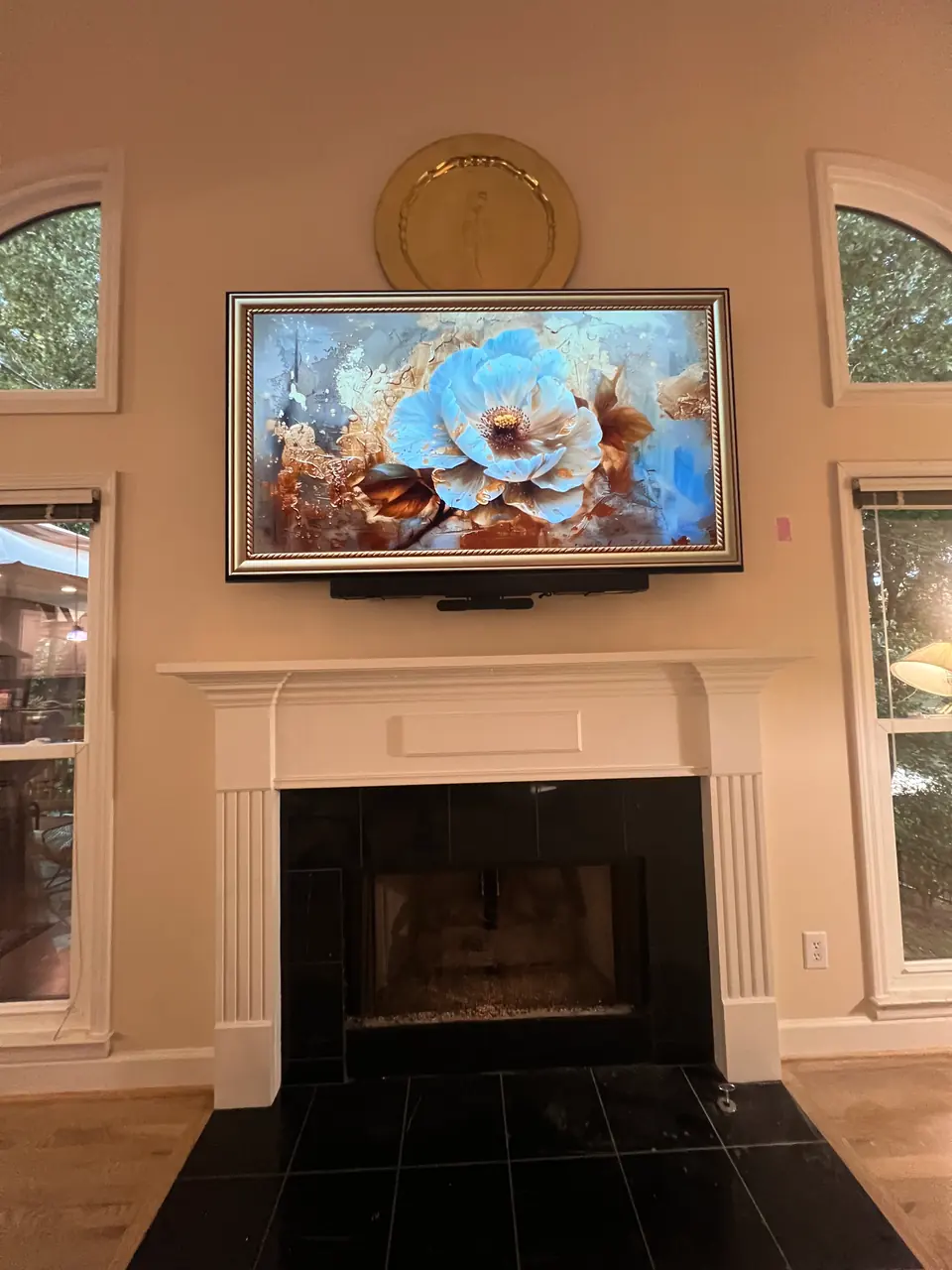
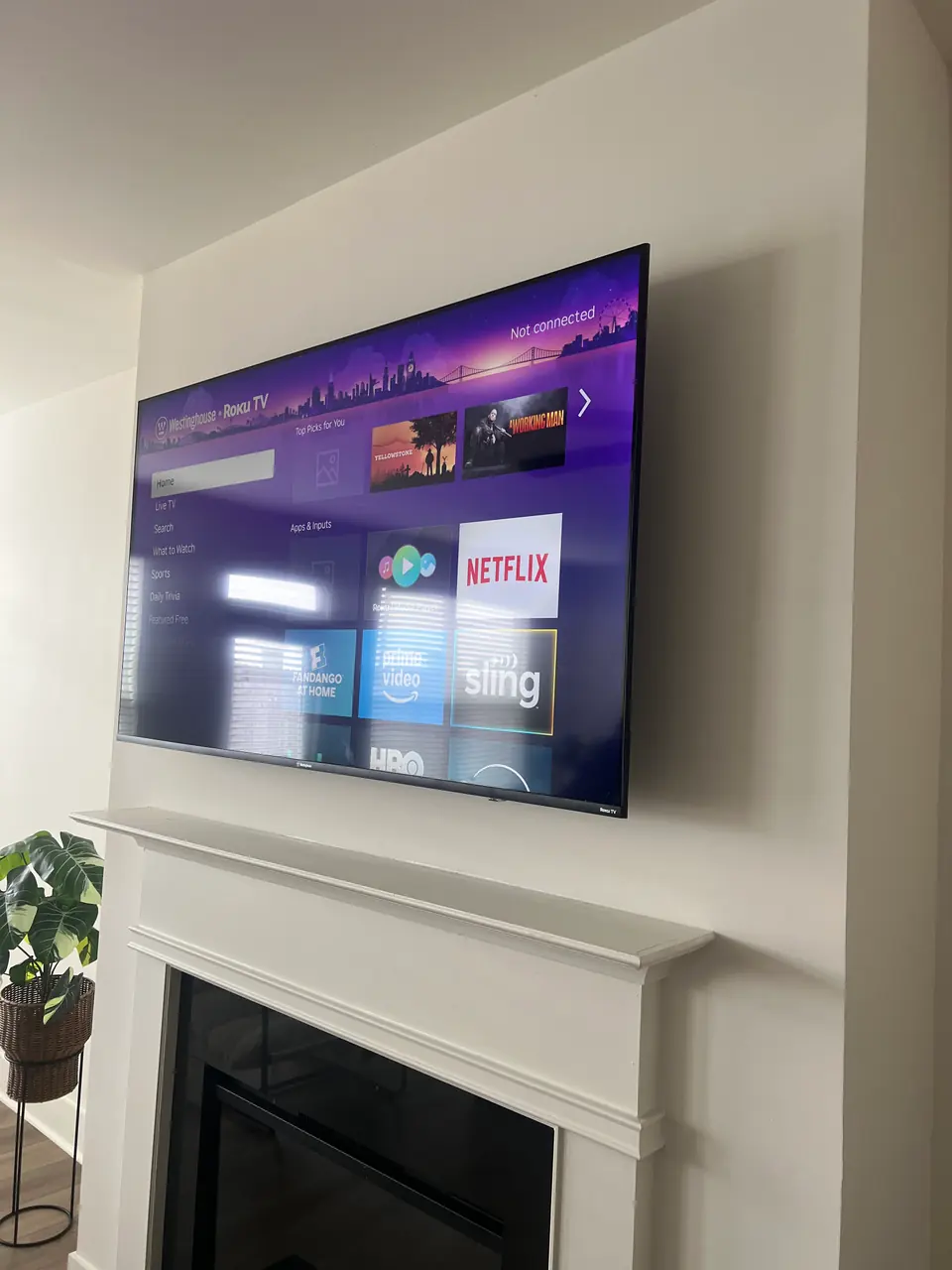
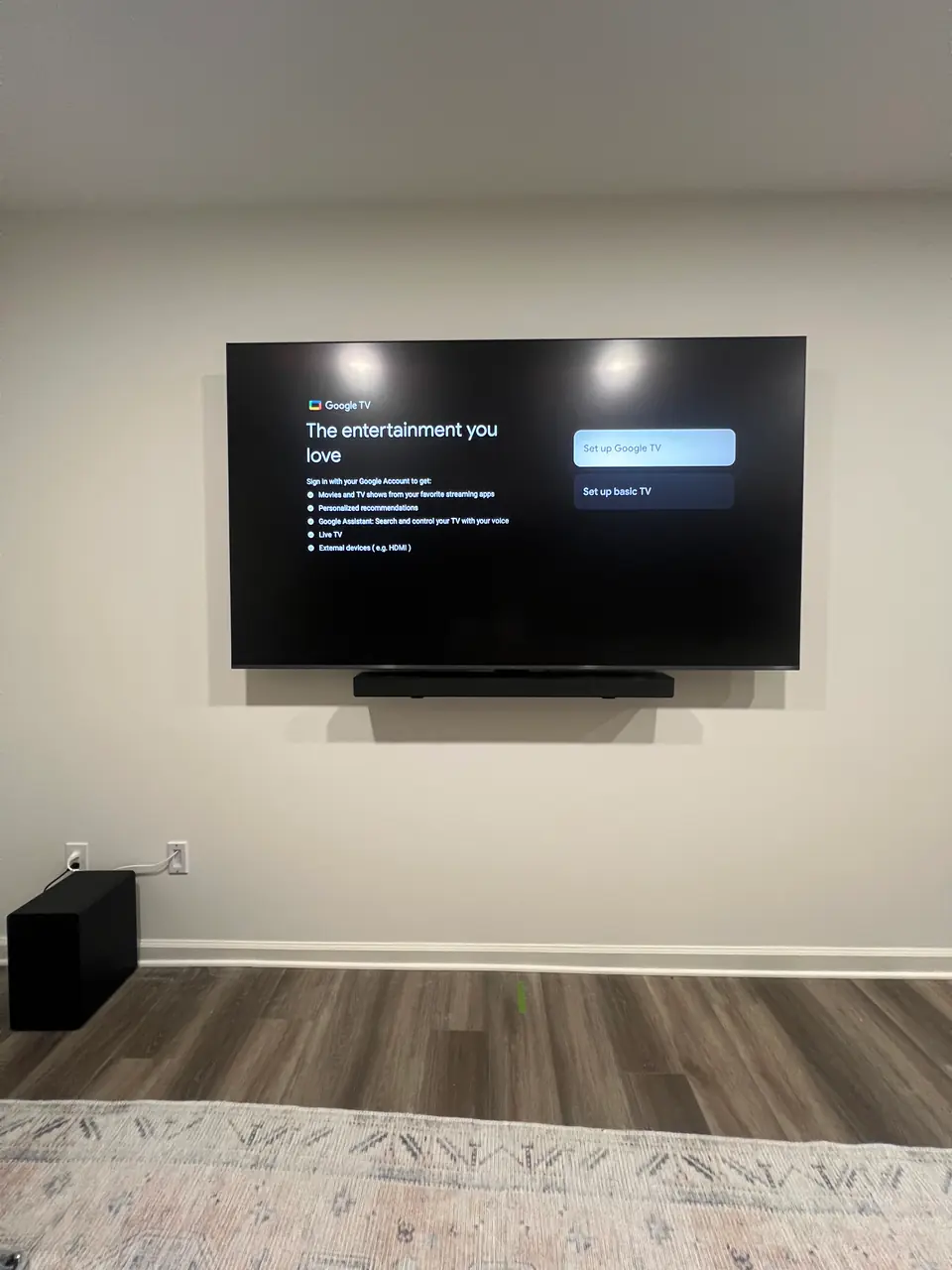
The post-war ranch houses of Sherman Oaks were built long and low, and their fireplaces followed suit. A brick firebox with a short mantel, or none at all, puts the top of the brick somewhere near shoulder height, which is a gift for a TV. Hung above a fireplace that low, a screen ends up close to where it would sit on an empty wall. The $49 fireplace line still applies, and the brick takes masonry anchors at $59. A 65-inch TV on a tilting mount above that brick, cords in a cover, comes to $332.
What's behind the paint matters more here than in a newer suburb. Houses from the 1940s in Sherman Oaks usually have plaster, either on wood lath or on the perforated gypsum boards that preceded drywall, while the 1950s and 1960s houses have early drywall. Plaster costs nothing extra on the price list, but it cracks if it's treated like drywall. The technician finds the studs behind it by probing rather than trusting a stud finder alone, drills pilot holes before the lag bolts go in, and keeps the wall plate on the framing.
South of the boulevard, the streets climb into the hills toward Mulholland, through Longridge Estates and Royal Woods above the Sepulveda Pass. The houses up there trade brick for glass and leave fewer solid walls for a screen, and the usual landing spot is the one framed wall at the back of the living room or the wall shared with the hallway. Full-motion mounts at $79 help in those rooms, because the TV can be pulled out and turned toward whichever seat faces the view.
Along Ventura Boulevard and the streets just behind it, Dickens and Moorpark among them, Sherman Oaks has three-, four- and five-story condo buildings from the 1970s and 1980s. Their walls are drywall over wood or metal studs, and drywall mounts at no extra charge. In a rental, the landlord decides whether the wall can be opened, so the $49 cover is the usual answer there. Sherman Oaks is part of the Los Angeles area we cover, and availability depends on the day's schedule.