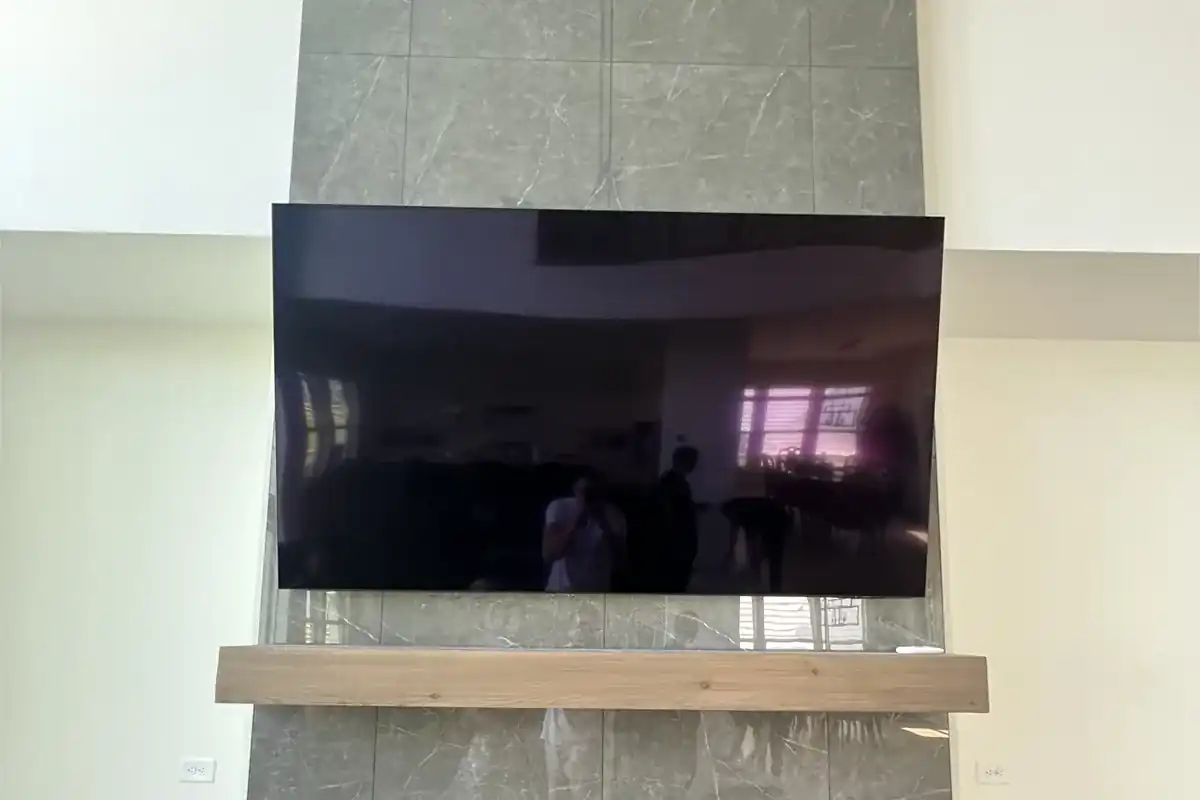
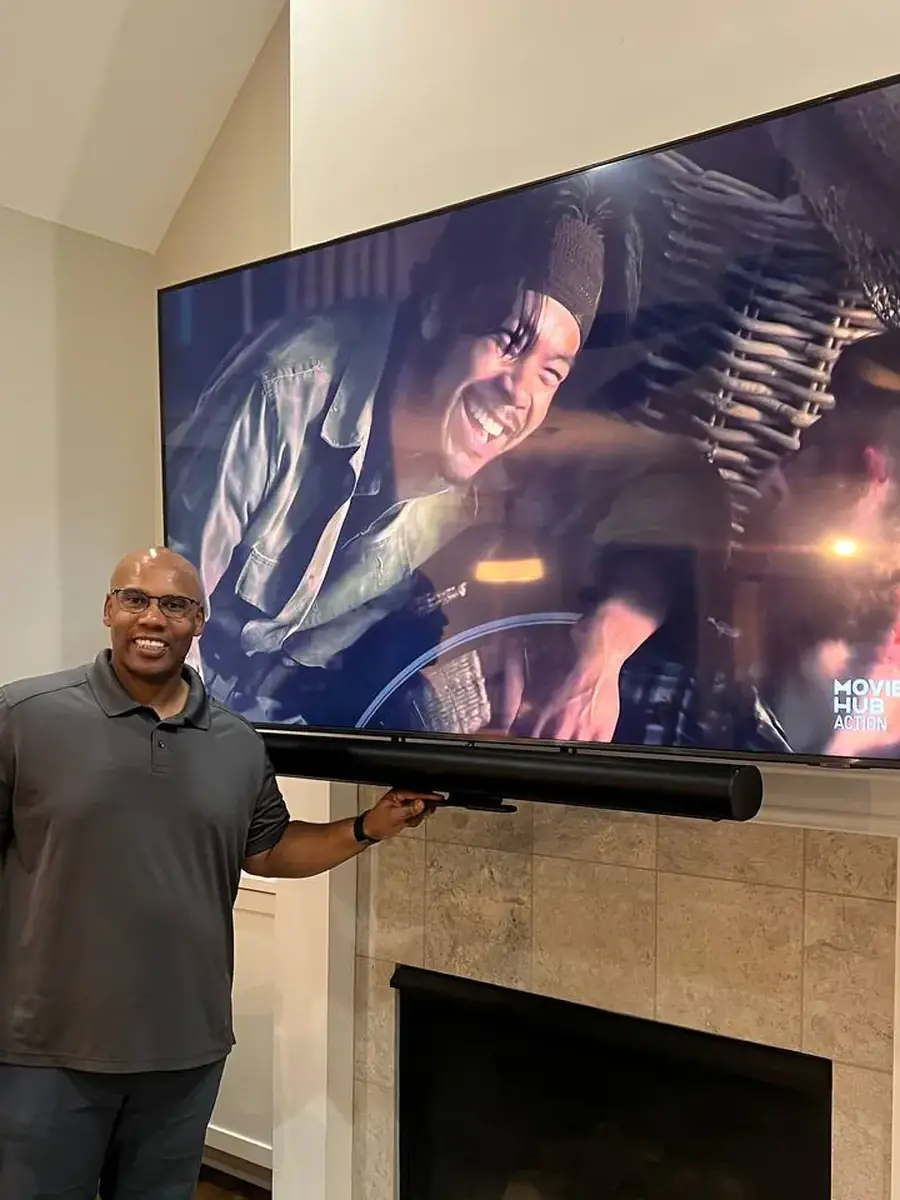
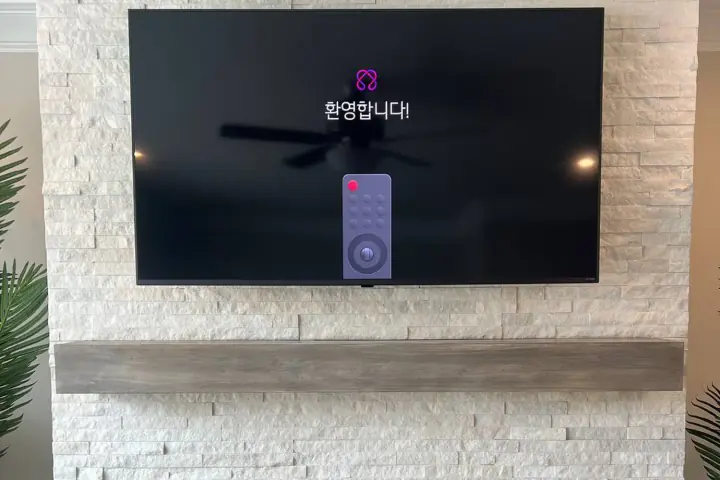
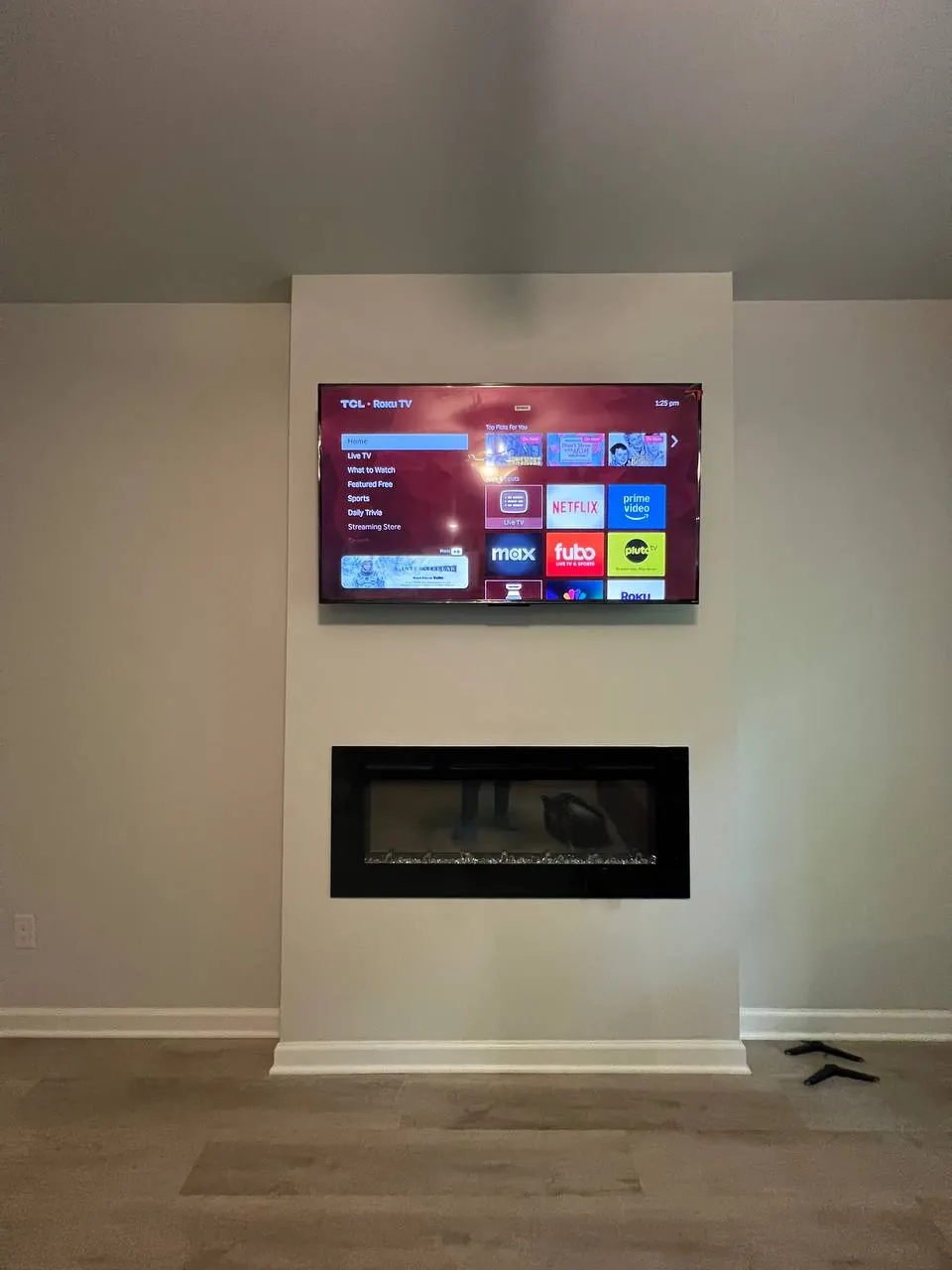
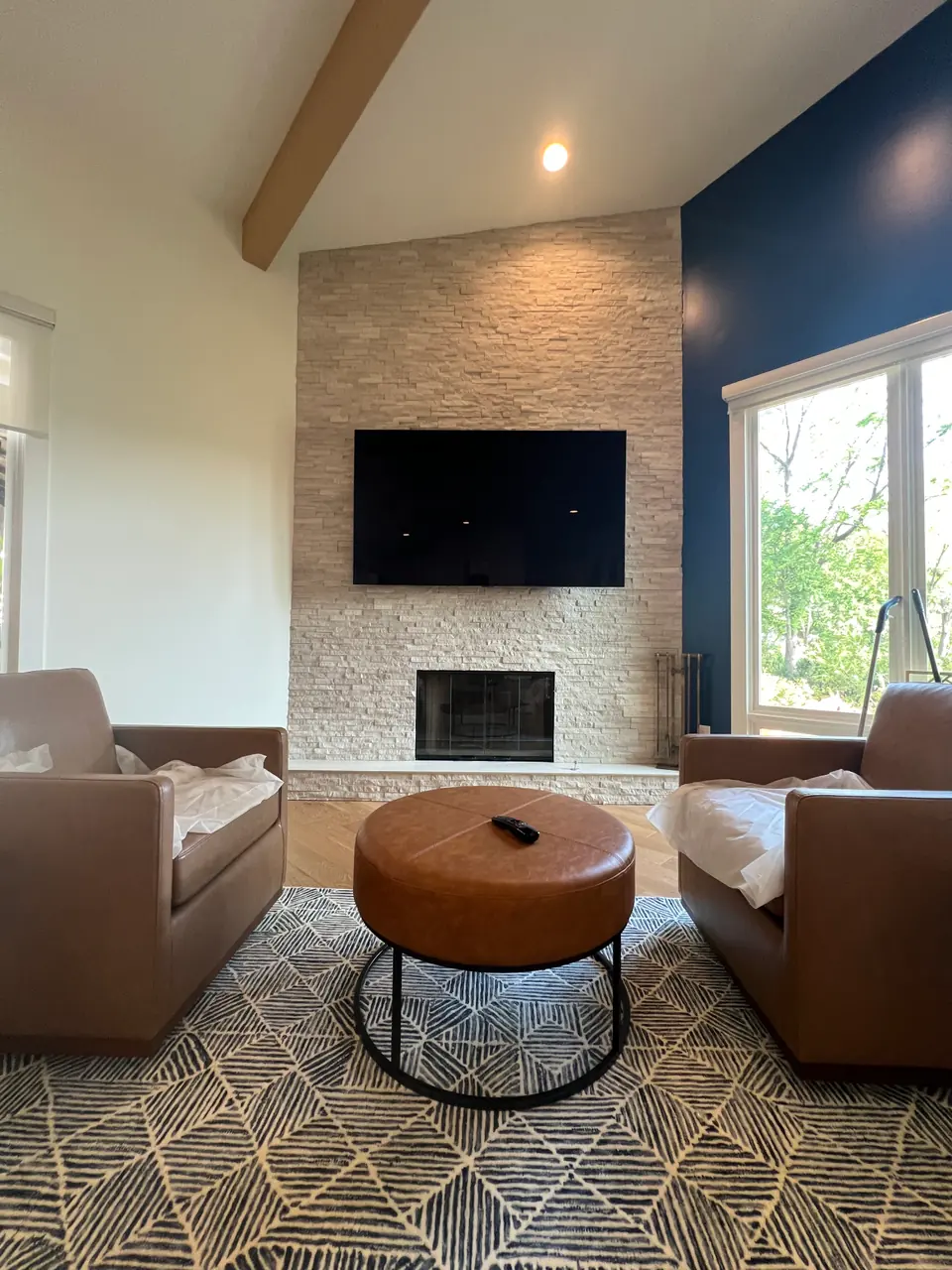
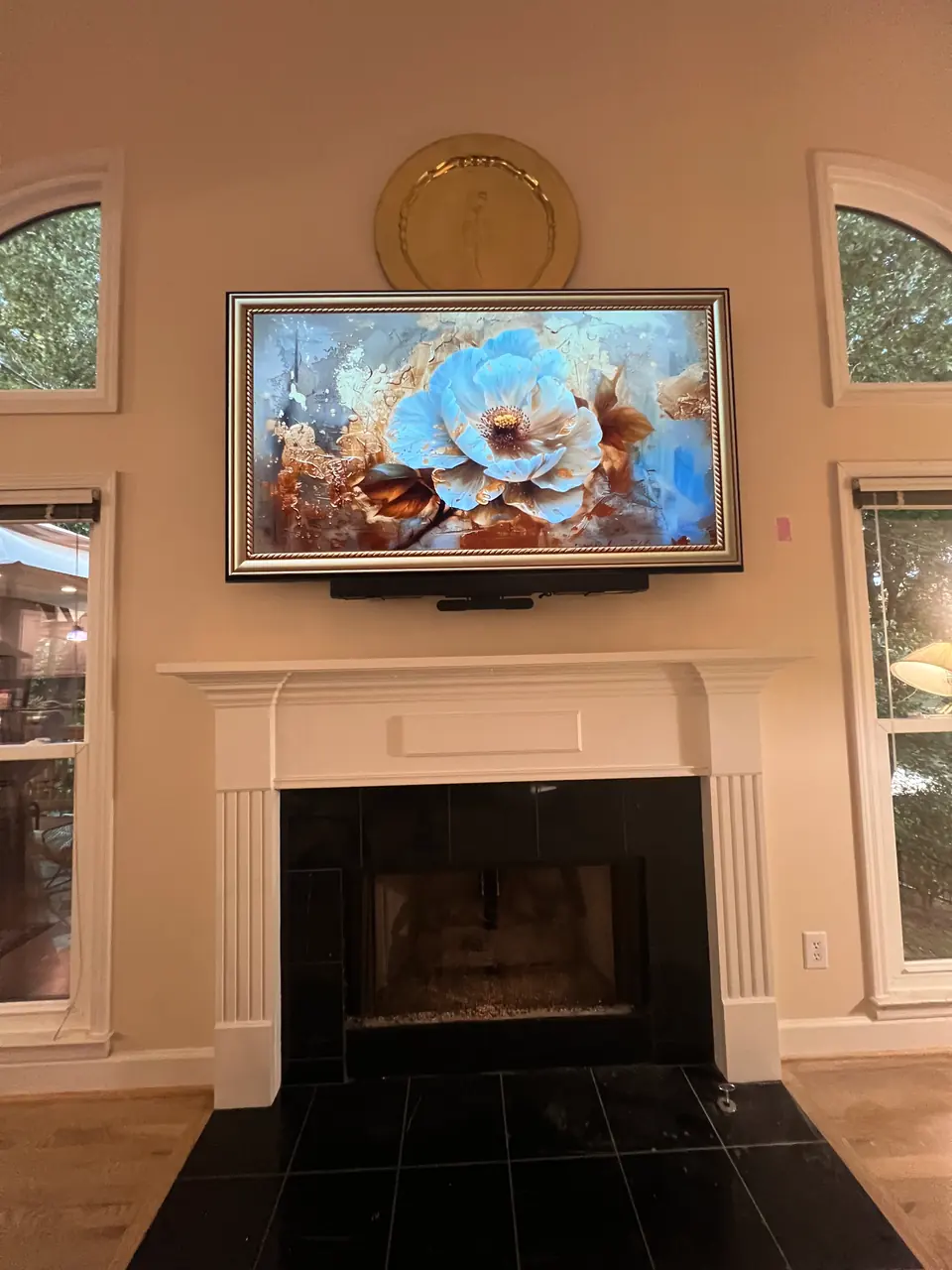
El Cajon was incorporated in 1912 but stayed small until the 1950s, when tract houses began spreading across the valley floor, and building went on through the 1960s and 1970s. Many houses from those decades are a single story, with stucco outside and wood studs inside. The walls are usually drywall, with plaster in some of the earliest, and the mount's lag bolts pass through either finish into the studs, so neither one changes the price. Living rooms of that era often have a brick fireplace, which adds $59 for masonry anchors, plus $49 when the TV hangs above the firebox.
Fletcher Hills, on the west side, covers the low hills that the developer Ed Fletcher subdivided in 1927 and 1928, and a small part of it lies in La Mesa. Its lots went on sale just as the Depression began, and much of the neighborhood stayed empty until the housing surge of the 1940s and 1950s, so most of its houses are post-war, with the same drywall or plaster walls as the valley floor. On the other side of the valley, Granite Hills straddles the eastern city limit and Bostonia the northeastern one, but every address in both uses El Cajon mail. Harbison Canyon, out toward Alpine, does too. None of those lines changes the price list.
A large share of El Cajon households rent, and in Bostonia renters outnumber owners. Apartment drywall adds nothing to the price, but the landlord decides about drilling and opening walls. Where the walls stay closed, a paintable cover runs the cords to the outlet for $49, as the wire concealment page shows.
Downtown stretches along Main Street, where The Magnolia, a restored theater the city owns, draws crowds for concerts and comedy. Parkway Plaza, the city's shopping mall, anchors a second busy district. Businesses there pay the same per-TV prices as homes, though concrete block and steel studs turn up in their walls far more often.