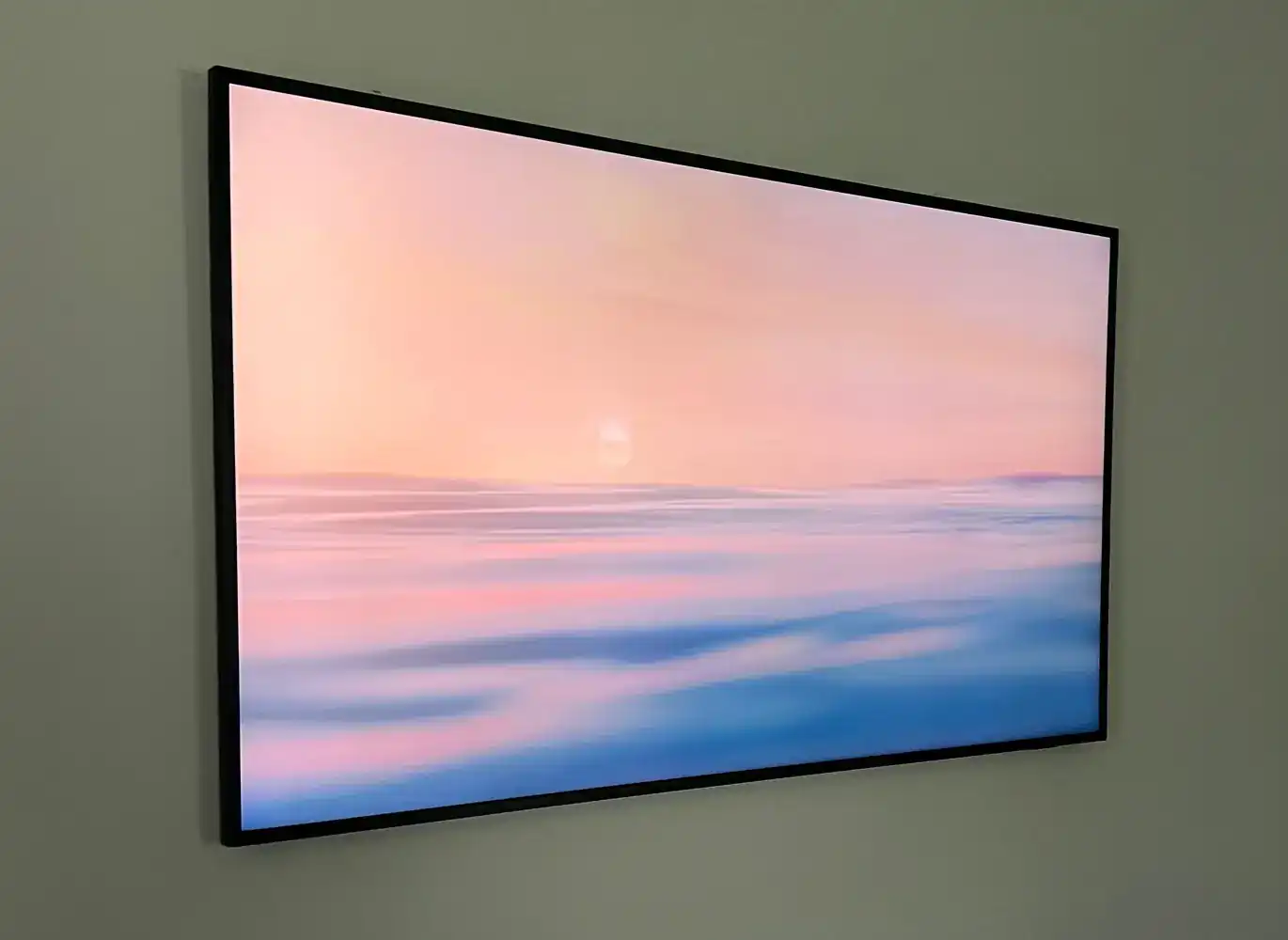
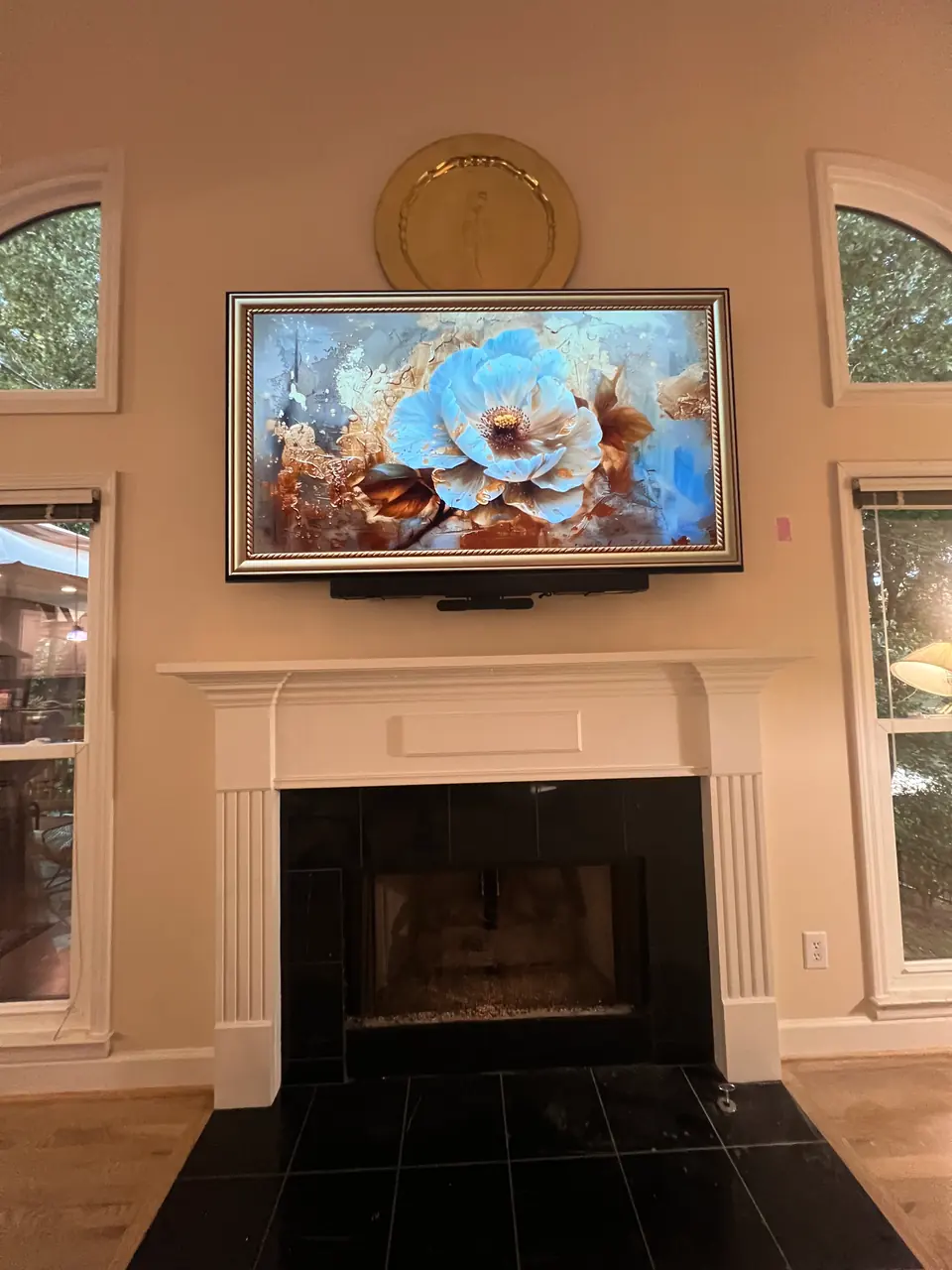
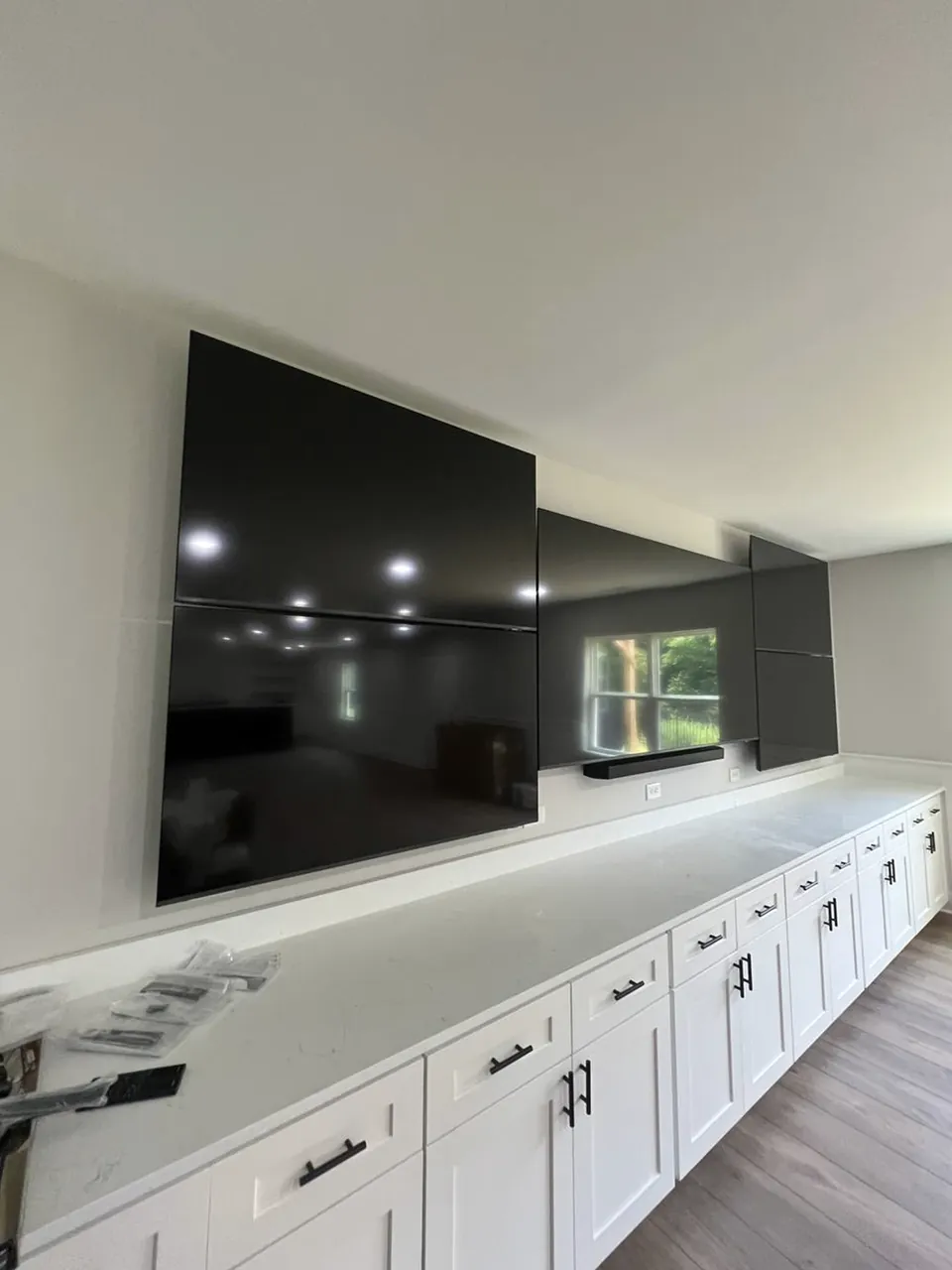
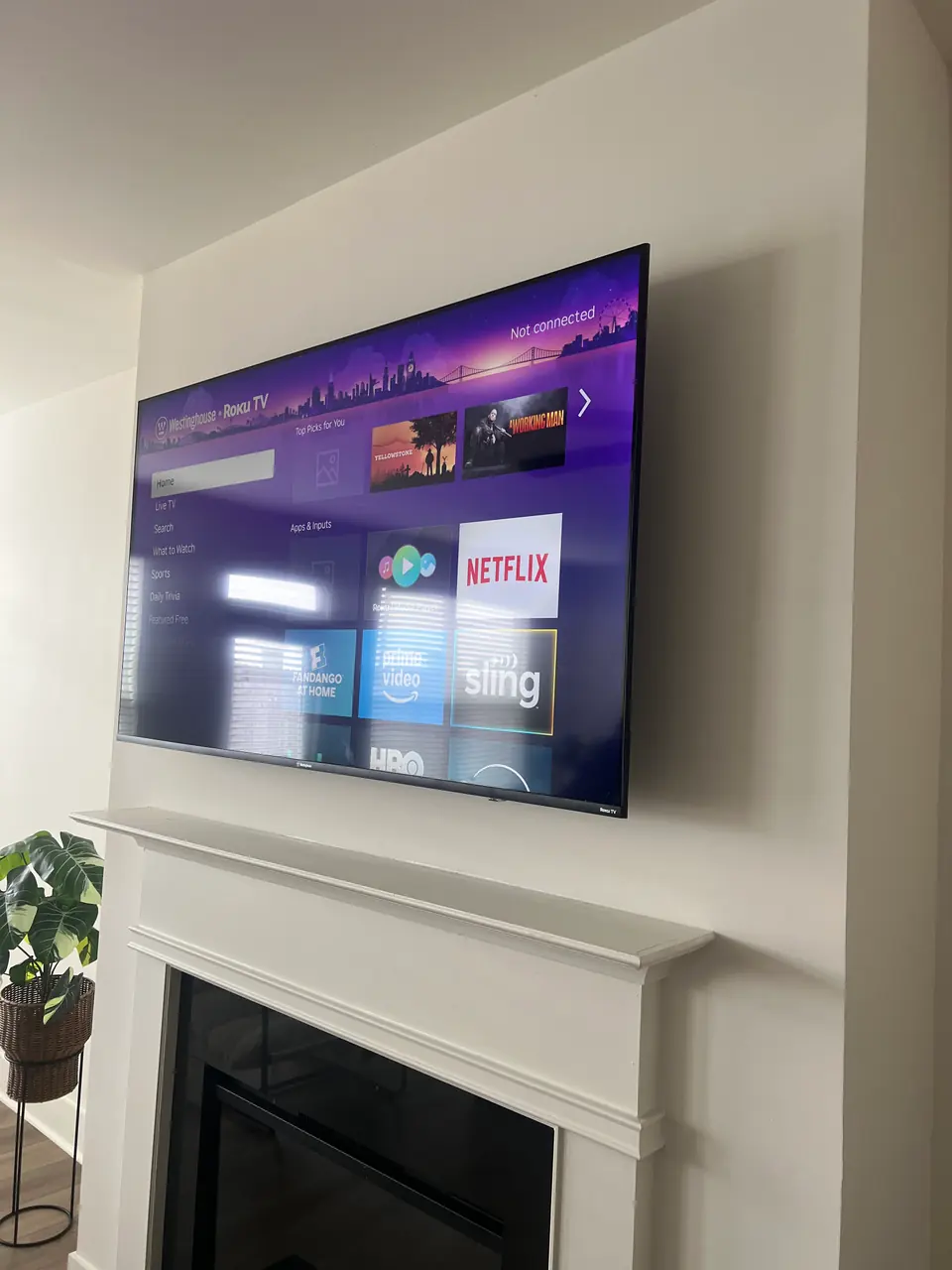
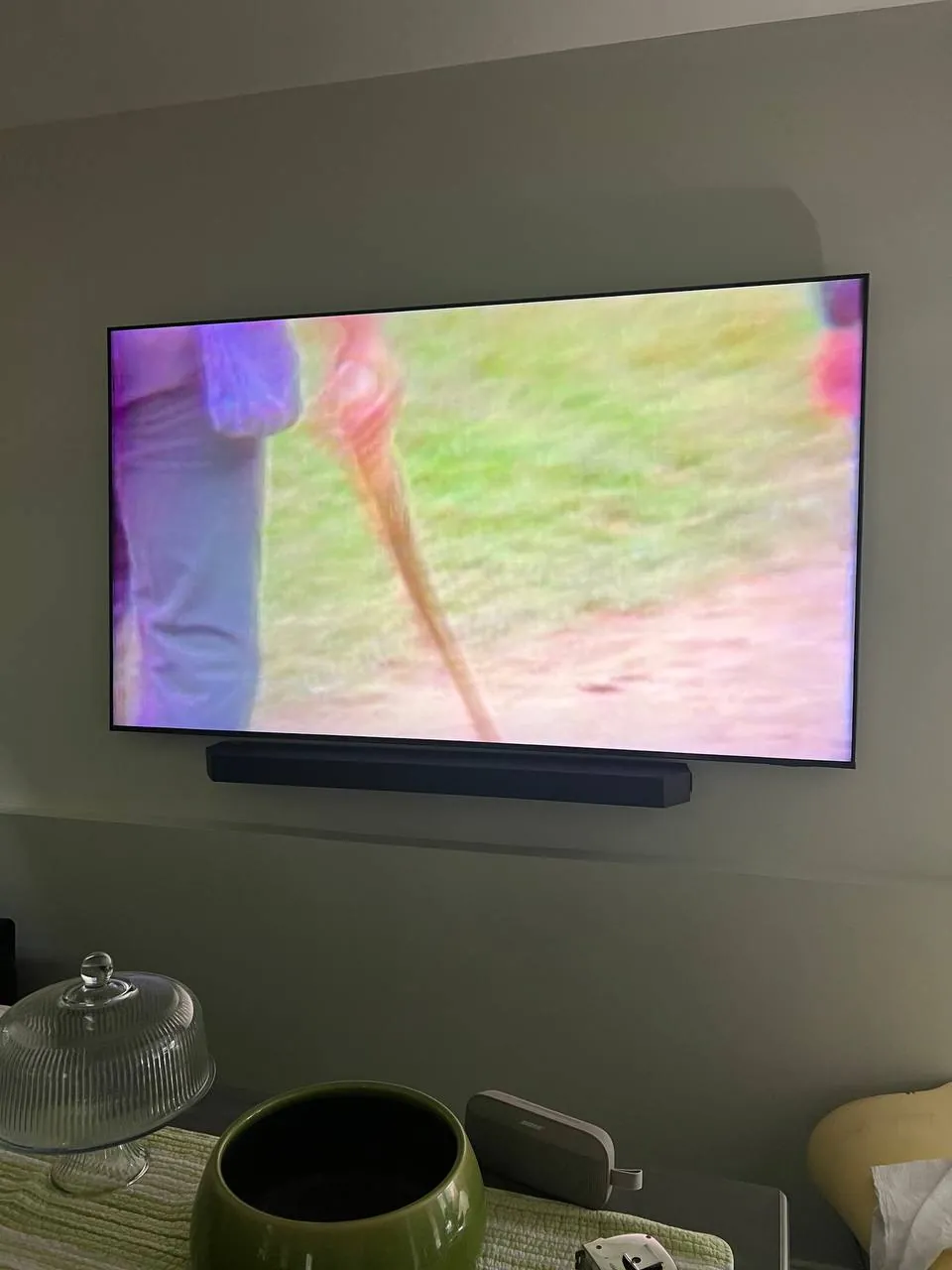
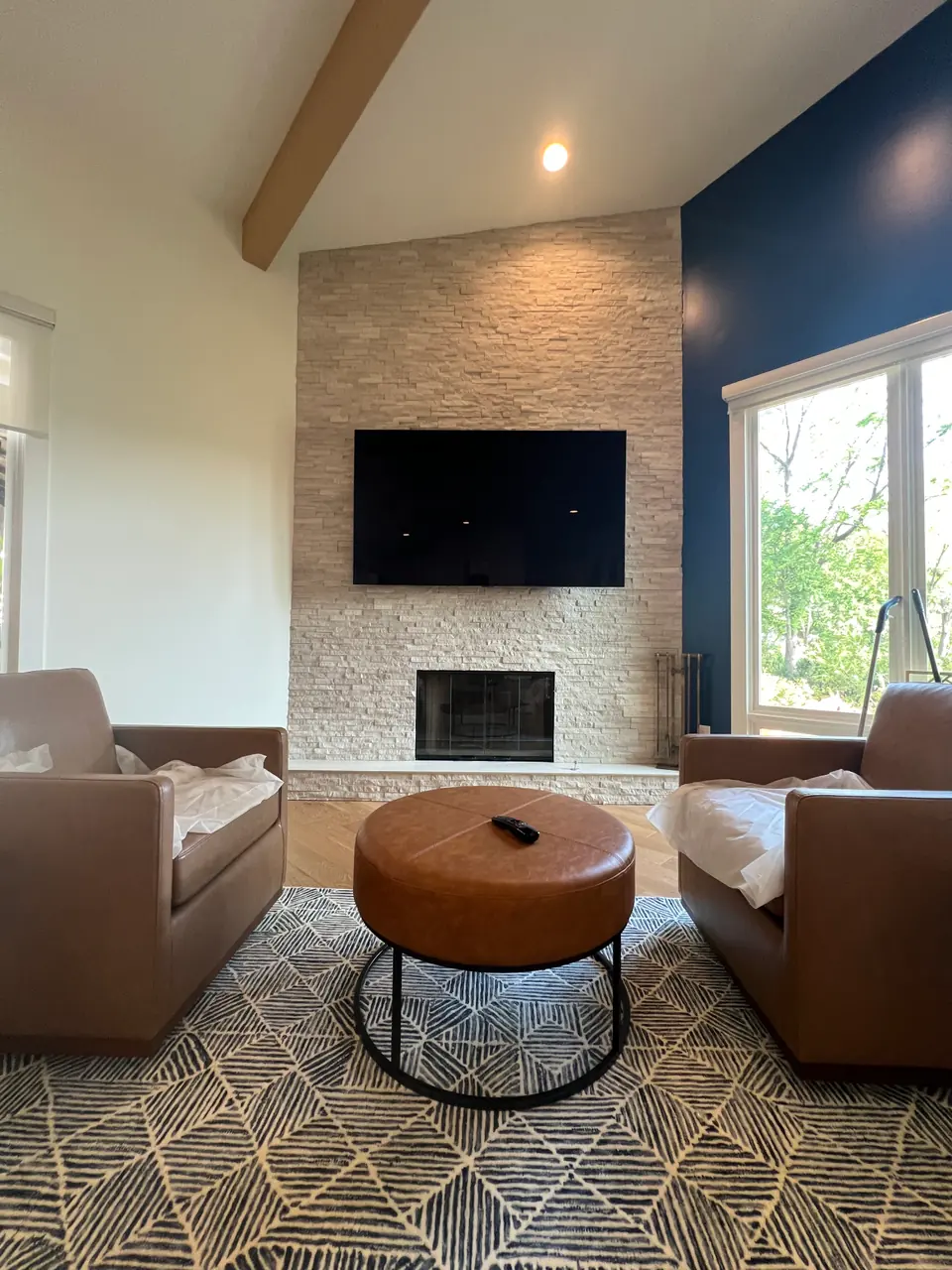
Lake Padgett Estates started in the late 1960s, East Lake followed in the 1970s, and their houses share a shape: concrete block under stucco, a main room with a vaulted ceiling and often exposed beams, and sliding glass doors and tall windows across the side that faces the water. The best wall in the room, the one the furniture faces, is glass. What remains is the end wall under the peak of the ceiling, which can rise well past an ordinary room's height, and two side walls broken up by a hallway or a pass-through to the kitchen.
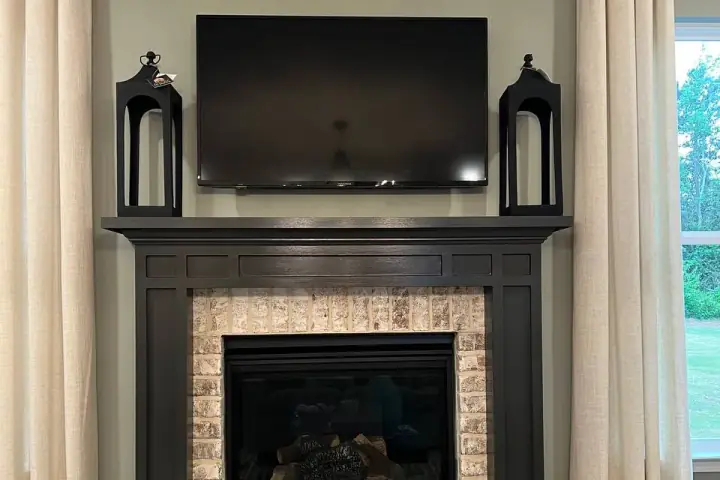
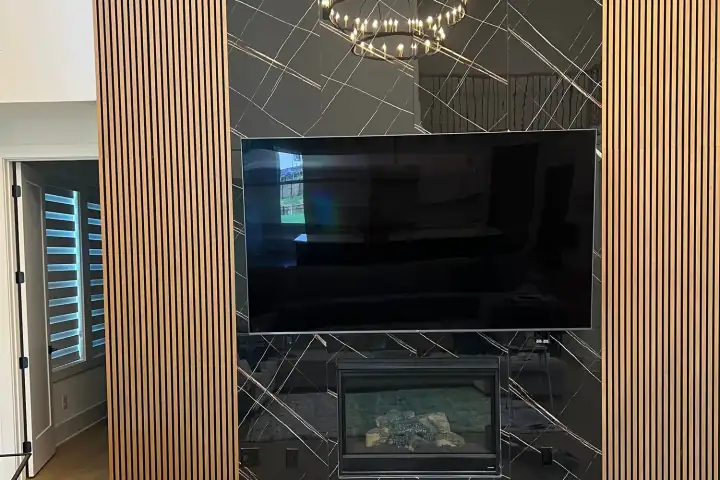
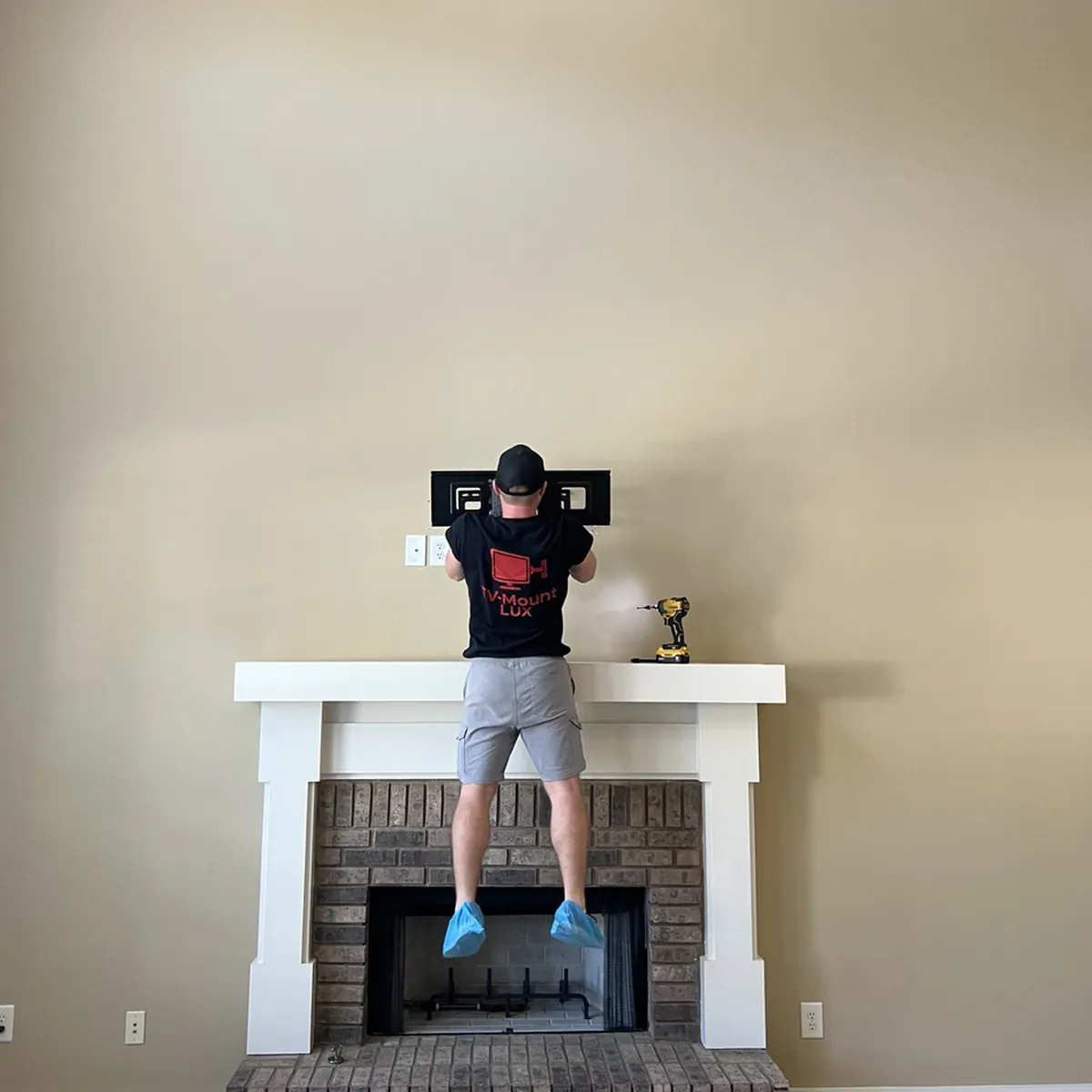
On a tall end wall the mistake is to center the TV on the wall. The screen belongs where the eyes are: sit on the couch, measure your eye height, and the middle of the picture goes near that mark, however much wall rises above it. When furniture or a sill pushes the TV higher, a tilting mount ($59) angles the picture back down. An end wall in one of these houses is often the outside block wall, so the mount anchors into masonry for $59 and the cables go in a paintable cover ($49) down to the nearest outlet.
The new side of Land O' Lakes is simpler. Connerton is still being built out on its former ranch land, with townhomes and villas beside the single-family streets. Ballantrae dates from the mid-2000s with newer sections since, and Wilderness Lake Preserve went up in the early and mid-2000s with a few gated enclaves inside it. In all three the family room has a framed drywall wall where the builder expected a TV: no wall charge, $99 for in-wall wiring with a power outlet behind the screen, and only the height left to decide.
Lake Padgett South's houses run from the 1970s into the 1990s, and the vaulted ceiling stayed popular through those decades, so the eye-level rule applies there too. Availability depends on the day's schedule, and every install includes finding studs or using anchors made for the wall, leveling, a load test of the mount, tidied cables and cleanup.