The oldest houses in West Selma stand nearest the railroad, starting with a two-story house from about 1880 on South Massey Street. Queen Anne houses came next, along with many that pair Queen Anne rooflines with Colonial Revival porches, most of them sided in weatherboard. Rooms that old usually have plaster or wood boards inside. Both mount for the same price as drywall, since the bolts pass through to the framing, but plaster can crack when it's opened, so in-wall cables there start with a photo.
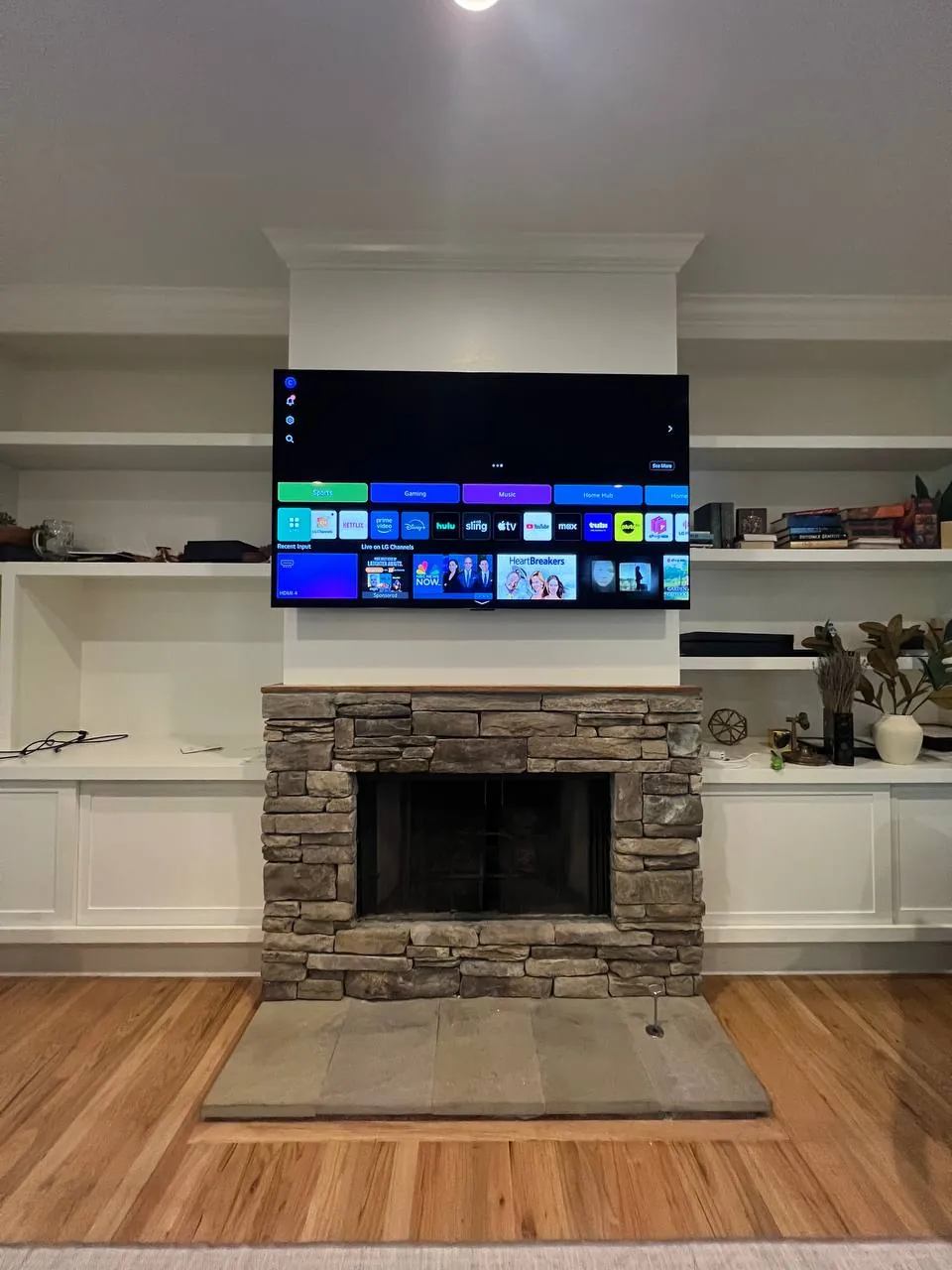
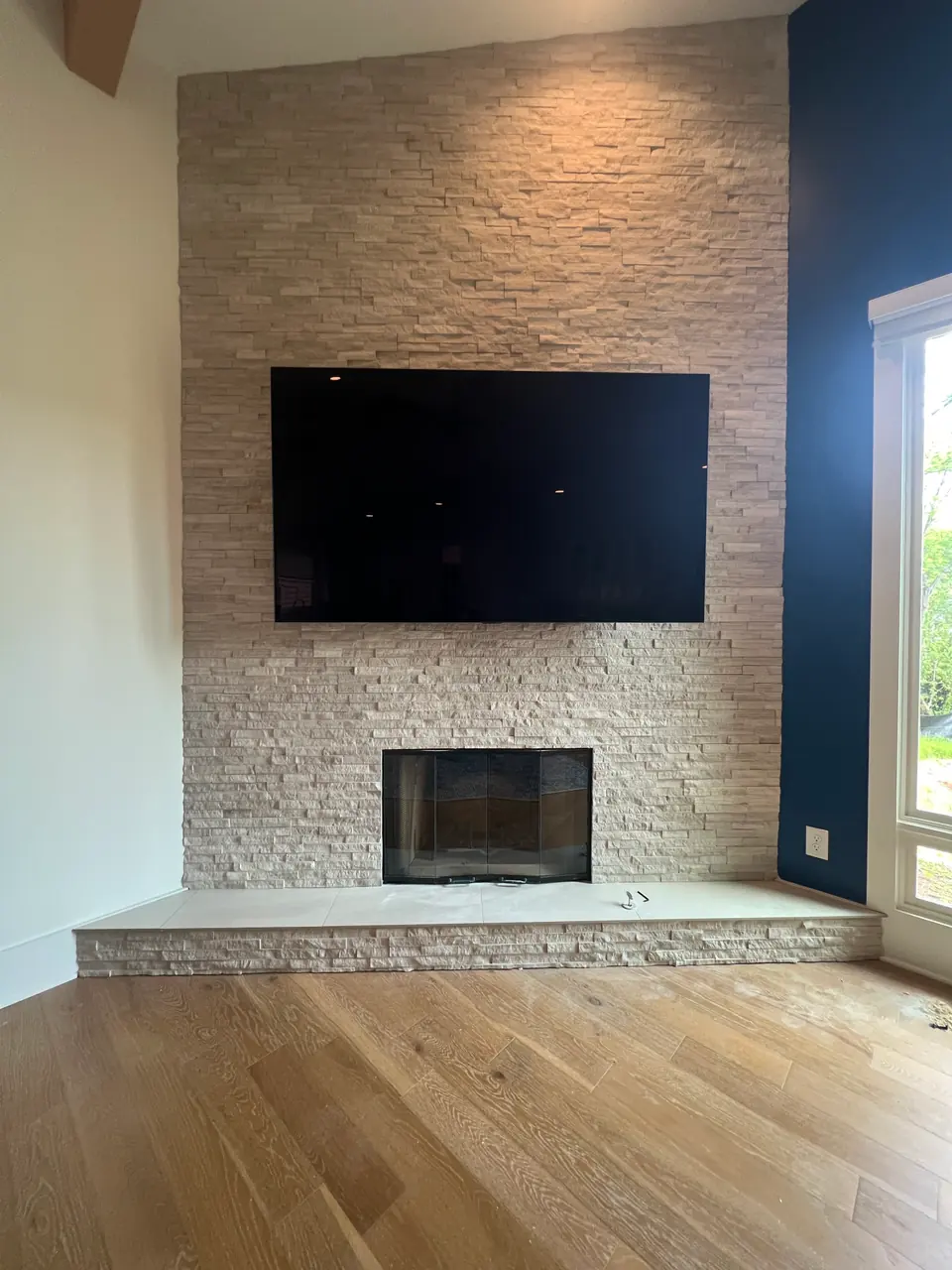
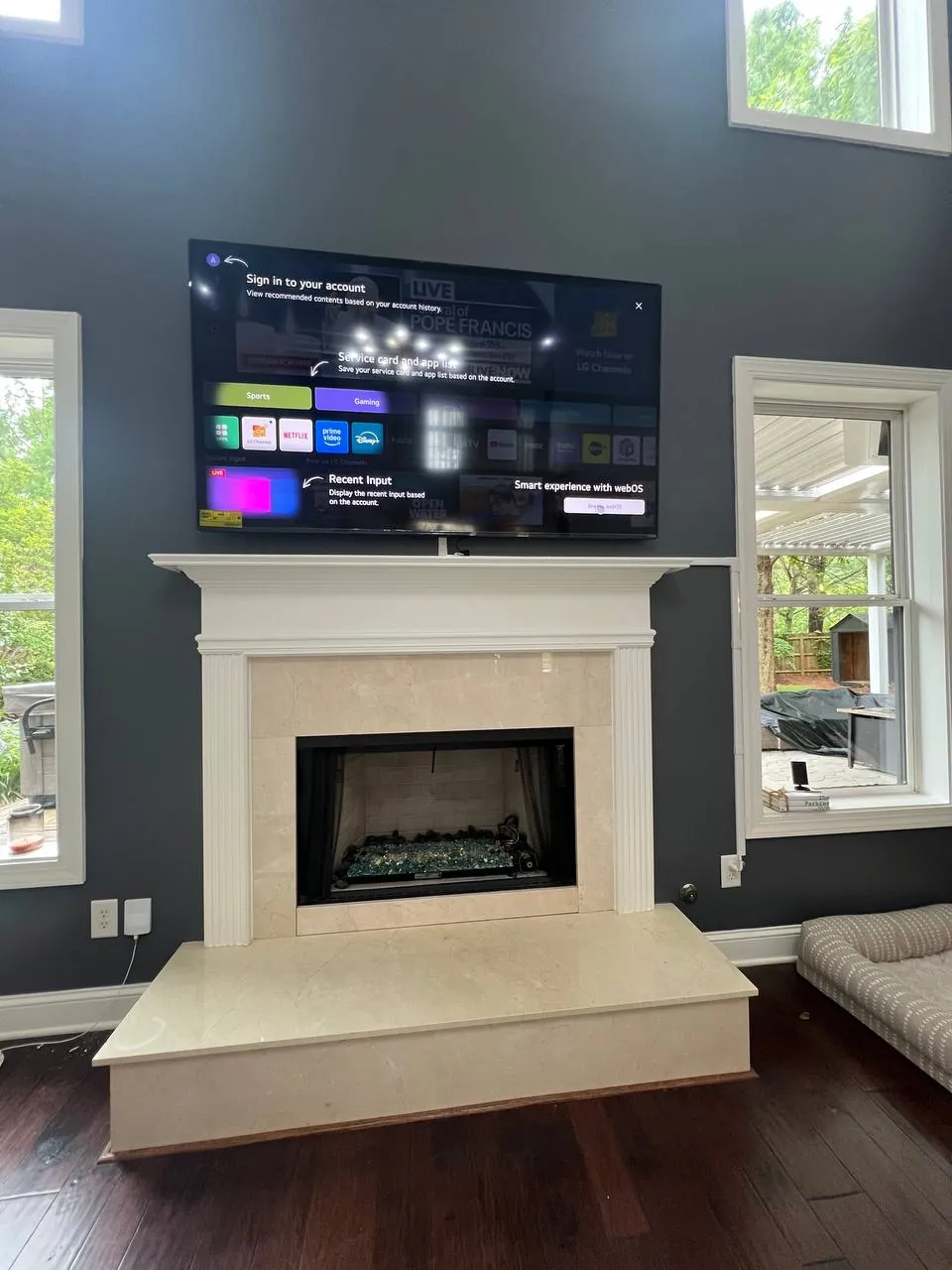
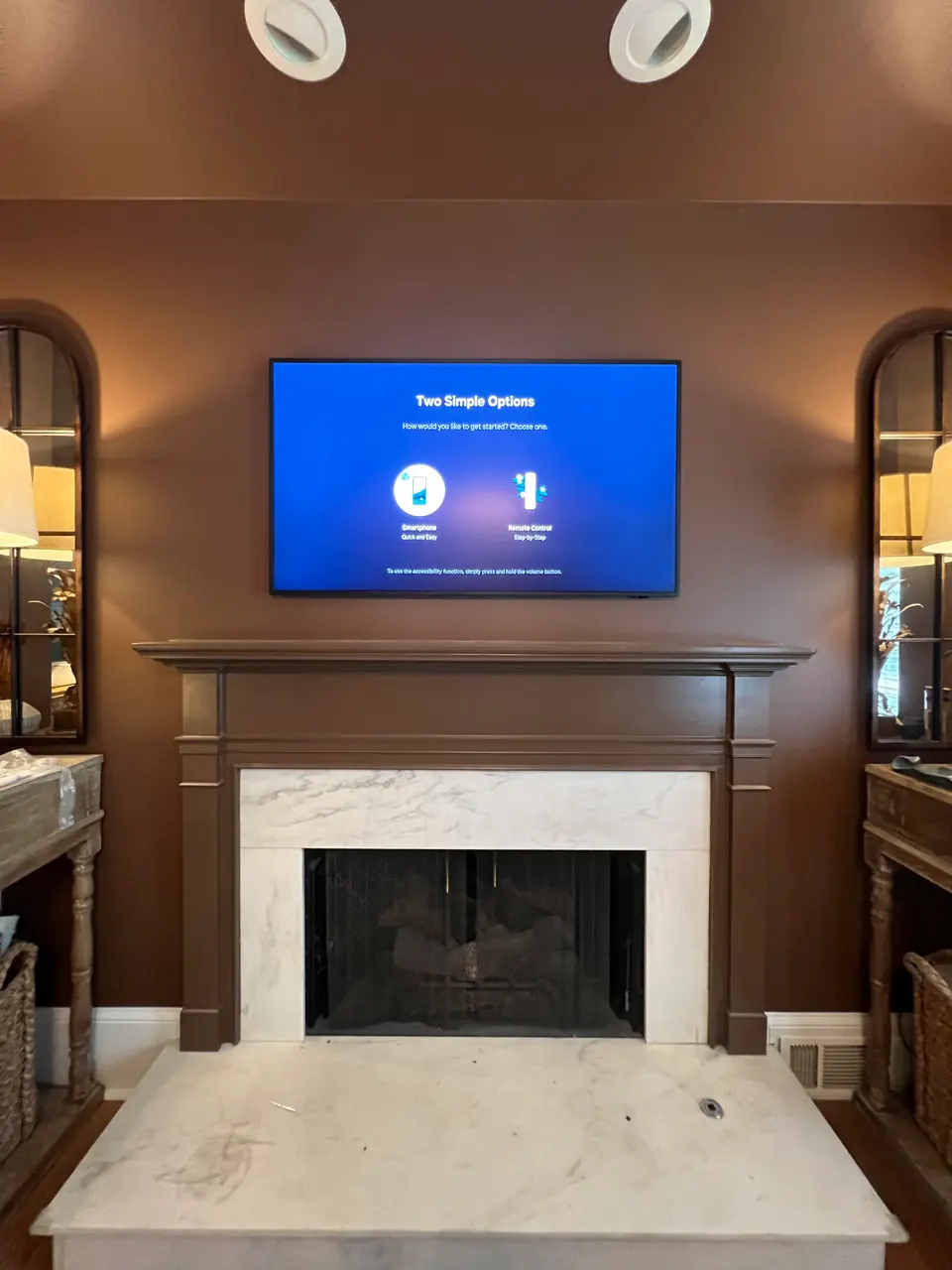
Bungalows from around 1920 line stretches of North Massey and North Pollock streets. Selma's Period Cottages, the English-style houses built between the world wars, and the plainer Minimal Traditional houses that followed World War II often have their chimney on the front of the house. In those, the living room fireplace usually sits on the street-side wall. A TV above that mantel takes the $49 fireplace line, plus $59 more when the chimney face is brick.
Ranch houses arrived in 1944 and kept coming for decades, many of them brick, often with a carport at one end. Some of those carports, and some back porches, have since been closed in to make another room. When that happens, the house's old outside wall becomes a wall of the new room, and on a brick ranch it's still brick, so a TV hung there takes the $59 hard-wall line.
Downtown runs along Raiford Street, where the commercial blocks date from about 1875 to 1960, and the 1924 depot still serves passenger trains. Every house in town, from the oldest on Massey Street to the newest, gets the same price list, as do homes in Smithfield next door.