The oldest houses in Spring stand in Old Town Spring, built in the early 1900s, and most of them hold shops today. Residential Spring came later. Northampton, Champion Forest, Memorial Northwest and Cypresswood filled in through the 1970s and 80s with traditional brick two-stories and one-stories under trees that have since grown large, and 1980s subdivisions like Enchanted Oaks kept the pattern going. Gleannloch Farms, laid out on a former Arabian horse farm, carried Spring into the late 1990s and 2000s with drywall throughout and the two-story family rooms of that era.
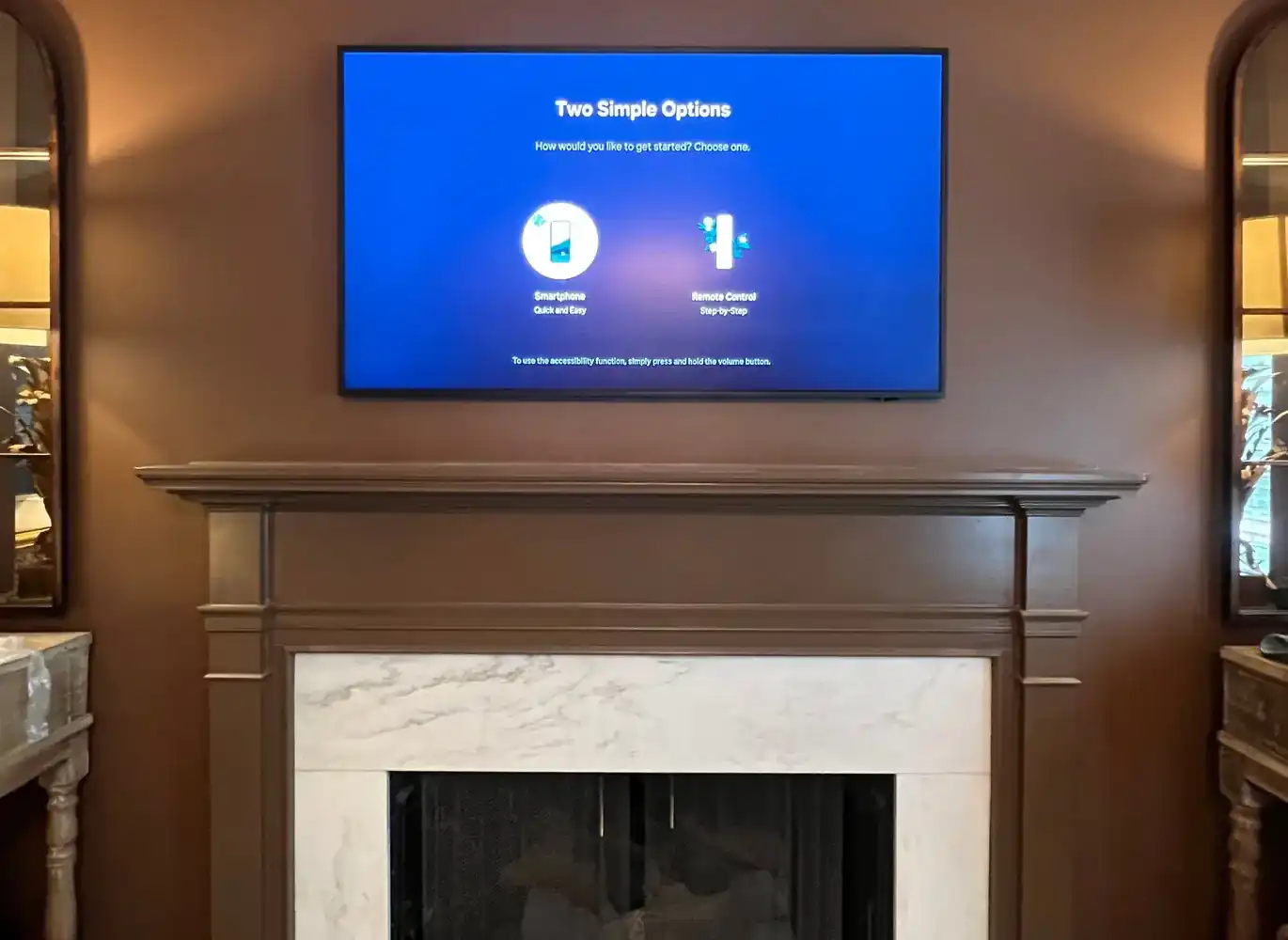
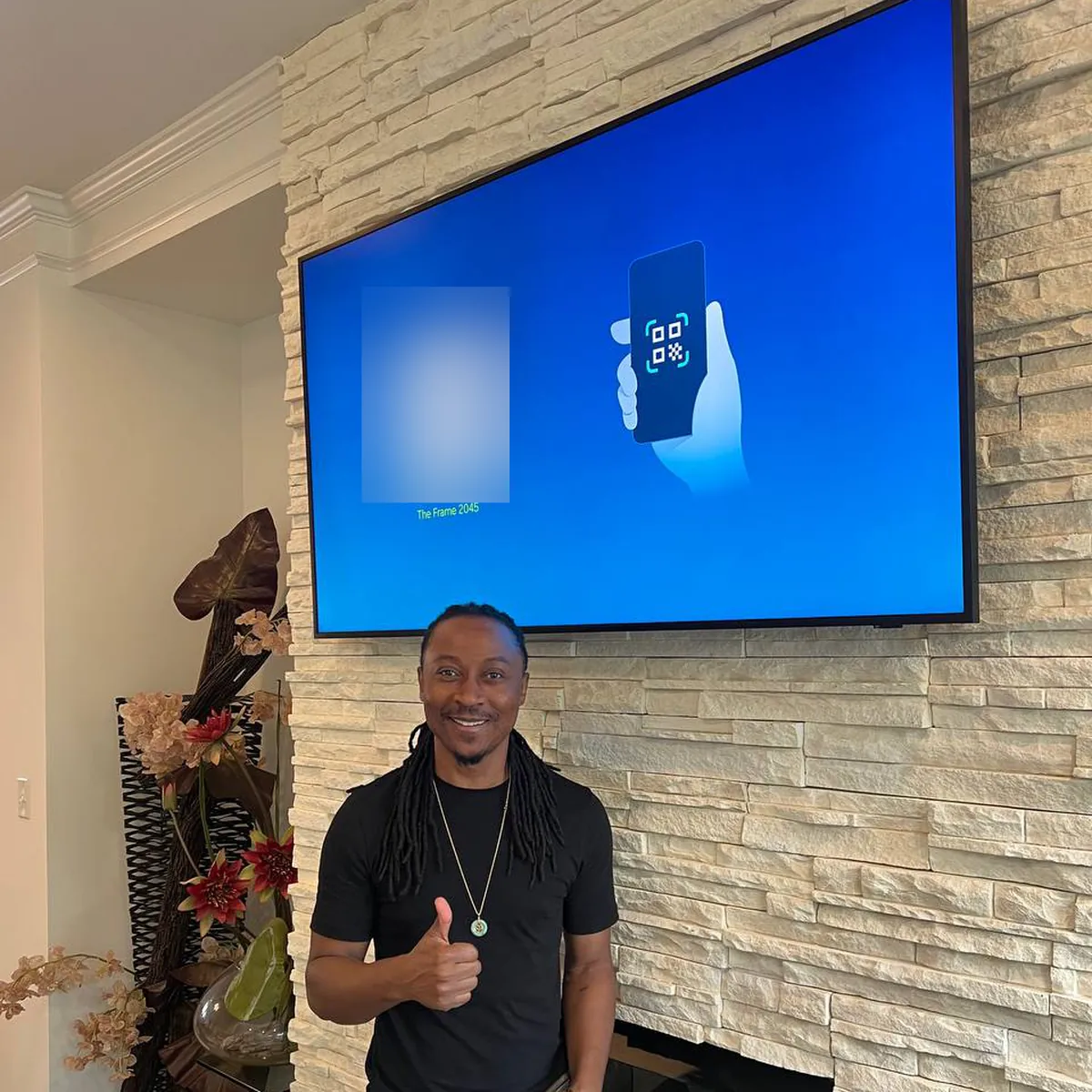
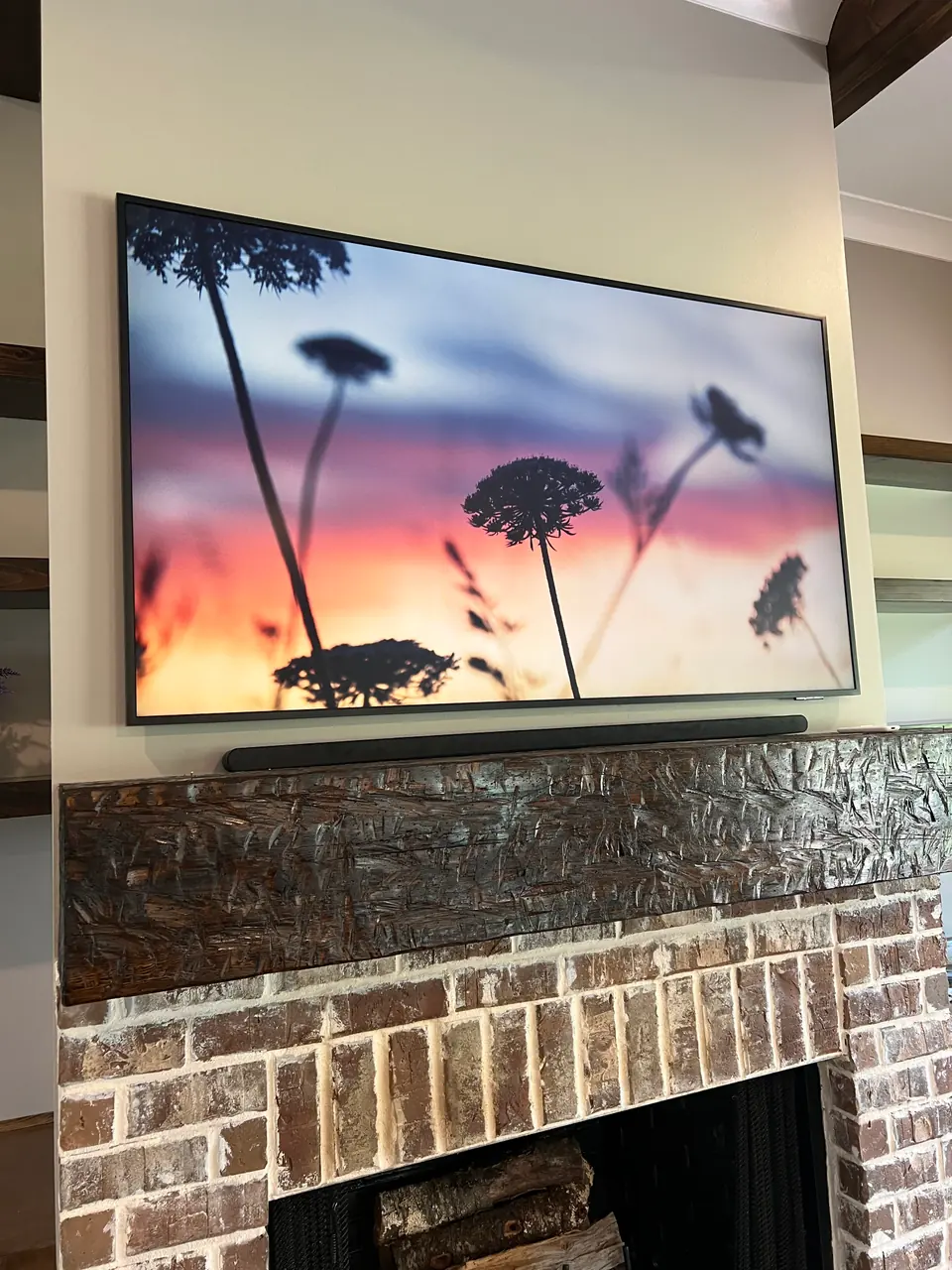
Walk into a 1970s family room in Spring and the fireplace is often not a surround but an entire wall: dark brick, usually with a raised hearth, sometimes a heavy beam for a mantel and sometimes none at all, running up to a beamed or vaulted ceiling. That wall is masonry wherever the TV lands on it, so the mount goes in with anchors made for brick, which is the $59 hard-wall line, and $49 more when the TV sits above the firebox. A mount set into sound brick holds as well as one in studs, and the load test at the end of the install proves it.
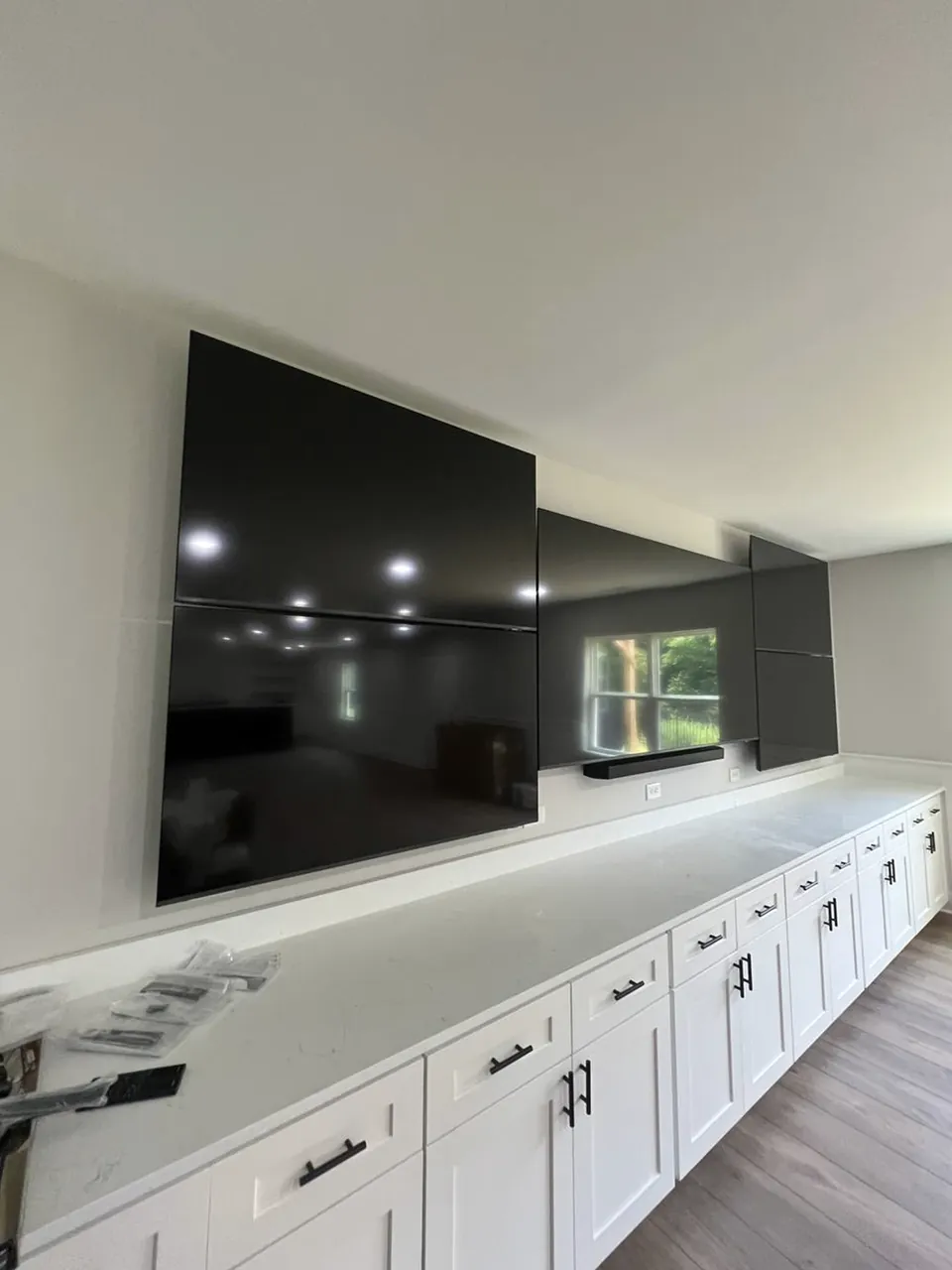
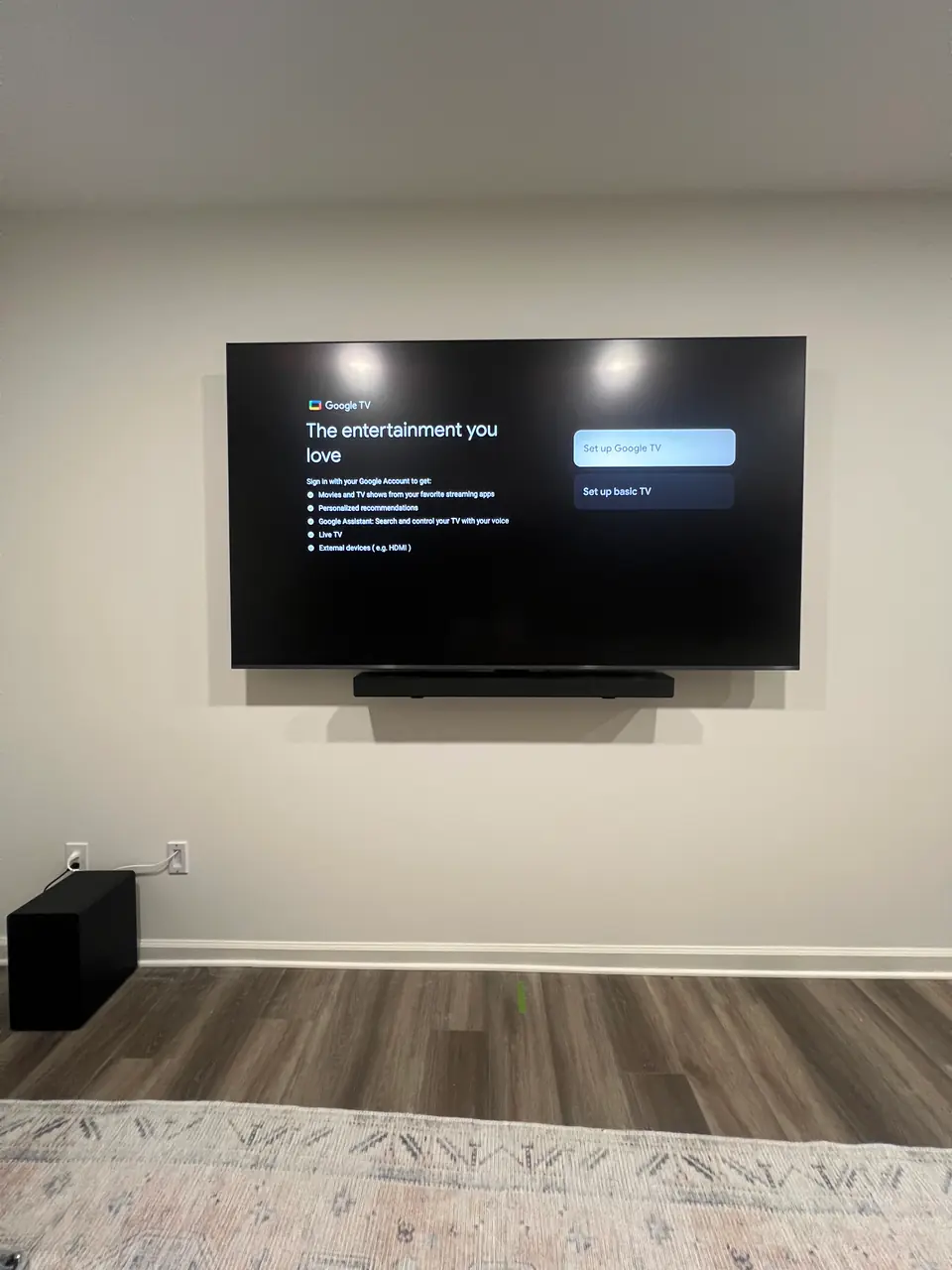
The cords are the real difference. A framed wall has a cavity between the studs, and cables drop through it to an outlet behind the TV. Solid brick has no cavity, so there is nowhere for a cable to go. On the brick, the honest answer is a paintable cover for $49 running from the TV down to the nearest outlet, painted to come close to the brick's color, or a mount placed so the cords reach an outlet close by. The other answer is to turn around: the drywall wall across the room from the fireplace mounts at no wall charge, and the cords go inside it with a power outlet behind the screen for $99.
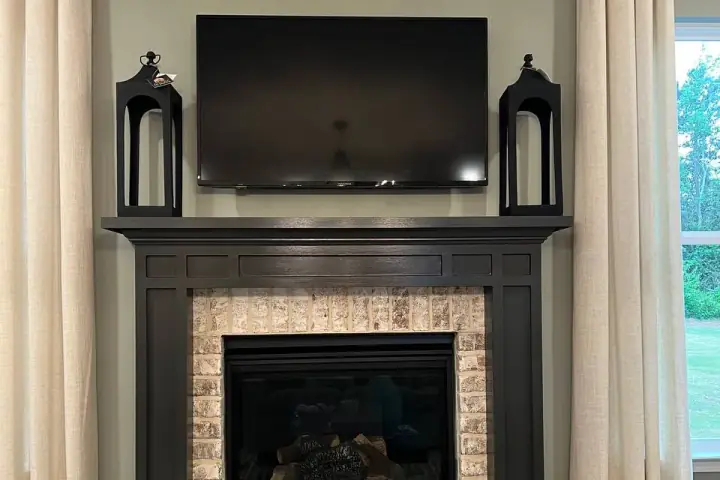
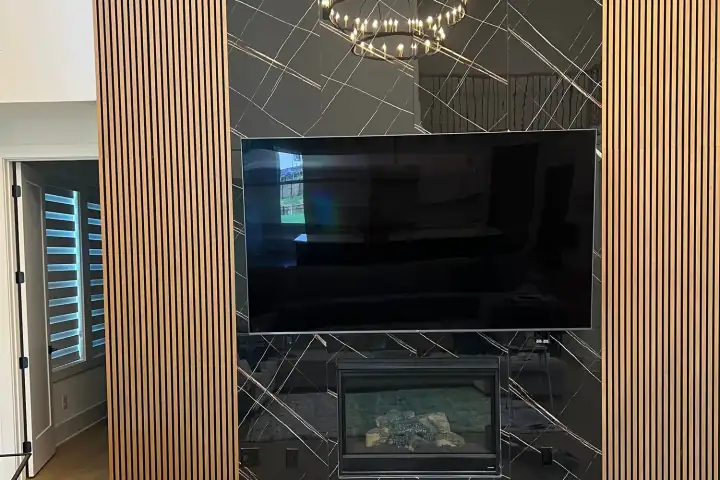
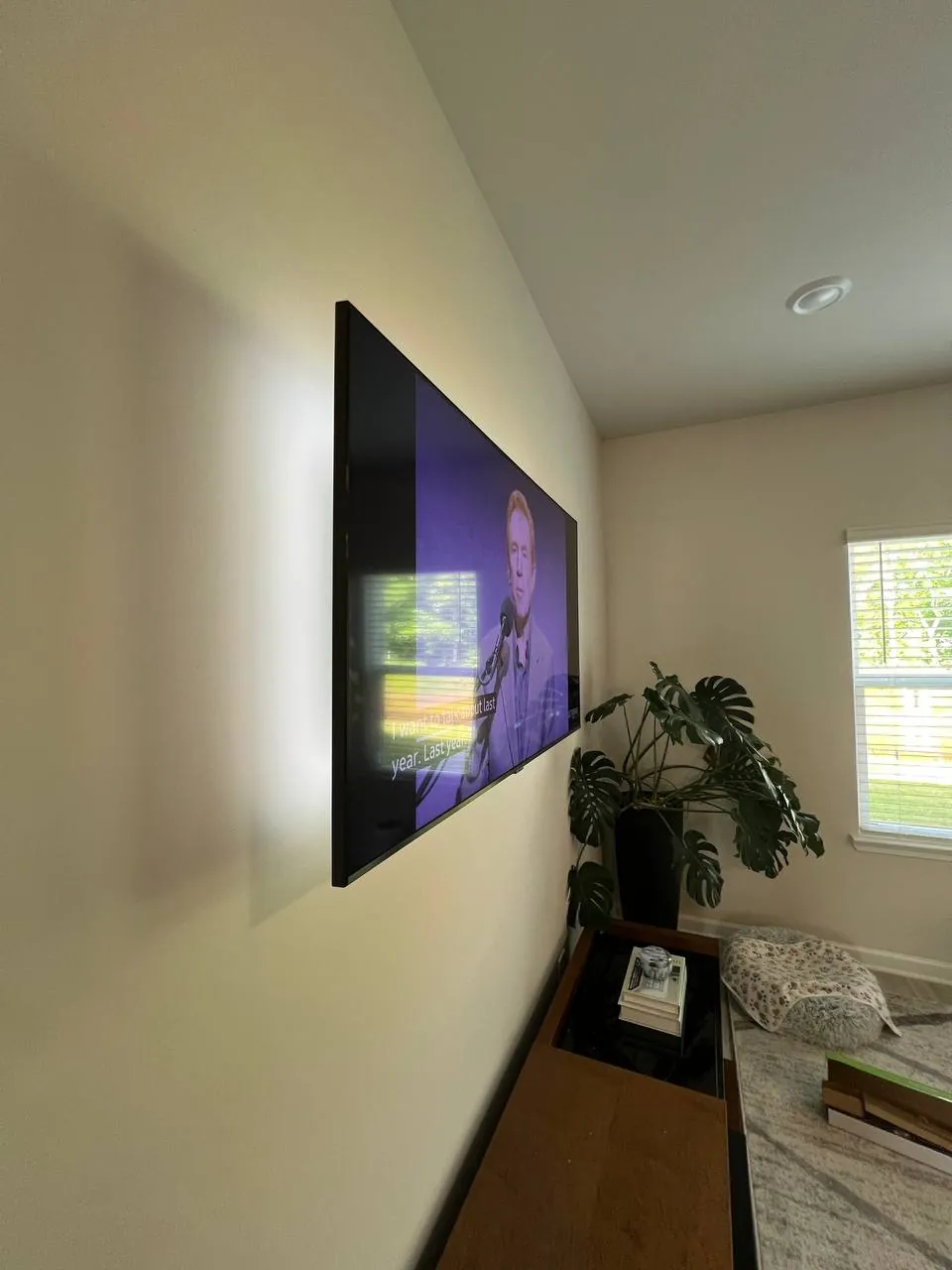
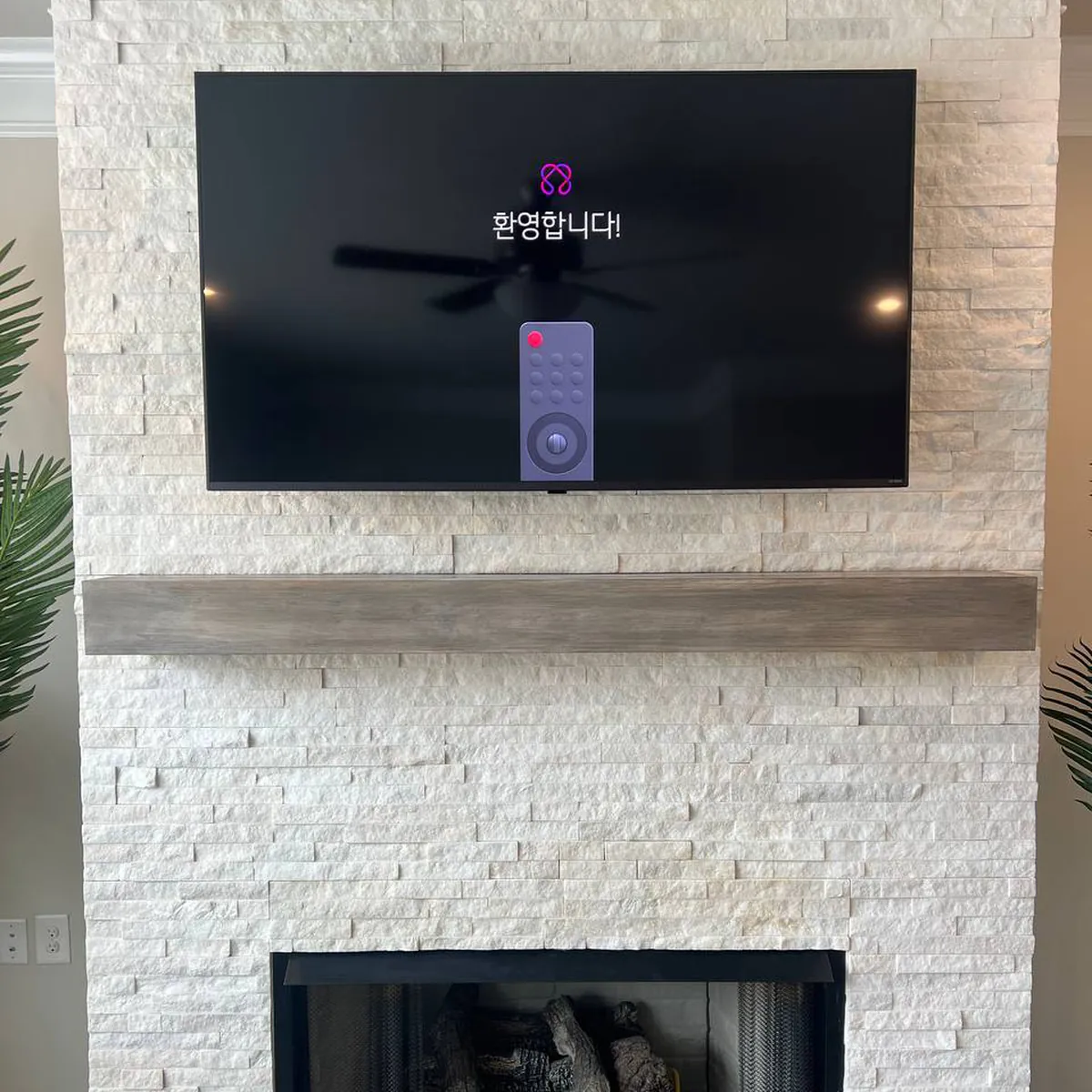
In Gleannloch Farms and the other 1990s and 2000s neighborhoods of Spring, the fireplace is usually a stone or tile surround with drywall above, and the rest of the house is drywall on wood studs, so the TV goes up at the labor price plus the mount and the wiring. The early-1900s houses of Old Town Spring have older framing and sometimes plaster, which costs the same as drywall to mount on. Our Houston area page covers the wider region, and brick and stone mounting goes deeper on masonry anchors.