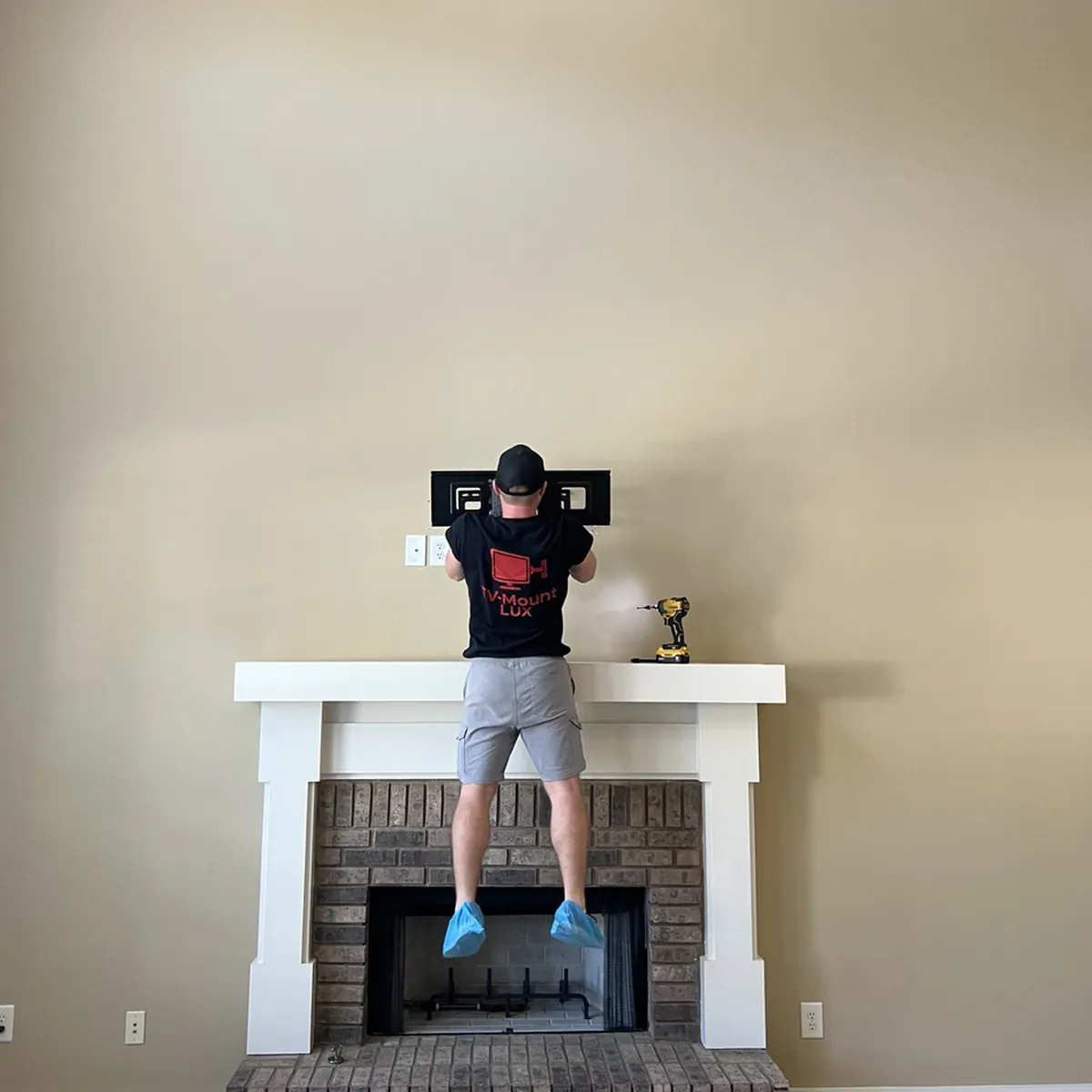
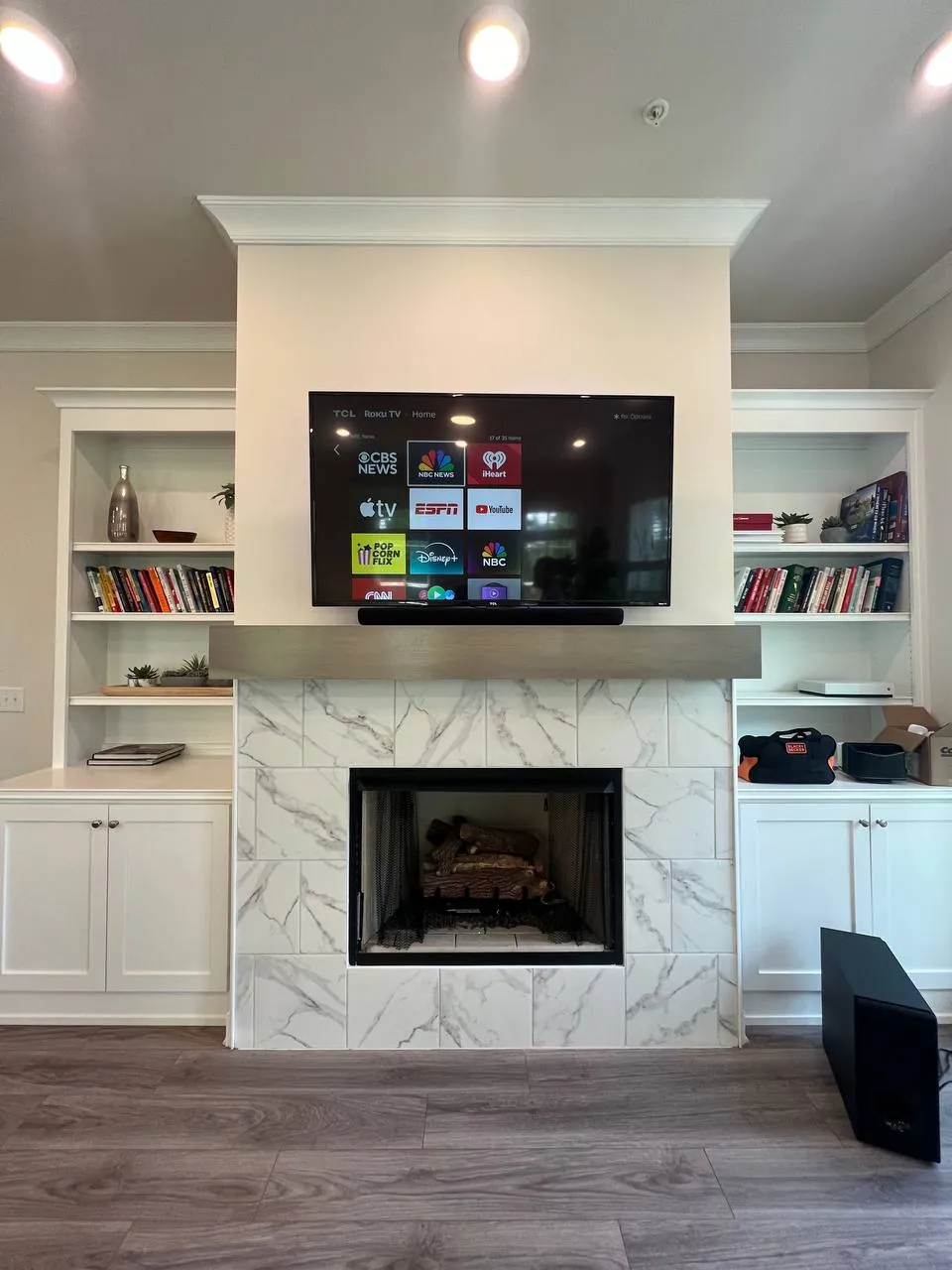
German immigrants farmed and ranched the prairie around Tomball through the 1800s, and the town was a railroad stop called Peck until 1907, when it took the name of Thomas Ball, the lawyer who had steered the line through. Old Town Tomball keeps the depot at its center, and the German Christmas Market that fills Market Street and South Walnut Street every December is that heritage in plain view. The older houses near the depot are wood-frame, some on pier-and-beam, with drywall or plaster inside, and both sit on the same no-charge wall line.
The subdivisions came in waves. Willow Forest dates from the 1980s and 1990s, Village Creek and Inverness Estates from the late 1990s and early 2000s, Decker Oaks Estates from the early 2000s, and Northpointe, out by the Grand Parkway and State Highway 249, grew through the 2000s. They are brick-veneer houses on slabs with drywall inside and three or four bedrooms. This page is about the screens beyond the family room: the 32-inch across from the bed, the 24-inch beside the kitchen cabinets, the one on the home office wall that doubles as a monitor. The Woodlands, to the northeast, has its own page.
Past the subdivisions, Tomball lots are measured in acres. Timbergreen has custom houses from the 1980s and 1990s on large wooded lots, and Treeline, from the mid-2000s, pairs bigger lots with a heavy tree canopy. A house with land has the rooms to match, a guest room, a study, a kitchen with wall to spare, and since the walls are still wood studs and drywall, the acreage changes the drive, not the price.
The price list splits labor by screen size, and the first line ends at 31 inches, so a 24-inch screen is $69 to hang and a 32-inch is $129. For a small screen the usual mount is the fixed one ($49), since a TV that light sits close to the wall and rarely needs to tilt. The cords can go inside the wall for $99 or ride down in a paintable cover for $49, and the wire concealment page covers both.