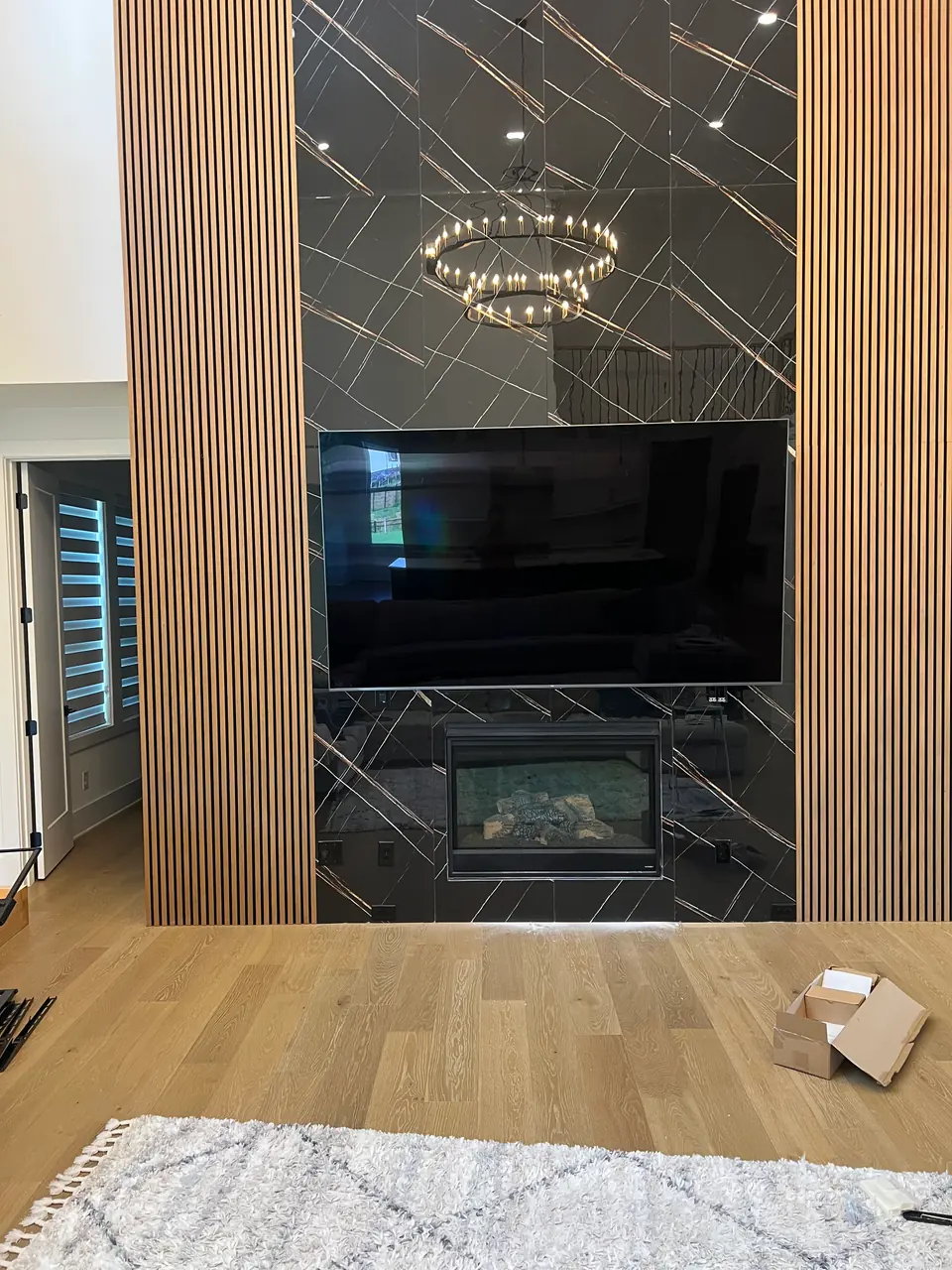
The Stadium-Seminary district climbs a bluff northwest of downtown, its streets set at an angle to the rest of the city so the cross streets look out over the harbor. Queen Anne is its most common style, in two- and three-story houses with corner towers, polygonal bays and porches trimmed with jigsaw work. Stadium High School, inside the district, was started in the 1890s as a hotel and finished as a school. Houses of that age were plastered over wood lath. A TV on plaster costs what it would on drywall, and the bolts are simply long enough to reach through both layers into the studs.
Rooms in a Queen Anne house are seldom plain boxes. A tower or a bay swells out of one wall, the windows run tall, and the front and back parlors are often joined by pocket doors that slide into the wall beside the opening. Each of those takes up wall a TV could have used. In these houses the wall gets chosen before the mount does, and the second block below walks through how.
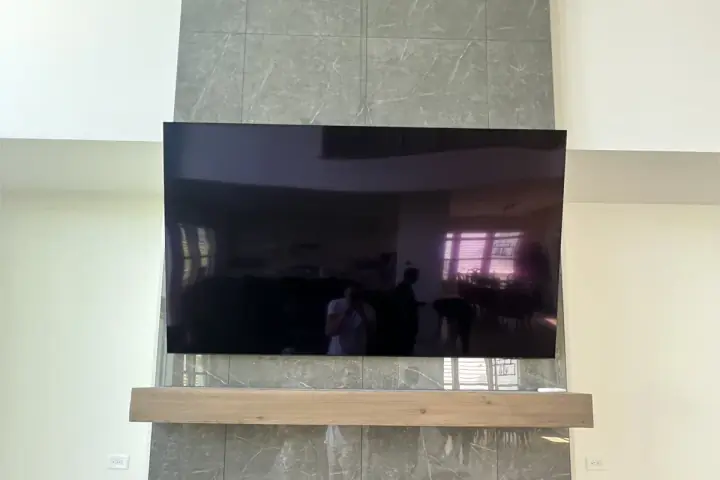
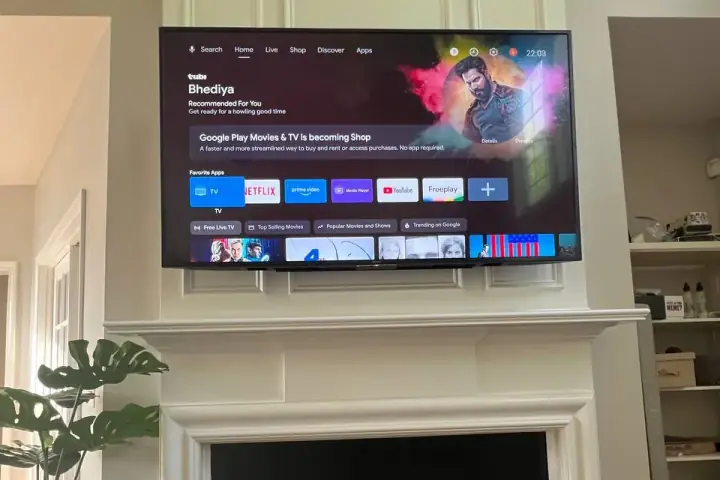
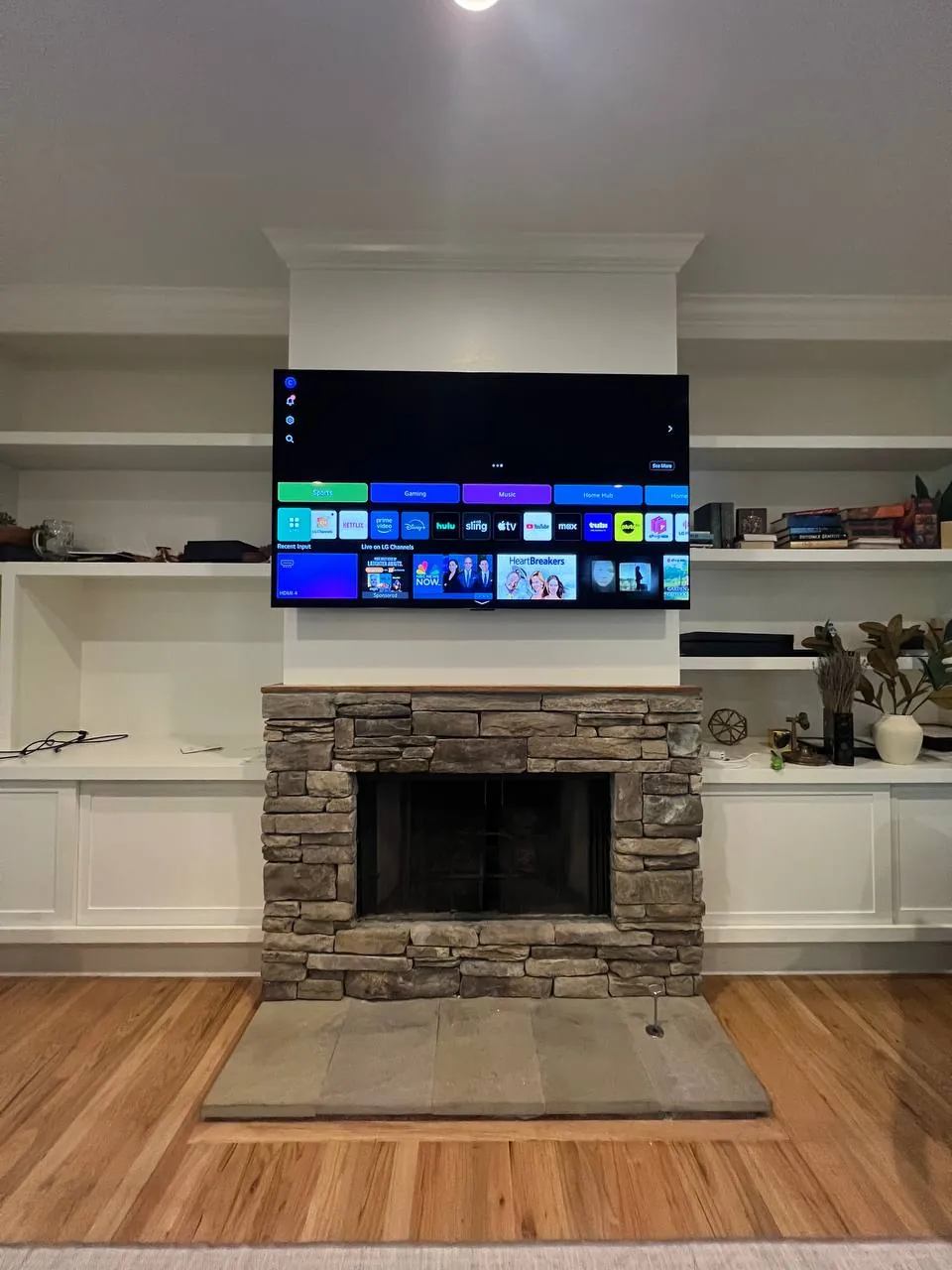
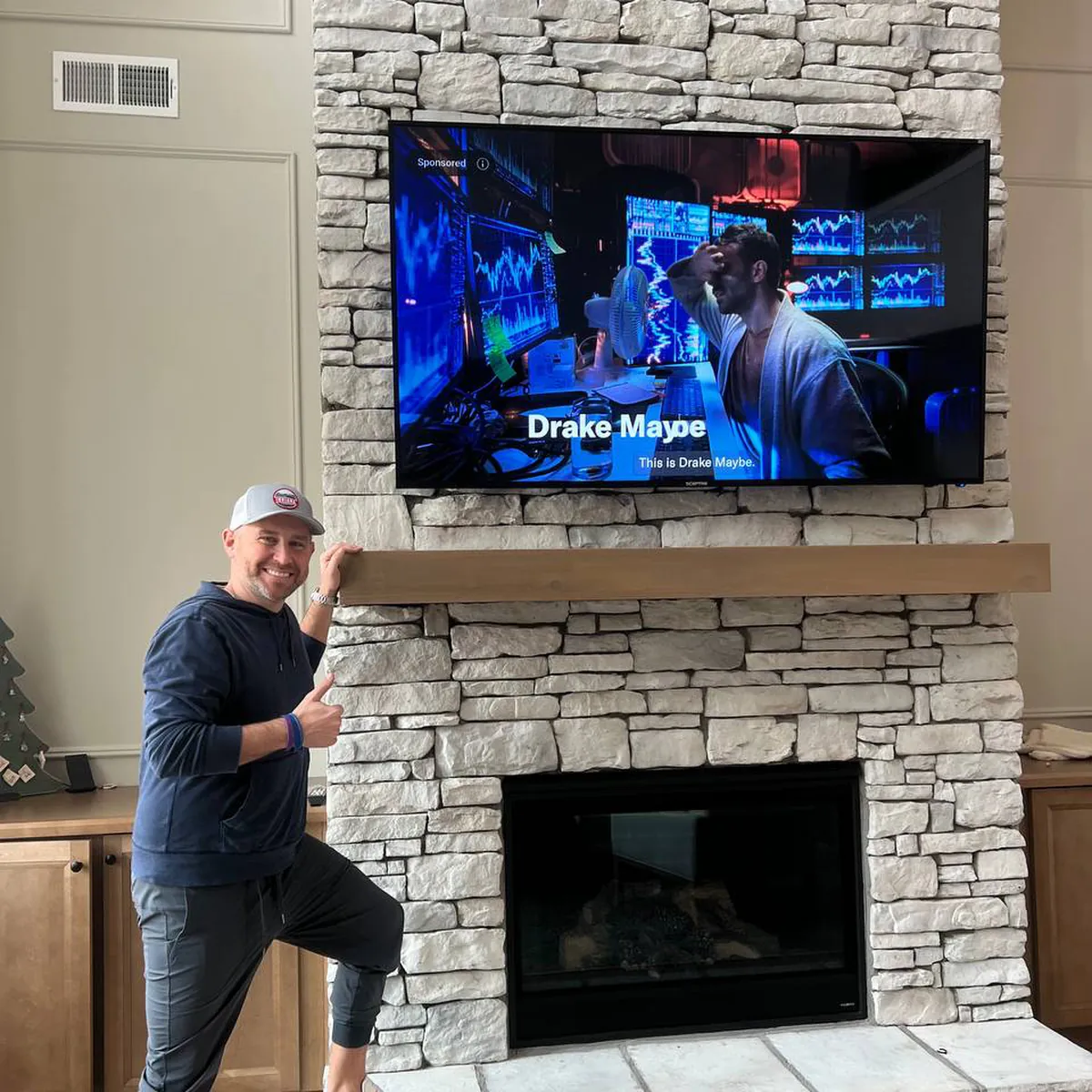
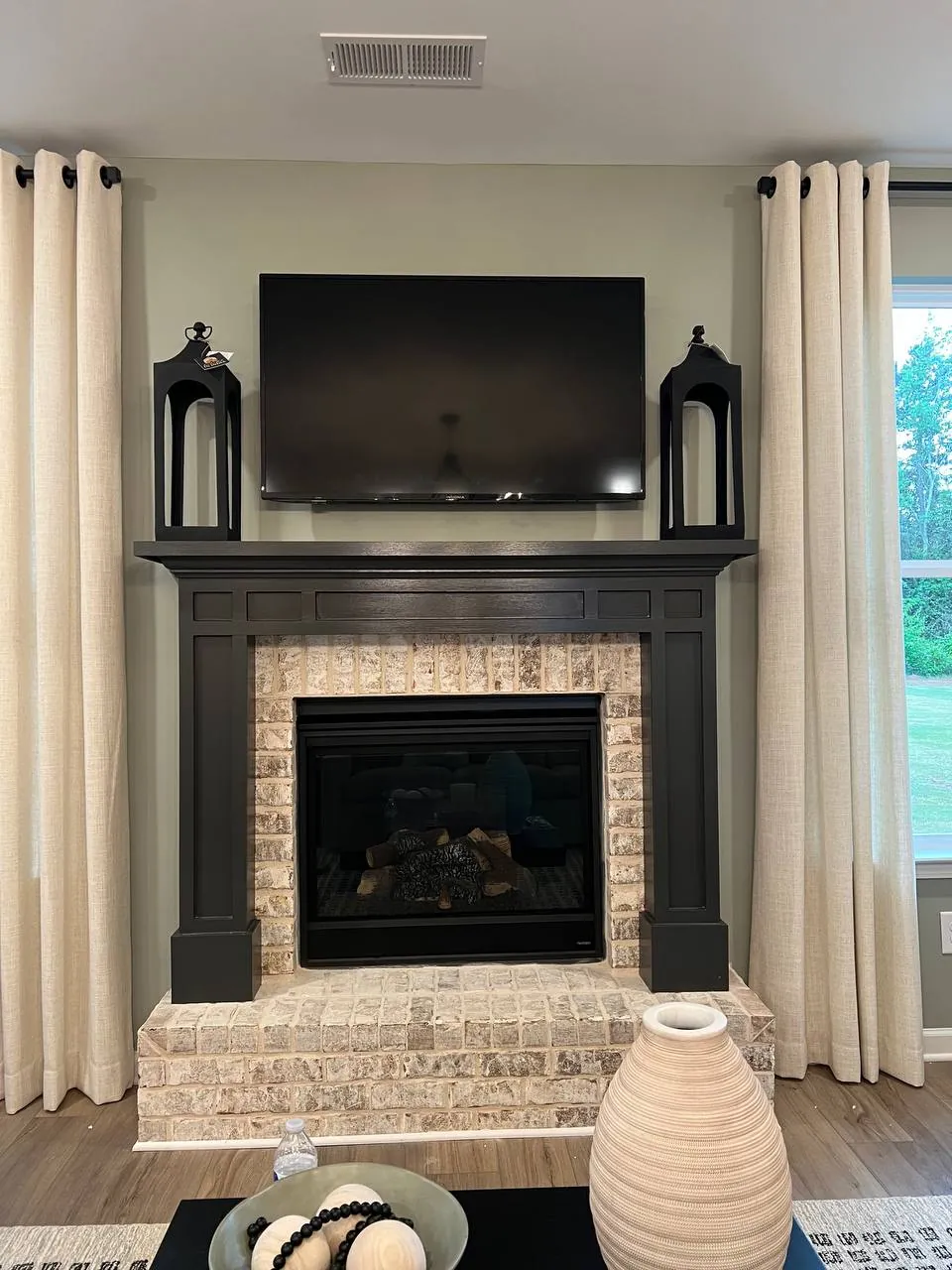
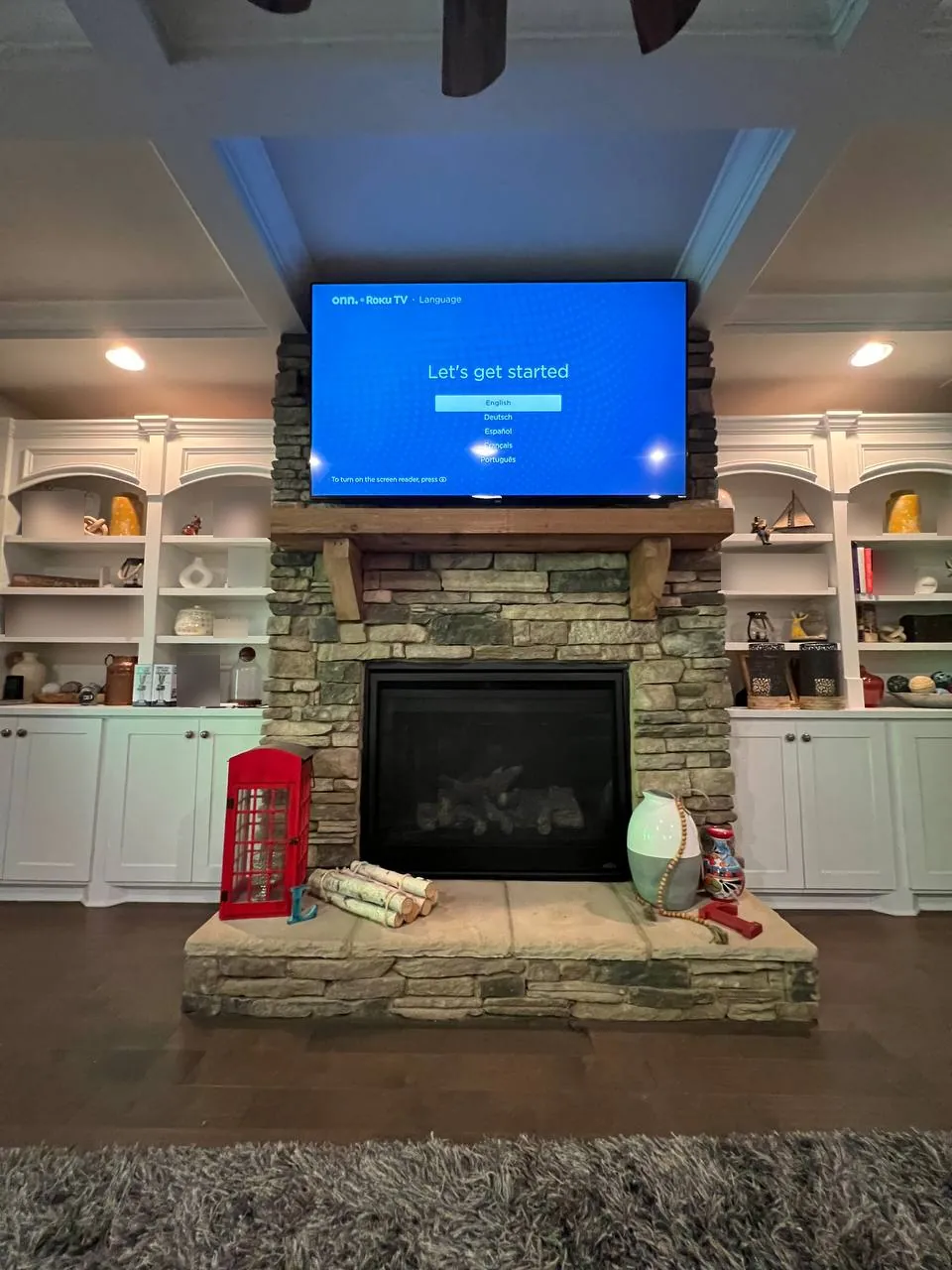
North of Division Avenue, the North Slope Historic District is mostly middle-class houses: Victorian, Craftsman, Colonial Revival and Foursquare. The Wedge, the triangle of blocks between Sixth Avenue and Division, filled in from the 1890s through the 1930s. Out in the North End, Craftsman bungalows from the 1910s and 1920s line the streets around the Proctor District and the University of Puget Sound, and Old Town keeps the name of the original settlement, where Job Carr built his cabin in 1865. Plenty of these houses have a brick fireplace, and mounting above one means masonry anchors at $59 plus the fireplace line at $49.
Downtown, the University of Washington Tacoma opened in 1997 in a row of old brick warehouses, and along the Thea Foss Waterway a mill built in 1905 now holds lofts with exposed brick and very tall ceilings. Brick takes masonry anchors at $59 per TV. Under a ceiling that high, hang the screen for the people sitting in front of it, not for the middle of the wall.