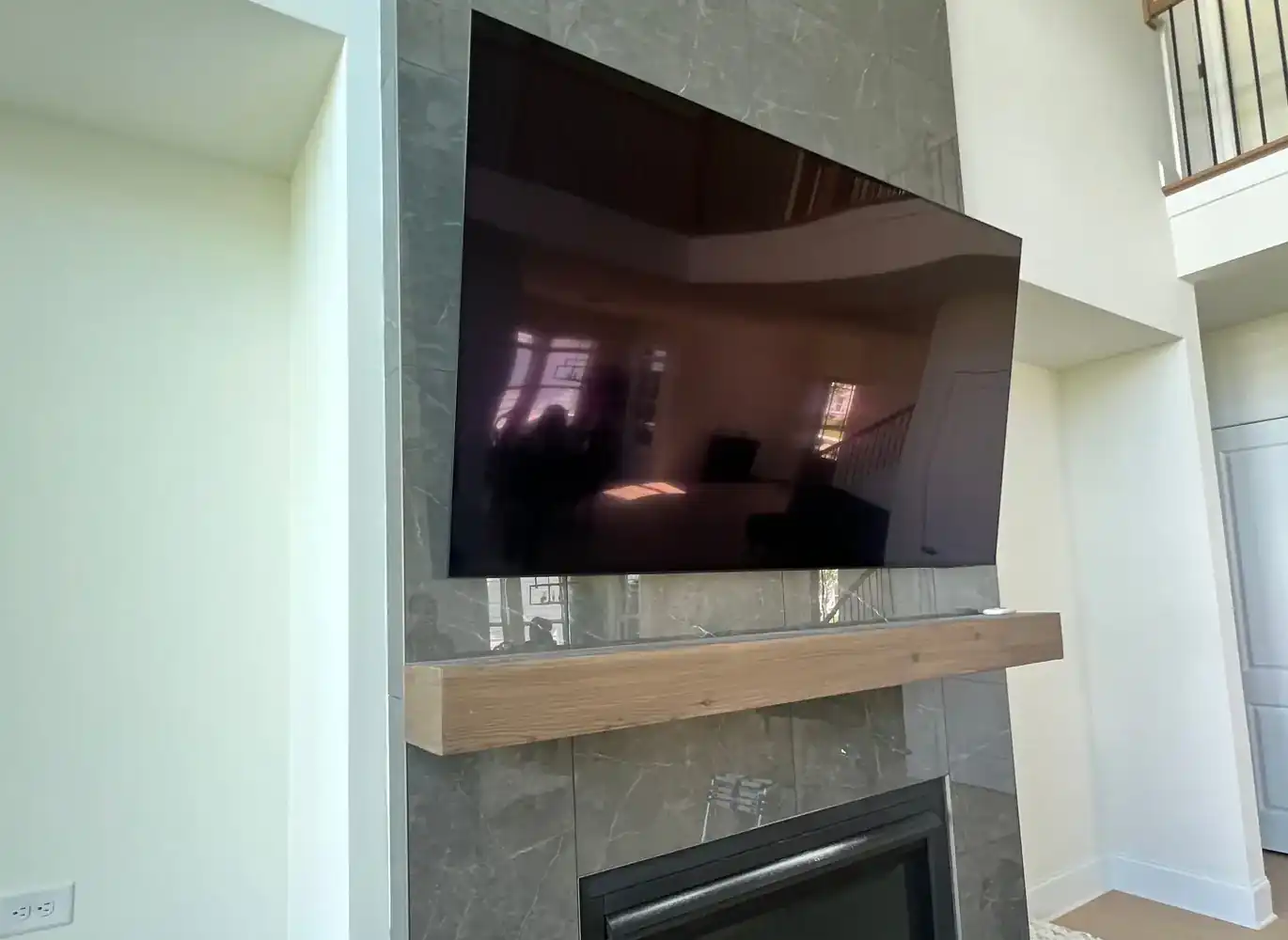
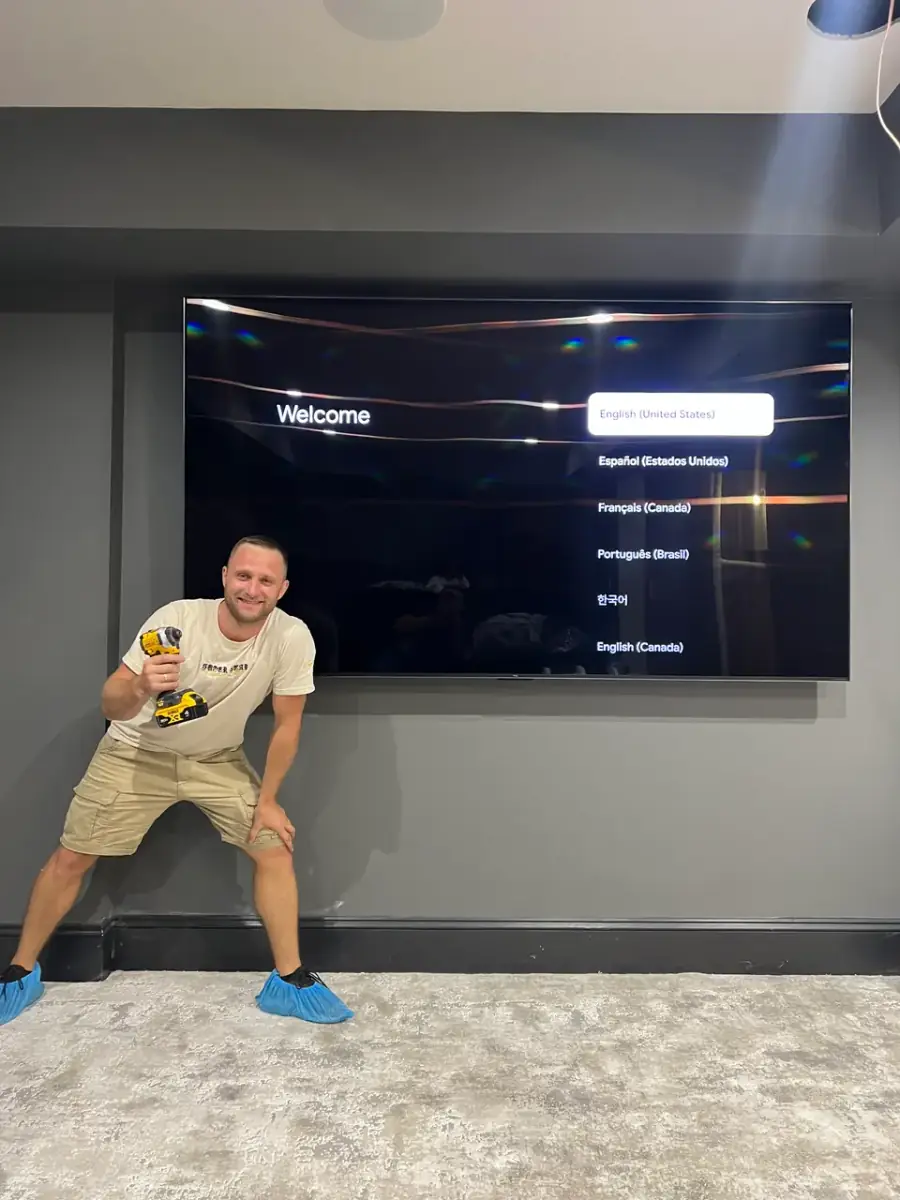
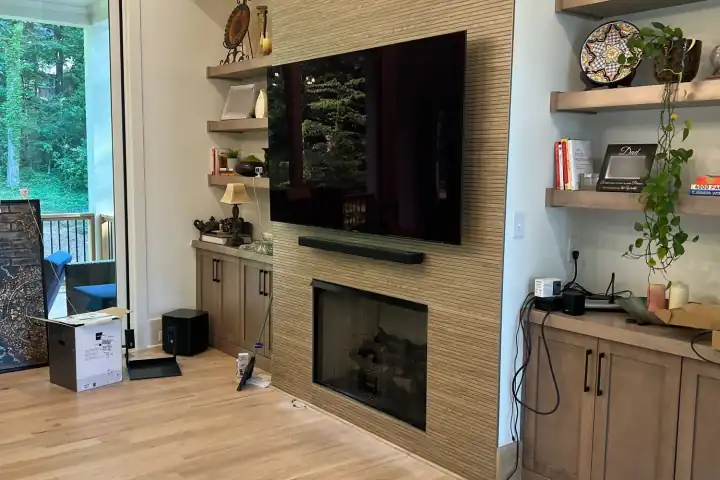
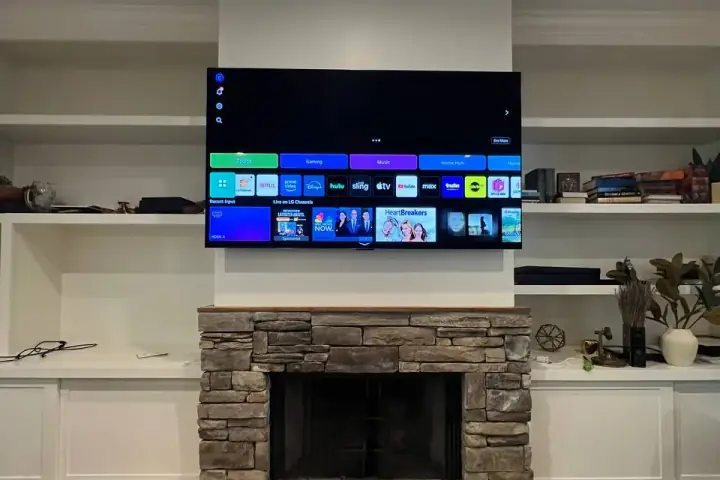
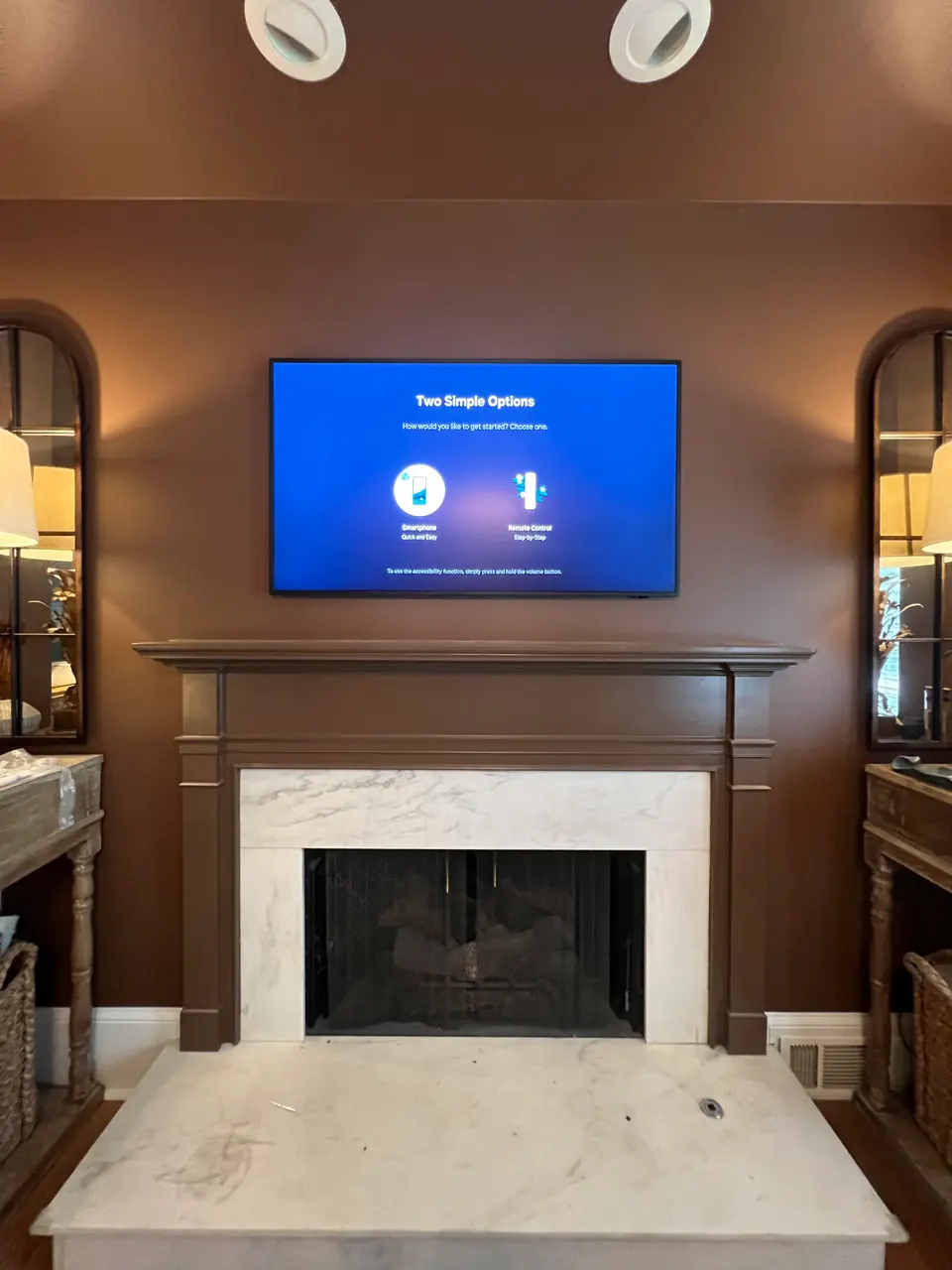
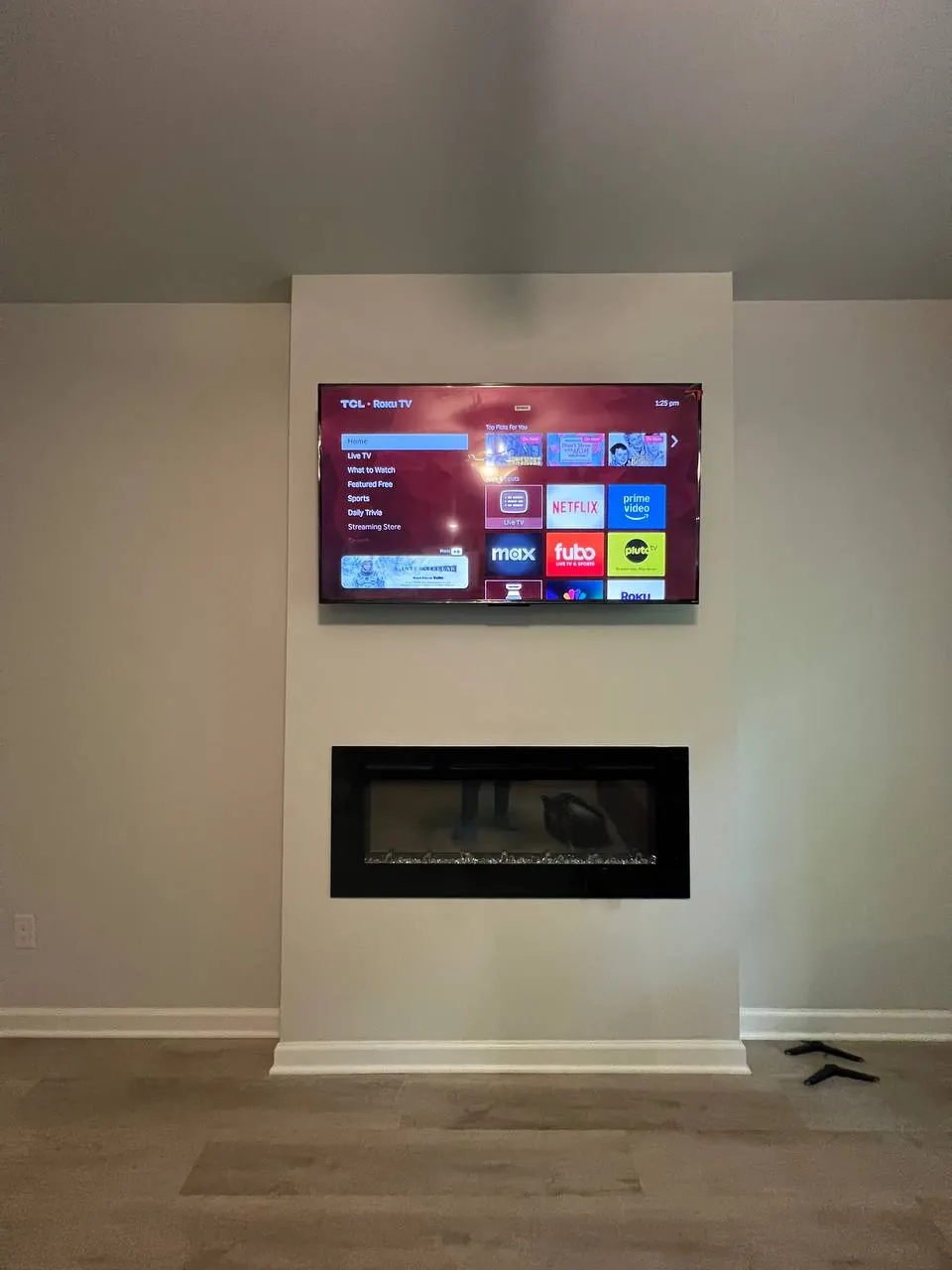
Southcenter and Andover Park are mostly commercial, so many of the TVs there go into waiting rooms, break rooms, restaurants and stores. Commercial interiors are built differently from houses. Partitions are often drywall over thin steel studs. Andover Park was developed as an industrial park by the early 1960s, and some of the older industrial buildings in the area have concrete tilt-up walls, poured flat on site and tilted up into place.
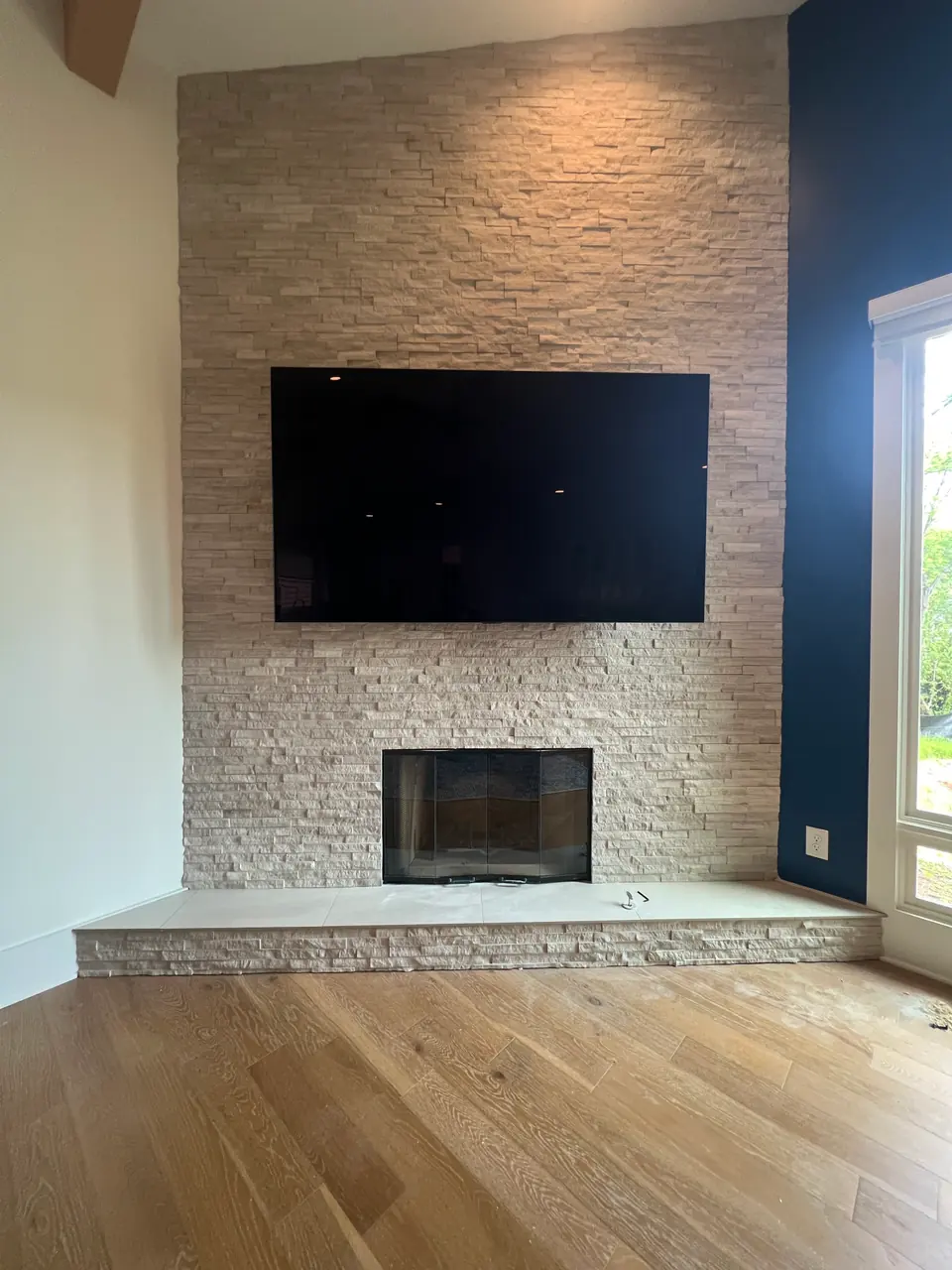
Each kind of wall changes the hardware, and one changes the price. Drywall over steel studs carries no wall charge, but thin steel won't hold a lag bolt the way wood does, so the mount goes up on anchors made for metal framing, or into wood blocking where the builder added some. Concrete takes masonry anchors set with a hammer drill, which is the $59 hard-wall line. Ceiling mounts over a counter or a bar are priced from a photo.
A screen for customers also sits differently from one in a living room. Hung above head height in a waiting area, a TV on a tilting mount ($59) angles down toward the chairs. A row of screens behind a counter usually goes on fixed mounts ($49) so the edges line up. Two TVs in one order take 20% off, and three or more take 30%, which adds up when a whole room is being fitted out. In a shared building, the property manager may limit drilling to certain hours, so check before picking a time.
On the residential side, Riverton is the city's most historically intact neighborhood, with mostly one-story ramblers and two-story houses. Apartment complexes line Tukwila International Boulevard near the light rail station, with newer mixed-use buildings among them. In a house, drywall or plaster mounts at no extra charge, while brick adds $59. Apartment tenants need the landlord's word on drilling and opening walls, so ask before you book.