Aurora was founded on the Fox River in Kane County and has spread east past the DuPage County line toward Naperville, in the western part of the Chicago area. Building on the far east side began along Eola Road and Route 59 in the late 1970s and early 1980s. Subdivisions kept filling the east side through the 1990s and 2000s, Stonebridge near Indian Trail and Eola roads and Palomino Springs west of Eola among them. Builders in those decades liked a family room open to the second floor, often with a stack of windows on the back wall, a gas fireplace and, in some houses, a hallway or balcony looking down from upstairs.
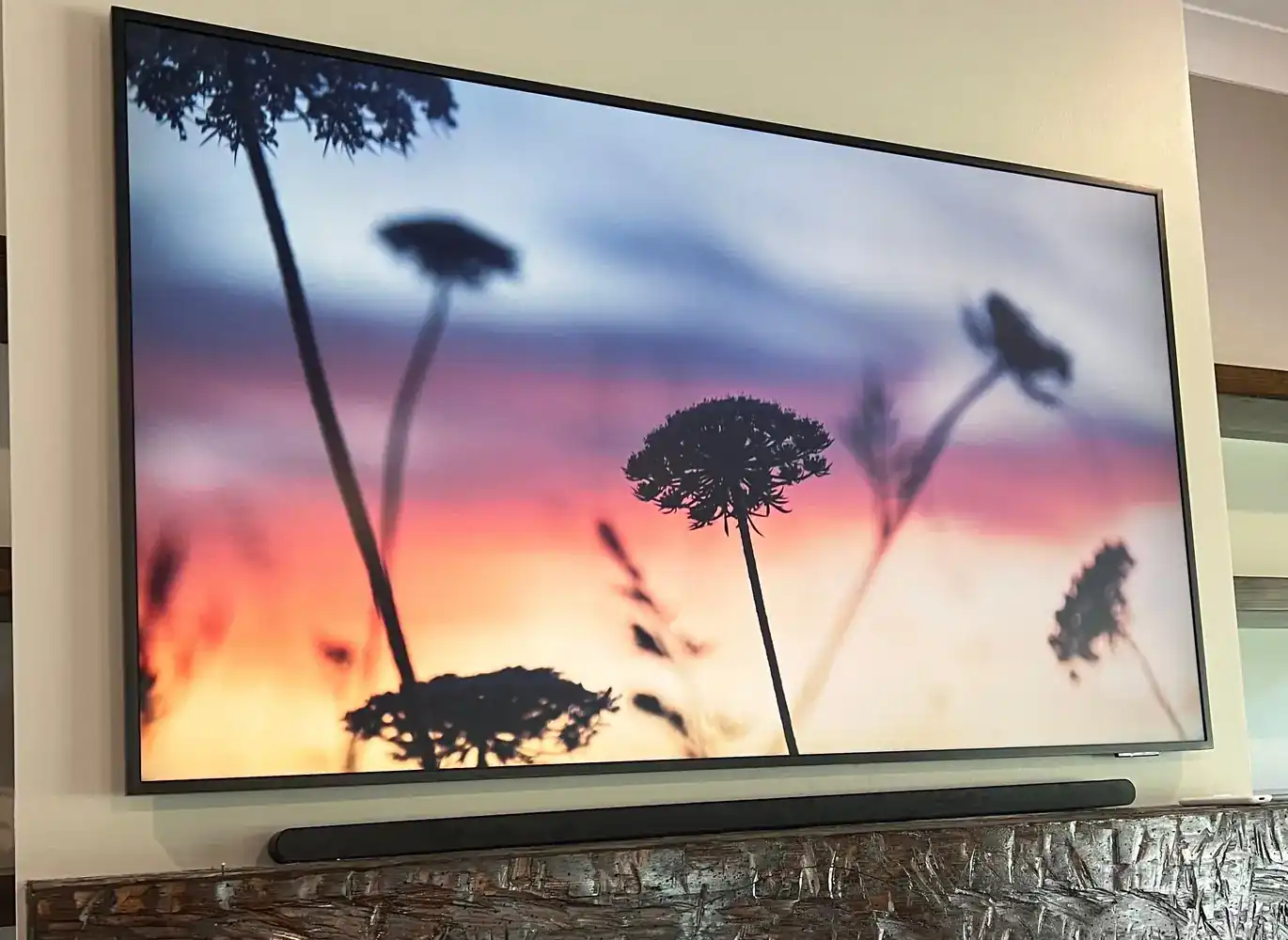
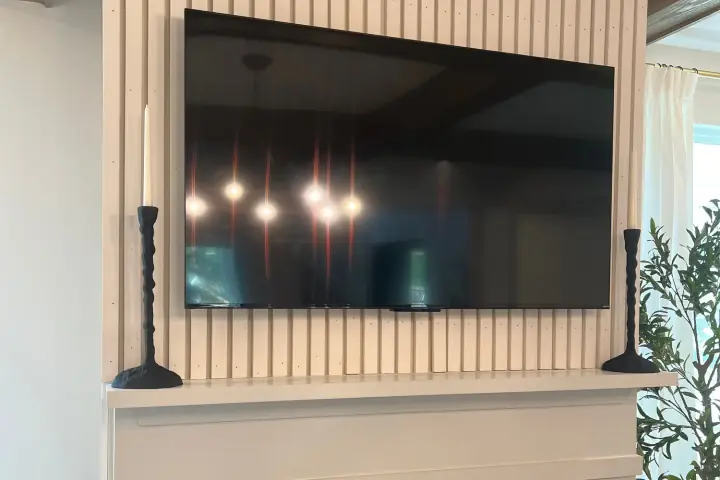
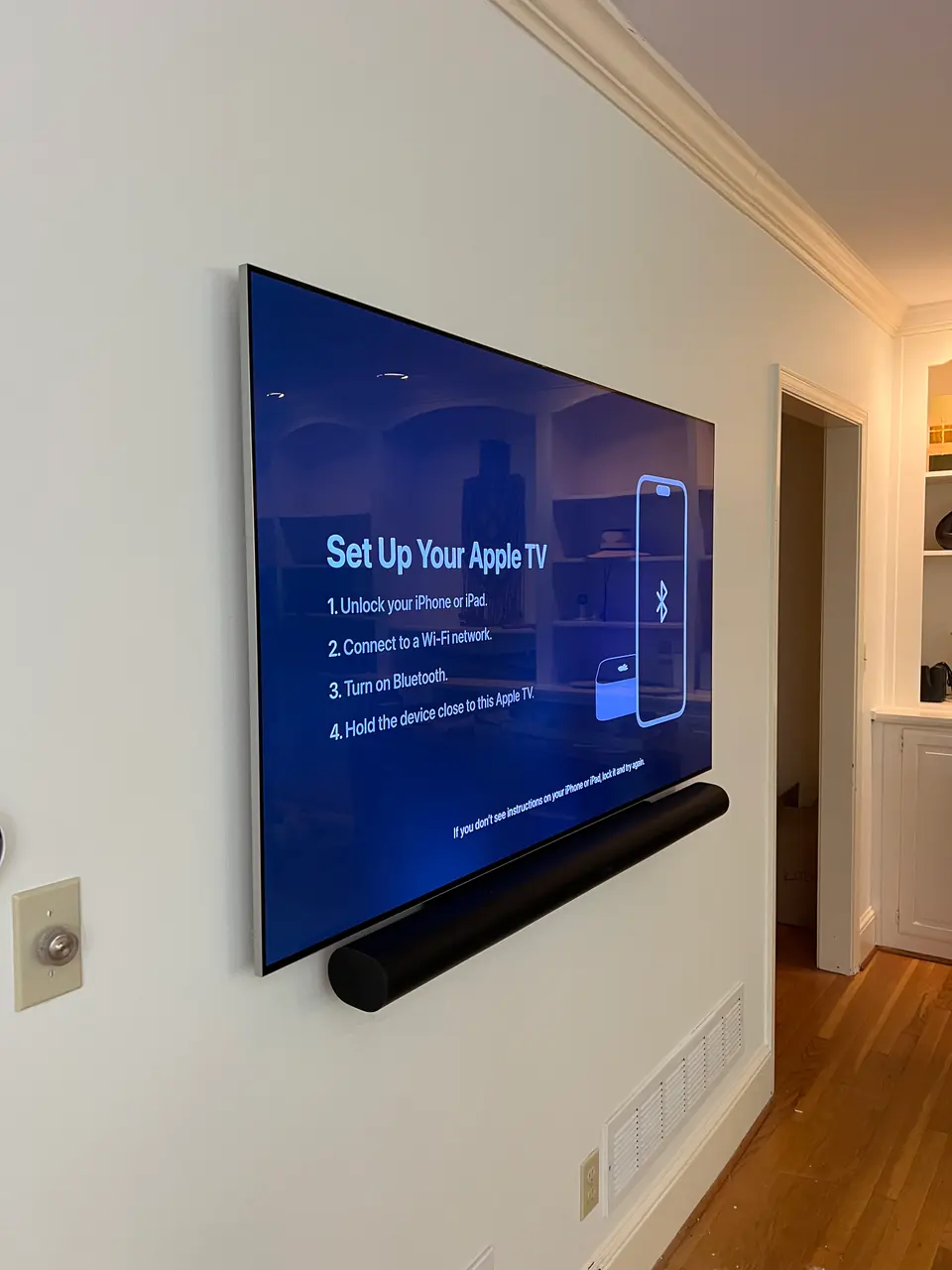
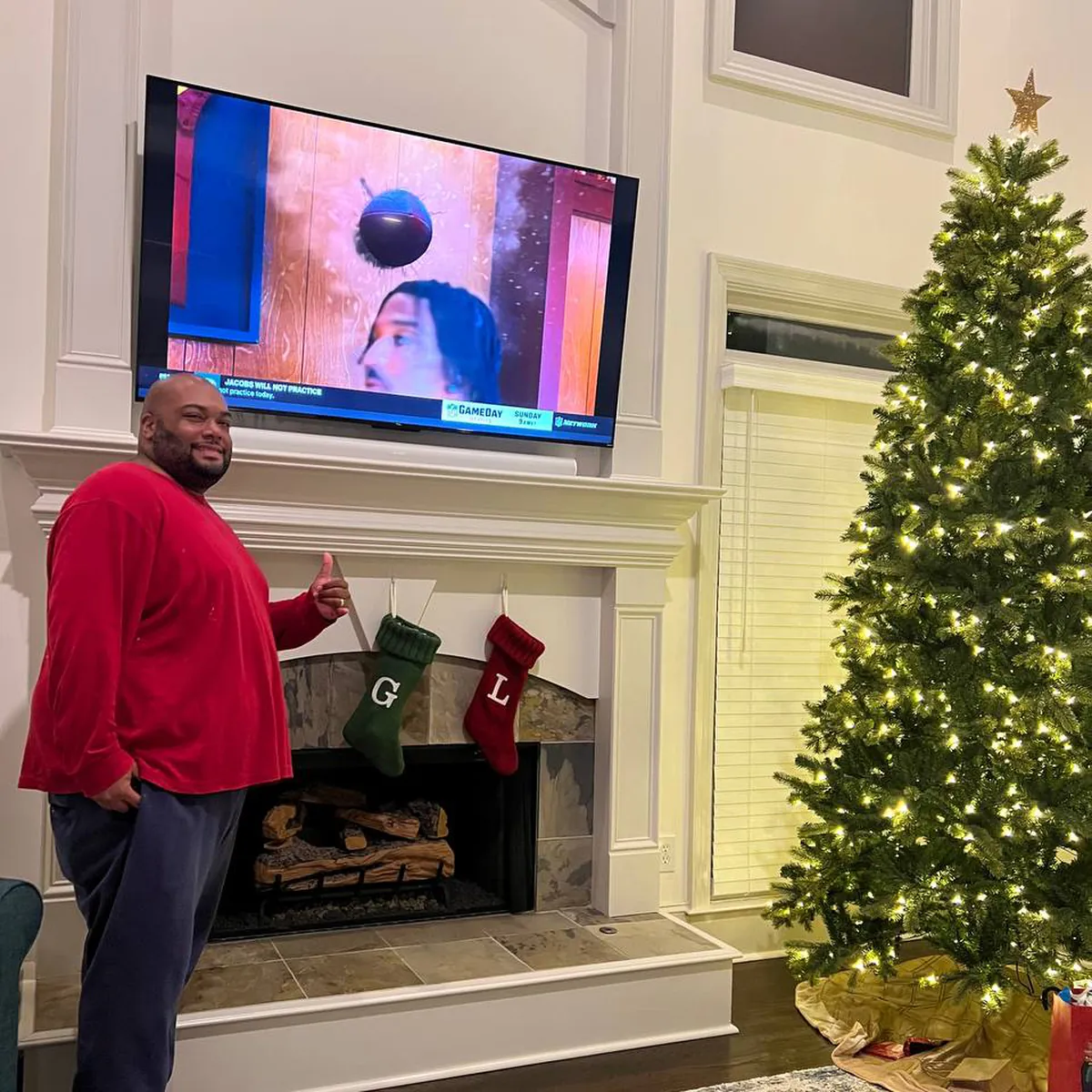
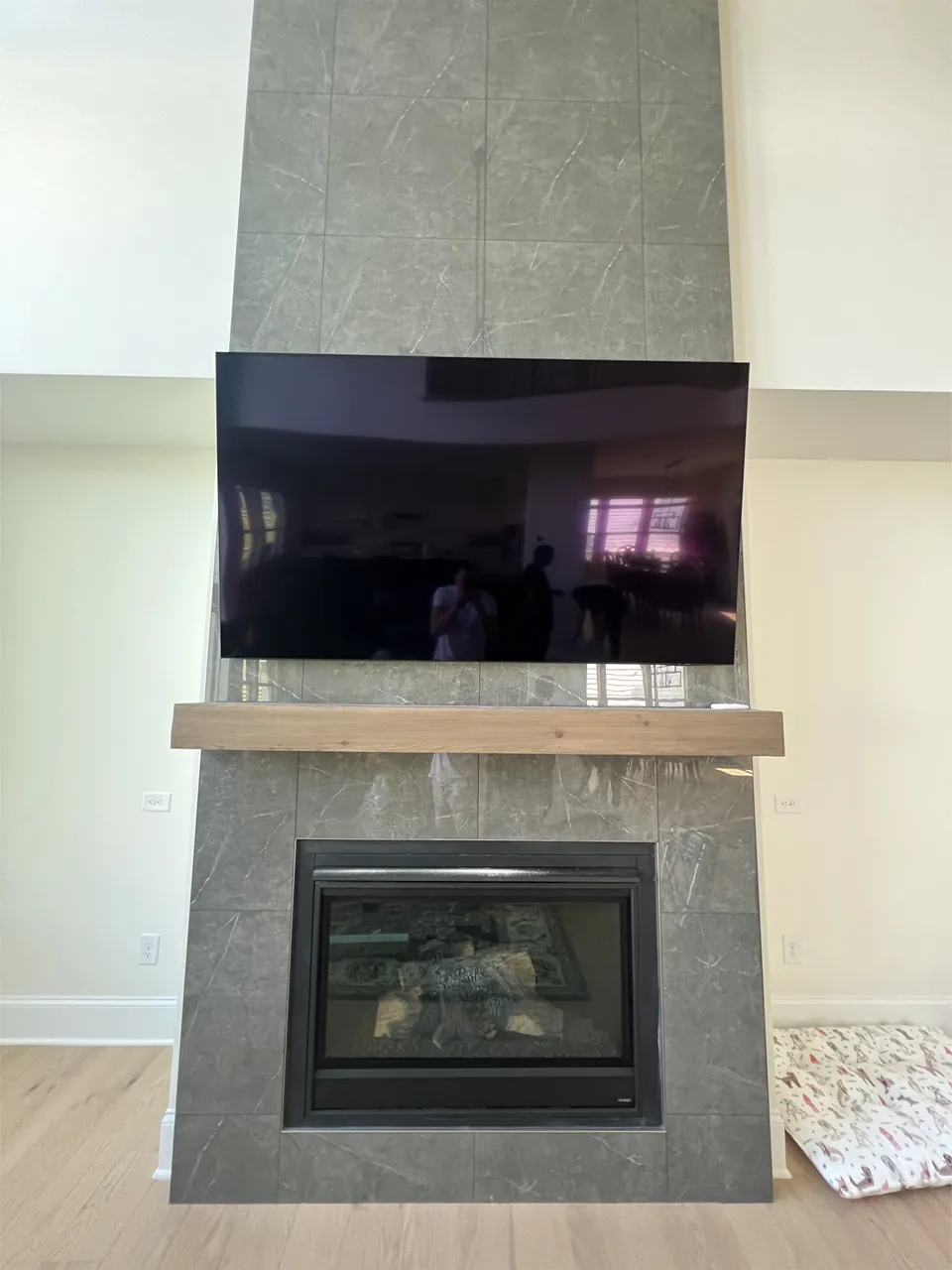
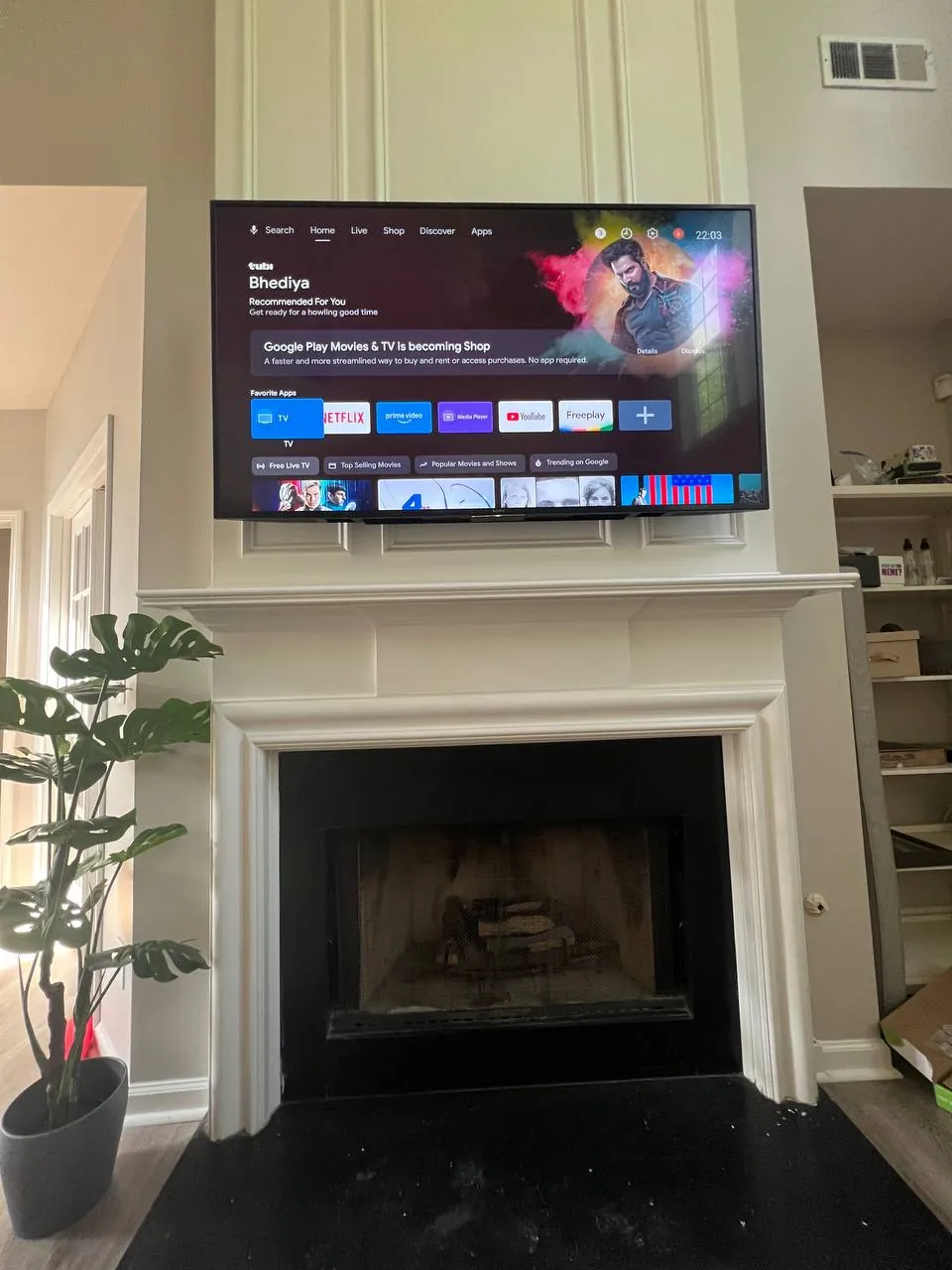
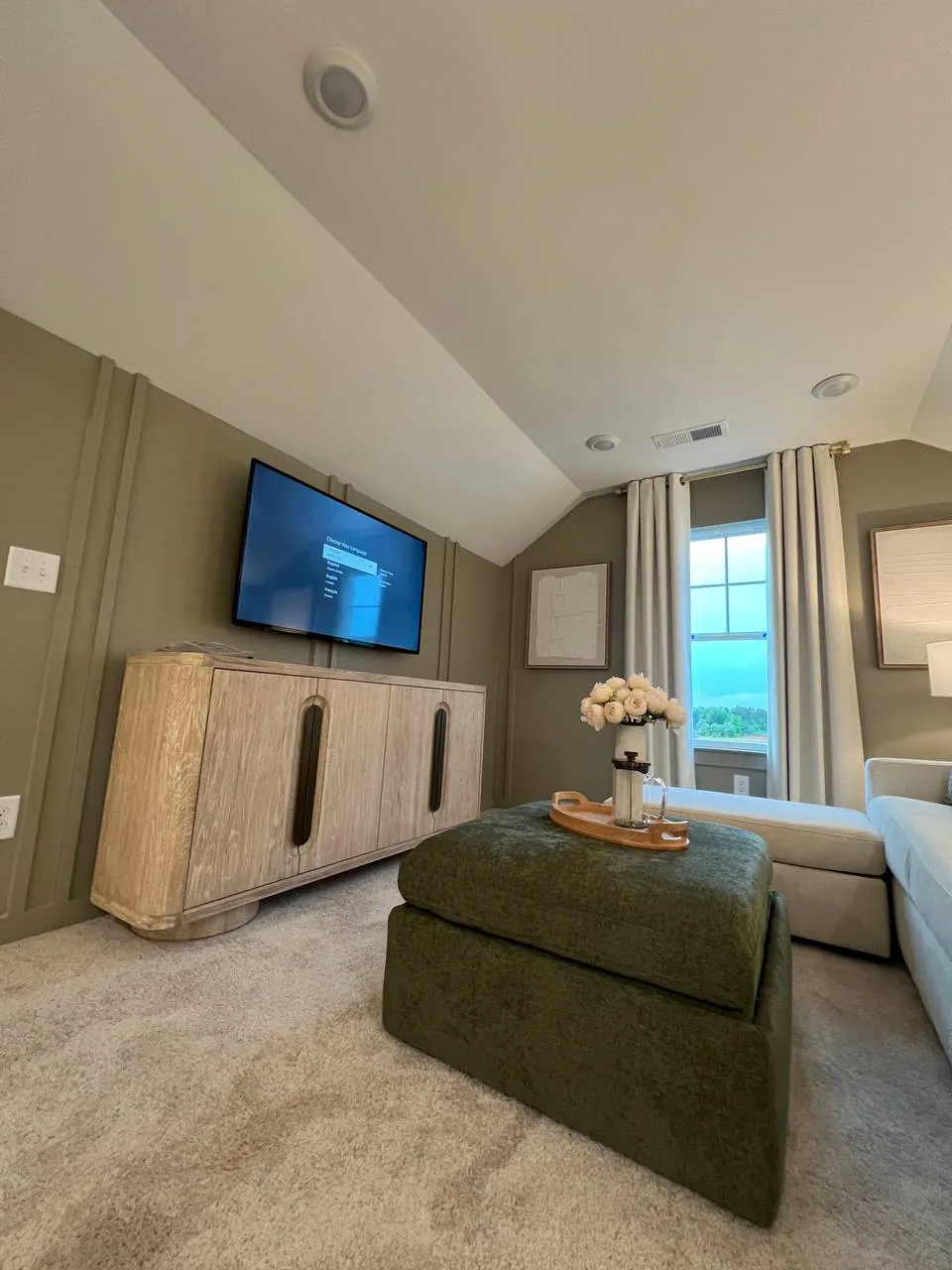
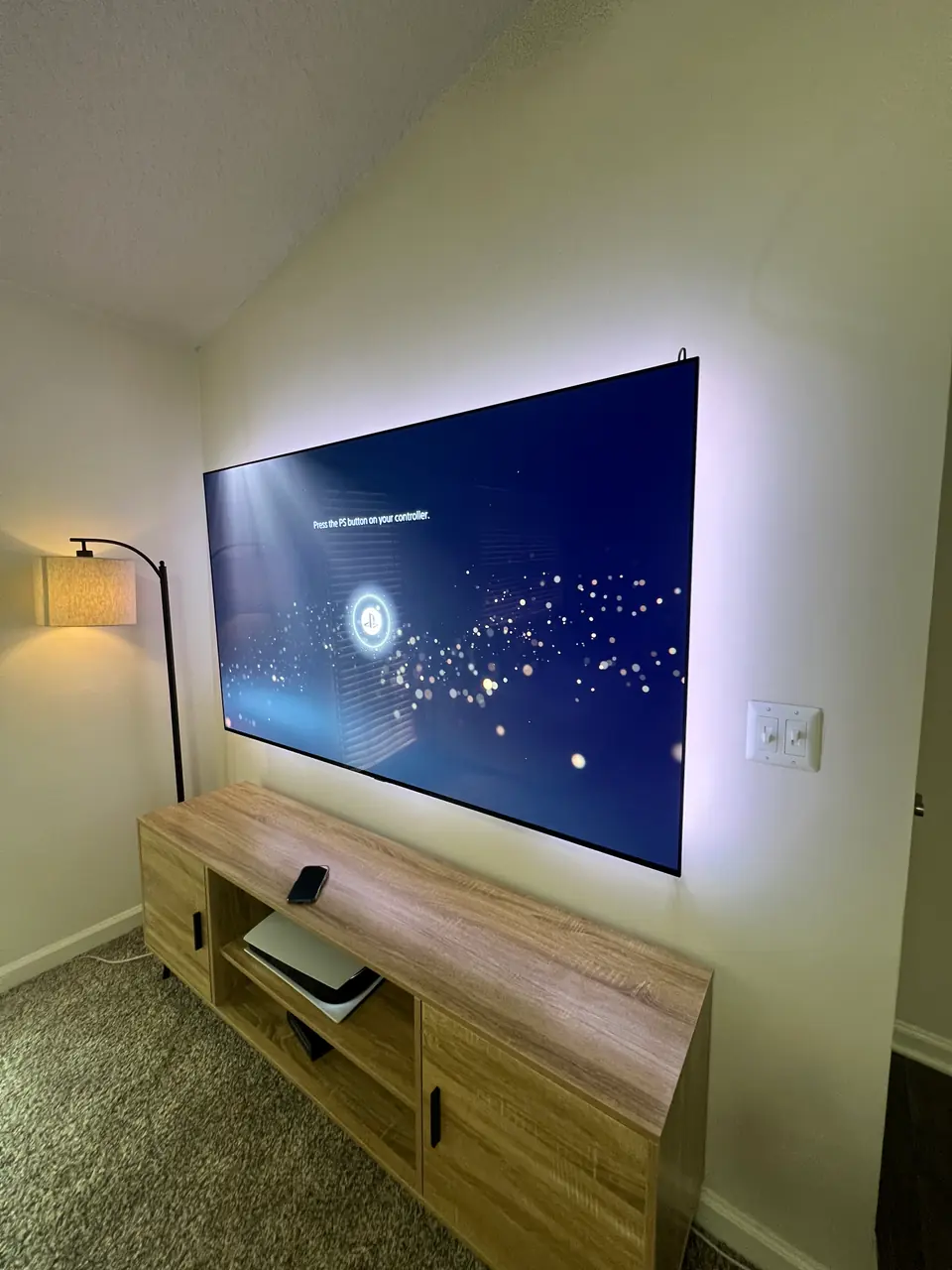
A wall that tall invites a TV hung high, as if the screen ought to rise with the room. The seats set the height, though, not the ceiling. Comfort comes from keeping the middle of the screen close to where your eyes land when you sit back, which is the same spot it would occupy on an ordinary eight-foot wall. Hang the TV halfway up a two-story wall and the whole couch tips its head back for the length of a movie. The wall above the screen can stay bare or hold art.
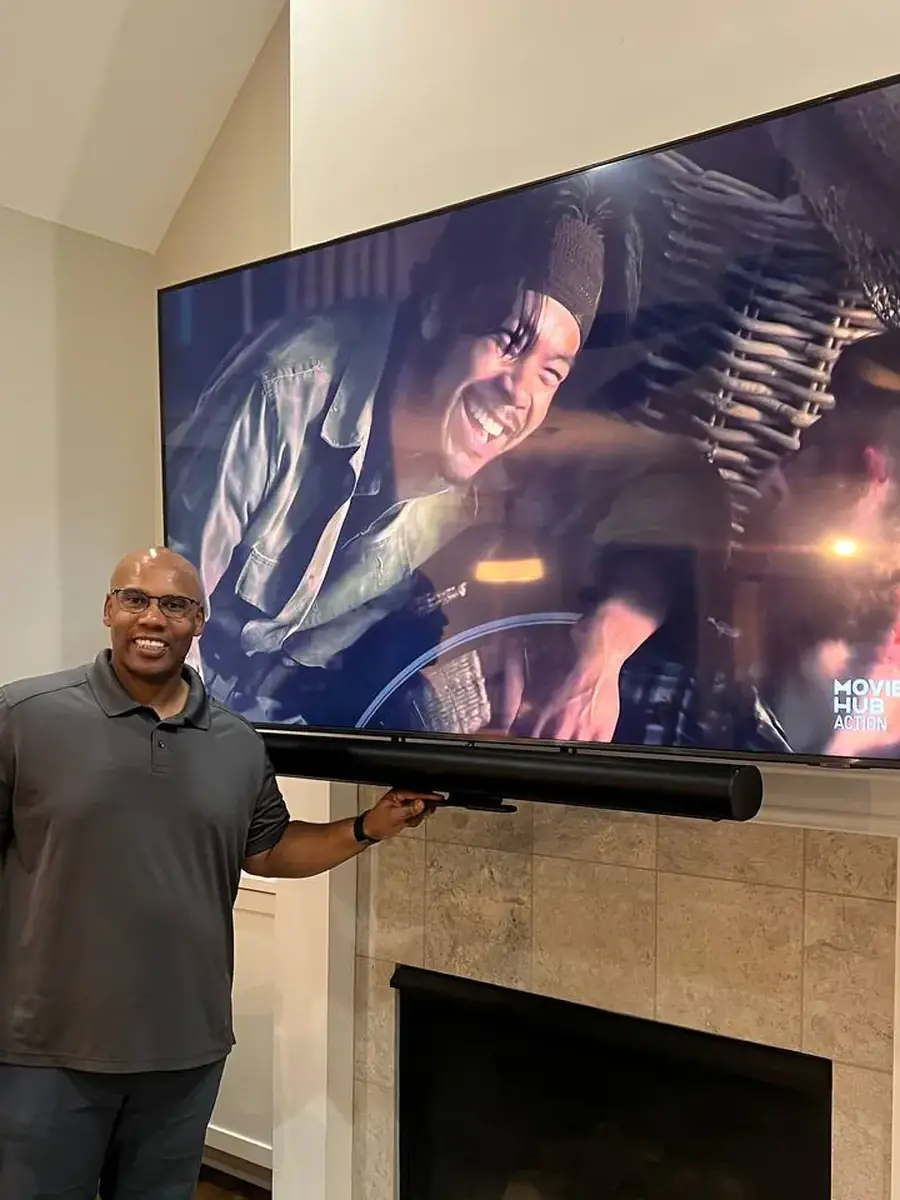
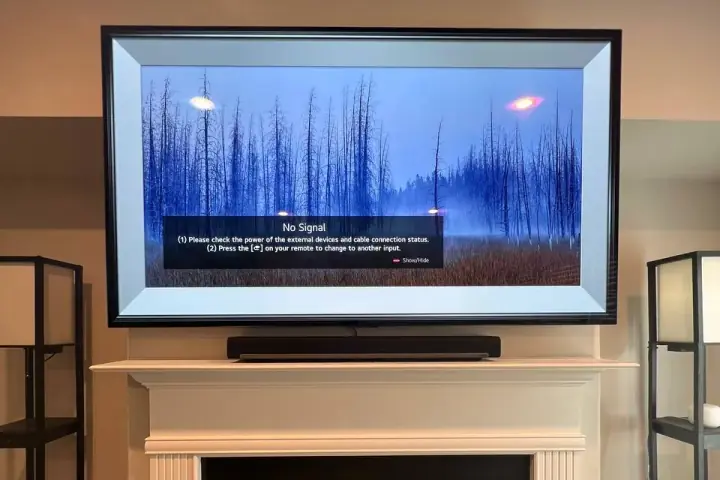
What the tall wall does change is scale. A 55-inch TV can look small against two stories of drywall, and the better fix is a bigger screen rather than a higher one. A 75-inch screen is about 37 inches tall, ten inches more than a 55-inch one, so centered at the same height it covers more of the wall without lifting anyone's chin. Where the TV must sit higher, as over a mantel, a tilting mount ($59) angles the screen down toward the couch. The fireplace page covers heat and wiring on that wall.
Near the river, the neighborhoods around downtown Aurora and Stolp Island are much older, and several are historic districts, the Near Eastside and Tanner districts among them. Their streets hold Italianate and Queen Anne houses, along with some Prairie School designs, and many of those houses have high ceilings and plaster on wood lath. Plaster costs the same to mount on as drywall, and the height rule carries over unchanged: a higher ceiling doesn't move your eyes. If the TV wall turns out to be brick behind the plaster, masonry anchors add $59.