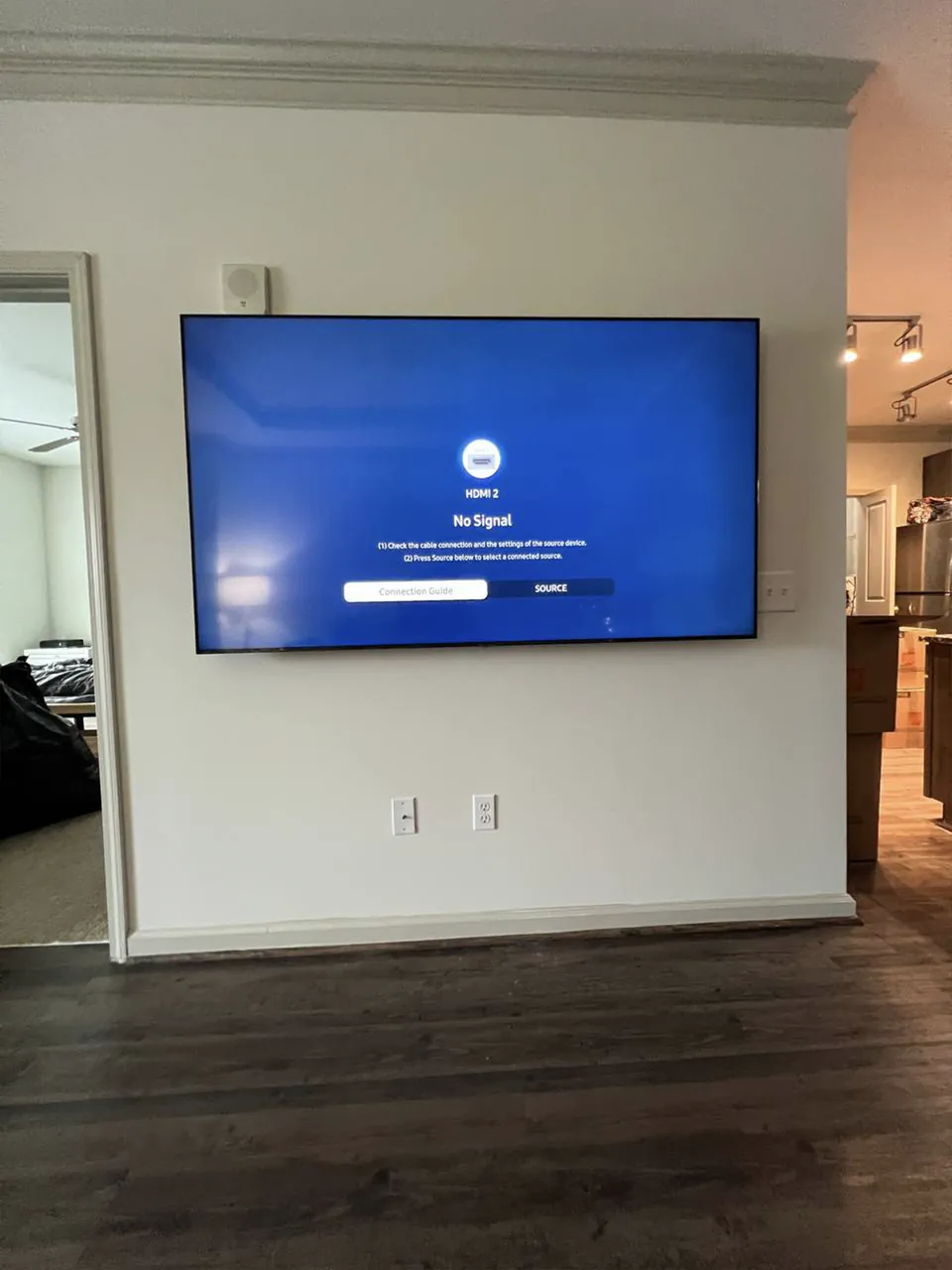
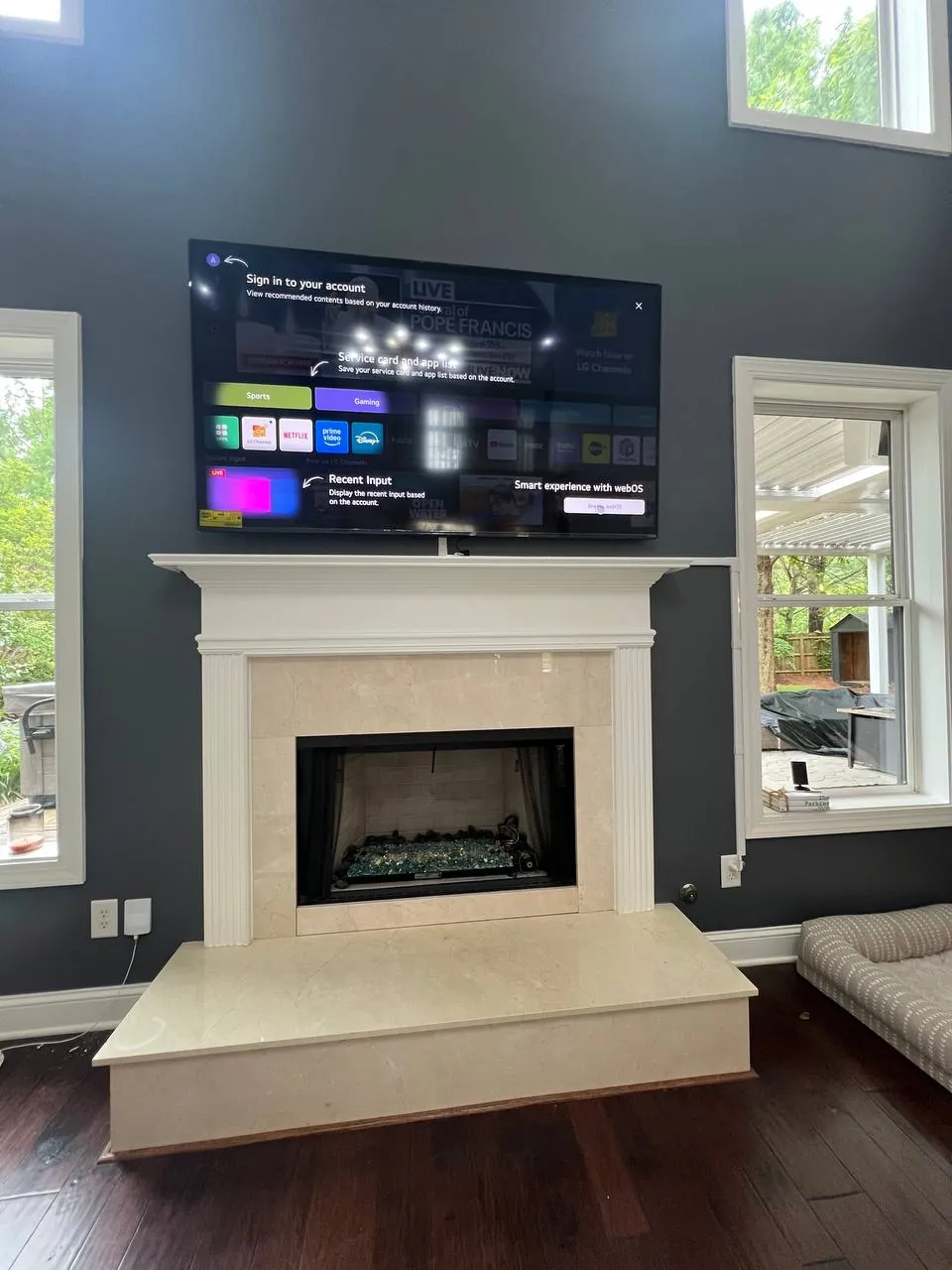
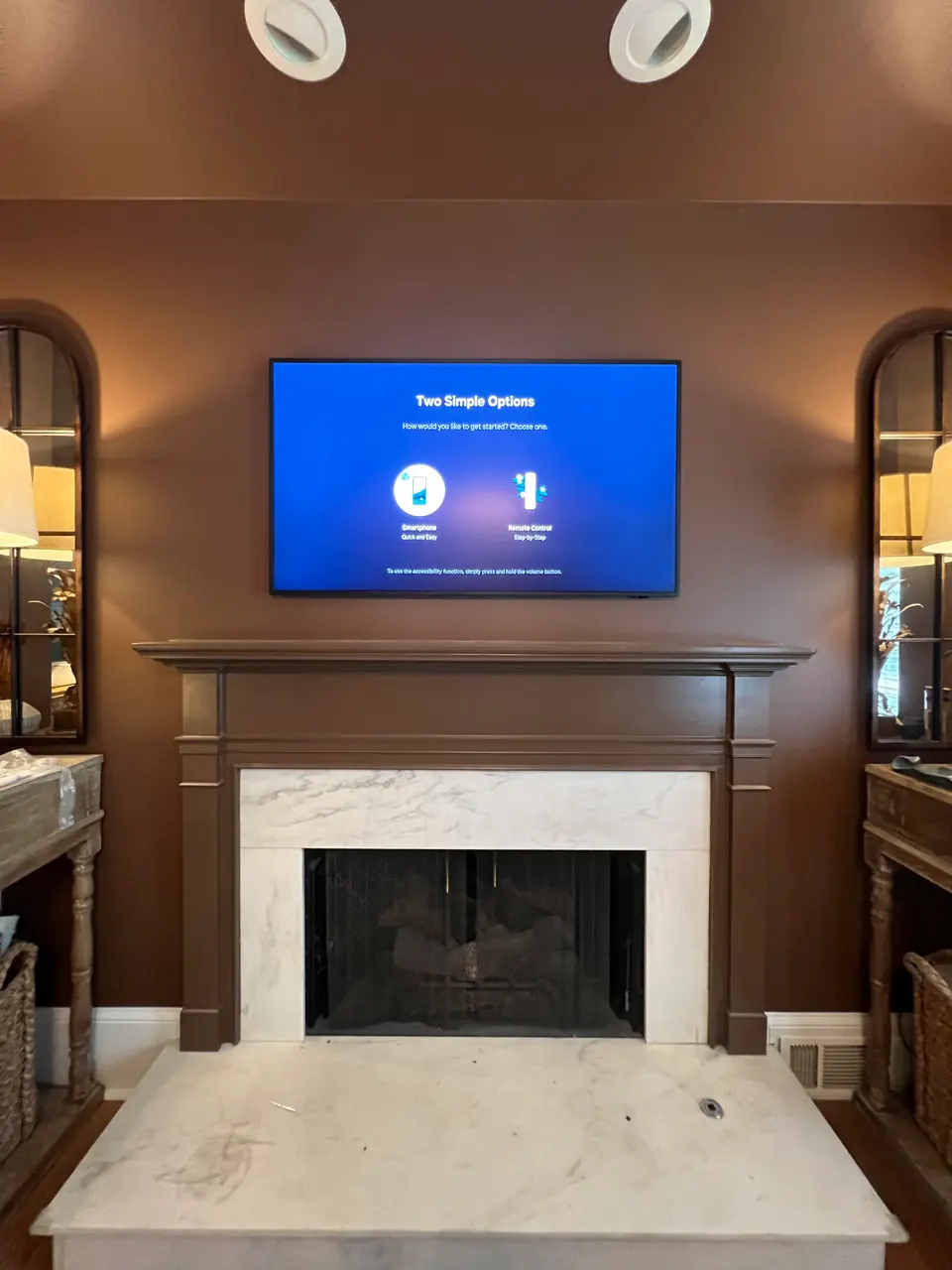
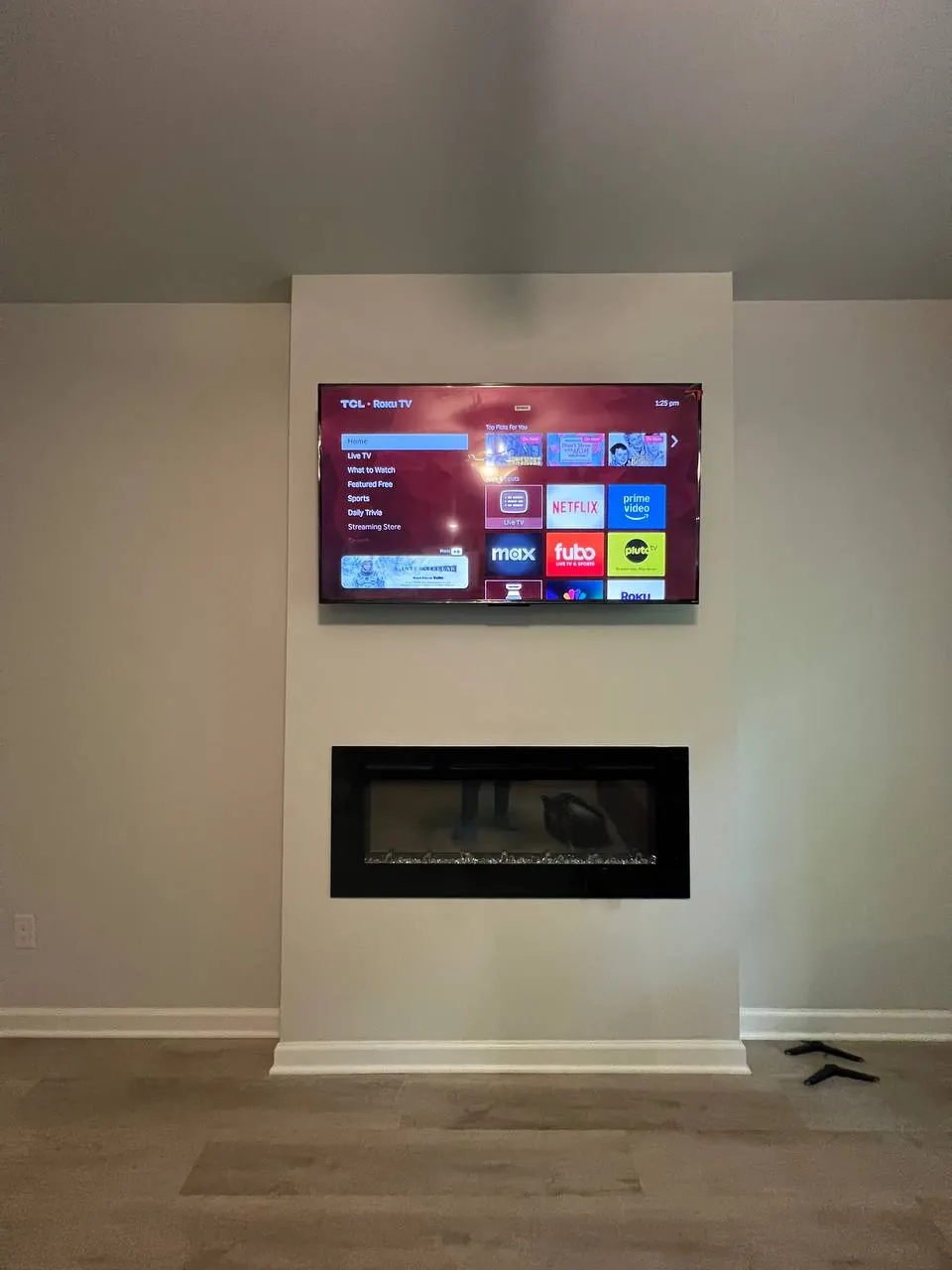
Dunedin takes its name from the Gaelic name for Edinburgh, and the town still leans into its Scottish side, with pipe bands marching down Main Street to the Pinellas Trail every spring. The streets around that center hold the city's oldest housing: Craftsman bungalows and frame cottages from the 1920s on brick streets, with plaster walls, wood trim and front rooms never drawn with a 65-inch screen in mind. Plaster costs nothing extra to mount on. The wall space is the issue.
In a room like that the TV usually ends up in one of two places. The first is the pier between two windows, where the mount has to catch the studs that frame the windows in a strip of wall that may be under four feet wide. A 43-inch TV is roughly 38 inches across and a 50-inch about 44, so the pier gets measured before the TV is bought. The second is a corner, with the TV on a full-motion mount ($79) fastened to one wall and swung out to face the sofa.
The 1950s block cottages near the water, Dunedin Isles Estates among them, have the same tight rooms with a different wall. A mount on the block front or side wall anchors into it for $59 and the cables go in a paintable cover for $49, while the framed partitions between the rooms carry no wall charge and can take the cables inside with an outlet behind the TV for $99. With a ceiling not far above eight feet, the center of the screen belongs at seated eye level, lower than most people expect, so the cable box goes beside the TV on a $49 wall shelf.
Along Edgewater Drive, by the marina and the Blue Jays' spring-training ballpark, the condo buildings include some from the 1970s, where the TV wall may be framed or concrete depending on what is on the other side, and concrete is the same $59 line as block. The Tampa Bay page lists the other cities on this price list, and Palm Harbor and Clearwater sit on either side of Dunedin.