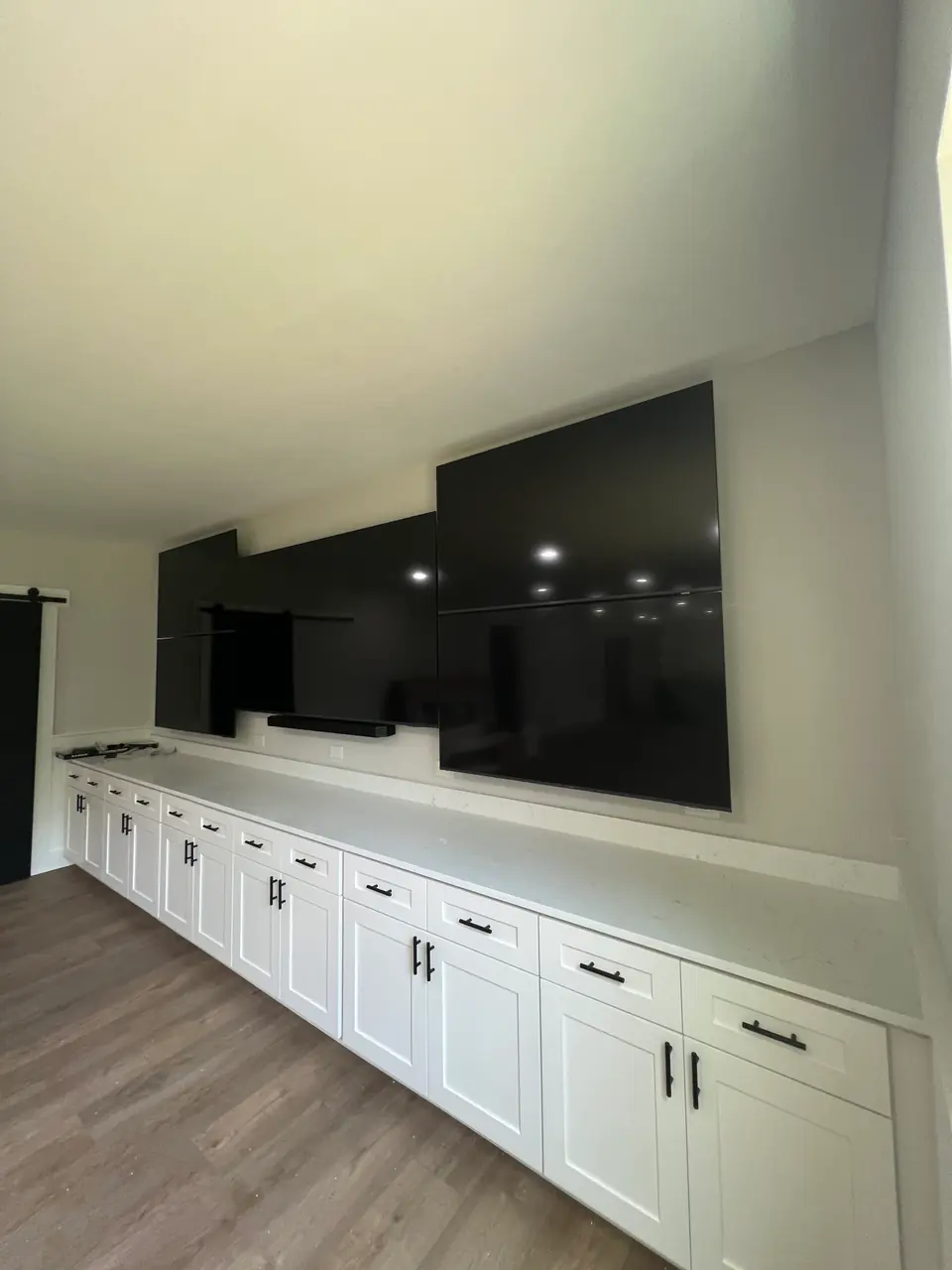
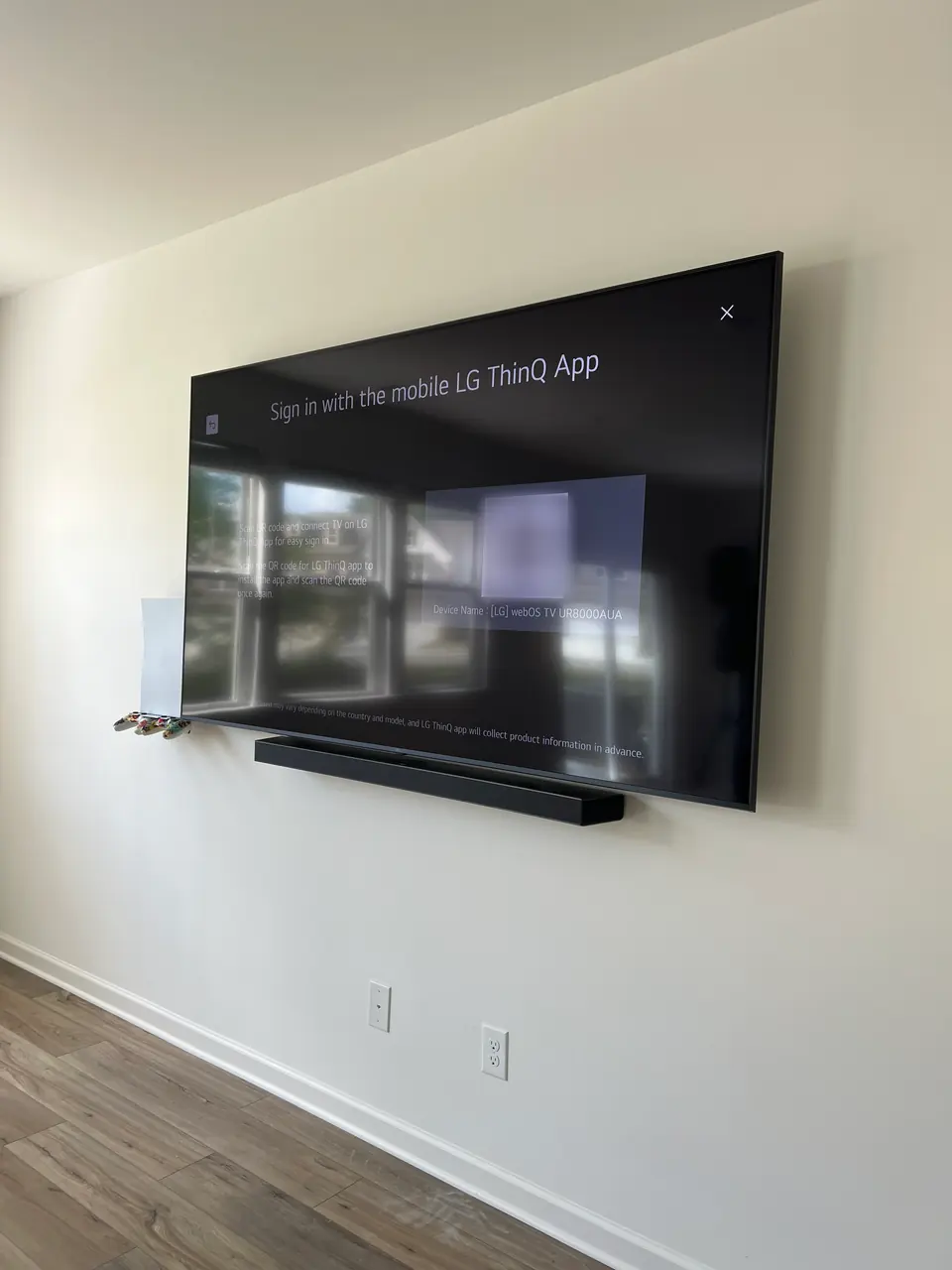
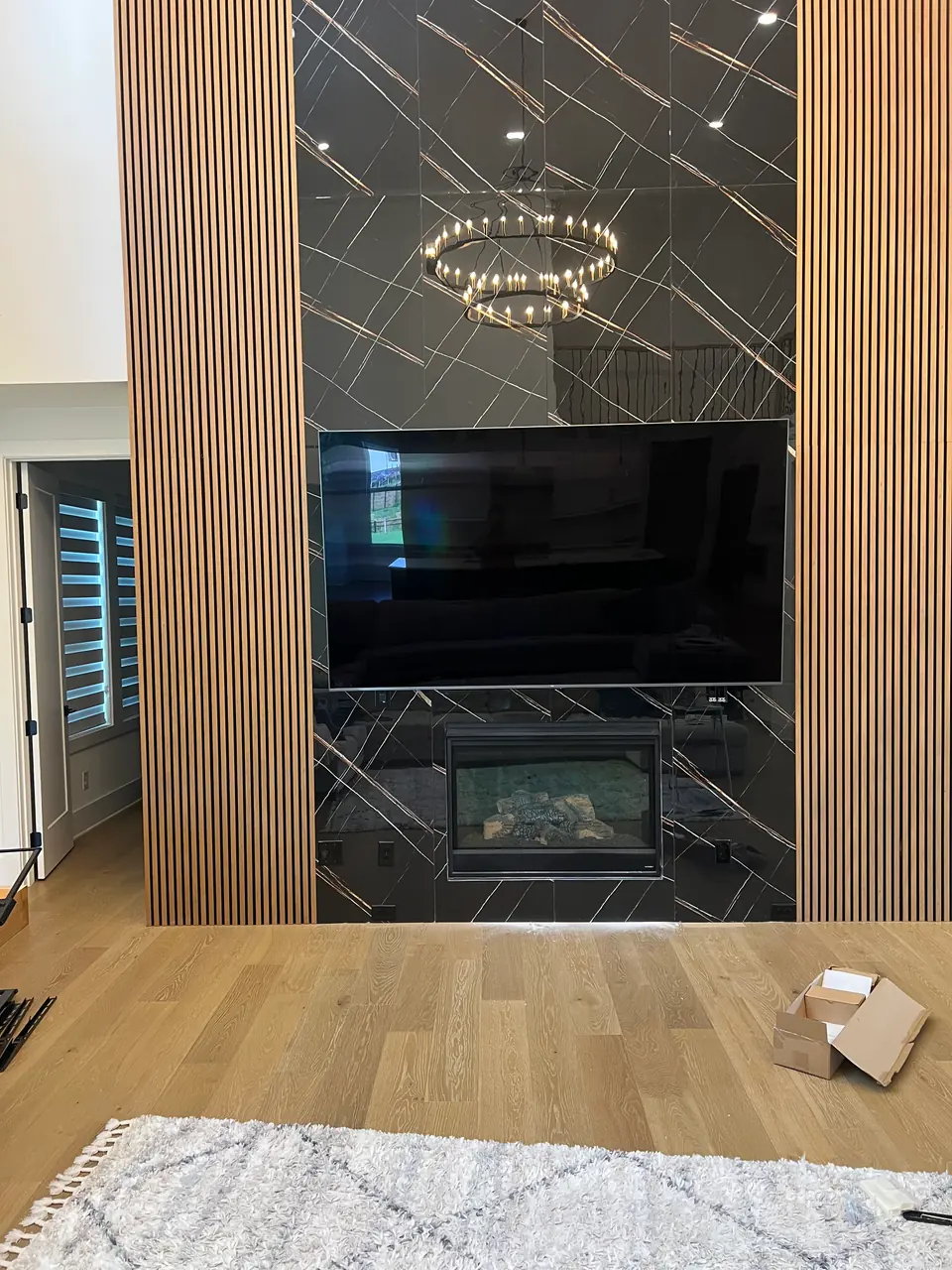
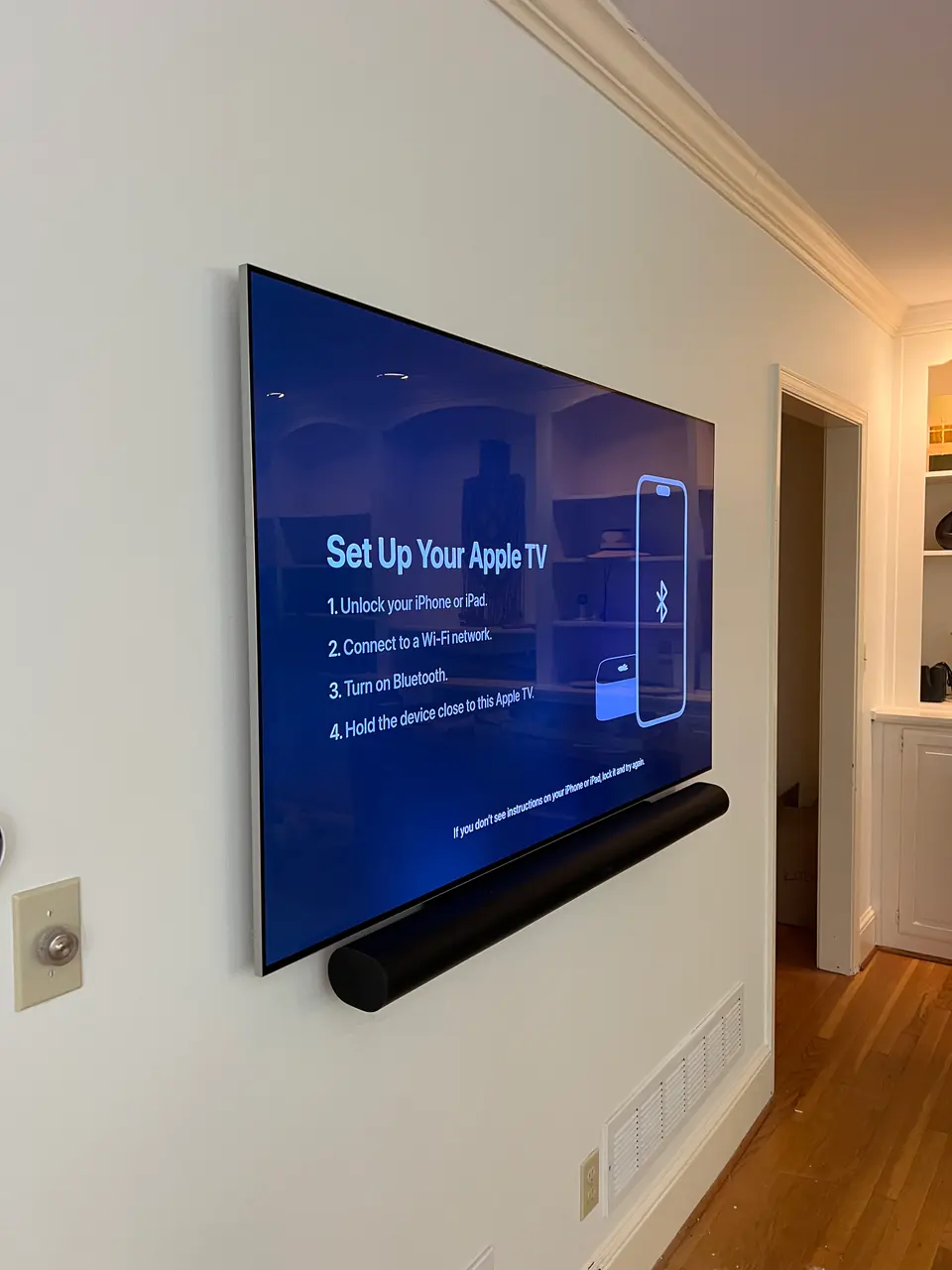
Pinellas Park was founded around 1911 by F. A. Davis, a Philadelphia publisher, and stayed a small town until after the Second World War. The growth that followed filled the grid on both sides of Park Boulevard with one-story ranches: concrete block outside walls under stucco, a picture window at the front and the bedrooms down a hall. The walls that divide the rooms are ordinary framed partitions, wood studs with drywall, or metal studs in some later houses.
That split is why the first question in a Pinellas Park ranch is which wall, not which TV. On a partition, the mount screws into the studs, there is no wall charge, and the cavity between the studs is open, so the cables can drop inside to a power outlet behind the TV for $99. On the block outside wall, the drywall or plaster sits on thin furring strips with the block right behind it: the mount anchors into the block for $59, the gap rarely has room for cables, and a paintable cover for $49 carries them to the nearest outlet.
In most of these floor plans the usable partitions are easy to pick out: the wall between the living room and the hall or the first bedroom, the wall that separates the kitchen from the living or dining room, and any wall between two bedrooms. The front and side walls are block, and so, in many houses, is the wall between the main rooms and a Florida room enclosed later, since that wall was once the outside of the house. A few older houses have block partitions too, so the technician taps the wall before choosing anchors.
The Mainlands of Tamarac, the large 55-and-over neighborhood in the northern part of Pinellas Park, dates from the late 1960s to the 1980s and is built the same way: block outside, framed partitions inside, one story. Manufactured homes are the other big group, in communities along Park Boulevard and on the streets off it, as in neighboring Largo. Their walls are taken up below, on the same price list as a house, and the Tampa Bay page lists every city around the bay.