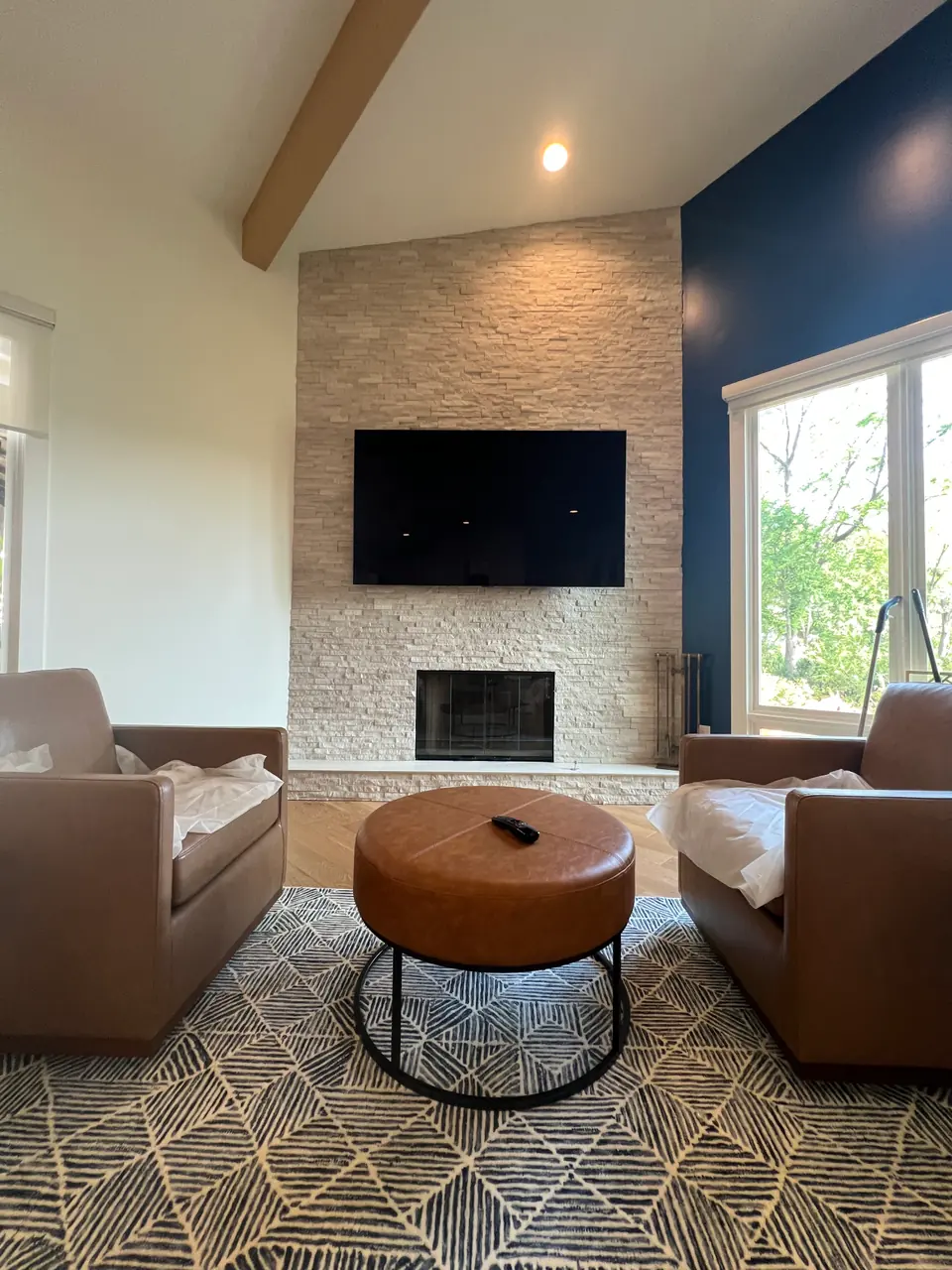
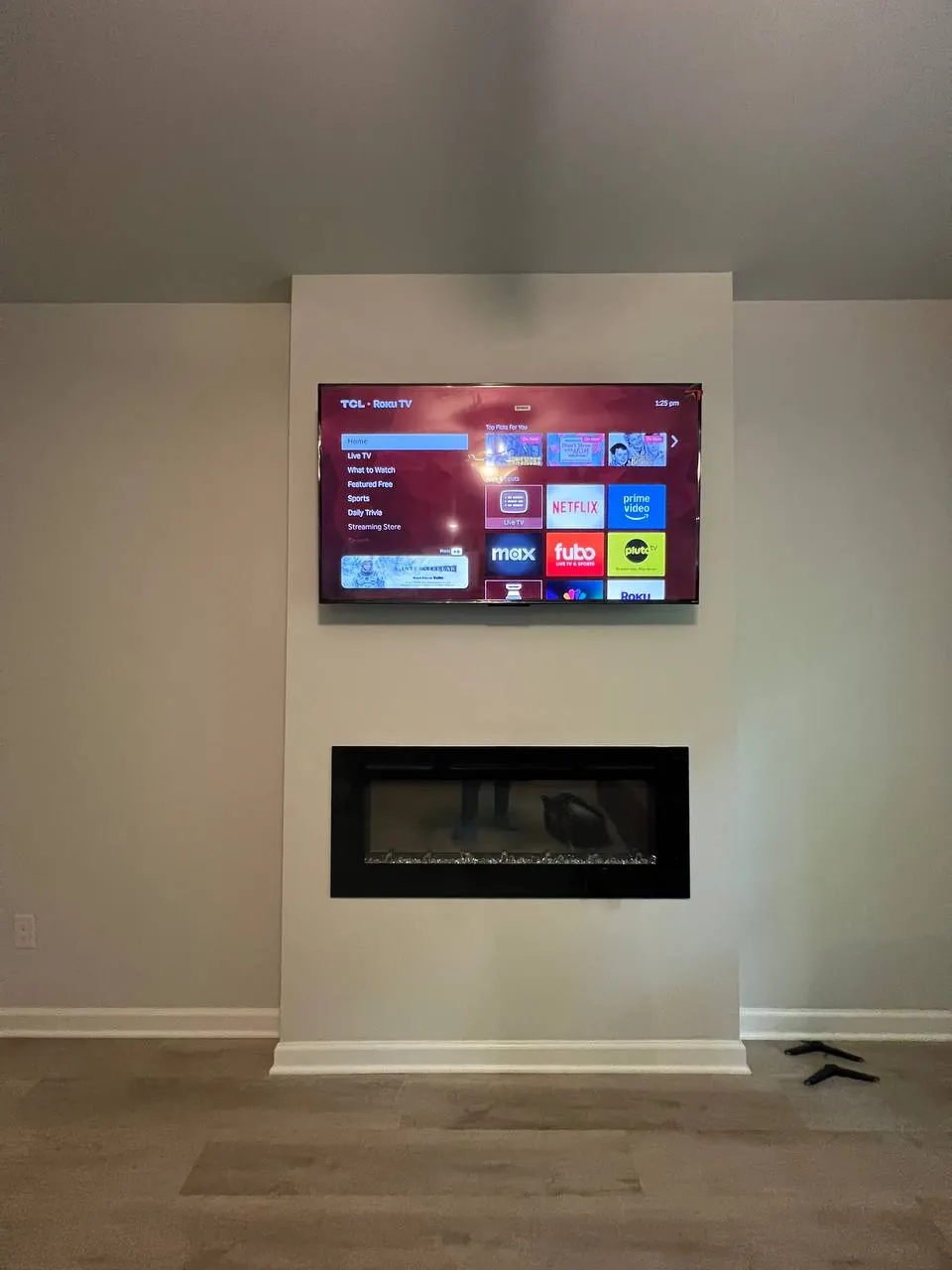
Walk into a Garland ranch from the 1950s or 1960s in Park Groves, near the center of the city, or one from the 1970s in Club Hill Estates out toward Lake Ray Hubbard, and the den is often the TV room: a brick fireplace on one wall, sheet paneling on the others, and a ceiling at eight feet. That ceiling sets the rules. Once the center of a 55-inch TV, about 27 inches tall, sits at the eye level of someone on the couch, only a modest band of wall is left above it. A soundbar ($79) has to be planned into the same few feet of wall rather than squeezed in afterward.
Paneling is a wood wall, and wood is priced like drywall: nothing extra. In most of these dens the sheets are nailed straight to the studs, and the mount's bolts go through the paneling into the framing as they would through drywall. One difference from drywall matters before anyone cuts: paneling cannot be patched without the repair showing, so an in-wall cable run ($99, with a power outlet behind the TV) keeps its openings behind the screen and the outlet plate, where they stay out of sight if the TV ever moves.
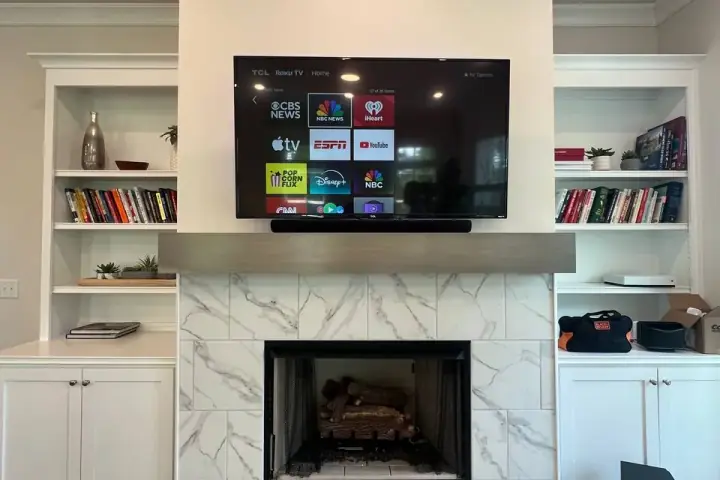
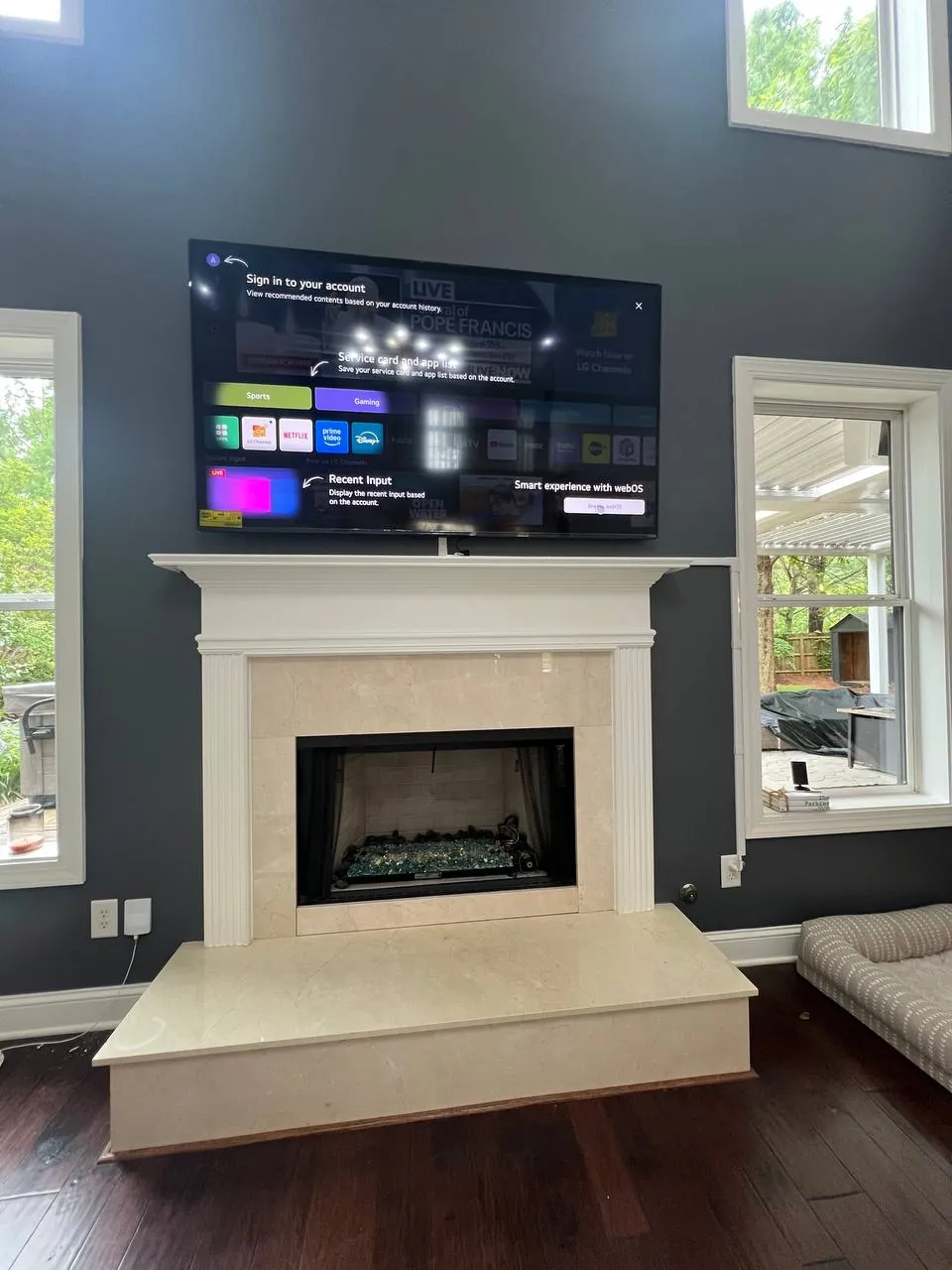
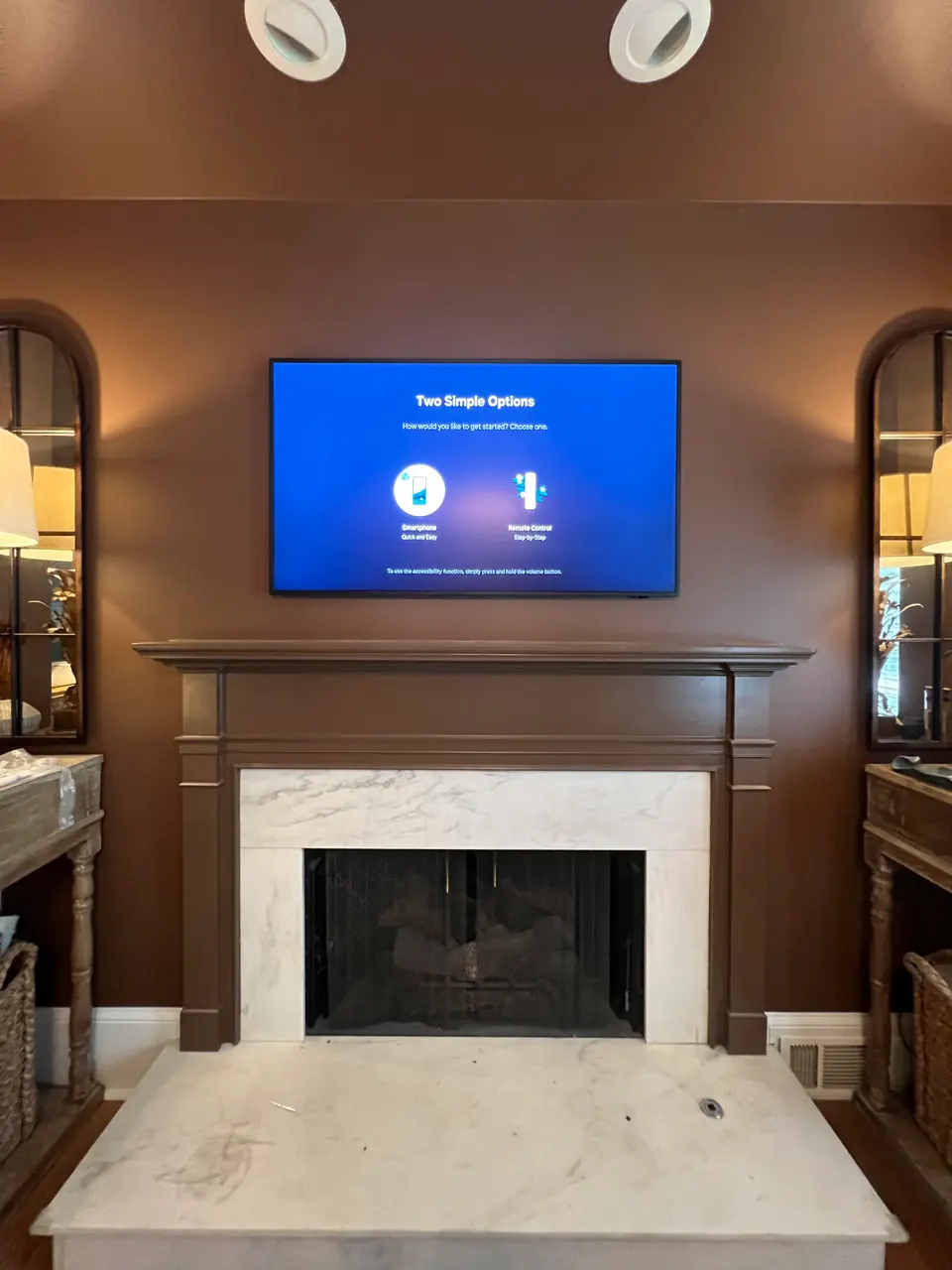
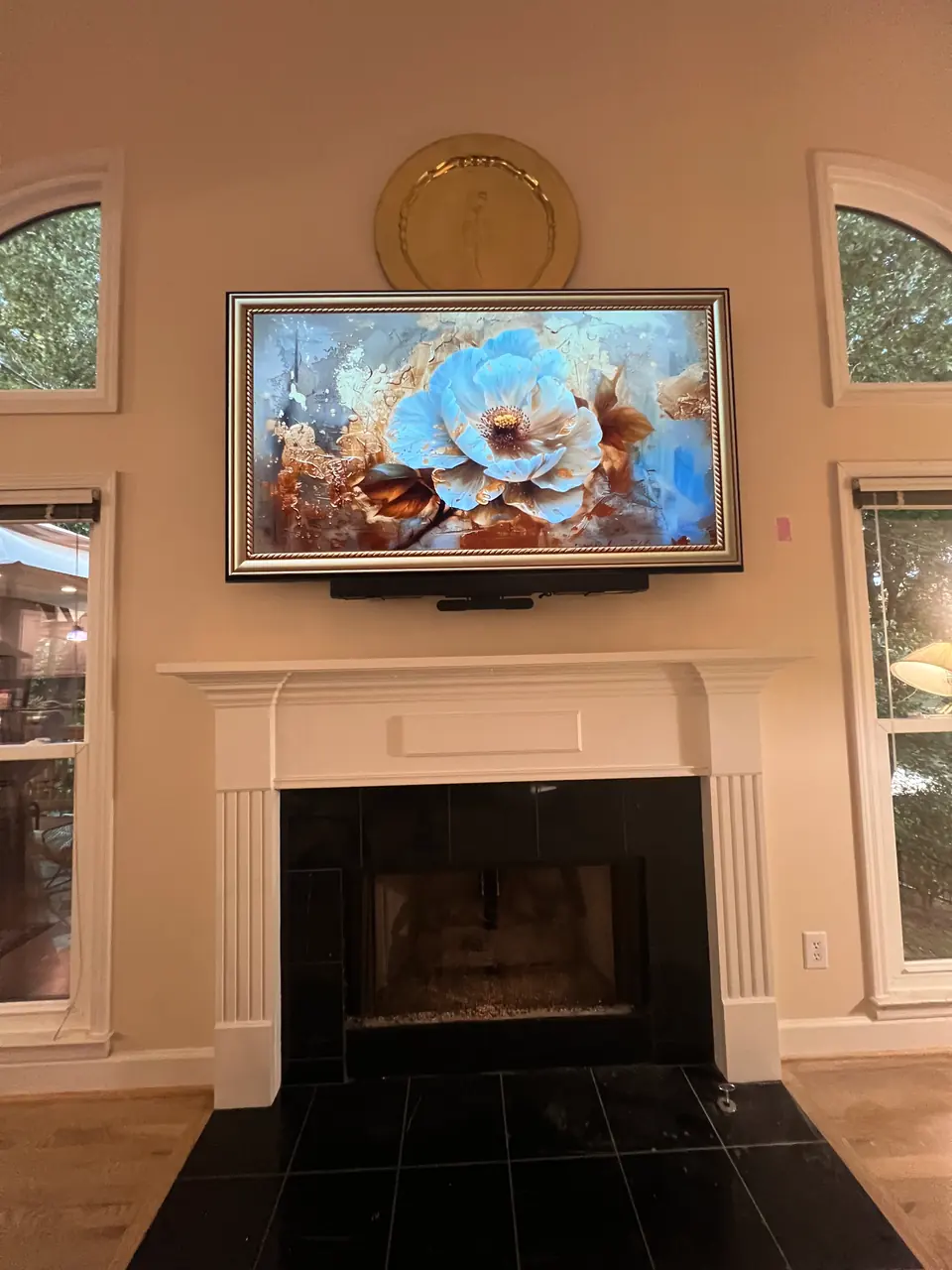
Firewheel, in north Garland, is a different era. Firewheel Estates went up along the golf course in the late 1980s and early 1990s, and the sections that followed from the late 1990s into the 2000s, the Hills at Firewheel and Provence at Firewheel among them, are two-story houses with drywall throughout and a gas fireplace whose tile or brick surround often stops at the mantel. Above that mantel the wall is drywall, so a TV over the fireplace there carries the $49 fireplace line and no wall charge.
Around the downtown square, where the Plaza Theatre opened in 1941, the oldest streets in Garland hold houses that predate the postwar boom, and some still have plaster, priced the same as drywall. Apartments and rentals cluster around downtown Garland as well, and the same ranch-era walls continue into neighboring Richardson and Mesquite.