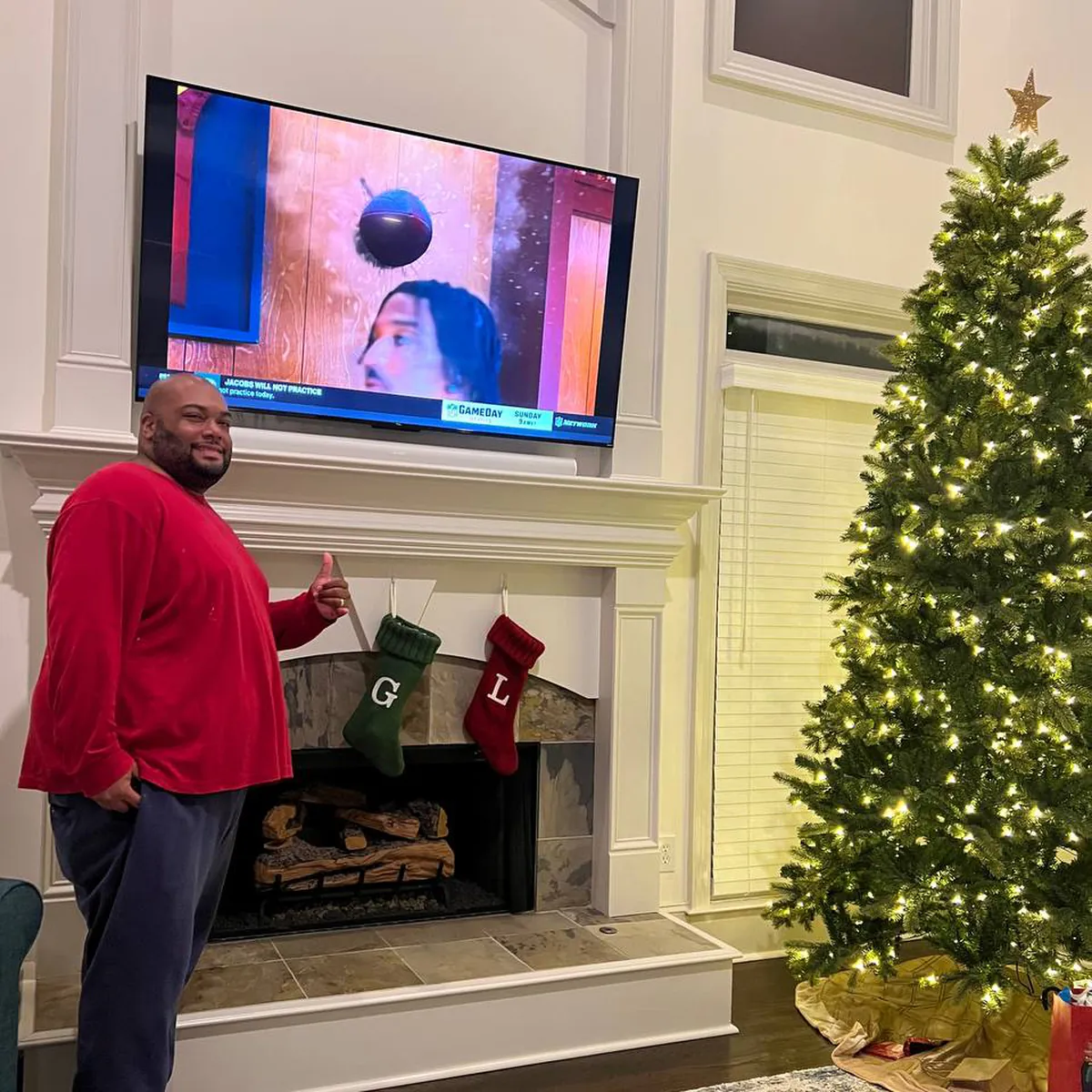
Mesquite's growth years were the 1960s and 1970s, the decades that brought the LBJ Freeway and, in 1971, Town East Mall, and the housing from that stretch still makes up much of the city: single-story brick ranches in neighborhoods like Northridge Estates, from around 1970, and two-story houses from the late 1970s and 1980s. The family room was often built around a fireplace faced in brick from the hearth to the ceiling. In a city that bills itself the Rodeo Capital of Texas, with the rodeo running at the arena on Rodeo Drive all summer, that brick wall is where a lot of TVs end up.
Brick is a hard wall on the price list, $59 per TV, drilled with a hammer drill and fitted with masonry anchors sized for the mount. Mounting above the firebox adds $49$49, at a height marked on the brick with you seated, and on a wood-burning fireplace the screen also has to clear the hottest band of brick, which a full-height wall leaves room for.
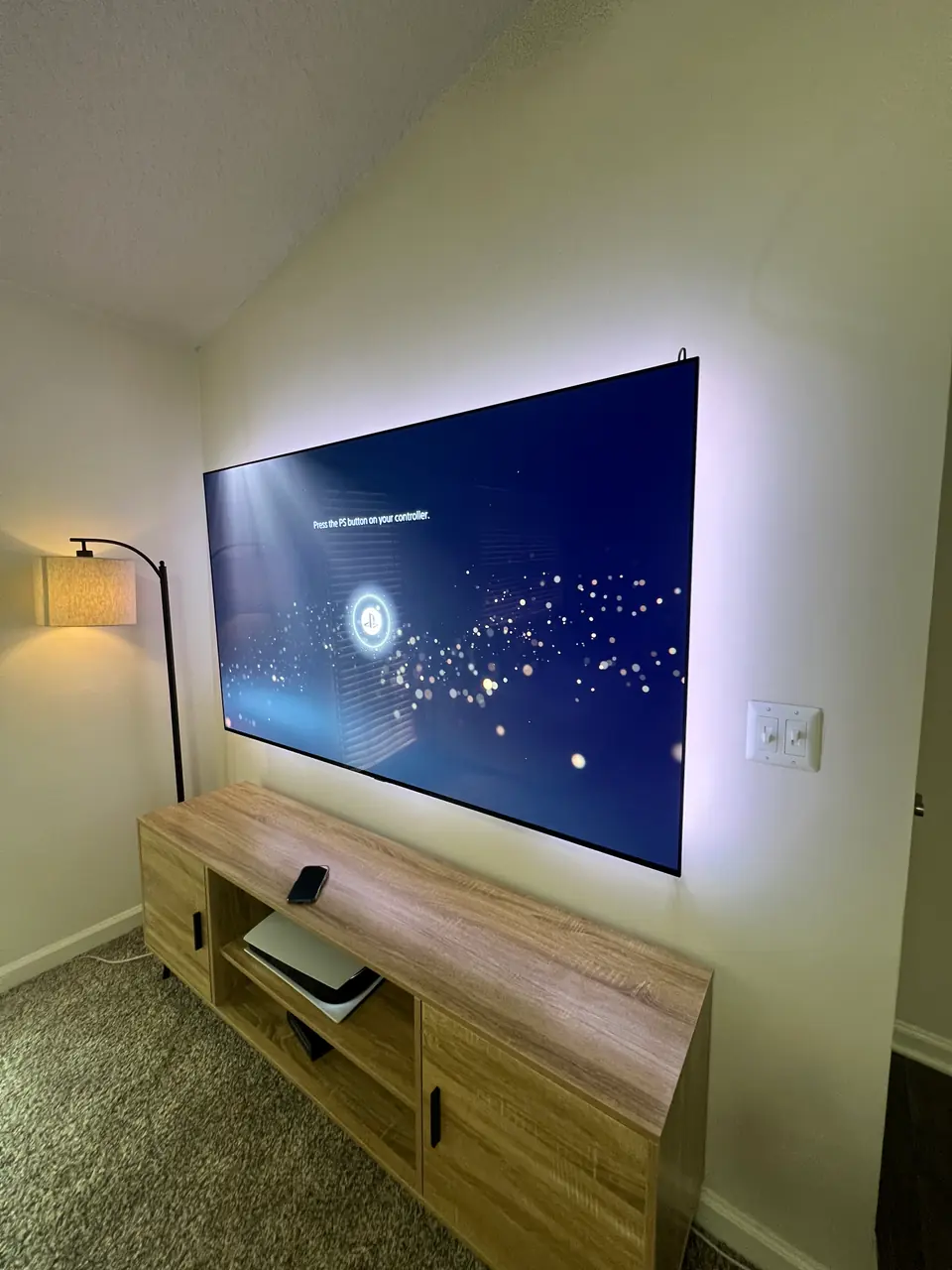
Cords are the real difference from a drywall wall. Behind a full brick wall there is usually no open cavity to fish a cable through, because the brick is mortared tight against the framing or the chimney mass, and the in-wall lines ($99, or $149 above a fireplace) belong to framed walls with drywall. So the wires either stay in view, running down the brick to the outlet, or go inside a paintable cover for $49 that follows a mortar joint and takes paint to match.
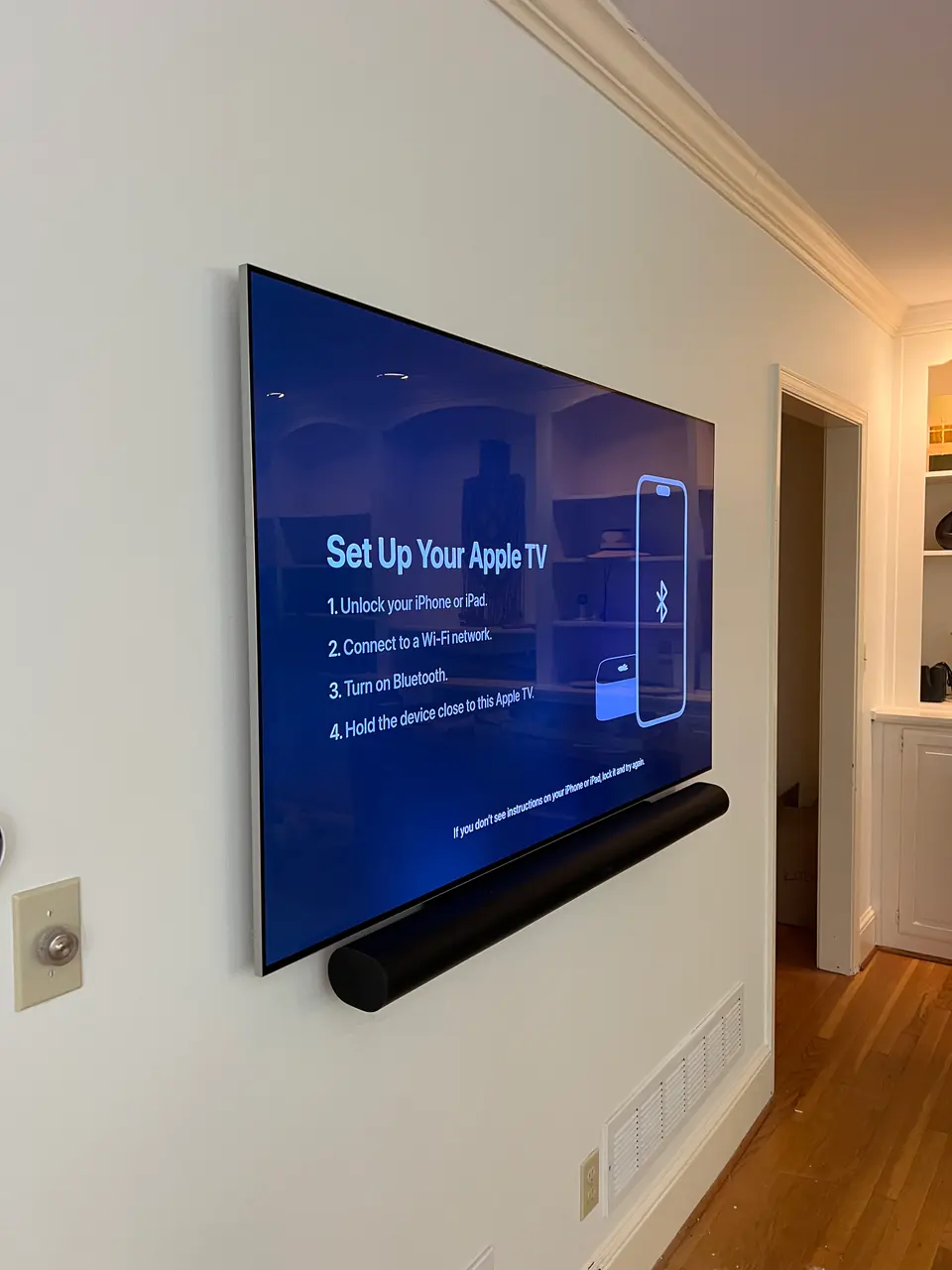
The other answer is the drywall wall across the room: wood studs and drywall at no extra charge, cables inside the wall with an outlet behind the TV for $99, and no fireplace underneath to push the screen up. Newer Mesquite subdivisions such as Creek Crossing and Falcon's Lair often have drywall above a smaller surround, so the brick question comes up less there. Mesquite sits on the east side of the Dallas-Fort Worth area, and the same list applies next door in Garland.