Kenmore began in 1901 as a shingle mill and a company town on the northeast shore of the lake, named after a town in Ontario. It stayed unincorporated through most of the century and only became a city in 1998. Bothell Way, now State Route 522, runs east and west along the shore beside the Burke-Gilman Trail toward Bothell, and the commercial core grew up along it. Arrowhead's oldest standing house dates from 1929, and Lower Moorlands has houses from the 1920s too. Walls of that age are often plaster, which mounts at the same price as drywall.
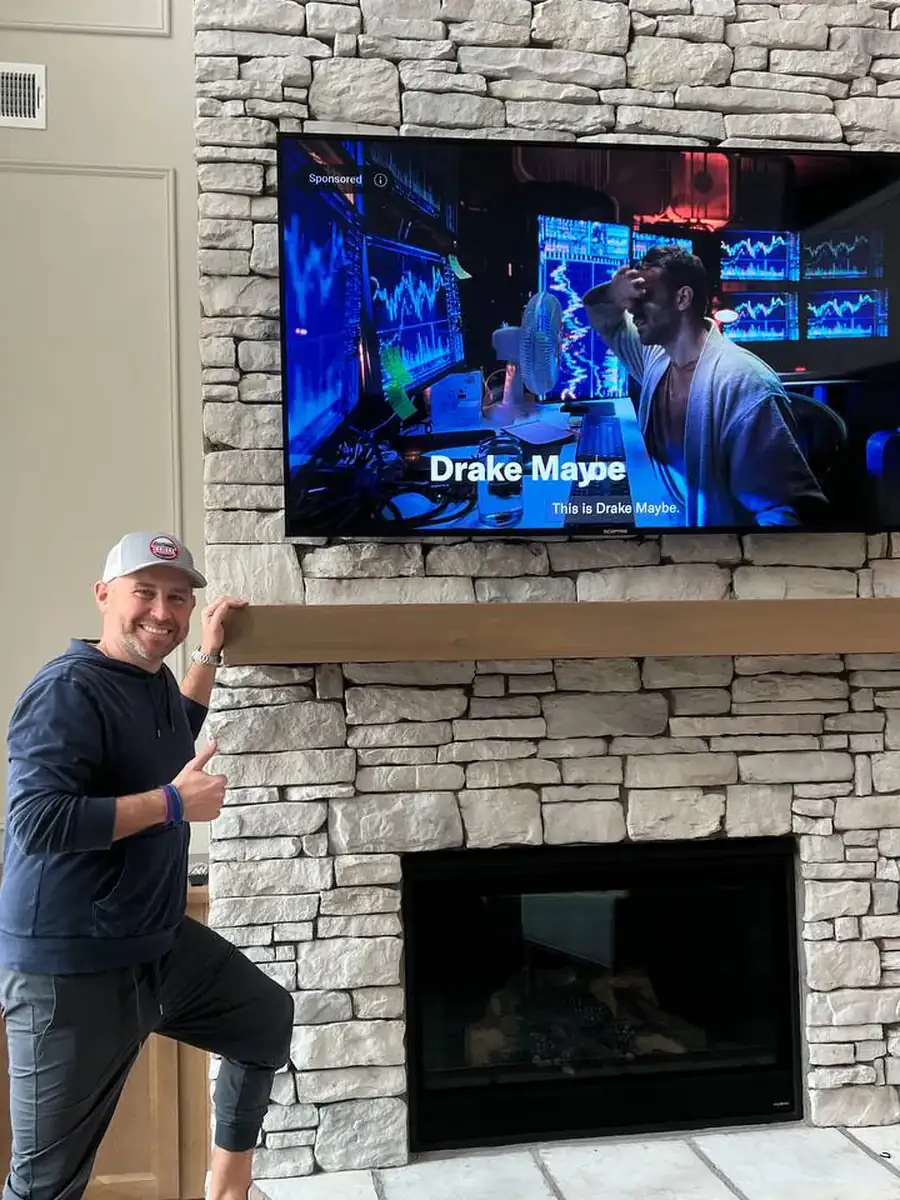
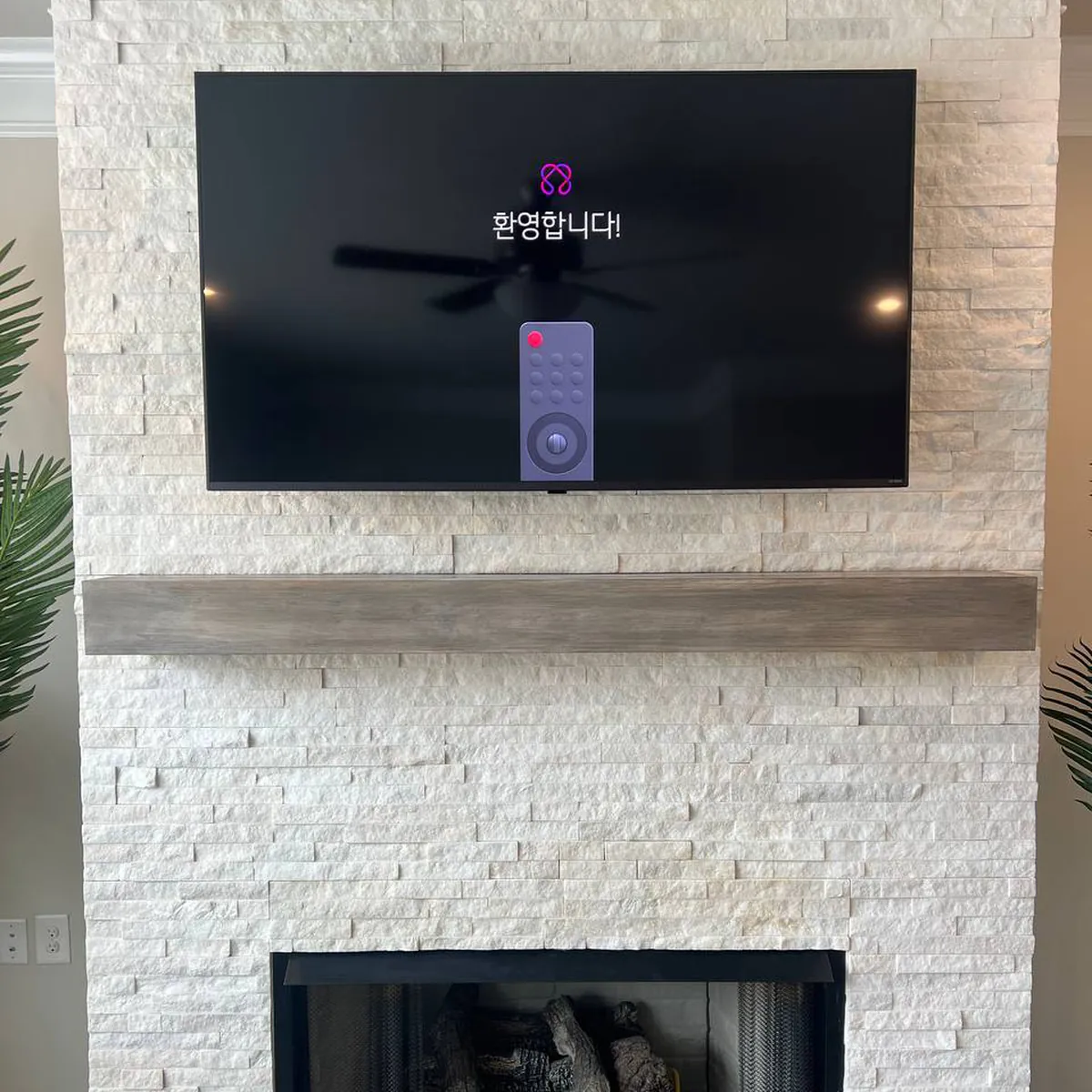
After the war, the hills became an early target for new housing. Inglewood was platted in 1953 and saw large-scale building by 1962, the first lots in Uplake Terrace sold in 1954, and suburban houses reached Upper Moorlands in the mid-1950s. Houses from those years usually have drywall or plaster over wood studs, and many living rooms center on a brick fireplace. Brick takes masonry anchors at $59 per TV, a TV above the firebox adds $49, and the cords travel down the brick in a paintable cover.
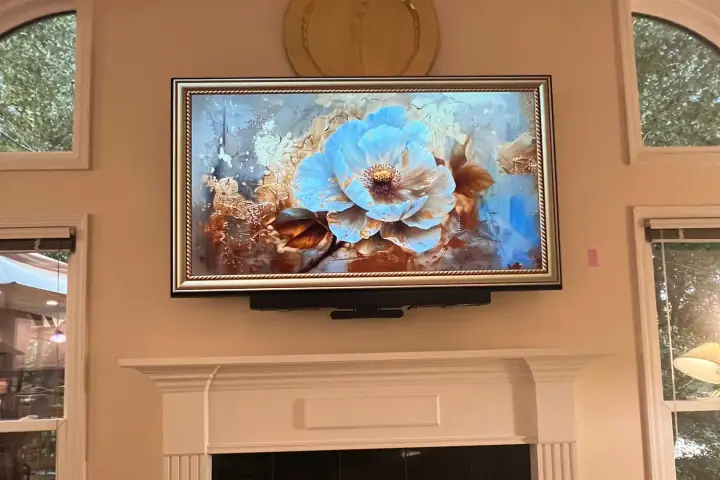
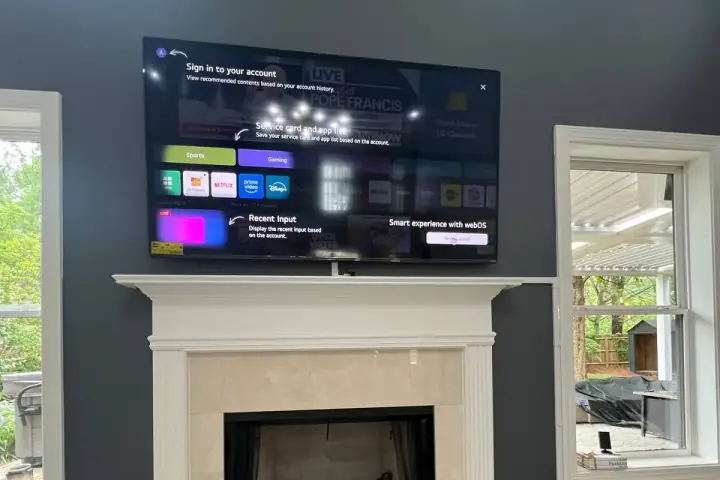
The same houses tend to have flat ceilings about eight feet high, and that is what limits a TV over the mantel. The stretch of wall between the mantel shelf and the ceiling is only so tall. A big screen can crowd it, or hang higher than is comfortable from the sofa, so it pays to measure before buying the TV. The second block below shows how.
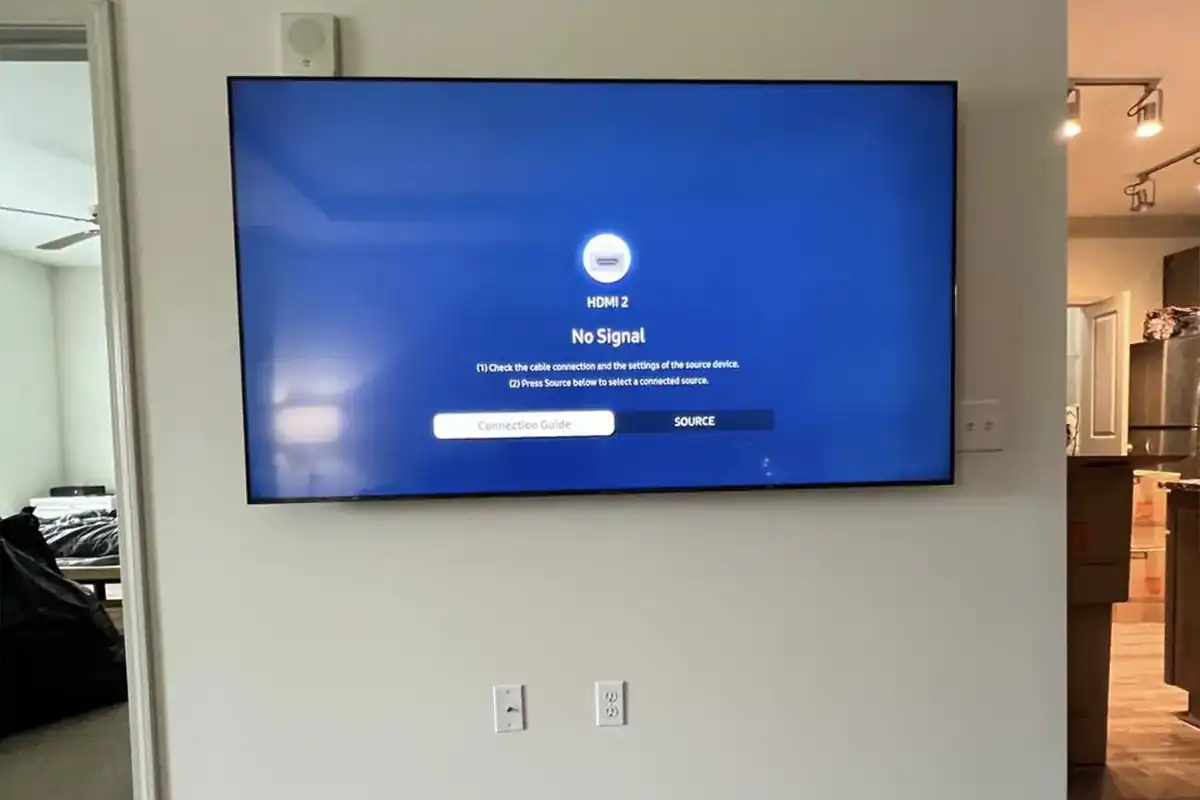
Downtown hugs Bothell Way. City Hall opened there in 2010, The Hangar community center followed on Town Square in 2017, and the city sold land north of the square in 2016 for mixed-use buildings. Apartments over shops are drywall inside, so the wall adds nothing, and the lease decides whether cables go inside it.