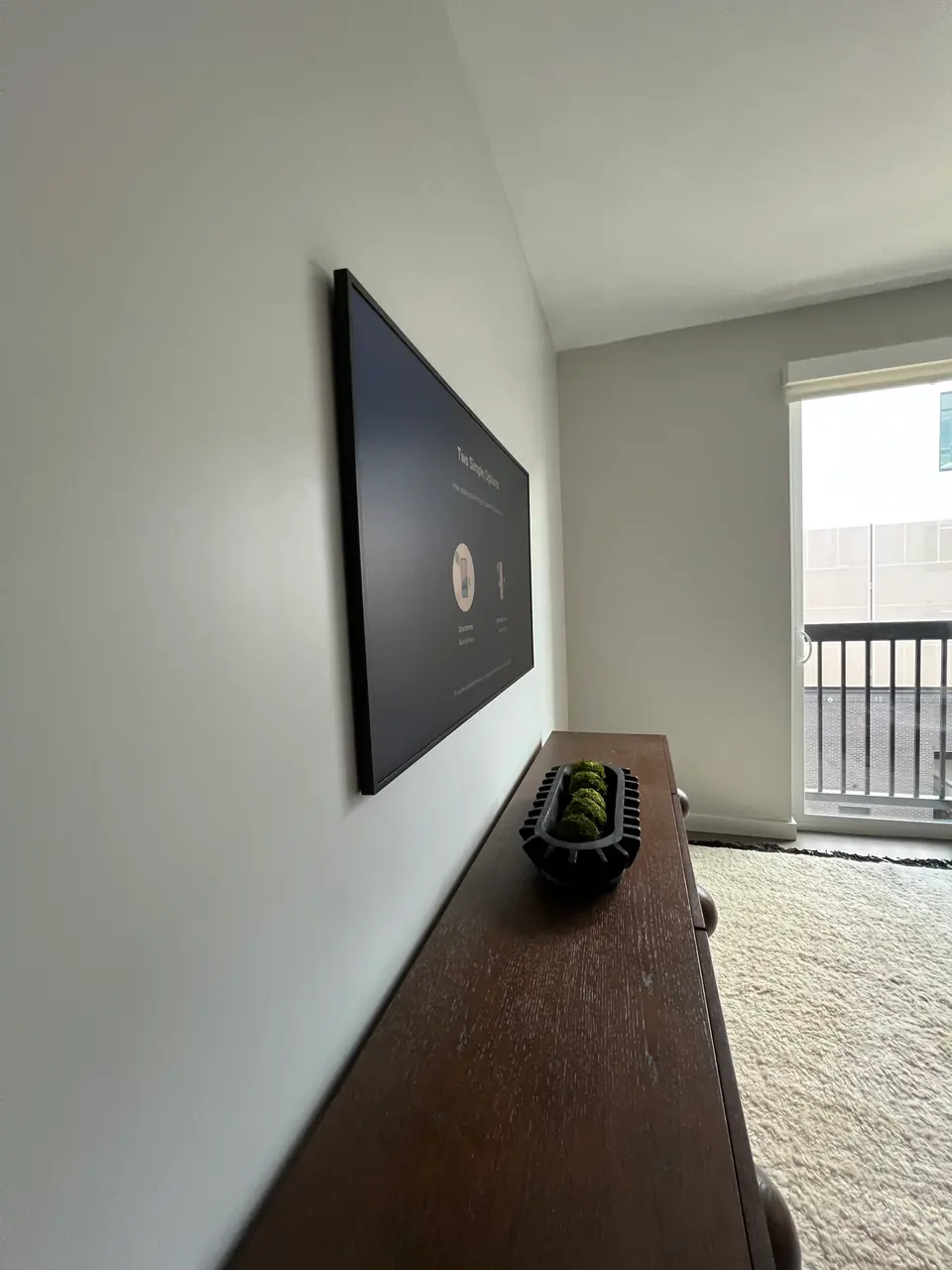
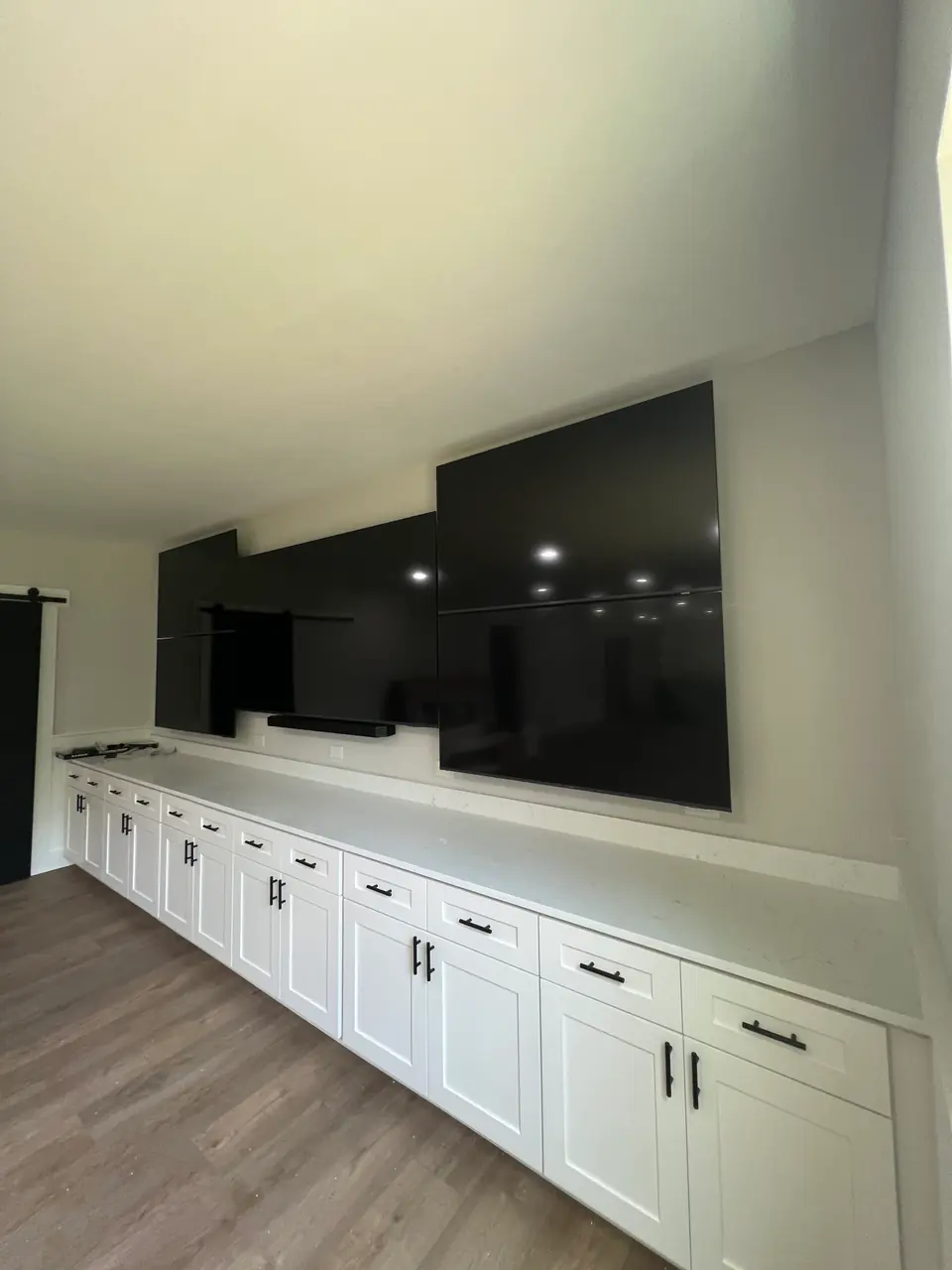
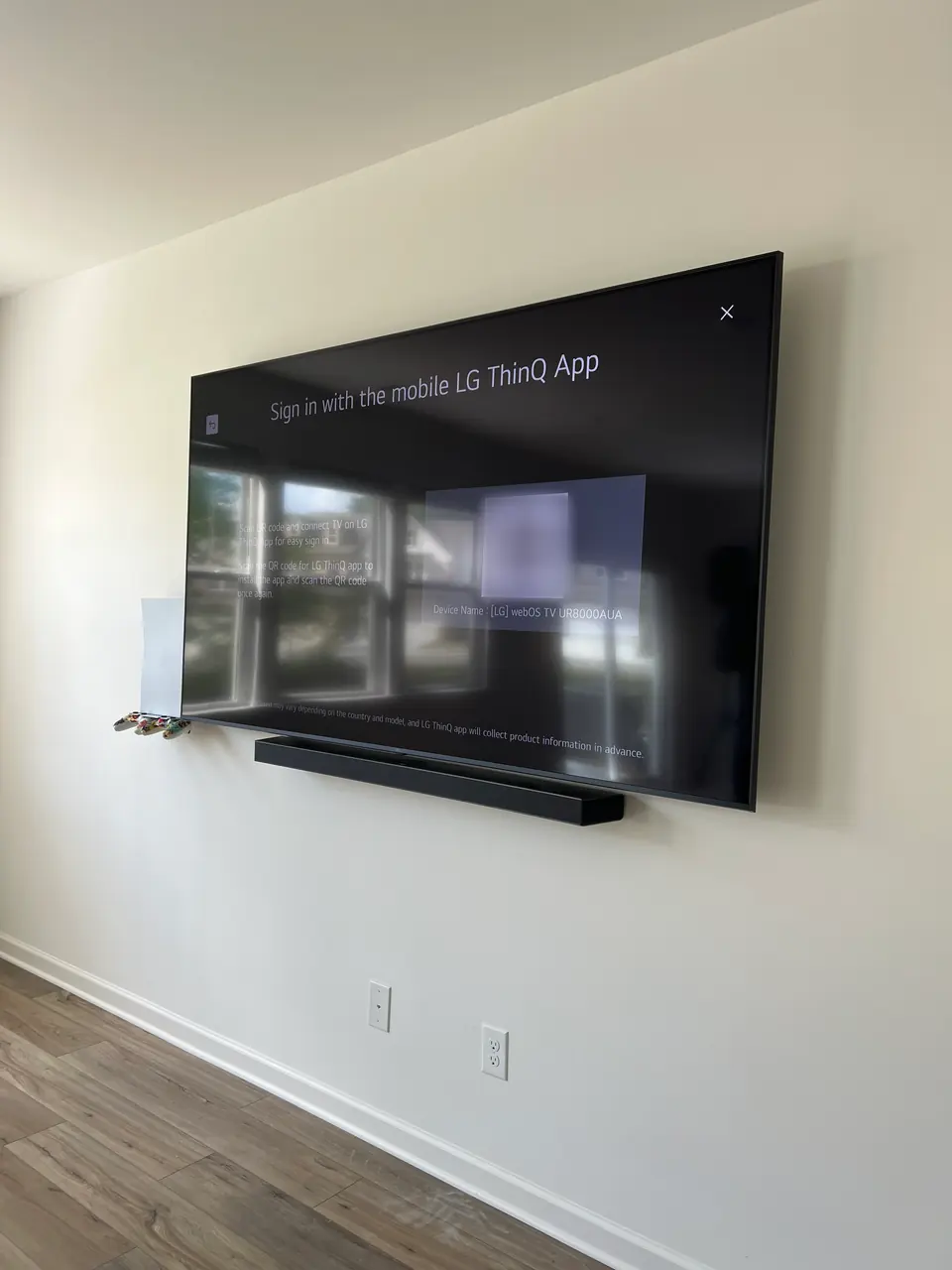
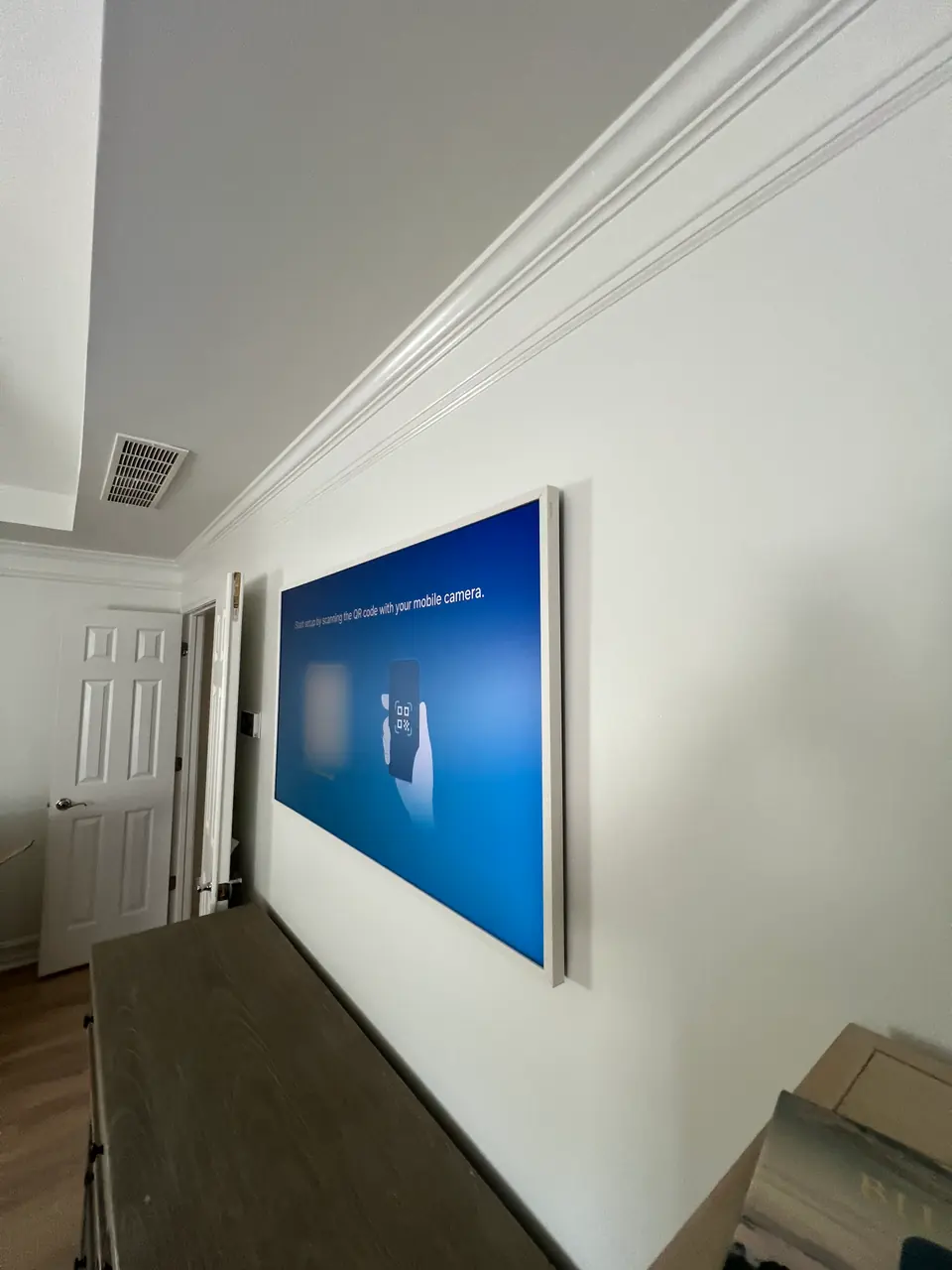
When the war ended, families needed homes, and the land north of the Seattle city limits filled quickly. Ridgecrest was one of the large developments that went up in the late 1940s, and the first Parkwood houses, built from 1948, were modest two-bedroom homes. All of it was unincorporated King County then, and Interstate 5 didn't cut through until 1965. Plenty of these houses have been added onto since, but the original living room is often small, and windows and doorways can leave just one short run of wall for a TV.
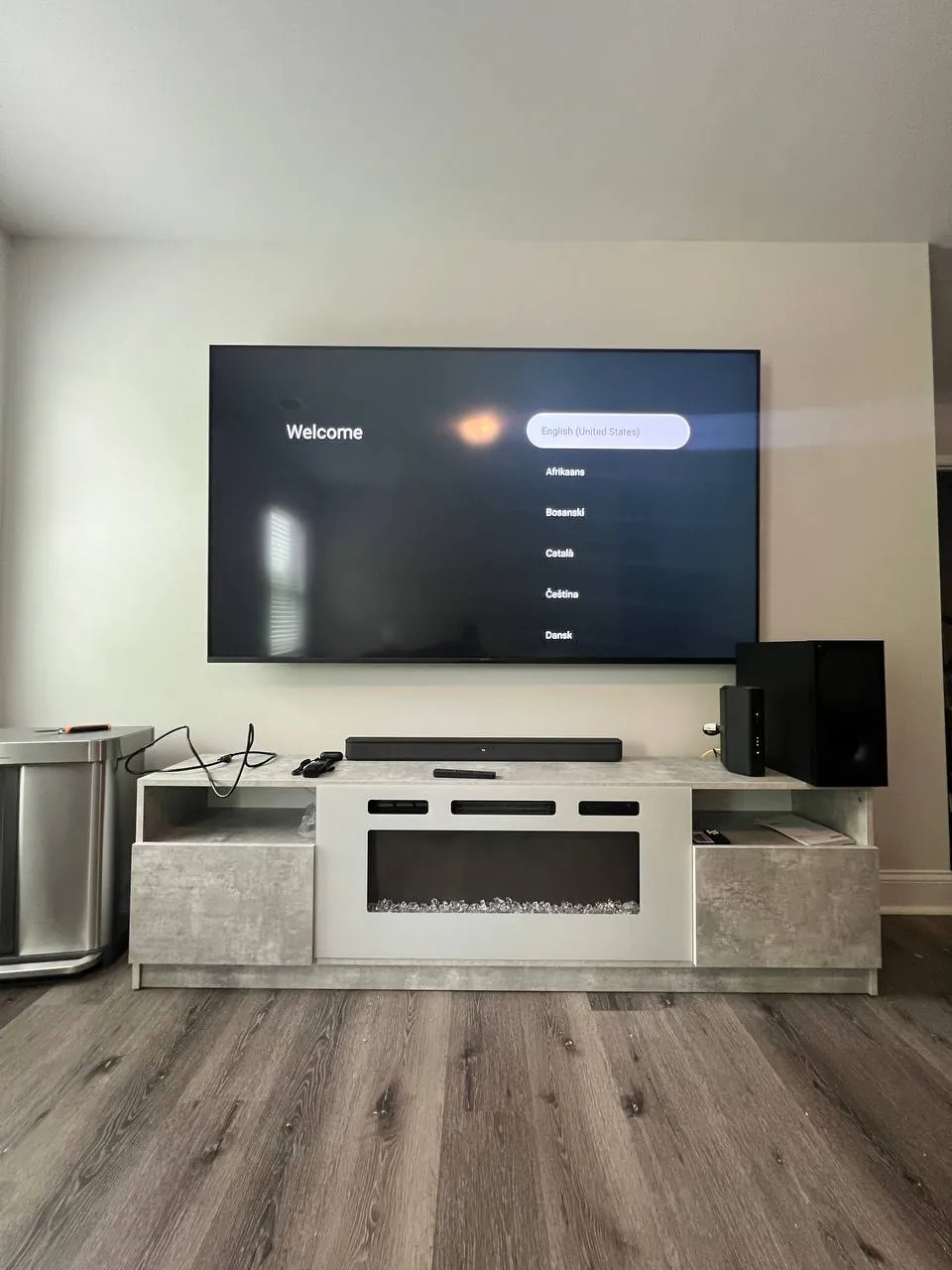
That wall decides the screen size, and the size sets the labor: $129 for anything from 32 to 59 inches, then $165 from 60 inches up with your help lifting, or $210 with two technicians. A 55-inch TV is a little under four feet wide and a 75-inch TV about five and a half, so measure the open stretch between the window trim and the nearest doorway before you shop. When no wall is wide enough, a full-motion mount ($79) set near a corner can angle the screen toward the couch.
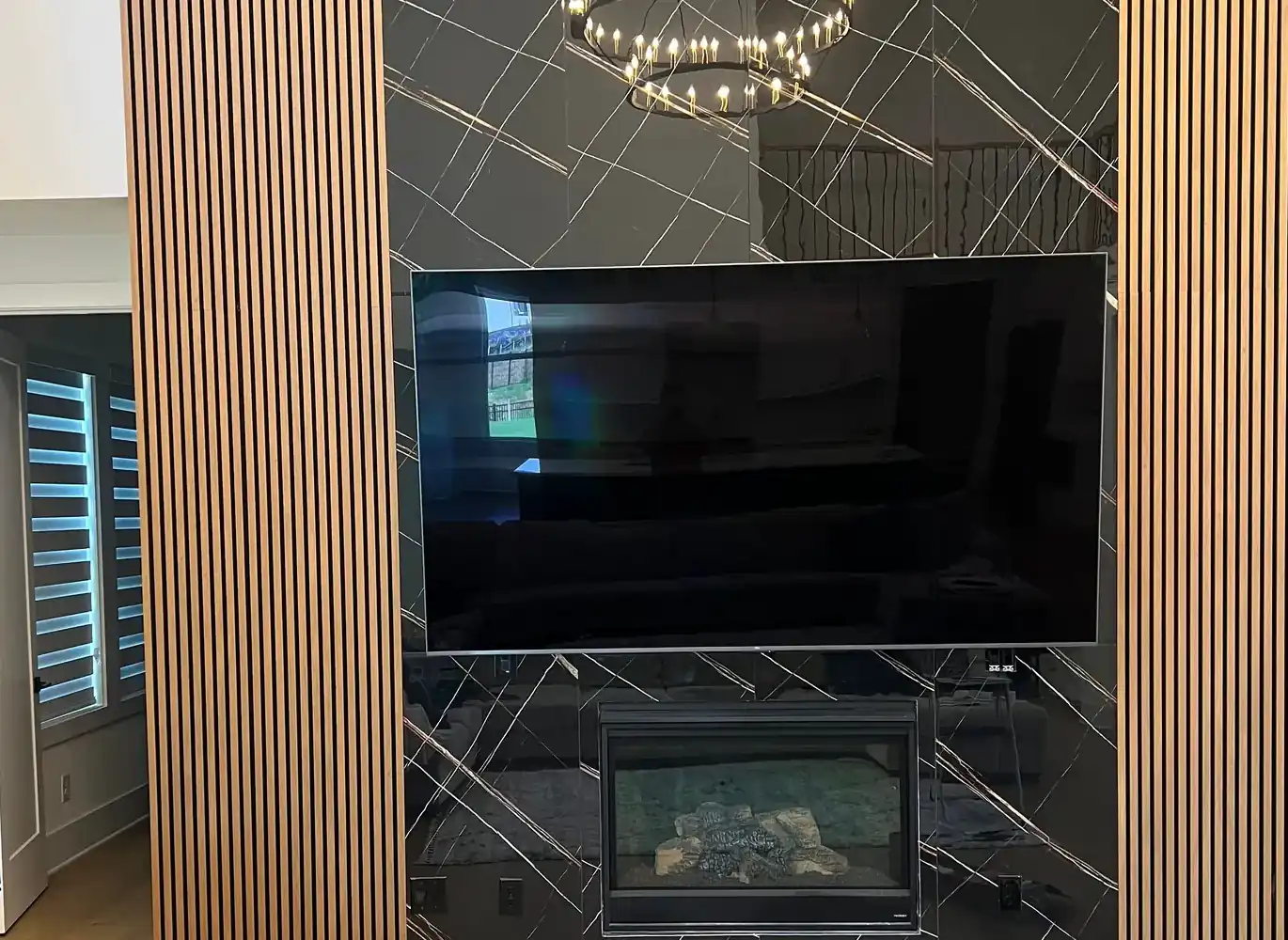
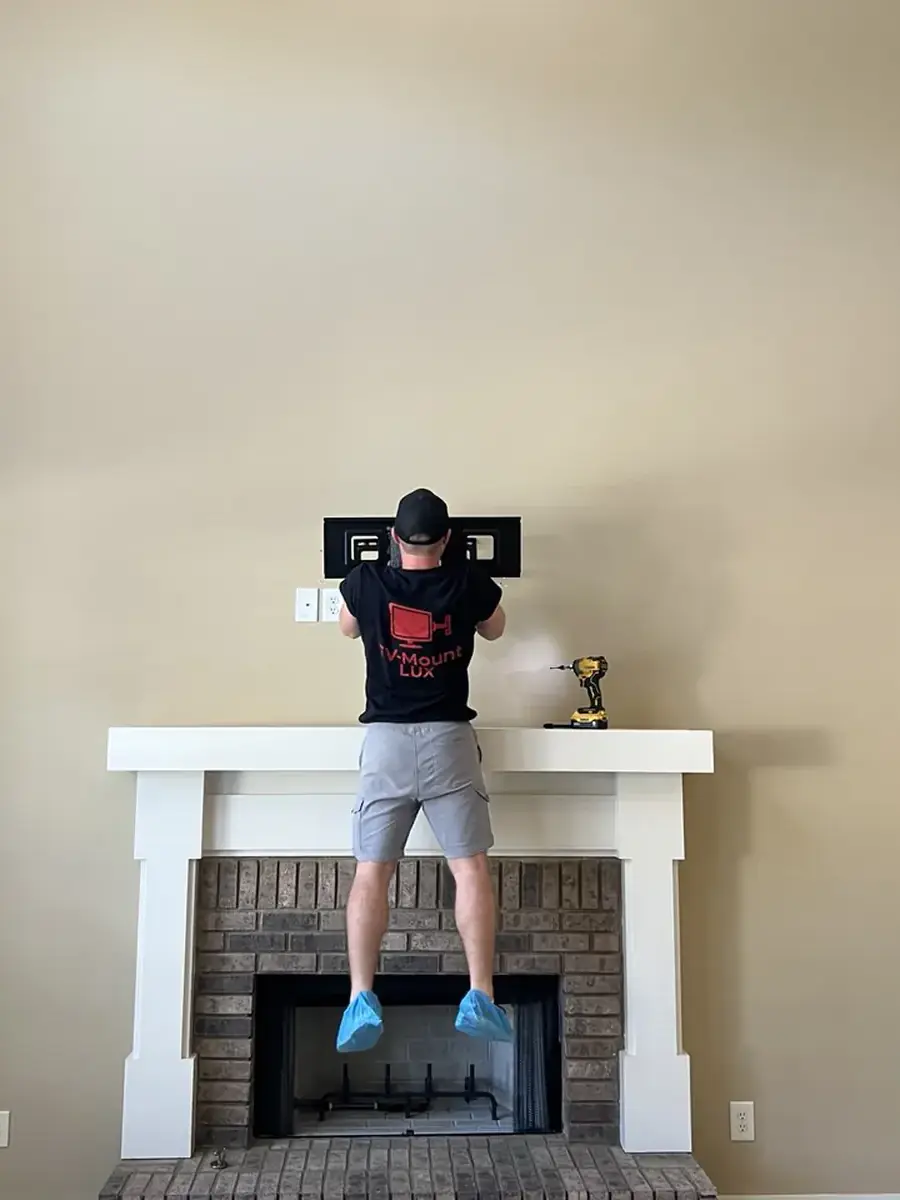
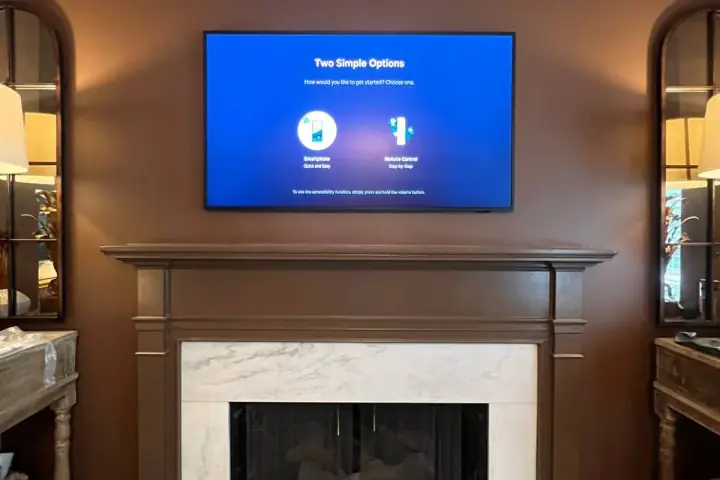
Walls in houses from the late 1940s and 1950s may be plaster or early drywall. Some split-levels from the 1950s and 1960s have a family room a half flight down, paneled in wood. All of these mount at no extra charge. A brick fireplace is the exception, at $59 for masonry anchors and another $49 when the TV goes above it.
Many of the newest walls in Shoreline are near the two light rail stations, which opened in 2024. Midrise apartment buildings have gone up around both, and townhouses especially around 185th. Inside they're mostly drywall over wood studs, so an owner can have the cables run inside to an outlet behind the TV for $99. Renters there need the landlord's yes before any holes go in, and where cutting into walls isn't allowed, the cords travel in a paintable cover for $49.