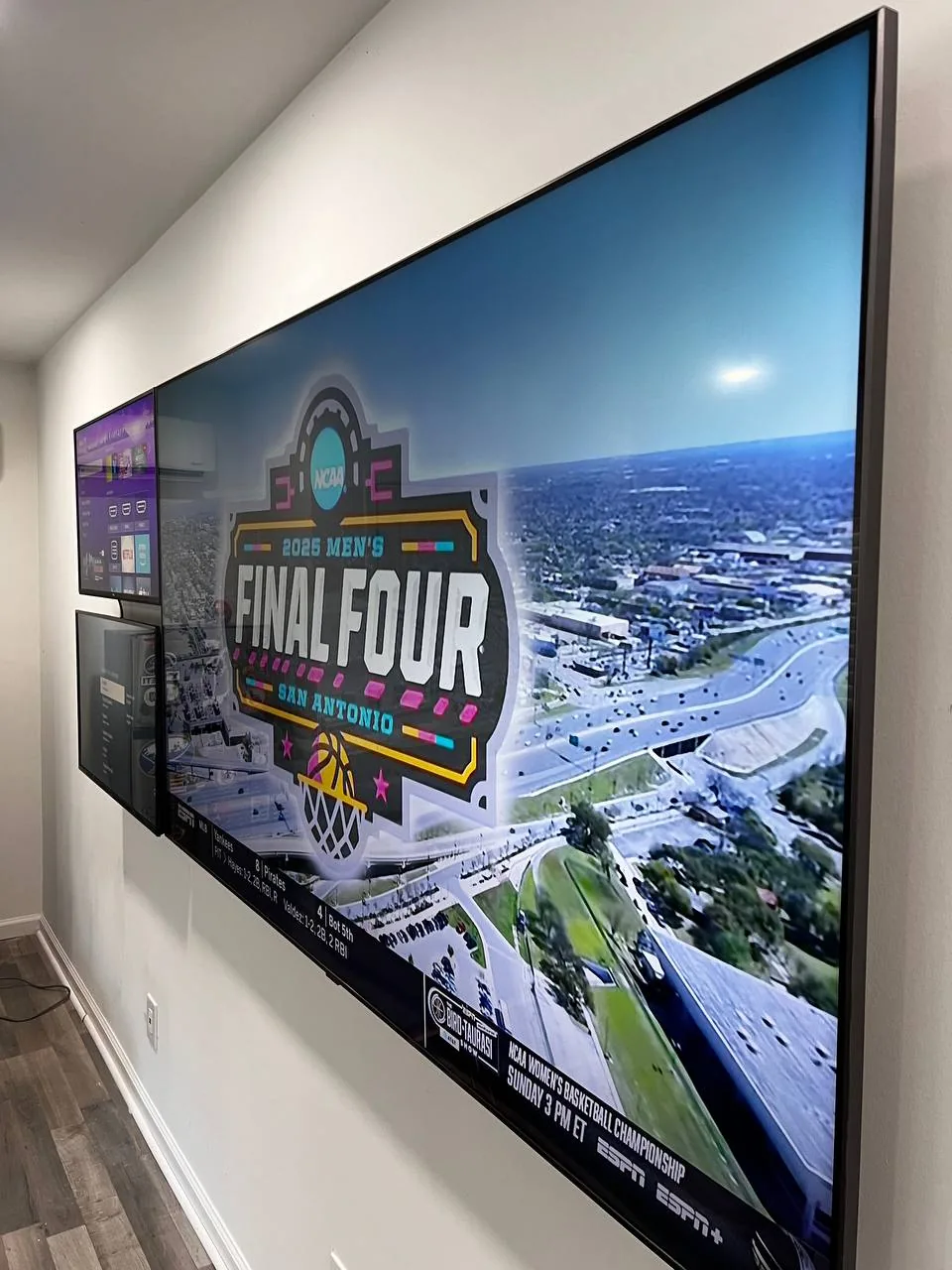
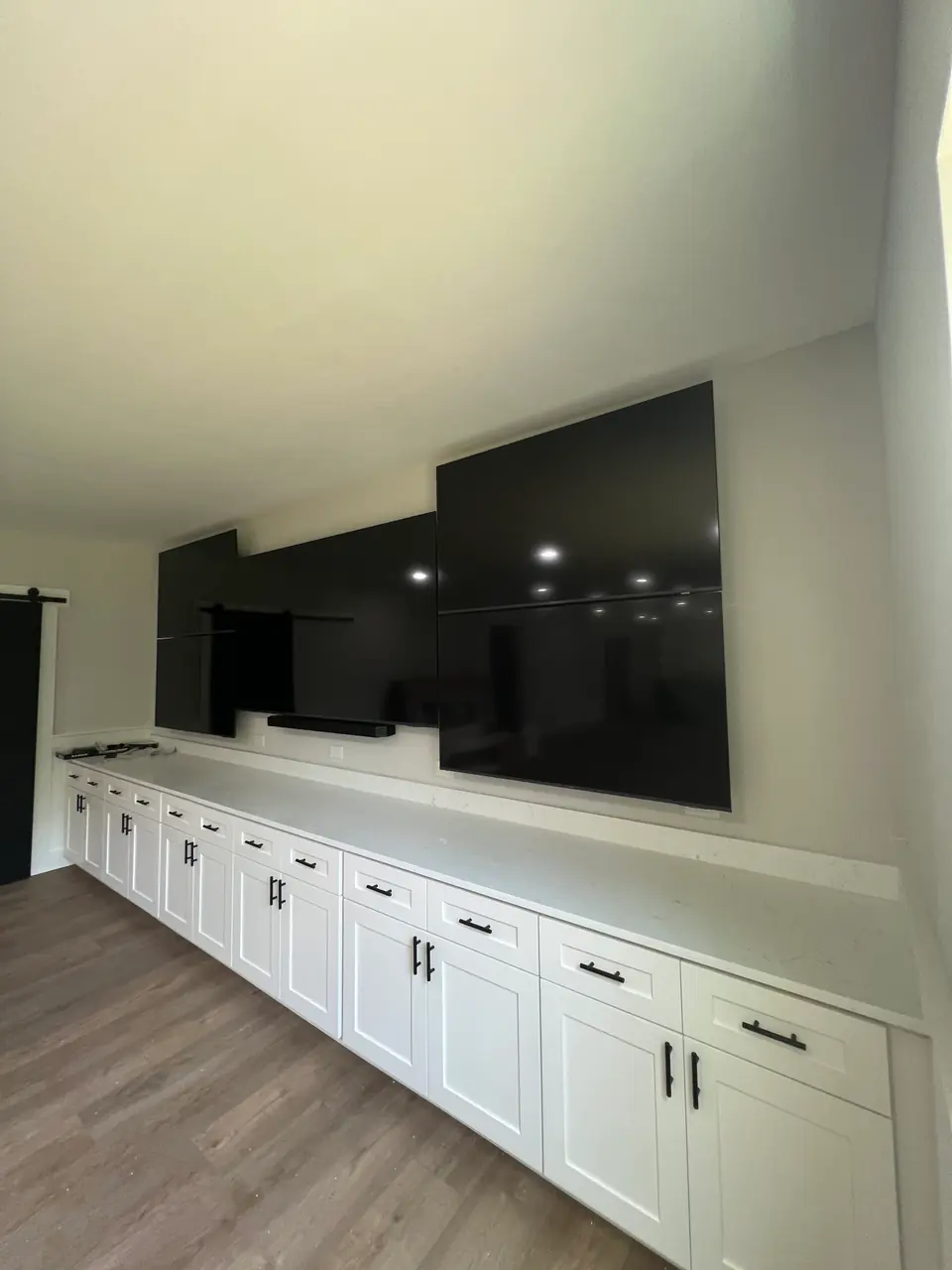
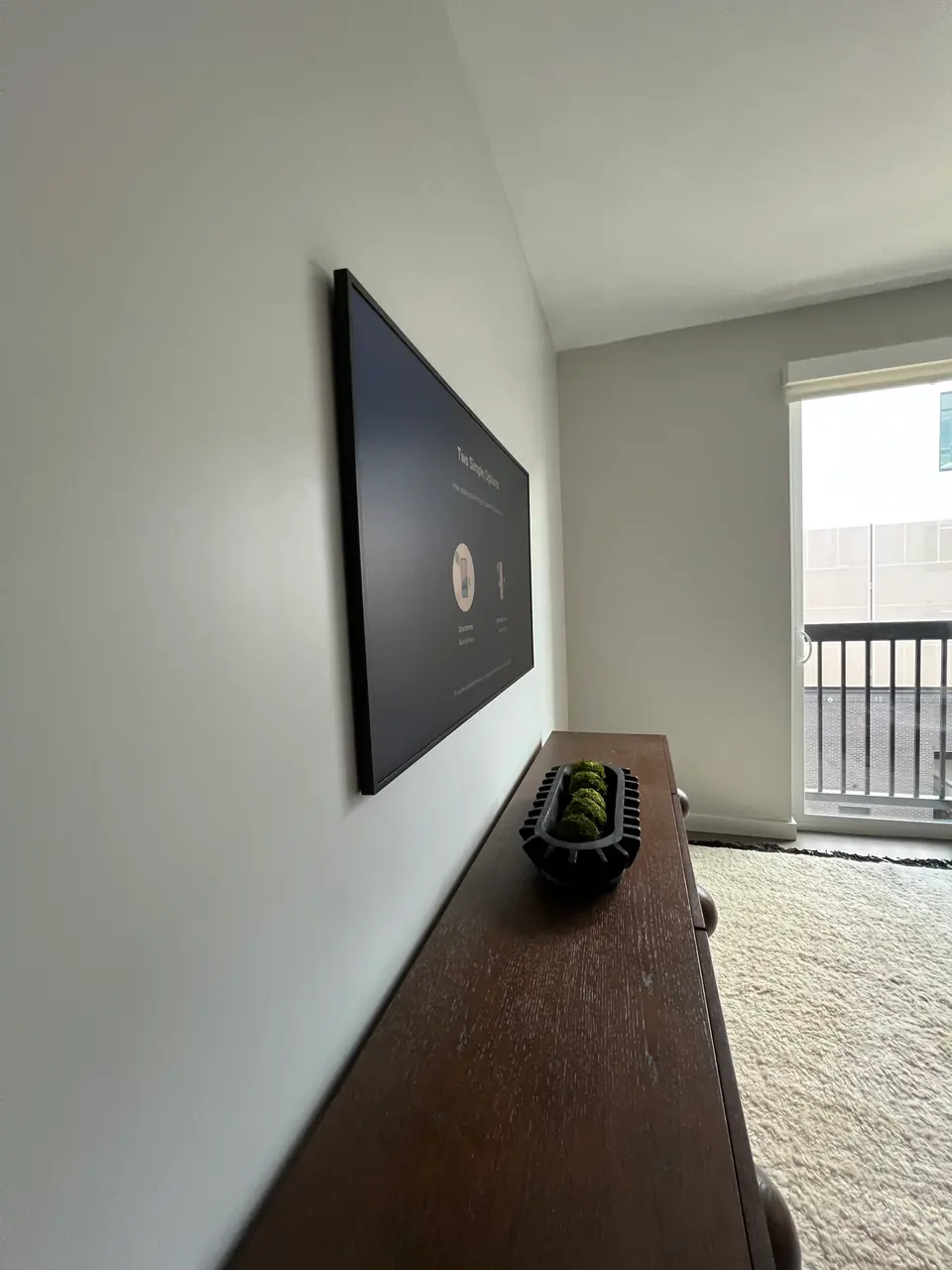
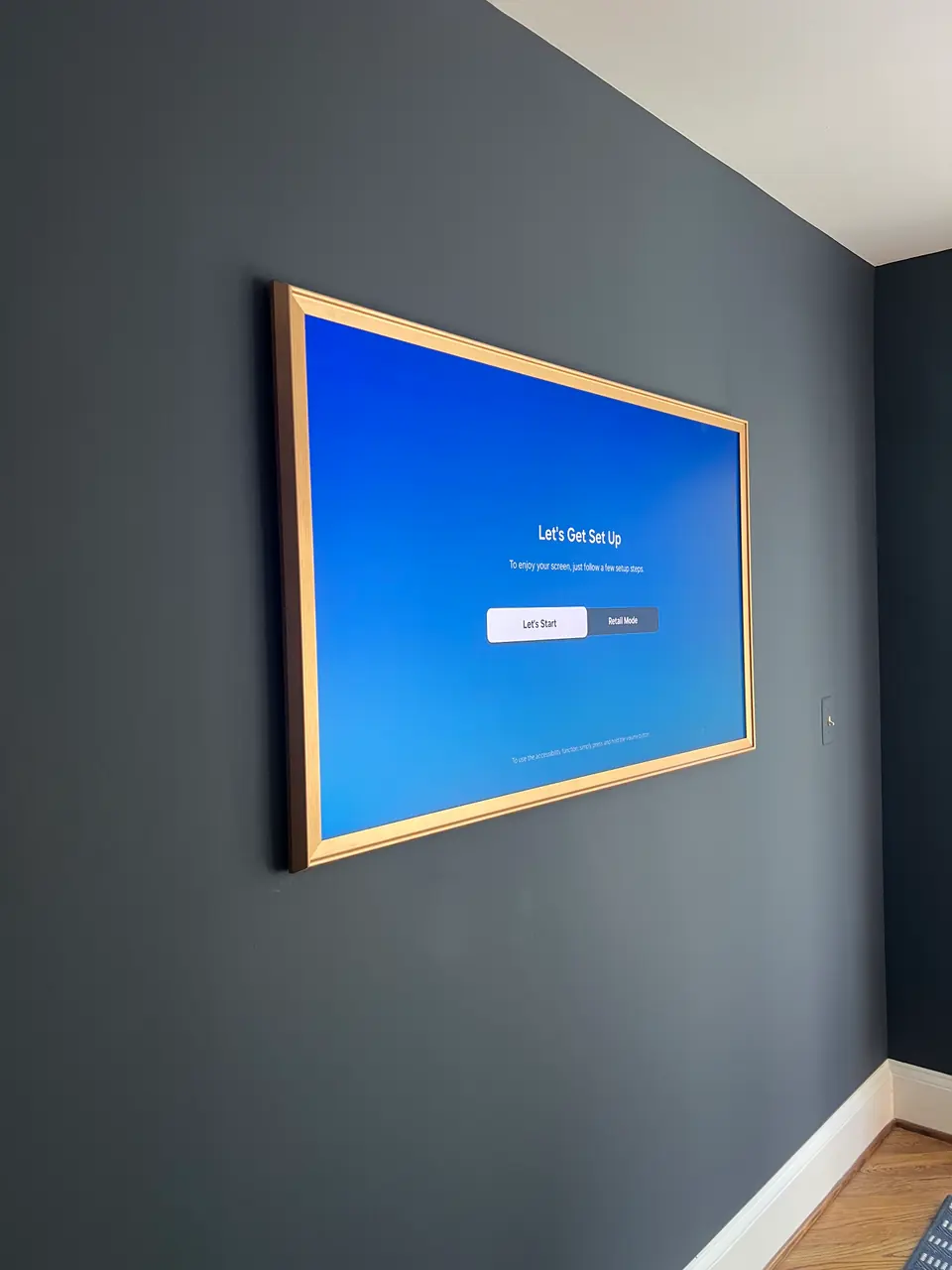
Bluff Park and Belmont Heights are both landmark districts, and their streets hold Craftsman bungalows alongside Spanish Colonial Revival, Tudor and Mediterranean houses built from the early 1900s into the 1930s. Nearly every one of them has plaster inside, spread over strips of wood lath nailed to the studs. The lath confuses a stud finder, so the technician confirms each stud by other means before the first hole. The lag bolts then pass through the plaster and lath into the wood, which is why plaster costs nothing extra on the price list.
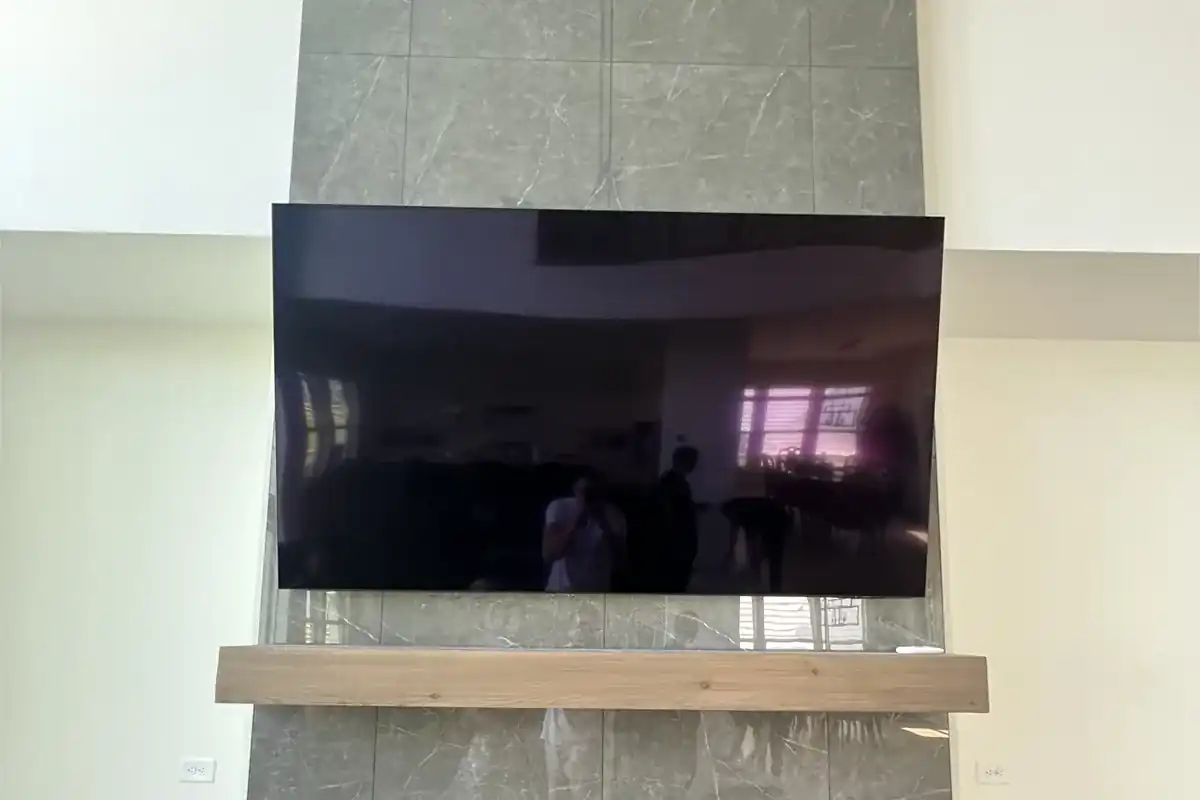
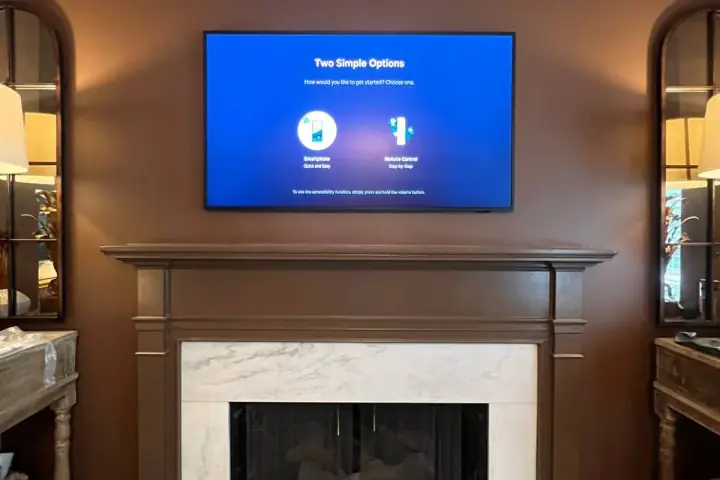
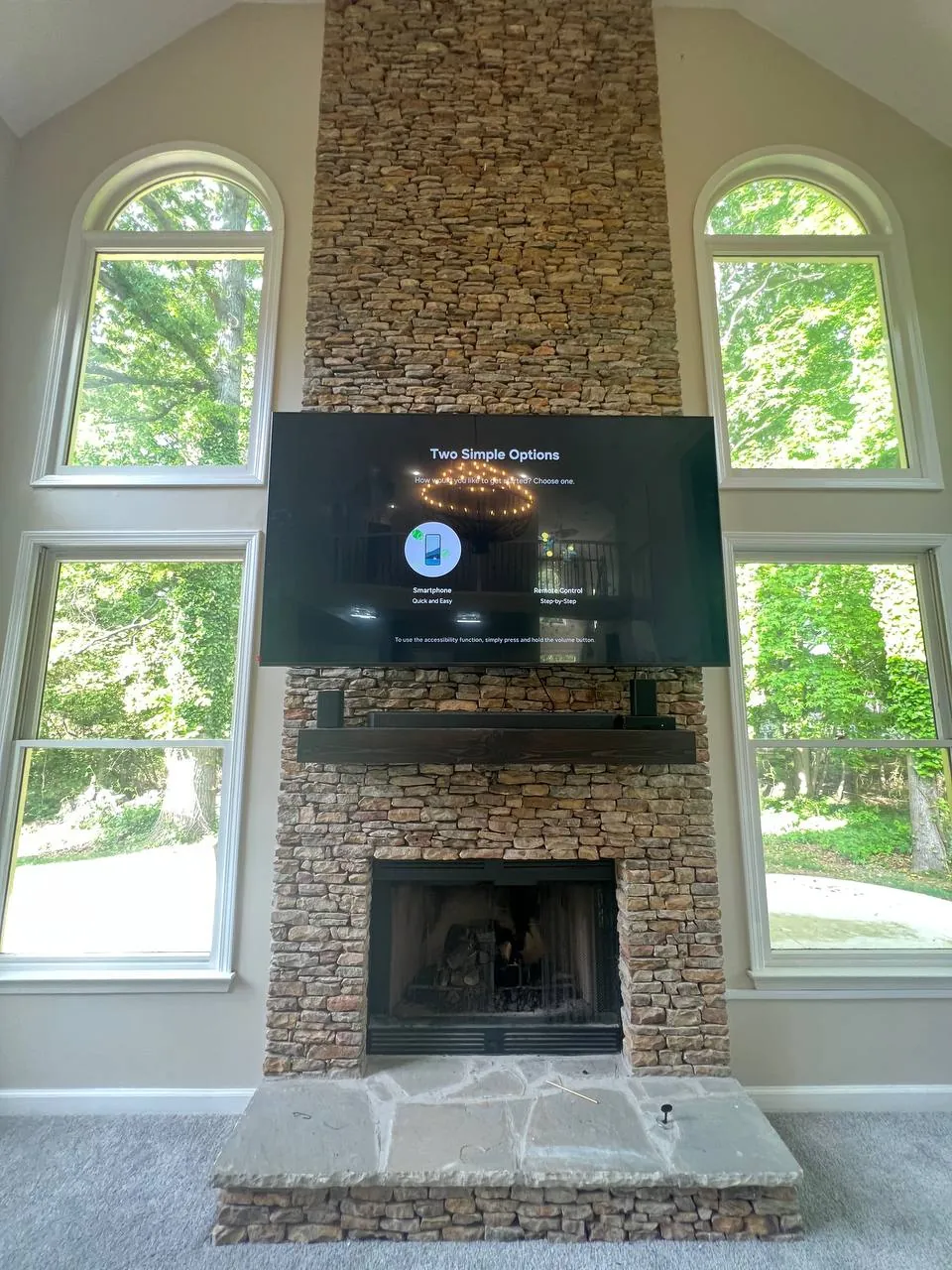
The Spanish houses add a detail of their own. Many have an arched niche in the living room, and the fireplace is often faced with tile. A niche is rarely wide enough for a modern screen, and the tile face is a hard wall, so a TV above that fireplace carries the $59 masonry line plus the $49 fireplace line. A plain plaster wall beside it has neither charge. Behind the lath there is usually an open stud bay, so cords can run inside the wall to a new outlet behind the TV for $99. Old houses are short on outlets, and that line solves the cord and the outlet together.
Downtown Long Beach, the length of Ocean Boulevard and the blocks of Alamitos Beach are where the towers stand, some from the 1960s and some from the 2000s. Their outside and shear walls are poured concrete, which takes masonry anchors set with a hammer drill at $59 per TV, with the cords in a paintable cover because solid concrete has no space inside. The partitions between rooms in the same unit are often metal or wood studs with drywall, and on those the mount goes up at no extra charge and the cords can disappear inside.
A large share of Long Beach households rent, in courtyard buildings near the beach, in stucco apartment blocks from the 1950s and 1960s and in the towers. A rental changes the plan in one way: the landlord decides whether the wall may be opened. With that answer in hand, the technician either runs the cords inside for $99 or keeps the wall closed and hides them in a $49 cover, and the mount itself needs only the holes for its lag bolts.