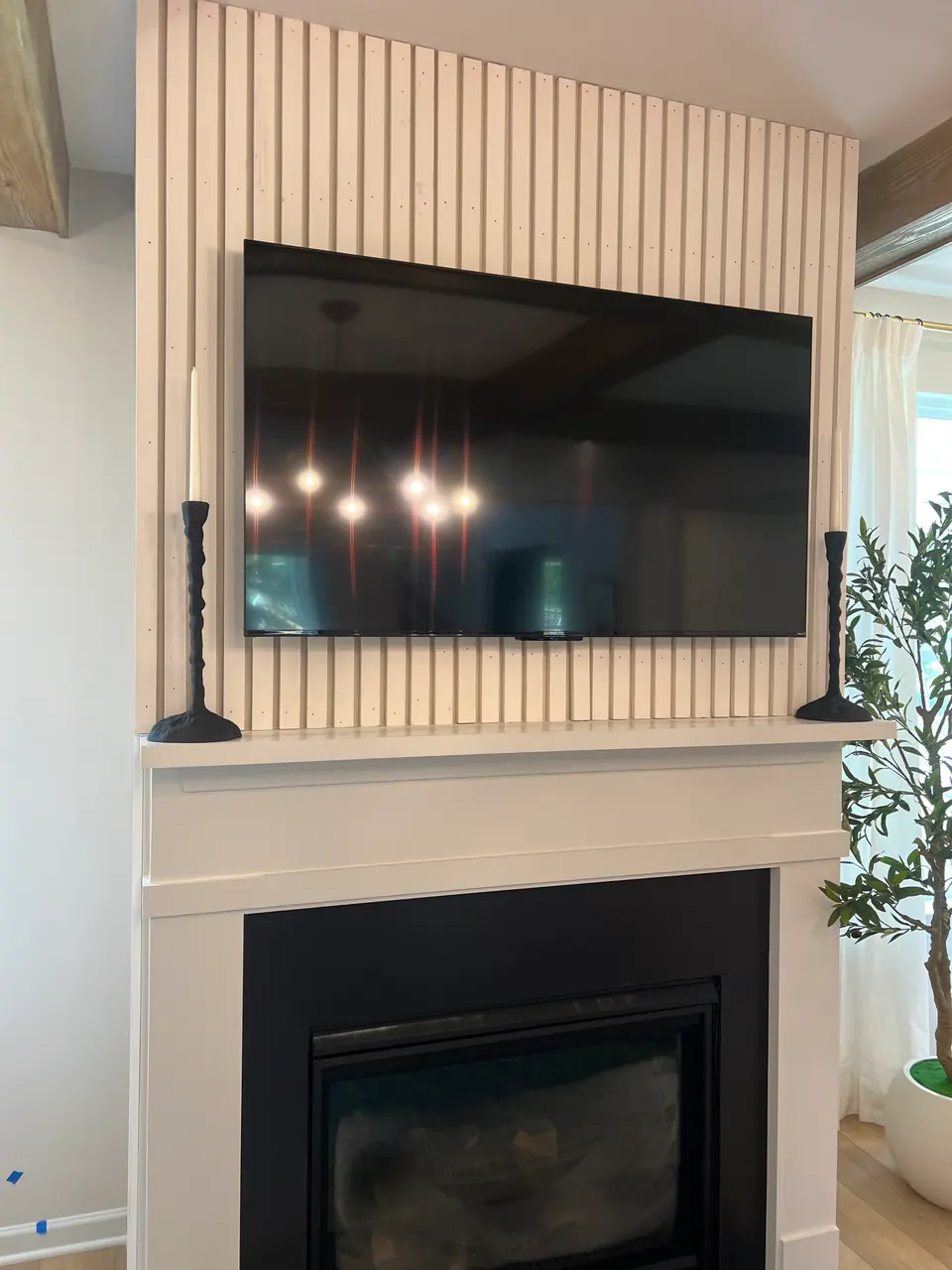
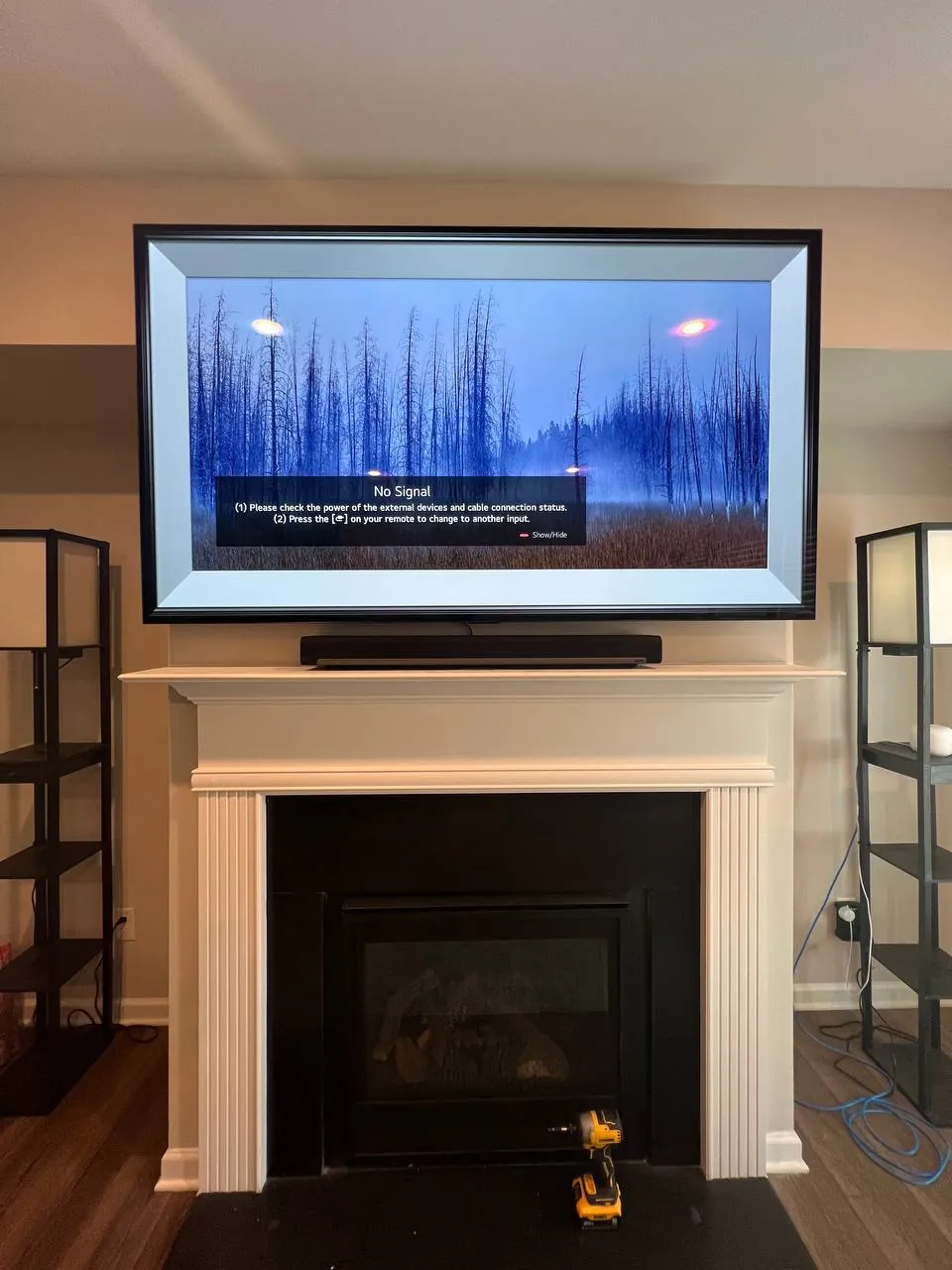
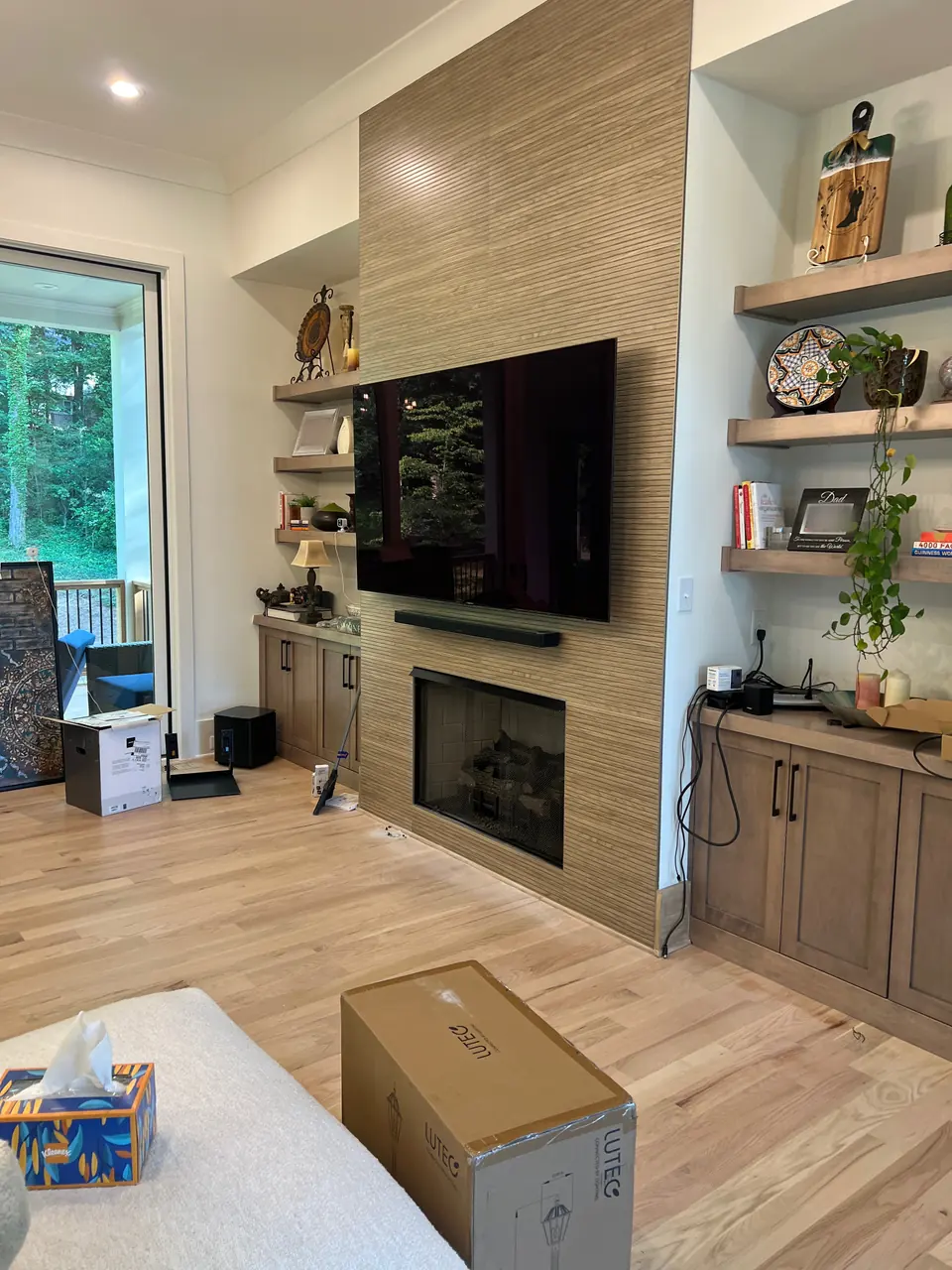
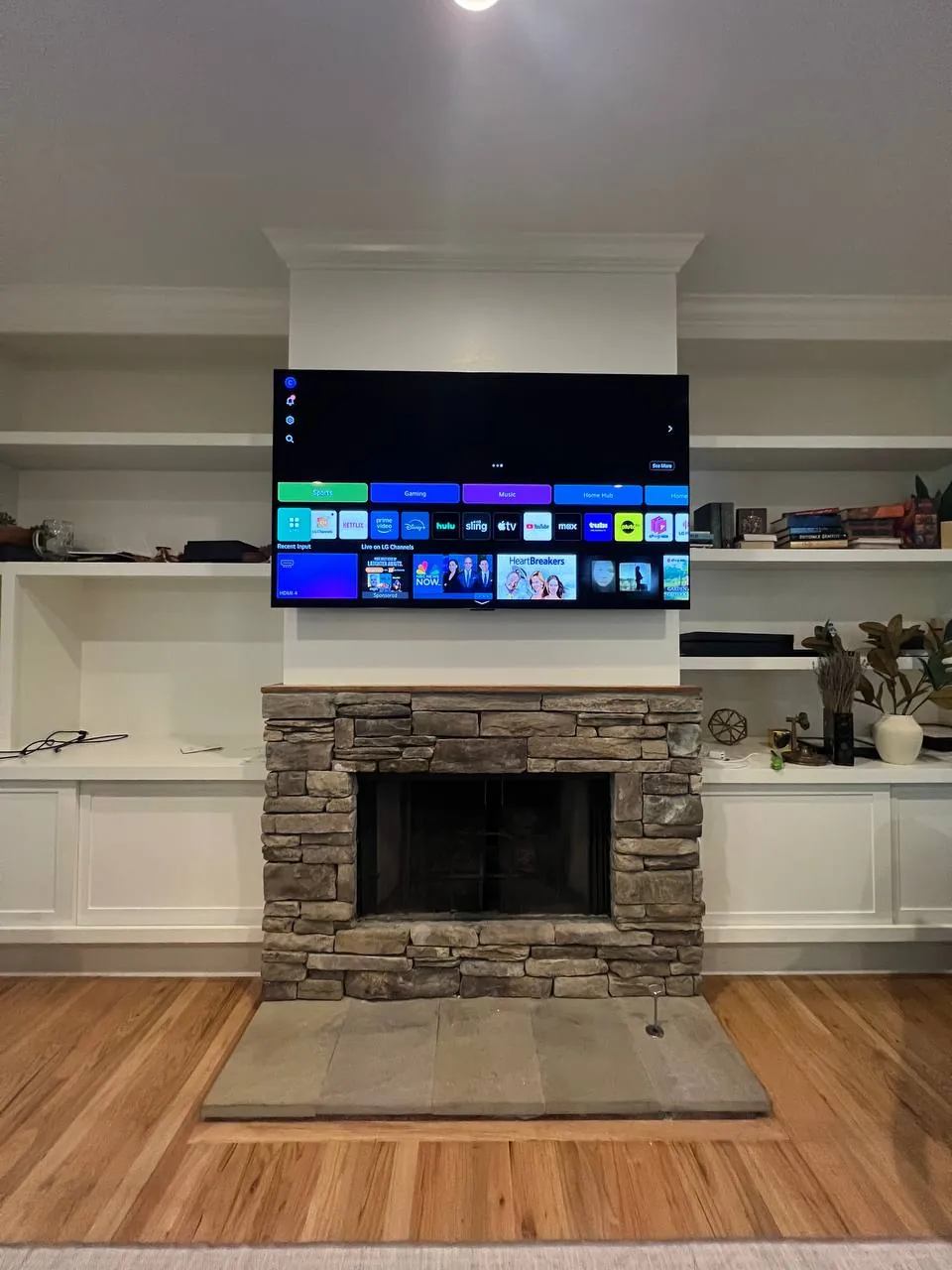
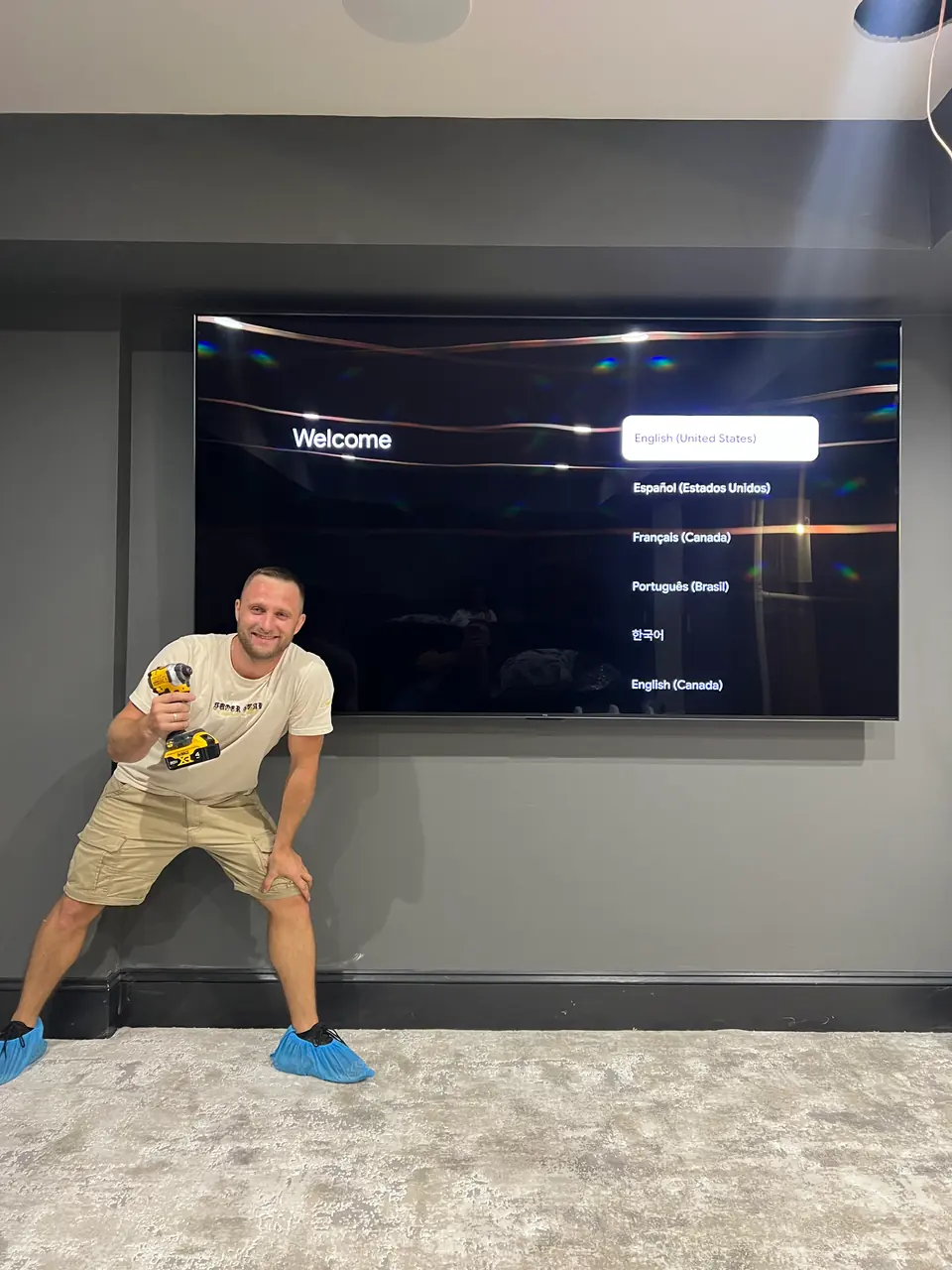
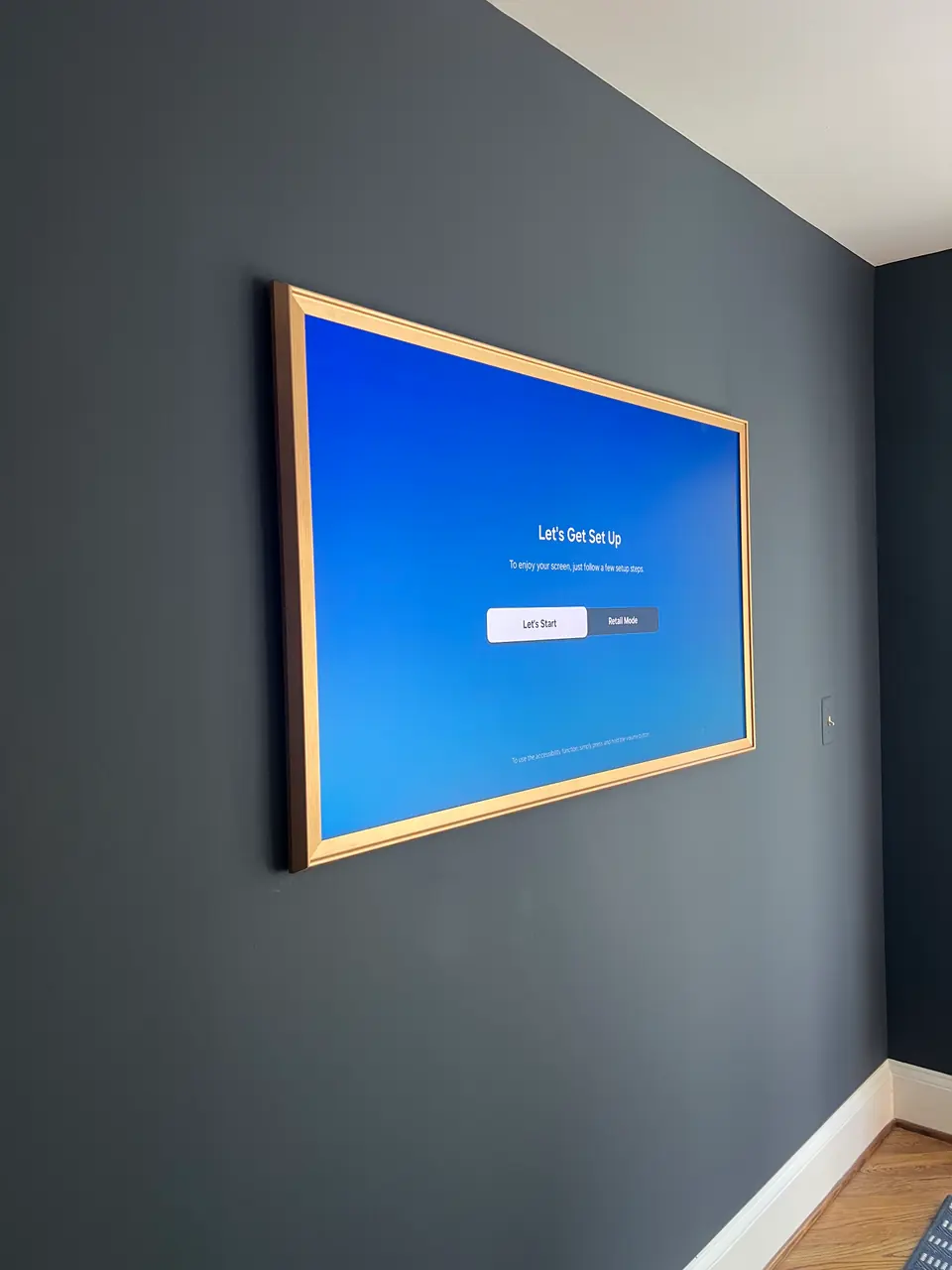
Much of South Redondo was rebuilt one lot at a time. Older houses on large lots gave way to two- and three-unit townhome plexes, and the same pattern runs through the streets behind Riviera Village and the Avenues. The garage sits at the street, bedrooms fill the middle floor, and the living room shares the top floor with the kitchen because that is where the view is. A 65-inch or 75-inch screen arrives in a box that has to turn on two landings before anyone measures a wall.
That climb is the reason the price list has two labor lines for 60 inches and up. At $165 one technician does the mounting and you help carry the TV up and hold it steady while it hooks onto the mount. At $210 two technicians handle the stairs and the lift. The gap between them is $45, and in a three-story Redondo Beach townhome it is usually money well spent when the TV is 75 inches or the stairway is tight. Below 60 inches the question goes away, since one technician carries a 55-inch screen up alone and labor is $129.
The top-floor walls are drywall on wood studs, which carry no wall charge. Because the floor below is bedrooms rather than a garage, the in-wall wire run at $99 stays inside one wall, with a power outlet behind the screen. Units in the plexes are often condos, some of them rented. If the walls may not be opened, a paintable cover at $49 does the job without a cut, and a renter should have the landlord's permission before the first hole.
North Redondo is a different town in one city. The streets of Golden Hills and El Nido are mostly single-story ranch houses from the 1950s, with drywall inside, a longer living-room wall and a lower ceiling. There the job is on the ground floor and the decisions are about height and sound. A tilting mount ($59) sits a 55-inch screen at a comfortable height on that wall, and a soundbar under it is $79. Apartments around Riviera Village tend to have smaller living rooms, where a 32-inch or 43-inch screen fits better.