A party wall is the wall a townhome shares with the unit next door. It is built to hold back a fire and to dull sound between neighbors, so it is heavier than any wall inside a unit, and it usually runs from the foundation to the roof. In many rows it is concrete block. Other rows use two separate stud walls with an air gap between them, each faced with thicker, fire-resistant drywall, and sometimes gypsum panels stand in the gap. An end unit has one party wall, and a middle unit has two, one on each side.
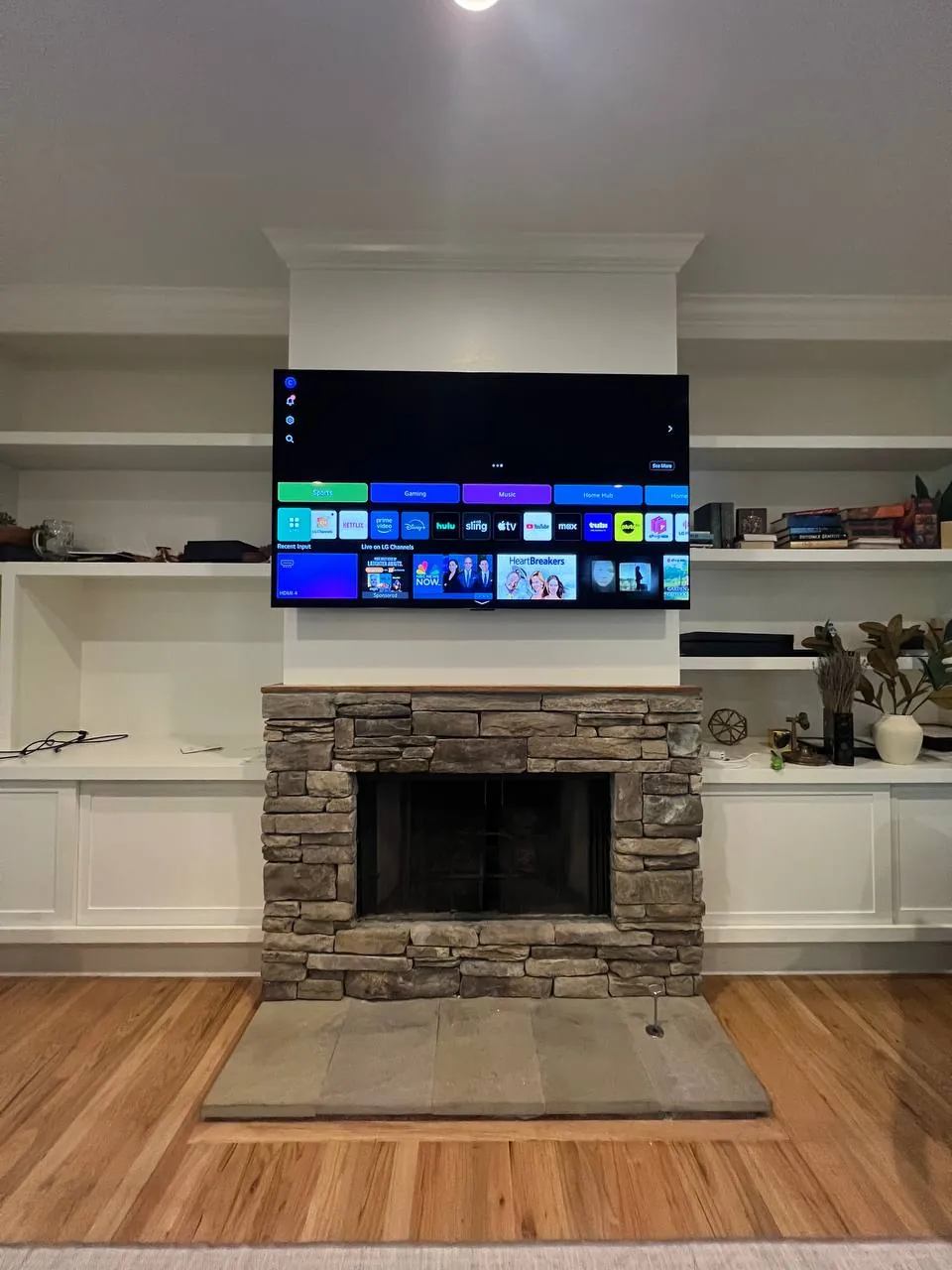
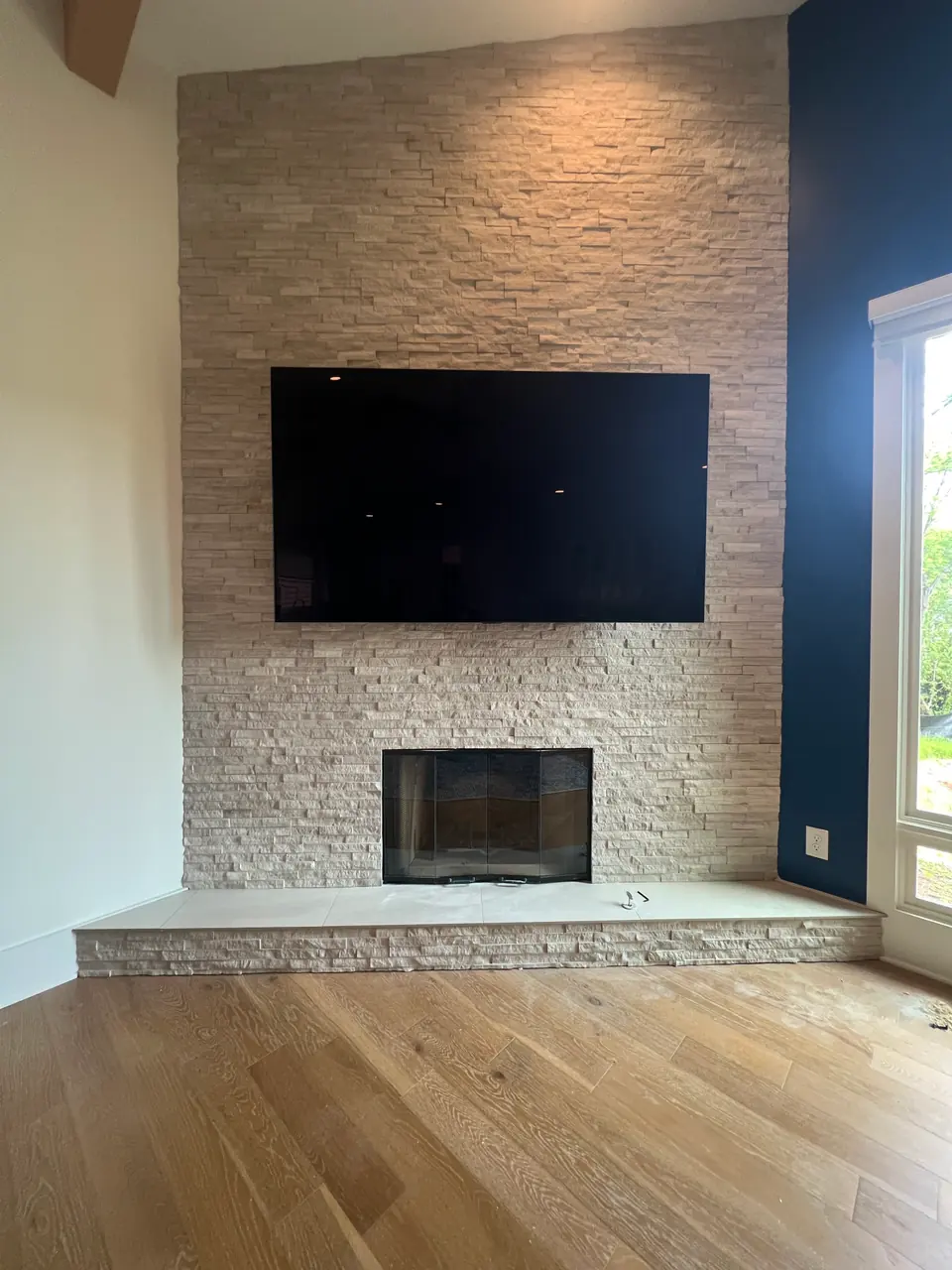
A TV can hang on either kind. On block, the mount goes up on masonry anchors set with a hammer drill, the $59 hard-wall line, and because a block wall offers no stud bay for hidden cables, they come down the surface in a paintable cover for $49. A framed party wall takes lag bolts in the studs of your half and, like any drywall, adds nothing to the price. Hidden cables are another matter. An outlet box cut into a party wall opens the layer that separates you from your neighbor, and many associations restrict it, so the cables usually go in the cover there too.
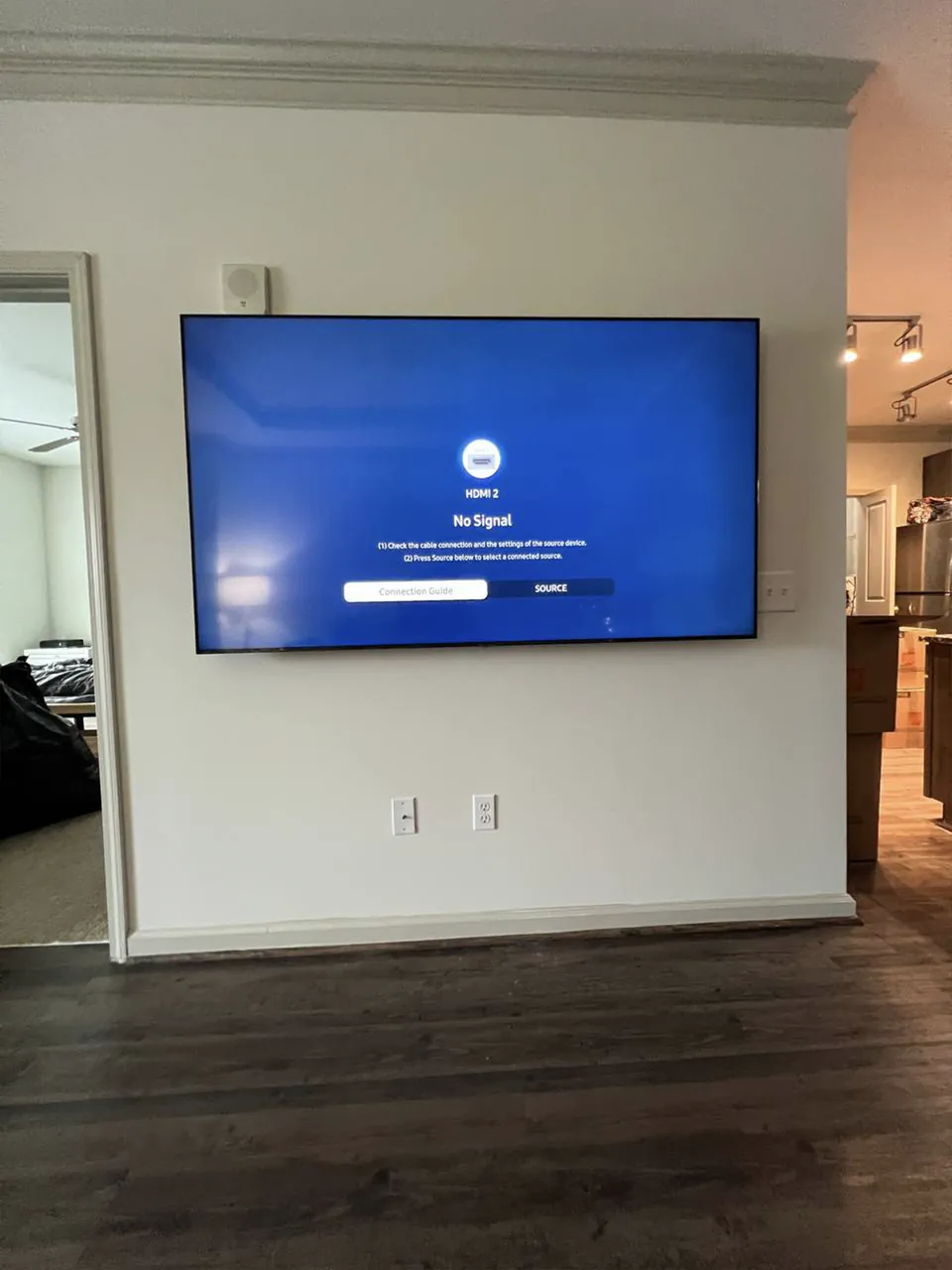
A wall that is yours on both sides is often the better spot. In a typical townhome that means the wall between the living room and the kitchen or stairs, or a wall between two bedrooms upstairs. These are ordinary stud walls with open bays, so the cables can run inside to a power outlet behind the TV for $99, and nothing about the job touches the neighbor's side. Sound is the other reason. Low notes pass through walls far more easily than voices, and a TV or soundbar fastened to a party wall sits right against it, so more of the bass reaches next door. Block and double stud walls both blunt sound, but neither stops it completely.
Palatine's single-family houses, like many in the northwest suburbs of the Chicago area, are simpler to plan. Split-levels in Winston Park date from the late 1950s, and brick ranches from the 1950s and 1960s stand on streets near downtown. Their inside walls are framed and carry no wall charge, and nobody lives on the other side of the drywall.