Arlington Heights was already a commuter suburb before World War II, but most of it was built after. The village grew sharply through the 1950s and 1960s and annexed land as it grew, and ranch houses went up on many of the new streets: one story, a living room facing the street through a wide picture window, and the bedrooms down a hall. In recent decades many older houses have come down, and larger two-story houses stand on their lots, often with taller ceilings and drywall throughout. A TV in either is priced line by line, as everywhere in the Chicago area.
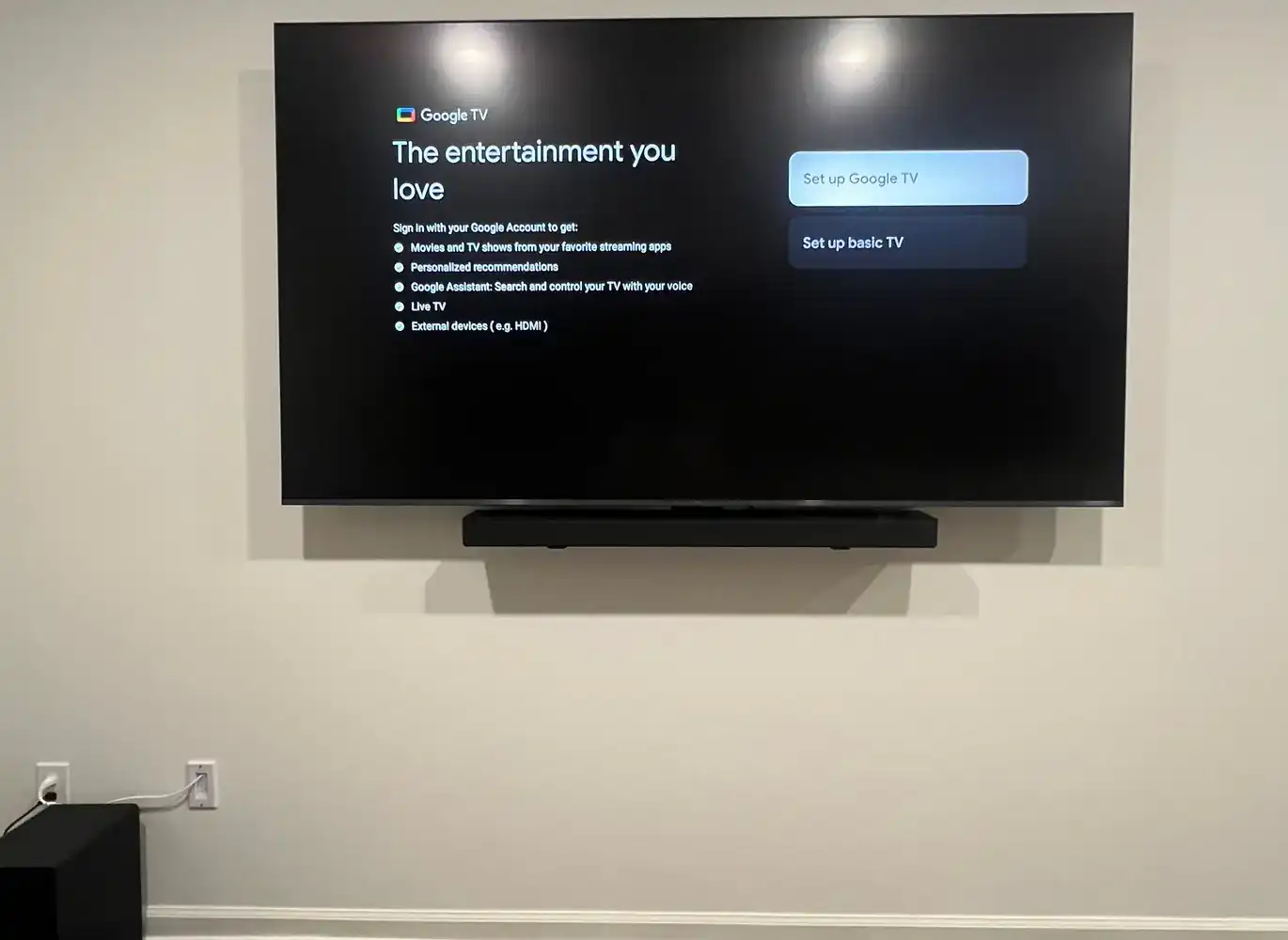
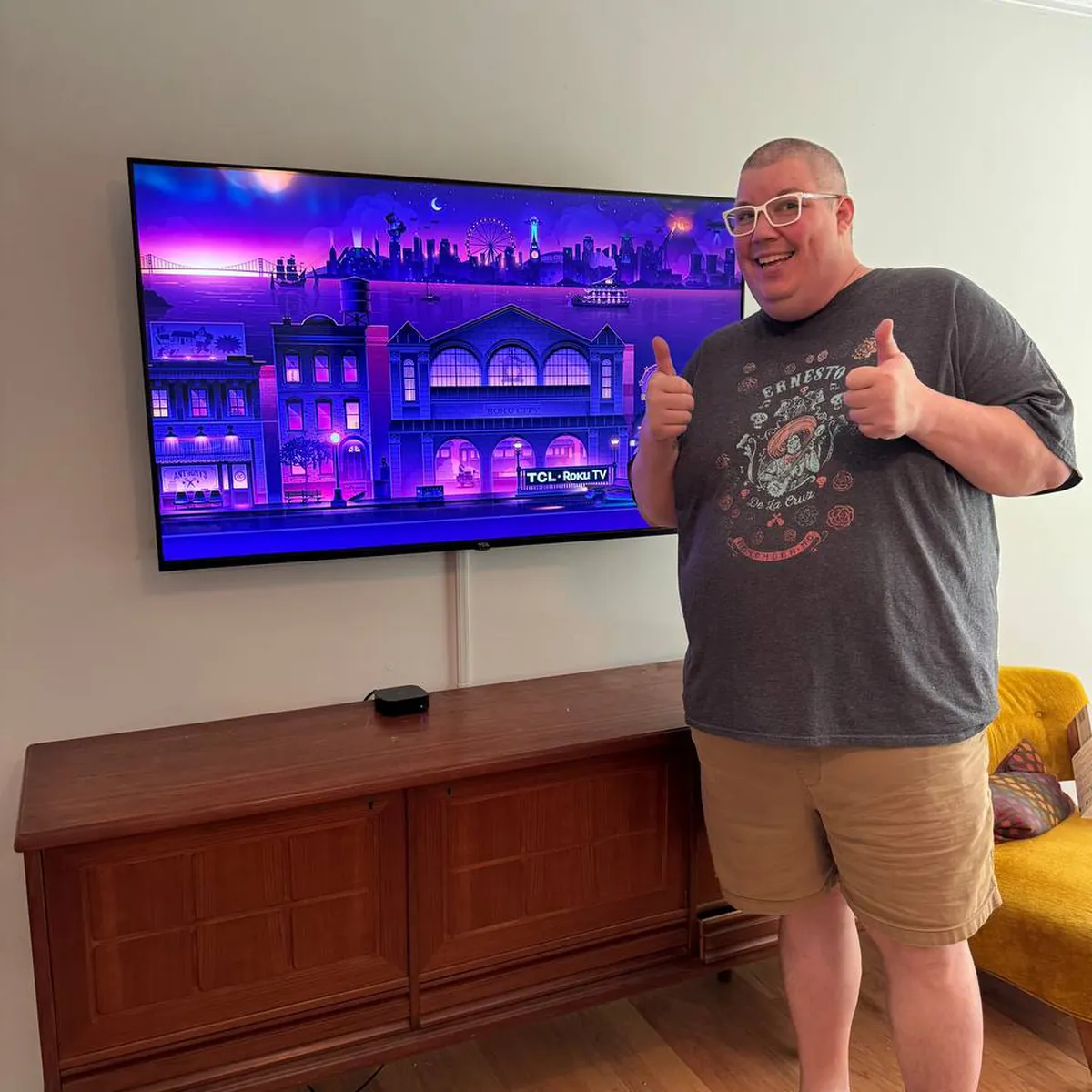
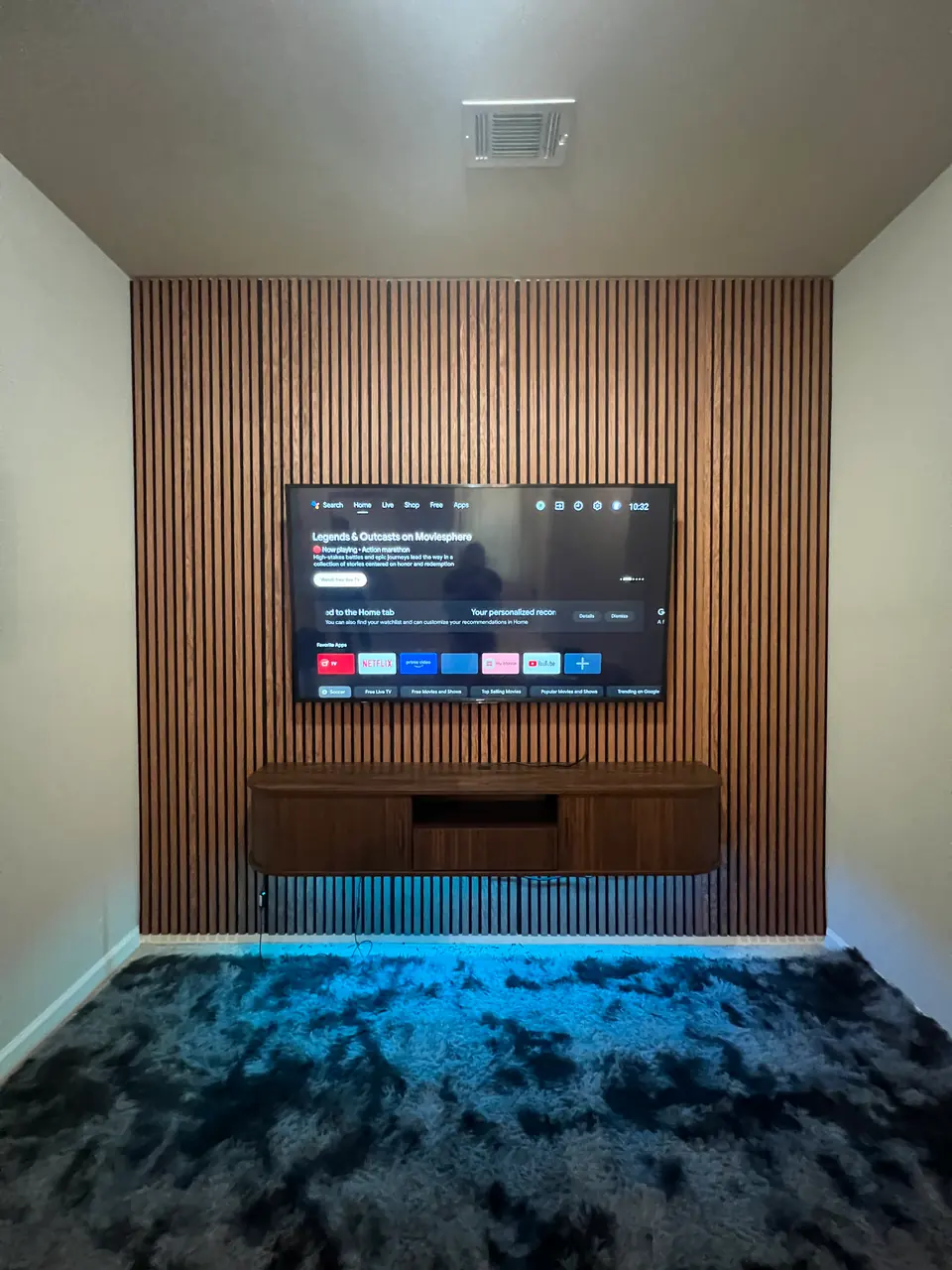
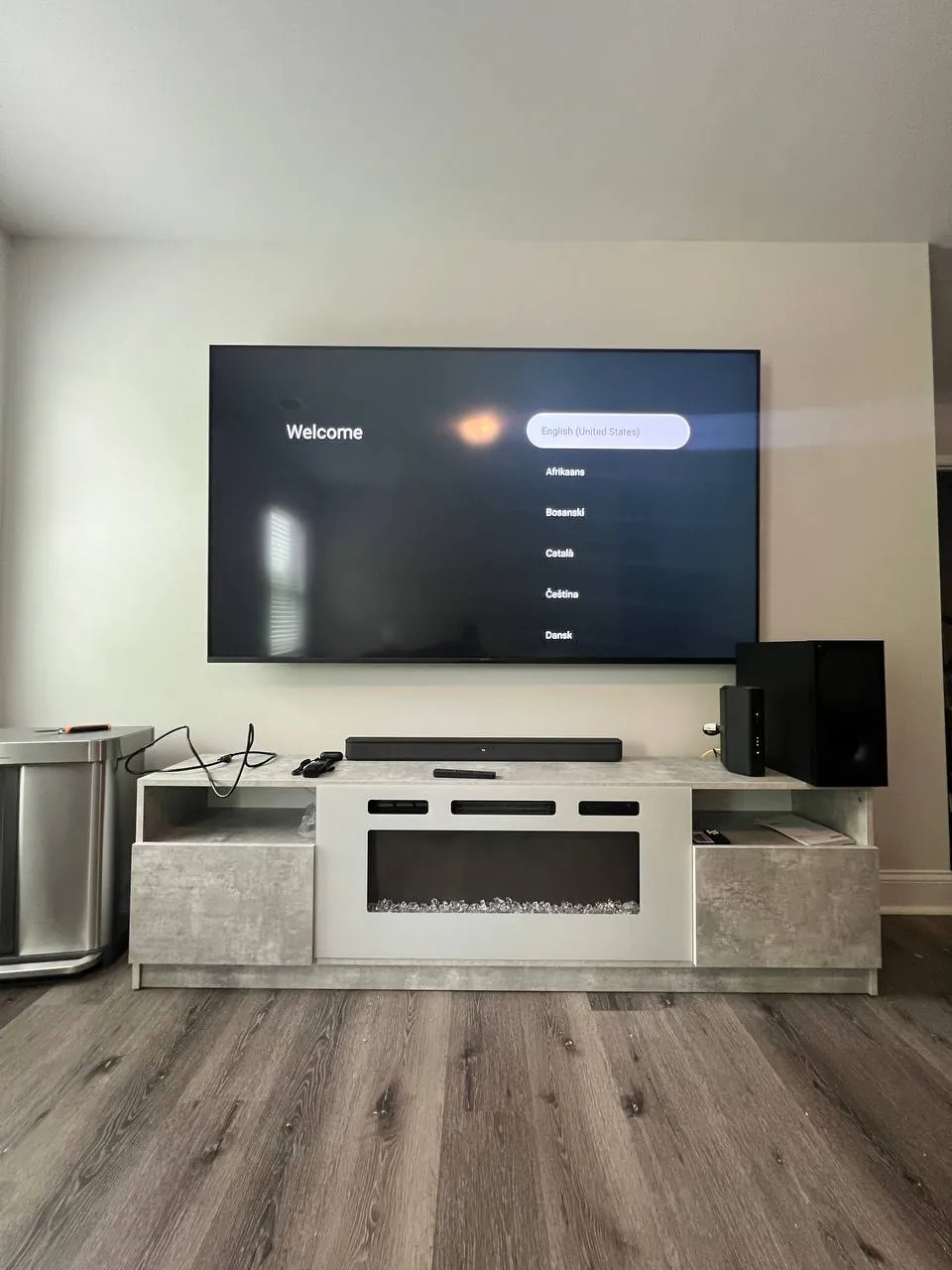
In a ranch, the picture window usually takes the front wall out of the running, so the TV tends to land on an inside wall, the one backing onto the hall, a bedroom or the kitchen. Inside walls are the easy ones for hidden cables. Most of their stud bays are empty, with no insulation, so the cables can drop down inside one bay, with a power outlet added behind the TV, for $99. Outside walls are harder, since insulation fills their bays, and any bay can hide a brace, a pipe or a duct. Some of the earliest mid-century houses have plaster over gypsum lath instead of drywall, priced the same for the mount and for the in-wall line, though cutting it makes more dust.
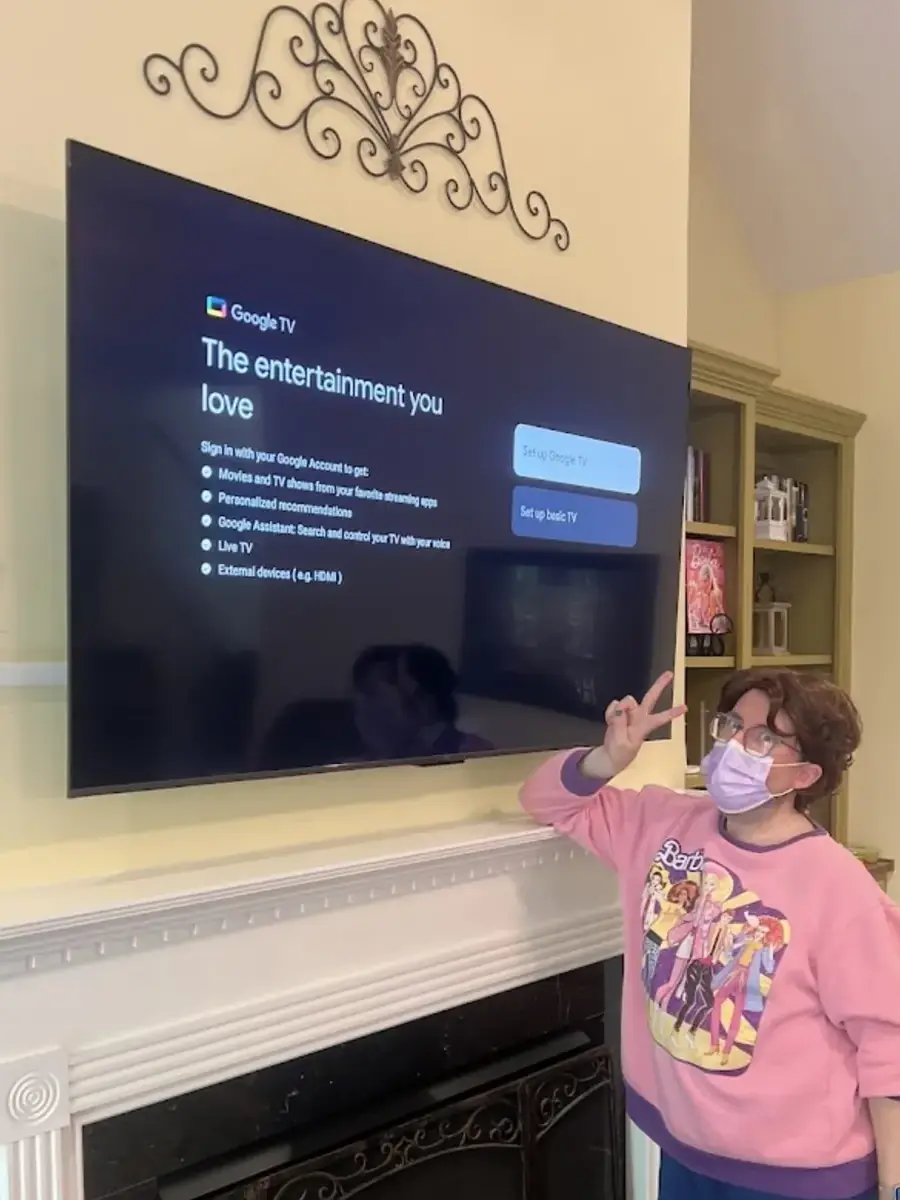
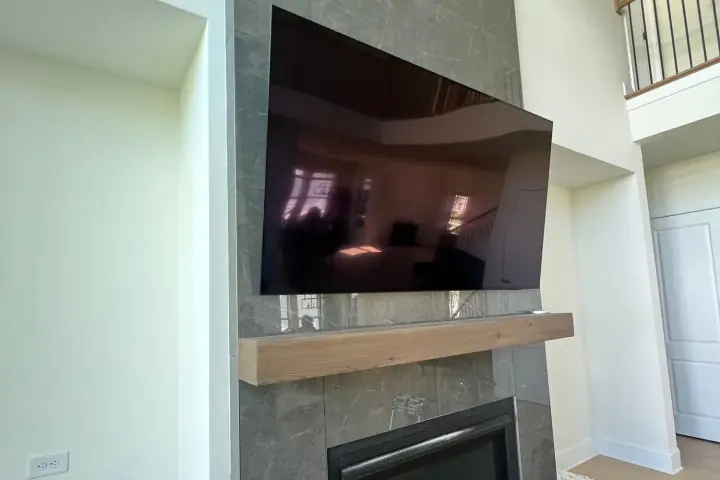
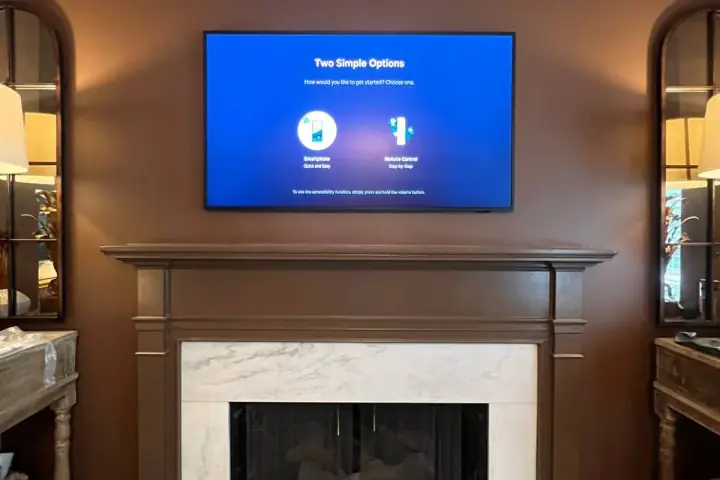
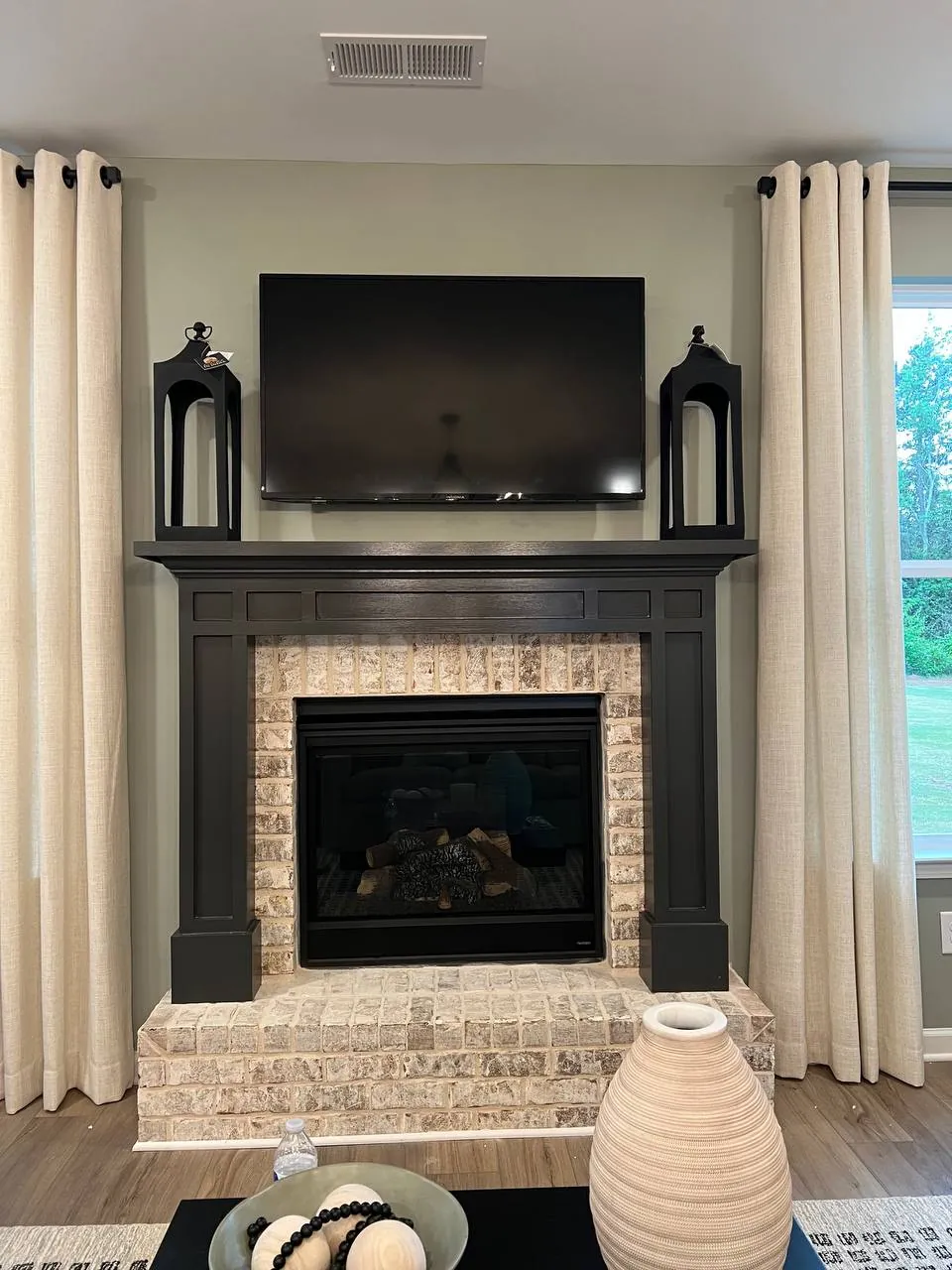
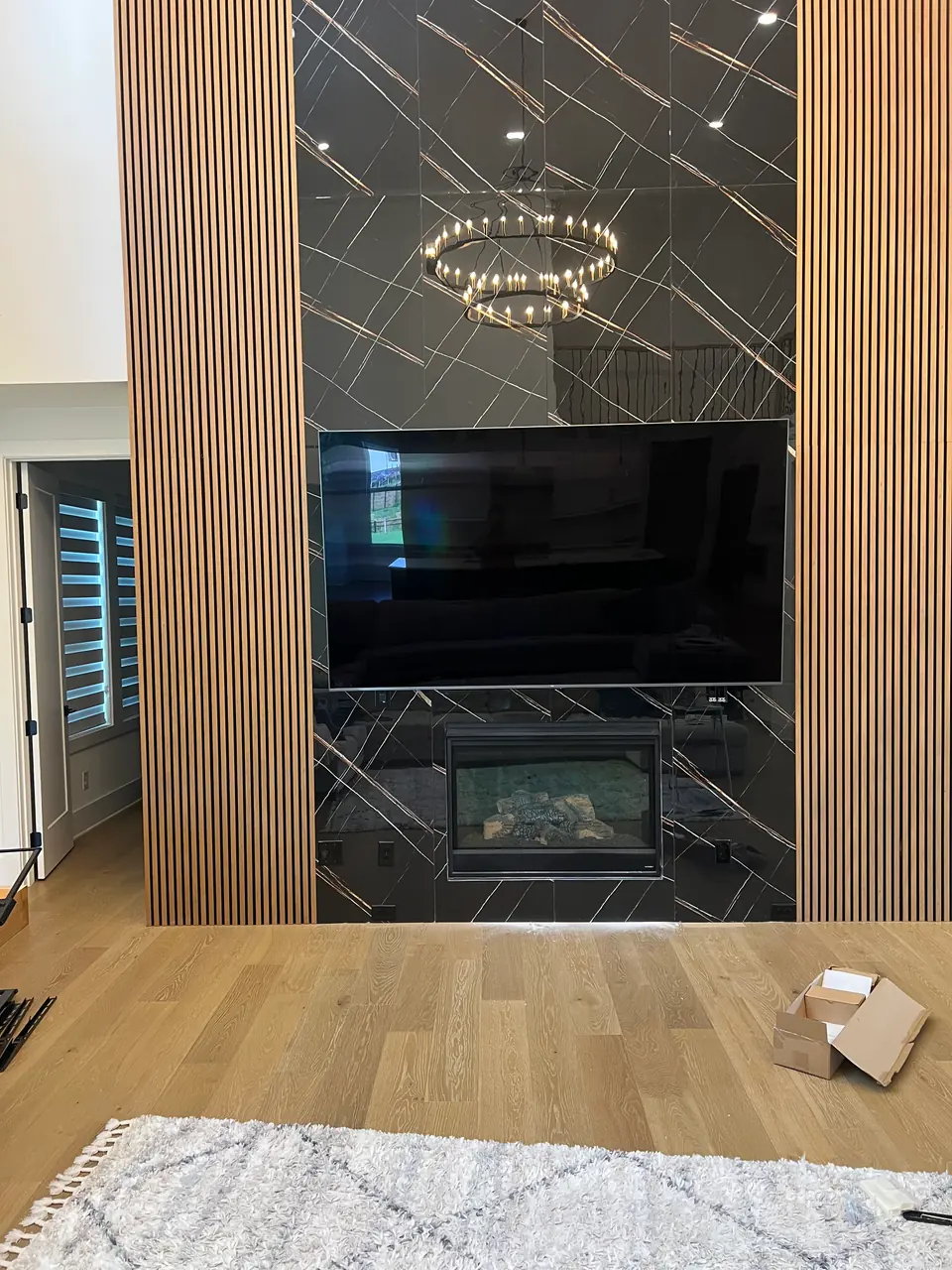
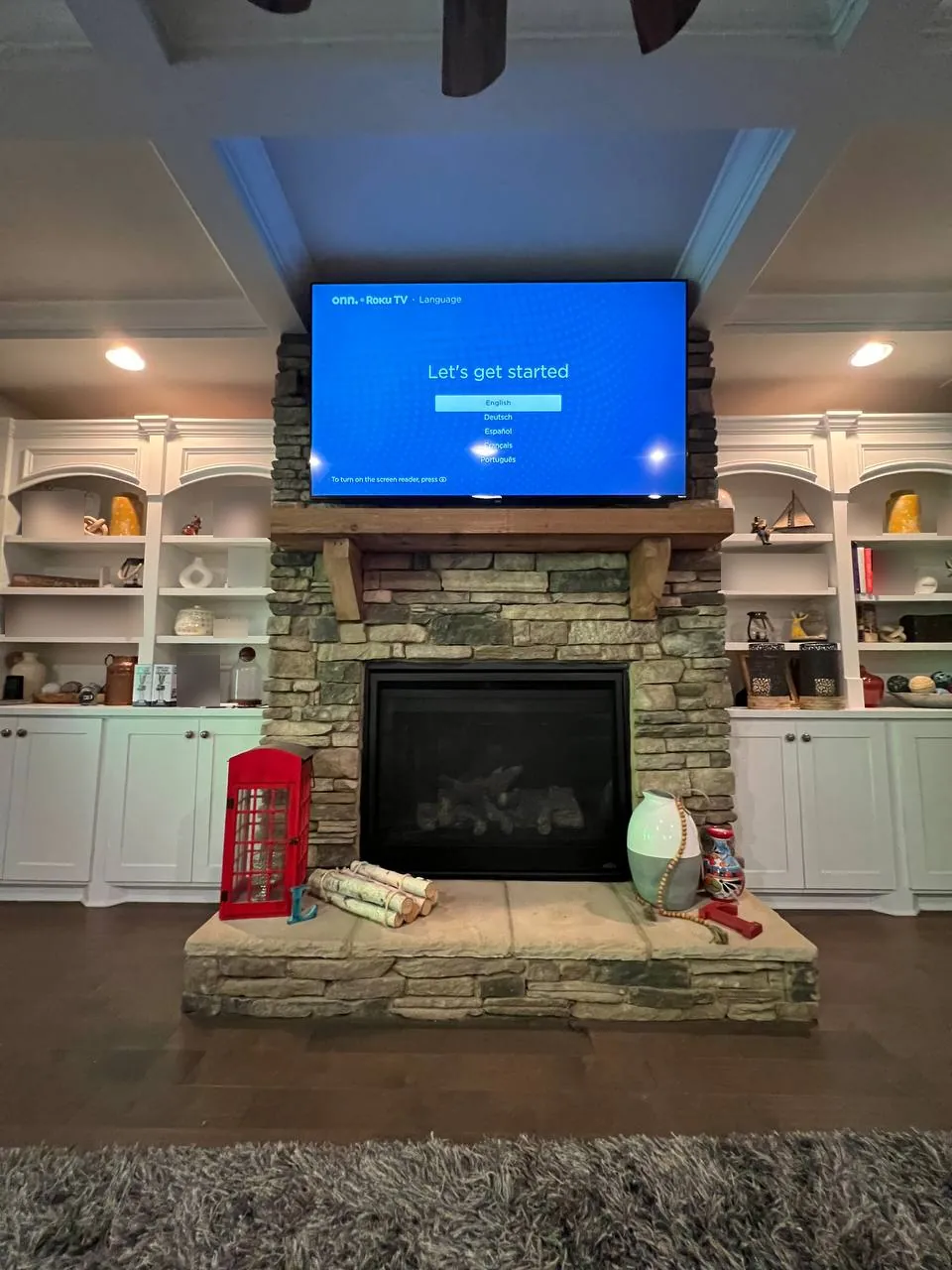
The new houses on Arlington Heights teardown lots are easier to read. Their drywall is new, the studs that take the lag bolts are straight and evenly spaced, and the inside walls are open. Outside walls are another matter, since builders now pack them with insulation, sometimes sprayed foam that leaves no path for a cable. Many family rooms in these houses center on a fireplace with a mantel, and above one the in-wall line is $149 instead of $99, plus $49 for mounting above a fireplace.
Not every wall should be opened. A brick fireplace front is solid masonry, with no cavity for cables, and a foam-filled outside wall may have no route at all. On walls like those, a paintable cover carries the cables down the surface to an outlet for $49 and can be painted to match. The wire concealment page shows the cover and the in-wall route.